


Iran’s grip on the Strait of Hormuz is slipping. Maybe for good, Washington says.
Early last month, Secretary of State Marco Rubio stated that Iran has lost control of the Strait of Hormuz. He added that the United States will target anything that threatens its forces or global navigation in the waterway. He also confirmed what everyone already knew.
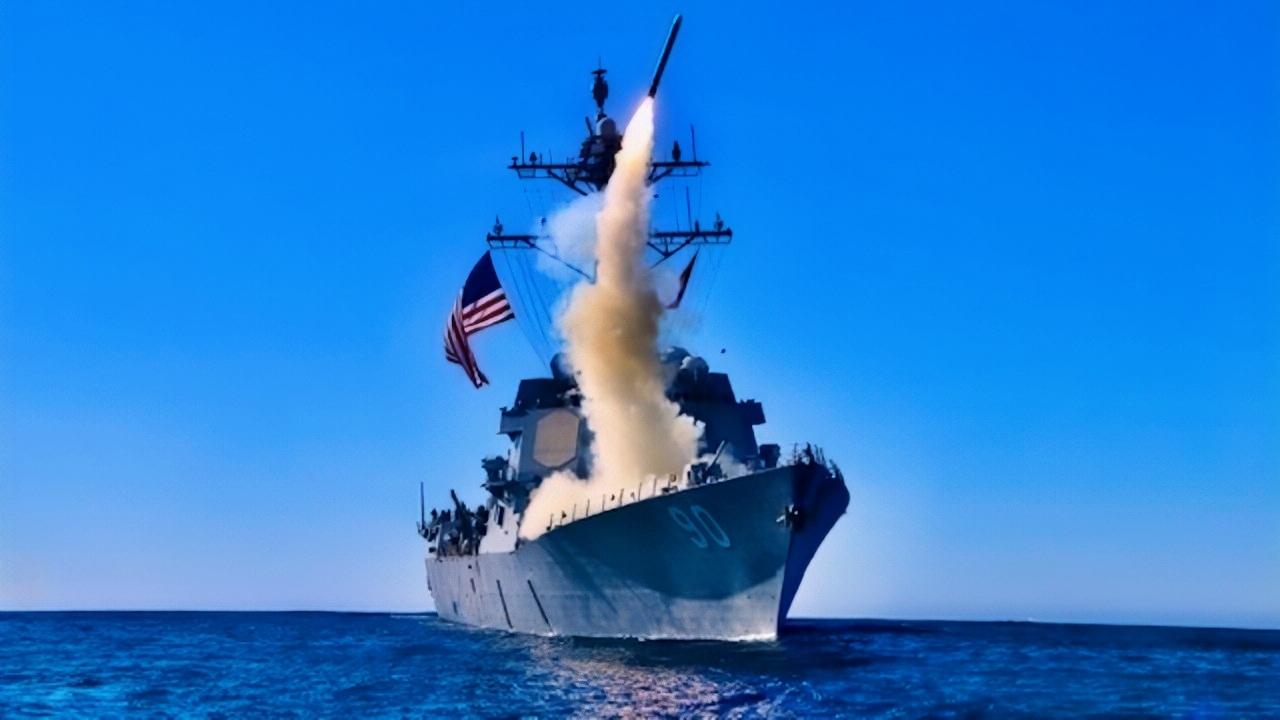
(Dec. 01, 2020) – The guided-missile destroyer USS Chafee (DDG 90) launches a Block V Tomahawk, the weapon’s newest variant, during a missile exercise. This event marked the first time a Block V Tomahawk missile was operationally tested, marking the Navy’s transition to a more advanced capability for the fleet. Block V includes an upgrade that will enhance navigation performance and provide robust and reliable communications. Chafee is currently assigned to Carrier Strike Group ONE and is homeported in Pearl Harbor. (U.S. Navy photo by Ens. Sean Ianno/Released)

(March 7, 2016) An F/A-18E Super Hornet assigned to the Warhawks of Strike Fighter Squadron (VFA) 97 performs a flyby during an aerial change of command ceremony above USS John C. Stennis (CVN 74). Providing a ready force supporting security and stability in the Indo-Asia-Pacific, Stennis is operating as part of the Great Green Fleet on a regularly scheduled 7th Fleet deployment. (U.S. Navy photo by Mass Communication Specialist Seaman Tomas Compian/Released)
The 60-day memorandum of understanding between Washington and Tehran expired in mid-August, and nobody in the White House is in a hurry to revive it. The White House believes that between economic sanctions, the blockade of Iranian ports, and the convoys escorting tankers through the Strait, it is winning.
That’s a long way from April. Back then, Rubio was still arguing over terms, telling Fox News the US would not accept a strait that stays open only for ships that get Tehran’s permission and pay Tehran’s toll.
So is Rubio (and the White House) right? Mostly. With one big caveat.
Who Actually Controls The Strait?
Control of the strategic chokepoint comes down to two factors. Who can deny it, and who can keep it open. For much of 2026, Iran could deny its use of it through missile and fast boat attacks.
The IRGC shut the Strait on Feb. 28 when the US-Israeli strikes began, and mines, fast boats, and anti-ship missiles kept tankers parked for months. Even under the June memorandum, the vague wording let Tehran claim the right to strike ships that strayed from the IRGC’s approved northern route. And it did.
However, the tide has turned. US airstrikes on IRGC missile sites have had an effect. Then, in late August, President Trump said all mines in the international shipping lanes had been removed or detonated, and Tehran was warned that any boat attempting to lay new ones would be sunk.
Days later, US forces hit two IRGC launchers on Larak Island after watching crews prepare to fire rockets carrying sea mines into the strait. Larak sits at the waterway’s narrowest point. That’s the IRGC’s front line of defense.
Then US missiles struck an Iranian tanker at the Kharg Island anchorage on Sept. 5.
Here’s the caveat. Losing control and losing the ability to cause severe damage to shipping traffic are two different things. The IRGC still has small fast boats, coastal missile batteries, and drones dispersed along its coast, and it answered Larak by firing ballistic missiles at US bases in Jordan.
Maritime insurance companies know this. One good hit on a loaded tanker can freeze traffic for a week.
So Rubio is right that Tehran no longer decides who sails. But it doesn’t mean that the threat is negated. Reduced to a degree? Definitely, but it remains, which is why insurers’ rates remain high.
The Blockade Is Doing What Sanctions Couldn’t
The bigger story is what the US Navy has done to Iran’s economy.
Since the blockade was reinstated on July 14, no Iranian crude oil ships have reached China via the Strait of Hormuz, according to Kpler, Vortexa, and TankerTrackers.com. Frankly, why Washington waited until July to do this defies description.
China was Tehran’s last major customer. Iran built its Jask terminal on the Gulf of Oman specifically to bypass the strait. None of that saved it. Jask exports plummeted from 76,000 barrels per day in July to zero in the first week of September. Before the fighting began, Iran was shipping about 1.75 million barrels a day.
Energy analyst Dalga Khatinoglu told Enterprise that Iran’s onshore storage is mostly full, and the crude oil it still holds outside the blockade line will likely be gone within a month or two. After that, Tehran has to start shutting down its wells. Doing that to mature fields risks damage that will take years to undo.
The rial’s worth is also cratering. It broke through 2 million to the dollar in late August and was past 2.2 million by early September. Iran’s own Statistical Center put annual inflation at 69.9 percent, while consumer prices have skyrocketed up 89 percent from a year ago. The IMF expects the economy to shrink 5.4 percent this year.
For an Iranian family, that means bread, medicine, and rent eating a paycheck that’s worth less every week. Reuters reported that while shops are full, no one is buying much of anything.
So What’s Next For Tehran?
The first question is…and should be, “Who is in charge?” Mojtaba Khamenei was elevated to Supreme Leader in March with heavy pressure from the IRGC, after his father was killed in the opening airstrikes on Tehran.
He has barely been seen in public since. It has been clear through the actions of the regime that the IRGC is running the show. That matters, because the Guards also own big pieces of the economy that’s now collapsing.
That leaves Tehran three real options.
The first is to lash out. Target and hit several tankers, a Gulf terminal or a US base, spike oil prices, and hope the pain at American gas pumps forces Washington to deal. That’s been their playbook, or it least versions of that all year. It hasn’t worked, and each round gives the US another reason to hit IRGC targets on the coast.
The second is the Omani factor. Oman’s foreign minister went to Tehran in late August with a phased framework that includes a temporary joint maritime corridor and a joint mine-clearing effort. That lets Tehran reopen the strait under a regional flag and call it a win at home. In a society as closed off and controlled as Iran’s, they can push the optics, as they control the messaging.
The third is to keep waiting it out. They banked on delaying this until the US midterm elections, when they felt a Democrat-led House and Senate would give them the favorable off-ramp they’ve enjoyed in the past.
However, time isn’t on Iran’s side. Oil storage tanks are full, the rial is sliding more every week, and the regime already faced economic protests across the country last winter. Hungry people with worthless money are a bigger threat to the Islamic Republic than any US carrier strike group.
With the economy in dire straits, and the blockade forcing the regime to possibly shut down its oil wells, it would not be surprising to see the hardliners lash out at least once more.
Defiant rhetoric will soon follow. But the money will run out long before the bravado does. That’s how these things usually end.
Iran had a big chip to play with the Strait’s closure, but that may play out if things go the way it seems.
About the Author: Steve Balestrieri
Steve Balestrieri is a National Security Columnist. He served as a US Army Special Forces NCO and Warrant Officer. In addition to writing on defense, he covers the NFL for PatsFans.com and is a member of the Pro Football Writers of America (PFWA). His work was regularly featured in many military publications


