
As the conflict in Iran threatens economies worldwide, officials are doing everything they can to keep their countries’ economies from spiraling further.
Iraq, for example, has devalued its currency against the US dollar, putting the exchange rate at roughly 1,500 Iraqi dinars per 1 US dollar.

The French Marine Nationale aircraft carrier FS Charles De Gaulle (R91), and the aircraft carrier USS John C. Stennis (CVN 74) are underway in formation in the Red Sea, April 15, 2019. The John C. Stennis Carrier Strike Group is deployed to the U.S. 5th Fleet area of operations in support of naval operations to ensure maritime stability and security in the Central Region, connecting the Mediterranean and the Pacific through the western Indian Ocean and three strategic choke points. (U.S. Navy photo by Mass Communication Specialist Seaman Joshua L. Leonard)

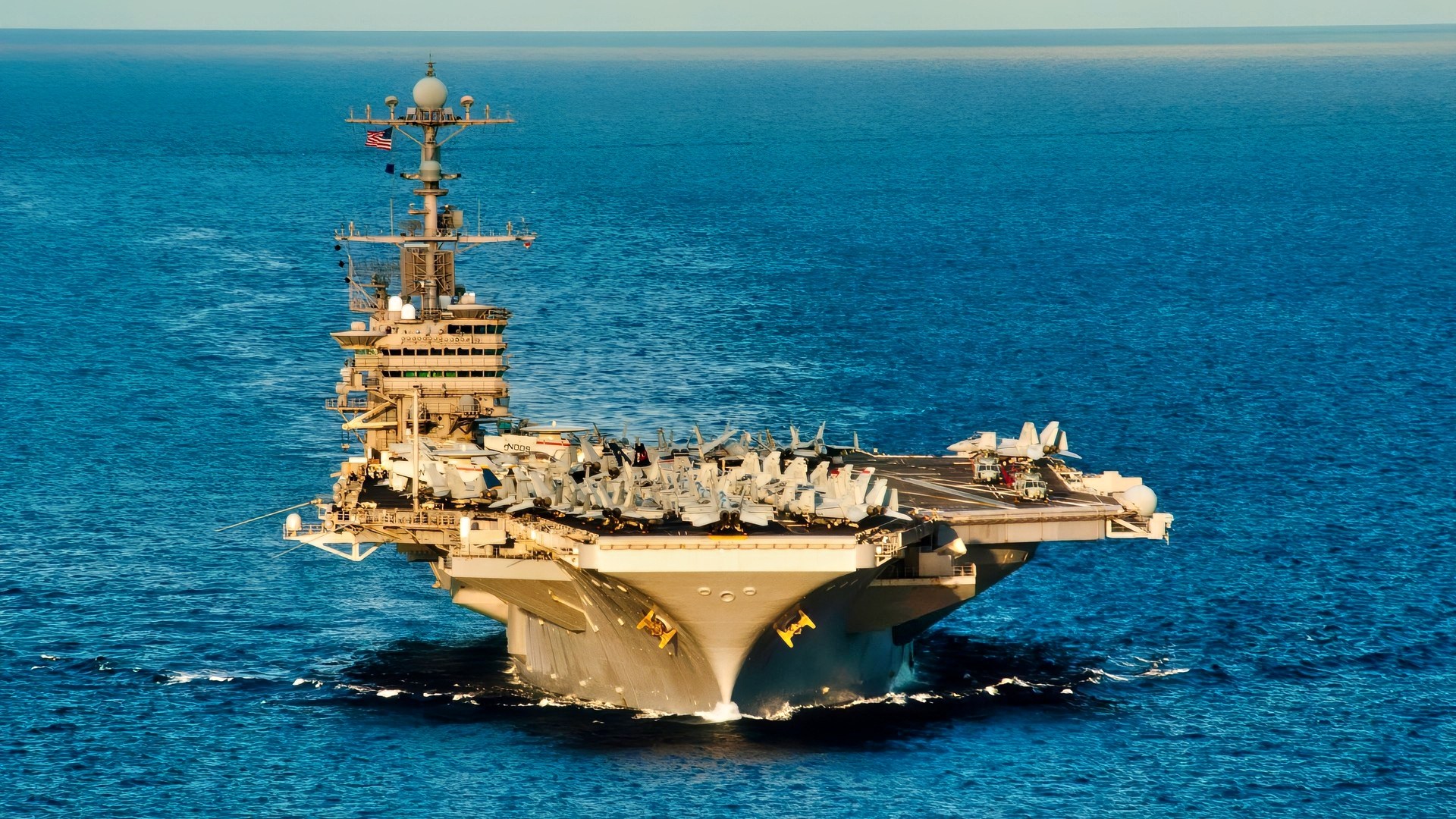
PHILIPPINE SEA(Feb. 22, 2016) USS John C. Stennis (CVN 74) sails through the Philippine Sea. Providing a ready force supporting security and stability in the Indo-Asia-Pacific region, Stennis is operating as part of the Great Green Fleet on a regularly scheduled 7th Fleet deployment. (U.S. Navy photo by Mass Communication Specialist Seaman Cole C. Pielop/Released) .
Previously, the exchange rate stood at around 1,300 dinars per US dollar.
Meeting Economic Challenges
According to Iraq’s central bank, the decision to devalue the dinar was made “to meet the relevant financial, economic, and monetary requirements.” The official exchange rate was last set in 2023, but exchange shops have always carried a different rate.
The gap between the official rate and the shops’ rate has only widened since the war in Iran.
The Iraqi economy relies heavily on oil exports, and getting oil to buyers has become more complex and expensive because of the closure of the Strait of Hormuz.
The majority of Iraq’s oil exports were channeled through the now-closed strait; now, Iraq has been forced to take a more expensive overland shipping route through Syria as an alternative, as the strait remains under Iran’s chokehold.
What Does Devaluing Accomplish?
By devaluing its own currency, Iraq hopes to literally get more bang for its buck.
The US buys exported oil in dollars, which then convert into more dinars and, at least on paper, give the Iraqi government more money to spend.
However, a weaker dinar also means imported goods will cost more, as the policy will have the opposite effect on businesses that rely on imports.
Following the announcement, the unofficial exchange rate rose to 1,700 dinars per US dollar, prompting many exchange businesses to close.
The War in Iran Impacts Everyone
Beyond military spending and direct casualties, the effects of the war in Iran have undeniably affected countries worldwide, particularly fuel prices.
The closure of the Strait of Hormuz has also disrupted other industries that use the waterway to transport goods.
Agricultural hubs in Southeast Asia and Africa, for example, have been forced to reckon with a severe shortage of fertilizer products.
Rising oil prices have also driven up the cost of everyday commodities, leaving many hungry.
The United Nations estimates that the conflict in the Middle East has caused 45 million people to lose proper access to food.
US Not Budging in Deal with Iran
Meanwhile, Washington isn’t budging from its hardline stance against Iran, insisting that Tehran end its nuclear ambitions, and creating even more uncertainty as to when hostilities will stop.
The U.S. is using “Operation Economic Outcast,” an extensive sanctions campaign that consistently escalates against Tehran — and US officials are seemingly hoping for Iran to become too weak to make its own concession demands once peace talks start again.
“The Iranian regime’s ability to fund its war machine and inflict terror on the world has been severely diminished thanks to Operation Economic Outcast,” Scott Bessent, US Treasury Secretary, said. The operation, he added, is aimed at “enablers” of Iran and is designed to “drain the [Iranian] regime’s revenue once and for all.”
VP Vance Signals Possible Softening
US Vice President JD Vance made recent statements saying that the US may be willing to consider sitting down with Iran again if the latter decides to take “meaningful” steps to reduce its uranium-enhancing capabilities and abilities.
In an interview with Reuters, Vance reasoned that if Iran was truly committed to not developing nuclear weapons, it did not need the ability to produce enriched uranium up to the level it has today.
Iran has reportedly been able to enrich uranium up to around 60%.
This level of enrichment puts Iran’s nuclear capabilities to allow it to use nuclear energy, but not yet nuclear weapons.
Uranium must be enriched to roughly 90% to be considered weapons-grade.
However, the war has made it more difficult to assess if Iran has continued its nuclear program, or if the US offensives have affected its nuclear program at all.
His statements come shortly after US President Donald Trump announced he recently rejected a deal with Iran, citing problems with elements of the agreement and calling them “not enough.”
About the Author: Tim Ramos
Tim Ramos has written for various publications, corporations, and organizations, covering finance, politics, travel, entertainment, and sports in Asia and the U.S. for more than 10 years.