
The Iran War Just Won’t End: A supertanker caught fire in the Strait of Hormuz after being struck by what the Islamic Revolutionary Guard Corps (IRGC) claimed to be an Iranian sea mine.
The UK Maritime Trade Operations did not immediately identify the supertanker, which was hit on its port side in the strait.
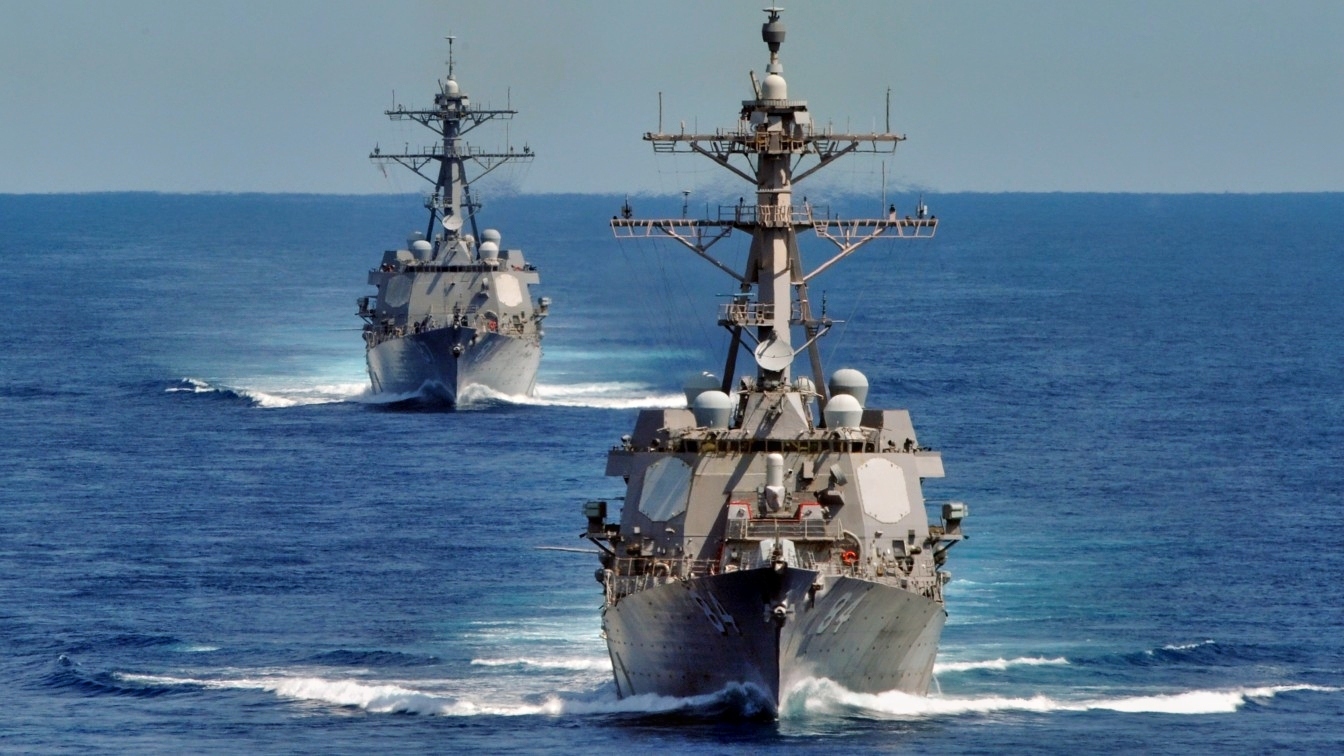
The Arleigh Burke-class guided-missile destroyers USS Bulkeley, right, and USS Mason participate in a strait transit exercise. Bulkeley and Mason are part of the Enterprise Carrier Strike Group and are conducting work-ups and flight operations in preparation for an upcoming deployment. (U.S. Navy photo by Seaman Jared M. King)
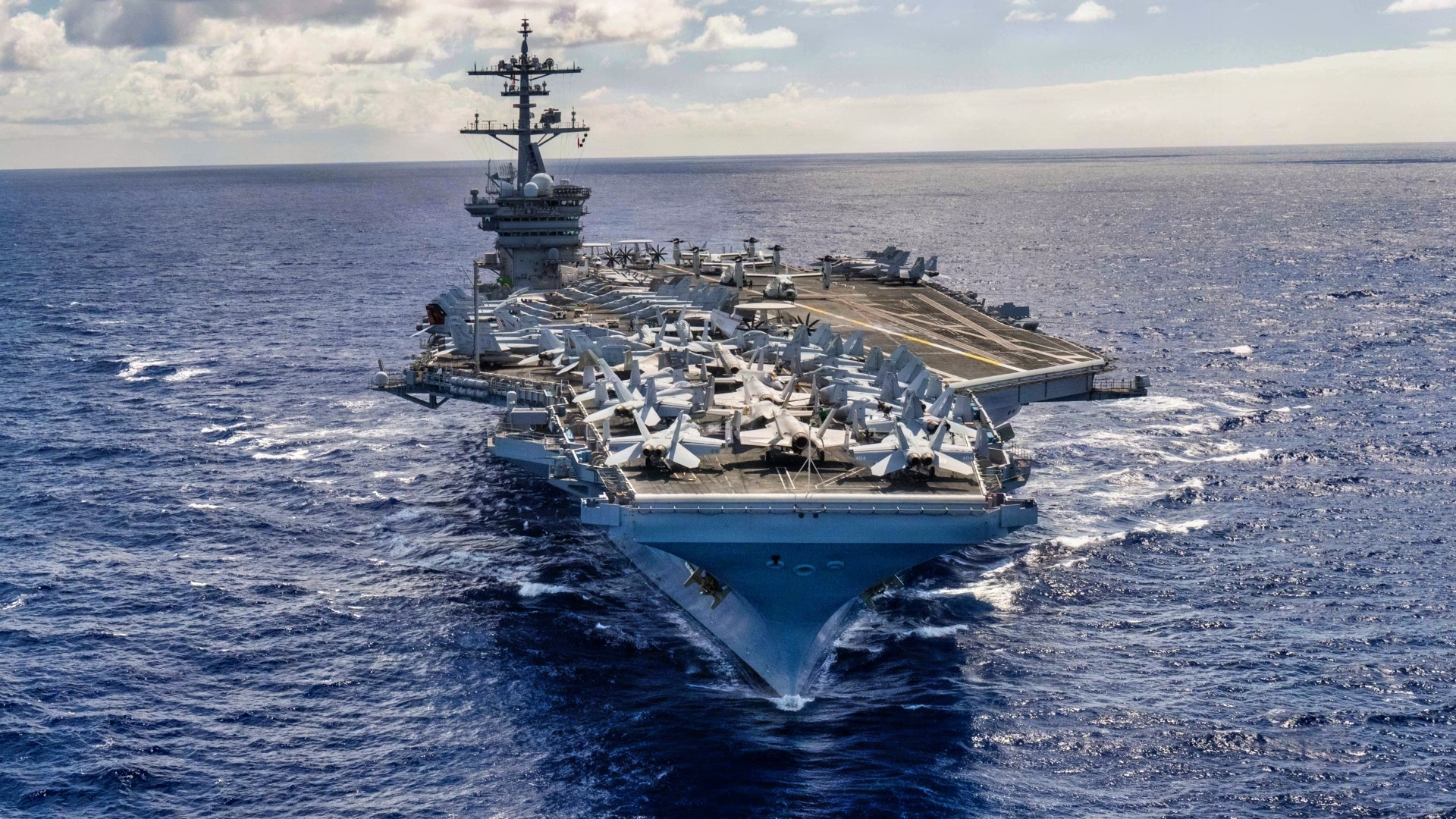
PACIFIC OCEAN (June 22, 2026) –The Nimitz-class aircraft carrier USS Theodore Roosevelt (CVN 71), transits the Pacific Ocean, June 22, 2026. Theodore Roosevelt, flagship of Carrier Strike Group (CSG) 9, is underway conducting exercises to bolster strike group readiness and capability in the U.S. 3rd Fleet area of operations. (U.S. Navy photo by Mass Communication Specialist 3rd Class Aaron Haro Gonzalez)
The fire came just hours after the United States struck a ship that was attempting to break through its naval blockade of Iranian ports.
Latest Strike in the Iran War
The IRGC posted a clip of the tanker on fire in the Strait of Hormuz on Sunday, 11th October.
“A devastating fire is the fate of any tanker that violates the rules and disregards security in the Strait of Hormuz,” the IRGC added in a statement, adding that it had struck a sea mine in the area.
The IRGC claimed that three tankers had been struck in the strait over the weekend, with a supertanker capable of carrying 2 million barrels damaged after striking a sea mine. Of course, that is hard to confirm and comes directly from Iran.
The group also warned that it would treat any ships trying to cross with tracking systems switched off as “hostile vessels.”
It’s the latest attack in the strait, and attacks have been increasing in frequency over the past two weeks since exports from the Gulf returned to pre-war levels at the end of September.
Last month, 477 non-Iranian vessels passed through the Strait of Hormuz: 246 eastbound and 231 in the other direction.
Since the turn of the month, however, Iran has retaliated with as many as 14 vessels struck so far in October, according to state media.
Western reports have a lower estimate of nine.
Nevertheless, the increased risk has seen traffic through the Strait of Hormuz fall to its lowest levels in months.
U.S. Blockade Ongoing
Conversely, the U.S. has been blockading Iranian ports for much of the conflict, and another vessel was damaged on Sunday.
“A U.S. military fighter jet struck the stern of Panama-flagged M/V Ocean Molica (also known as the ‘Arika Sun’) with a precision munition, fully disabling the ship’s propulsion without harming the crew,” said U.S. Central Command (CENTCOM) in a statement.
CENTCOM added that the ship had allegedly docked at an Iranian port and was attempting to leave the Persian Gulf for international waters.
It marked the fourth disabling of a ship since the U.S. blockade restarted in July, with another 135 turned around by U.S. forces.
Prices Remain High
Oil prices remain high after Iran intensified strikes on vessels in the Strait of Hormuz at the start of the month.
Traffic through the strait has fallen in recent weeks, with captains and shipowners reluctant to risk lives and damage to vessels and cargoes.
Exports from the Gulf have somewhat continued through a range of mechanisms.
Producers such as Saudi Arabia and the United Arab Emirates are using pipelines to bypass the Strait of Hormuz entirely, with the latter accelerating completion of a second pipeline to early next year.
Smaller exporters such as Qatar and Bahrain are using ship-to-ship cargo transfers, allowing vessels to hug the Omani coast and sail through the strait undetected.
As a result, oil prices remain high.
After hovering around $103 per barrel before the weekend, Brent crude, the global benchmark for oil prices, rose to $106 per barrel on the morning of Monday, 12th October.
Seafarers Offered Incentives
The Strait of Hormuz remains a key export route despite major producers’ efforts to find a workaround.
To incentivize shipowners, captains, and crew to complete the life-threatening journey, financial rewards are being escalated to eye-watering levels.
For example, tanker captains willing to transit the Strait of Hormuz can earn $100,000 per month, plus a $50,000 bonus per journey.
That’s about an $85,000 per month increase.
Sailors can also reap the rewards.
While most earn little more than $1,500 per month, those willing to make the trip can earn up to $9,000 per month.
Their journey is so dangerous that one Financial Times source described those brave enough to stay onboard as “almost being viewed as mercenaries.”
On a smaller scale, they are offering double pay to those willing to transit the Red Sea and sail in the Gulf of Oman.
The former has seen Saudi Arabian shipping targeted following a renewed offensive by the Houthi rebels in Yemen last month, while the latter is where the second ship-to-ship transfer takes place following a shuttle run through the Strait of Hormuz.
About the Author: Shay Bottomley
Shay Bottomley is a British journalist. He has written for the Western Standard, Business Insider, Maidenhead Advertiser, Slough Express, Windsor Express, Berkshire Live and Southend Echo.