

Trump Threatens to Bomb Oman – President Donald Trump has threatened to bomb Oman. He made the remark on Monday, after Iran announced fresh progress toward an agreement with Muscat over shipping through the Strait of Hormuz.
Oman Behaving ‘Badly’
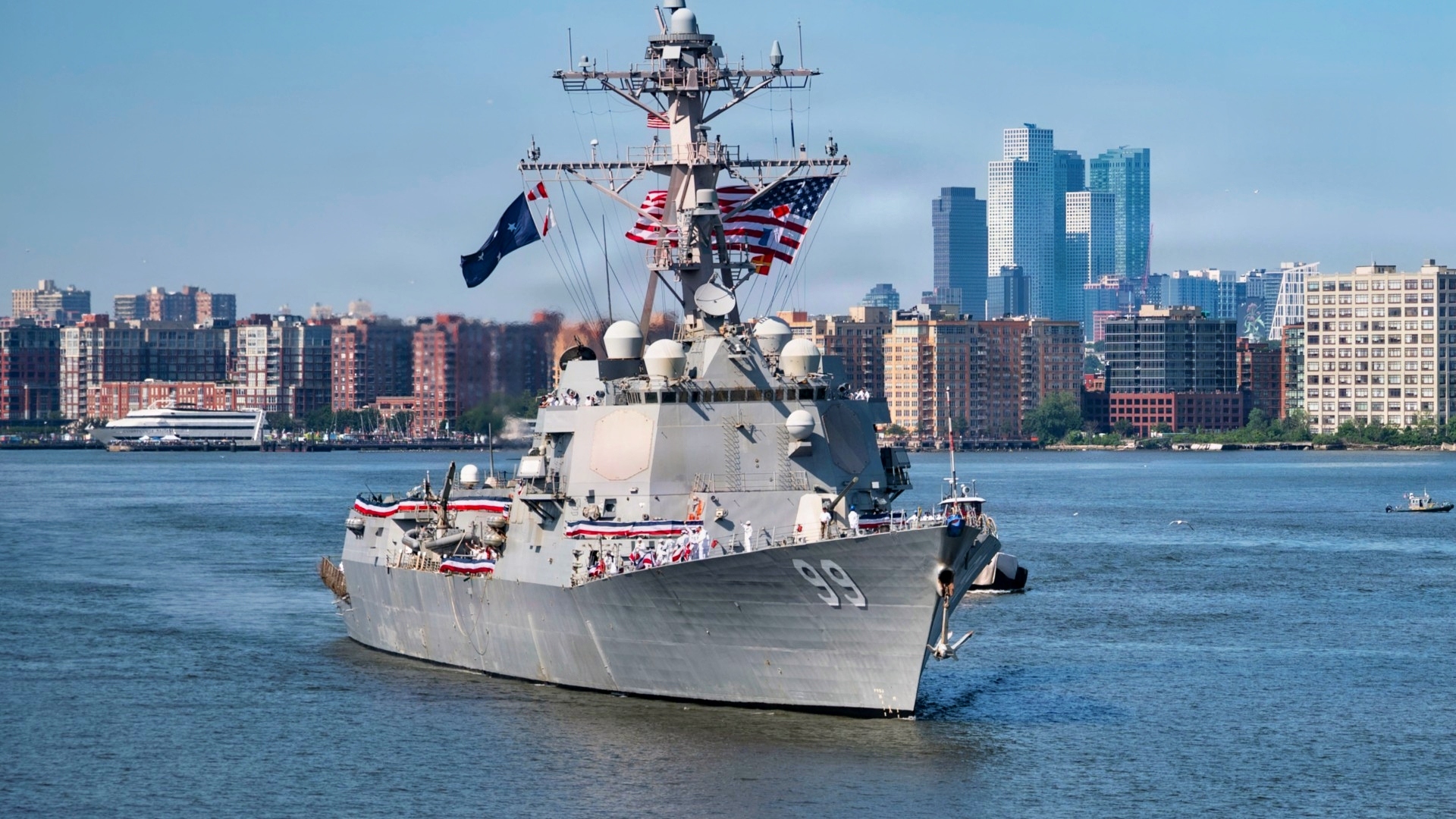
Arleigh Burke-class guided-missile destroyer USS Farragut (DDG 99) arrives at Pier 88 during the International Naval Review (INR) 250 Parade of Sail in New York, July 4, 2026. The Parade of Sail marks the opening of INR 250, a multinational maritime celebration commemorating the 250th anniversaries of the U.S. Navy, Marine Corps, and the nation, honoring the sea services’ enduring commitment to defending the United States and strengthening partnerships with allied and partner nations. For 250 years, our Navy and Marine Corps stood the watch—constant, unabated in mission, faithfully preventing crisis and resolute in defending America’s independence. INR 250 honors the Navy, Marine Corps, and Coast Guard’s enduring role on, under, and above the seas. (U.S. Navy photo by Mass Communication Specialist 2nd Class Janiel Adames)
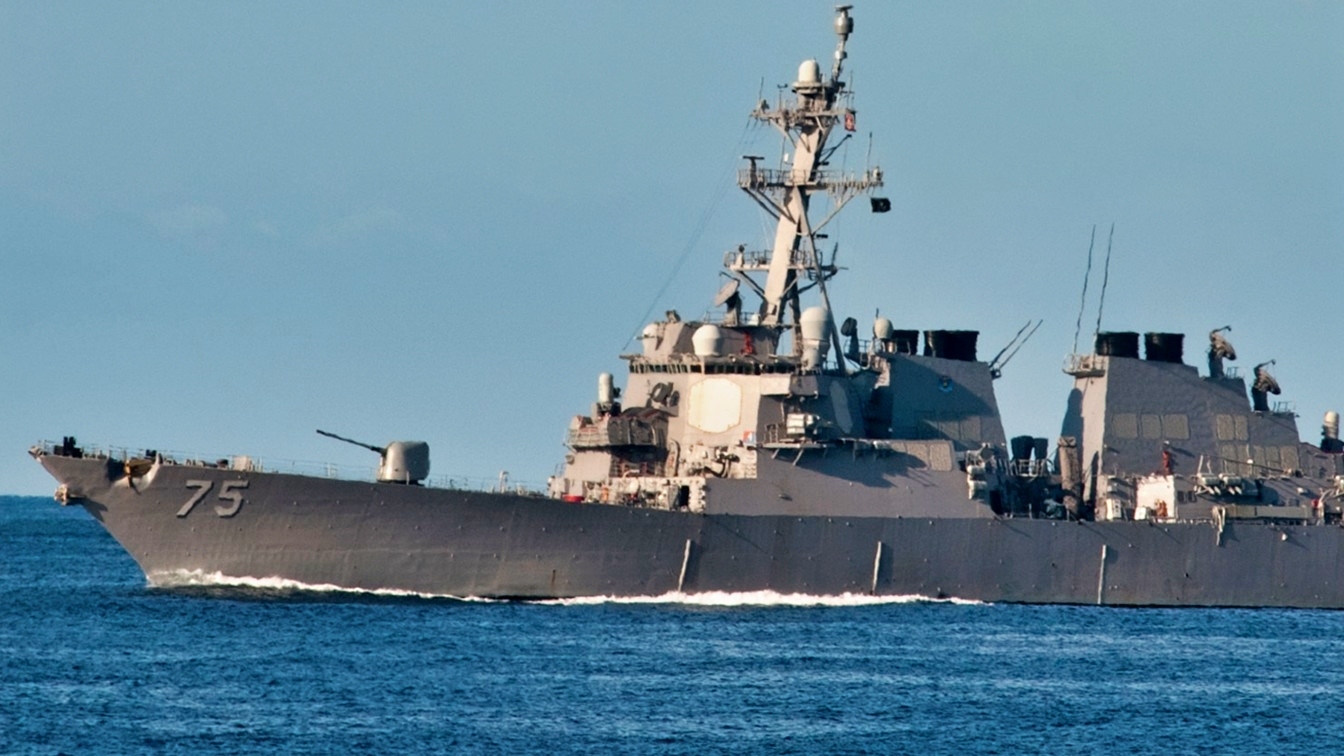
Arleigh Burke Class guided-missile destroyer USS Donald Cook is underway for a scheduled deployment in the U.S. Navy’s 5th and 6th fleet areas of responsibility. Donald Cook departed Naval Station Norfolk Monday, September 19th. (U.S. Navy photo by Petty Officer 3rd Class Scott Pittman)
“If Oman gets in the way, we’ll bomb the s*** out of them,” Trump told Fox News. Just hours later, he told reporters in the Oval Office that Oman, which has traditionally acted as a longstanding U.S. security partner to the U.S., had not behaved “very well.” He claimed Washington could handle the Gulf state “very easily.”
His comments come as the 60-day negotiating window set up by June’s U.S.-Iran “memorandum of understanding” runs out of time. He stressed that Washington would not seek to extend the ceasefire window as Tehran was “not going to make the kind of a deal that I feel is necessary.”
Iran and Oman Could Strike Deal
Iranian Foreign Ministry spokesman Esmail Baghaei said earlier on Monday that Iran and Oman had reached an understanding over the route ships could take through the strait.
“An understanding has been reached regarding the map of the transit route,” Baghaei said.
The countries on opposite sides of the waterway now say they are finalizing the details of the deal.
The exact terms of the deal are not yet public. The Associated Press previously said the agreement could permit ships to enter the Persian Gulf via a route closer to Iran, then exit to the wider ocean via a route close to the Omani coast. It said tolls would not be imposed in the interim.
Tehran has issued a slew of demands before fully reopening the waterway. It is demanding compensation for war damage, the unfreezing of Iranian assets, and the scrapping of all sanctions on the regime. Last week, Trump responded in kind, stating that Iran ought to compensate for the thousands of American deaths and casualties caused by the regime and its terror proxies.
“Additionally, compensation should be paid to the families of the hundreds of thousands of innocent protesters that Iran has killed over the last 50 years, not to mention the 52,000 that have been killed in the last five months,” he wrote on Truth Social.
U.S. Cooperation With Oman
Oman, which is strategically located at the mouth of the Strait of Hormuz, has been a significant actor in Middle East negotiations for decades. Unlike many states in the region, it is viewed as stable, having been ruled by the same dynasty for hundreds of years. It has long supported a two-state solution to the Arab-Israeli conflict.
A 2019 framework agreement expanded American military access to Omani facilities and the ports of Salalah and Duqm.
Oman controls the southern side of the Strait of Hormuz, making it central to efforts to resume shipping through the narrow waterway and broker talks between Tehran and Washington.
Prior to the outbreak of U.S. and Israeli strikes on Iran on February 28 this year, approximately one-fifth of the world’s oil and liquefied natural gas (LNG) supplies passed through Hormuz.
On Saturday, a measly five commodity vessels sailed through the Strait. Kpler figures said that zero boats were registered on Sunday. The previous weekend saw some 31 crossings.
June Deal Collapsed
The June memorandum had been slated as a temporary measure to pause military operations while Washington and Tehran discussed a wider-ranging deal within 60 days, including over Iran’s nuclear initiative.
On July 7, Trump said the agreement was “over”, while Iran’s Foreign Ministry said it was “suspended” the following week.
“They should put up the white flag of surrender,” Trump told Fox News on Monday, claiming that backchannel talks with the Islamic Revolutionary Guard Corps (IRGC) were ongoing. The IRGC has denied these claims.
The IRGC is listed as a foreign terrorist group by the U.S. government, and it extensively funds and trains terror proxies across the Middle East. The United Arab Emirates has accused the IRGC of being responsible for several recent attacks on commercial shipping in the Strait of Hormuz.
Tehran Threatens Escalation
On Monday, The Wall Street Journal reported that Iran has ramped up missile and drone production during the relative lull in fighting. The report said Arab intelligence officials had found a “strategic shift” among the Islamic Republic’s leadership to “get their forces ready to widen the war.”
Reuters reports that a top Iranian official had informed them that an attack aimed at breaking the U.S. naval blockade could be launched.
About the Author: Georgia Gilholy
Georgia Gilholy is a journalist based in the United Kingdom who has been published in Newsweek, The Times of Israel, and the Spectator. Gilholy writes about international politics, culture, and education.


