

Iran Desperately Tries to Retain Control over the Strait of Hormuz – In a last, desperate bid to maintain the key leverage it has in the conflict with the United States and Israel, Iran has intensified attacks on commercial shipping in the Strait of Hormuz.
The vital shipping lane has been Iran’s “ace in the pack” ever since the conflict began more than seven months ago, and its ability to dictate what can and cannot transit through has kept Iran in a war it’s otherwise lost.
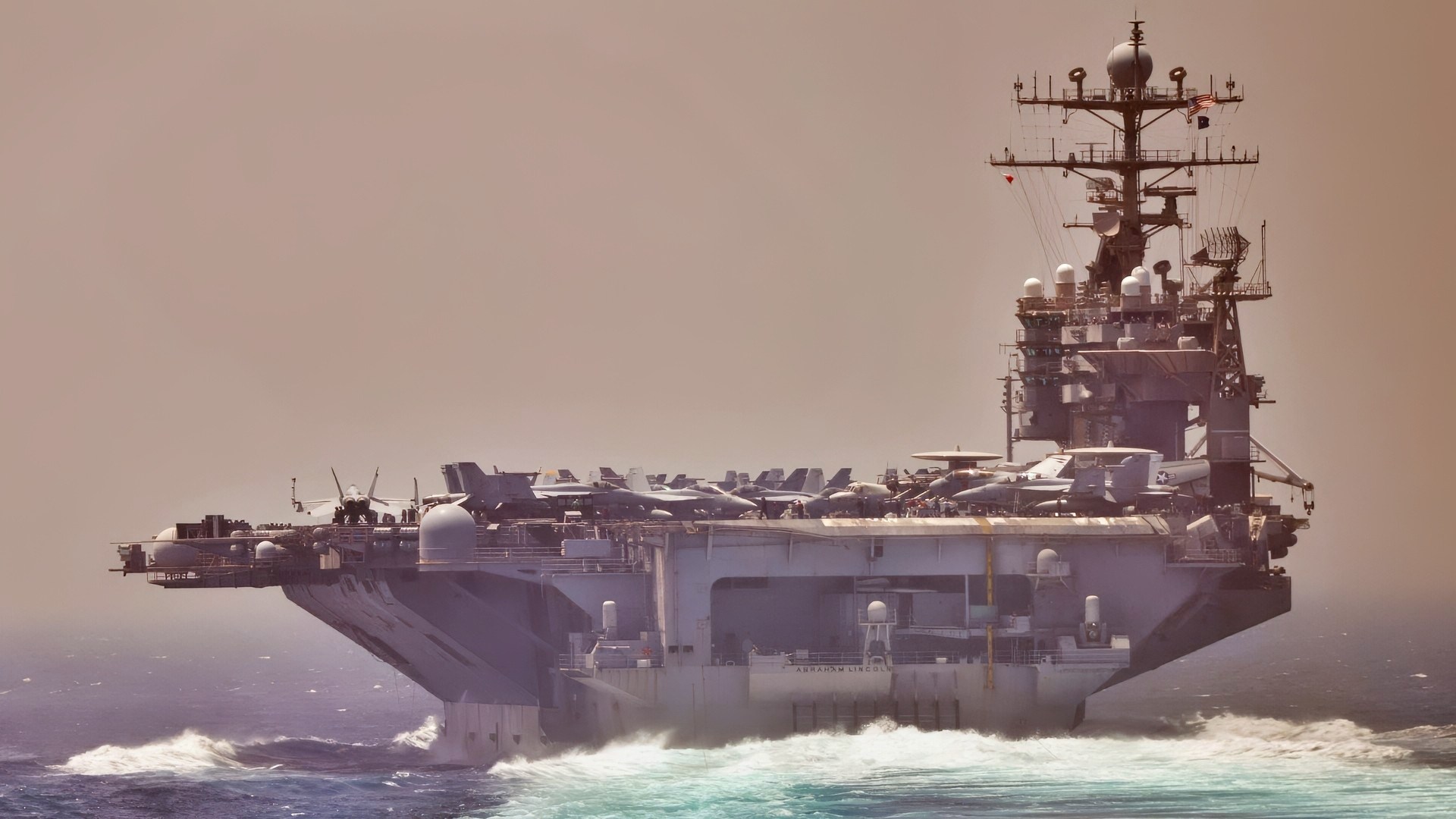
STRAIT OF HORMUZ (May 1, 2012) The aircraft carrier USS Abraham Lincoln (CVN 72), left, and the guided-missile cruiser USS Cape St. George (CG 71) transit the Strait of Hormuz. Abraham Lincoln and Cape St. George are deployed to the U.S. 5th Fleet area of responsibility conducting maritime security operations, theater security cooperation efforts and support missions as part of Operation Enduring Freedom. (U.S. Navy photo by Mass Communication Specialist 3rd Class Alex R. Forster/Released)
But while oil prices remain high, they’re not rising to the levels seen during the initial months of Russia’s full-scale invasion of Ukraine.
Iran is therefore taking one last gamble for a favorable outcome.
Months of Closure
Since the conflict began at the end of February, the Strait of Hormuz has been a key talking point in the war. The waterway is vital for Middle Eastern oil exports, with Gulf states such as Qatar, Kuwait, and Bahrain relying on its opening. Since U.S. and Israeli bombs rained down on Iran, Tehran has used its chokehold on the strait – which is only 24 miles wide at its narrowest point – to limit the flow of commercial shipping traffic through the body of water.
As a result, oil prices have risen. Brent crude, the global benchmark for oil prices, has regularly surpassed $100 per barrel since February. By comparison, Brent crude peaked at $74 per barrel in the 12 months before the war began.

ATLANTIC OCEAN (Oct. 29, 2019) USS Gerald R. Ford (CVN 78) conducts high-speed turns in the Atlantic Ocean. Ford is at sea conducting sea trials following the in port portion of its 15 month post-shakedown availability. (U.S. Navy photo by Mass Communication Specialist 3rd Class Connor Loessin)
Gulf Alternatives
The reopening of the Strait of Hormuz is out of the Gulf states’ hands, so those that can use alternative export routes have done so.
For example, Saudi Arabia has resumed shipping through its East-West oil pipeline. Constructed in the 1980s amid concerns of a conflict between Iraq and Iran, the Saudi Kingdom can bypass the Strait of Hormuz entirely by exporting through the Red Sea. The United Arab Emirates enjoys a similar luxury, rerouting oil to its Fujairah export terminal just outside the Strait of Hormuz. It is also building a new pipeline expected to be completed next year.
For countries like Bahrain and Qatar, ship-to-ship transfers have been used more often. Effectively, cargo is transferred from a larger tanker to a smaller vessel, which then completes a shuttle run through the Strait of Hormuz. Trackers are switched off for secrecy, while the journeys, which are supported by the U.S. Navy, are conducted at night as close to Omani waters as possible.
Ramping Up Attacks
Alternative routes and increased traffic through the Strait of Hormuz saw Gulf oil exports return to pre-war levels at the end of September, for the first time since the war began.
Higher traffic levels are partly due to financial incentives offered to crewmen who risk their lives to transit the strait.
Captains reportedly receive $100,000 per month for complete shuttle runs, plus an additional $50,000 per trip. Sailors also earn six times the usual pay, with a month’s pay netting $9,000 compared to the usual $1,500.
At least directly, Iran cannot attack alternate pipelines in Saudi Arabia and the UAE without effectively declaring war. It can, however, strike commercial shipping it claims breaches the regulations of a strait under its jurisdiction.
After a promising rise, traffic through the Strait of Hormuz fell again at the start of October, although the true figures are hard to analyze because many vessels in the region do not publicly report their movements.
Nevertheless, the increased reports of attacks suggest Iran has once again made the strait a focal point.
Why Now?
For sure, there’s always a consideration that Iran is playing U.S. politics, forcing energy prices to remain high in the lead-up to next month’s midterm elections. The powerful Islamic Revolutionary Guard Corps penned a letter urging America to vote out Donald Trump’s Republican Party, after all.
However, Tehran has clearly recognized the danger it faces. The two nations’ total exports, plus their ability to reroute oil through alternative pipelines, far outweigh those of their regional neighbors. Notwithstanding the fact that claiming a shipping lane is closed while vessels still sail through is embarrassing, Iran’s leverage in the war ultimately boils down to its ability to influence oil prices.
While prices remain high, partly due to Iran’s ramped-up attacks, Tehran still has leverage in the conflict. Once that’s gone, it will have to start making concessions. Keeping up the strikes delays the inevitable, but without a permanent end to the fighting, Iran will grow weaker by the day.
About the Author: Shay Bottomley
Shay Bottomley is a British journalist. He has written for the Western Standard, Business Insider, Maidenhead Advertiser, Slough Express, Windsor Express, Berkshire Live and Southend Echo.