
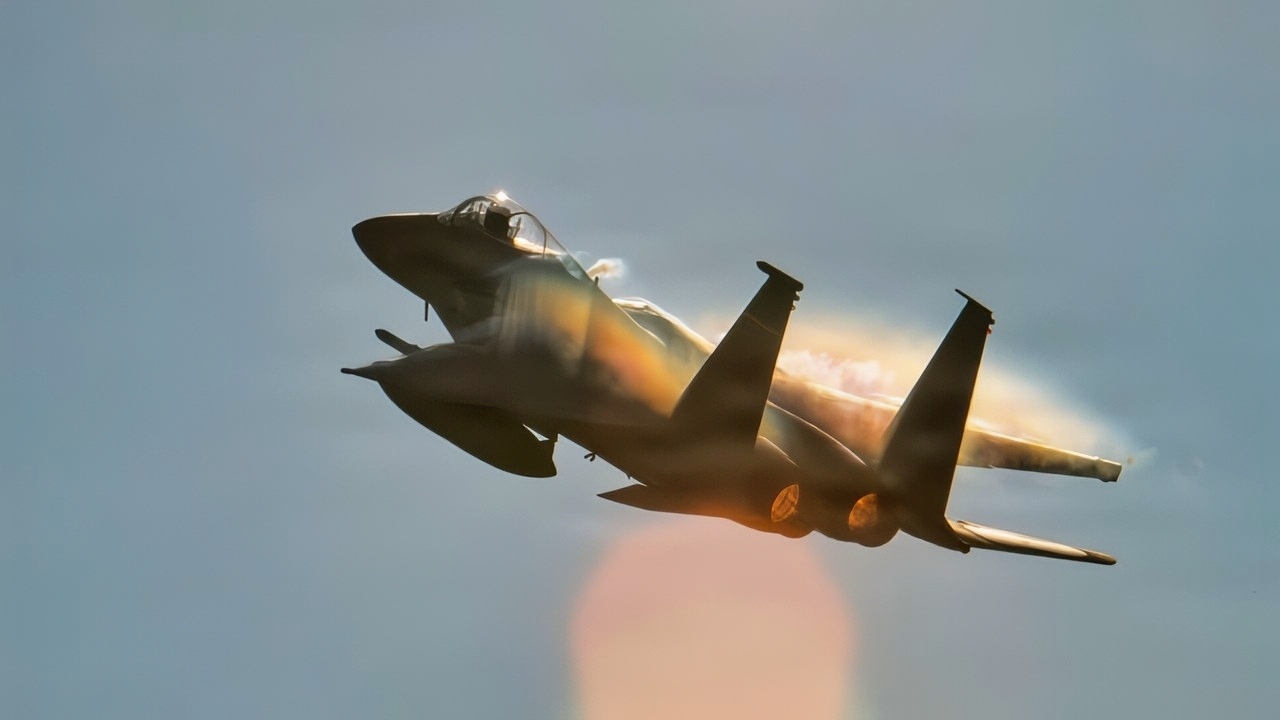
Iran Says U.S. Response to End War “Insufficient” as Trump Considers Joining Strikes Against Houthis – Tehran has deemed the U.S. response to its proposal to end the conflict “insufficient.”
President Donald Trump initially announced the U.S. rejection of the Iranian peace plan at the end of September, after a week of meetings through mediators on the sidelines of the United Nations General Assembly.
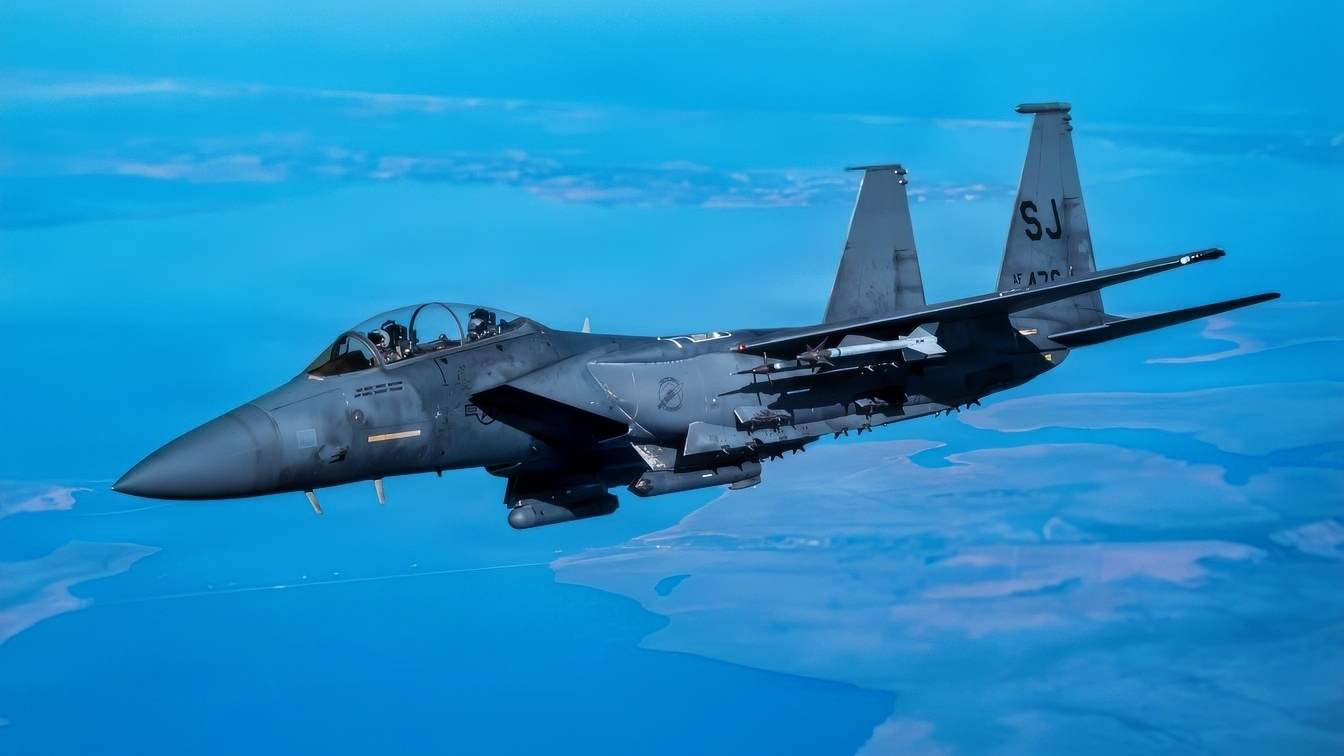
An F-15E Strike Eagle with the 4th Fighter Wing approaches a KC-135 Stratotanker from the 121st Air Refueling Wing to be refueled over the skies of North Carolina, Jan. 21, 2026. The F-15E is a versatile fighter jet built to handle both air-to-air and air-to-ground missions, equipped with advanced avionics and electronics that enable it to operate effectively at low altitudes, day or night, and in any weather. (U.S. Air National Guard photo by Airman Samir Harris)
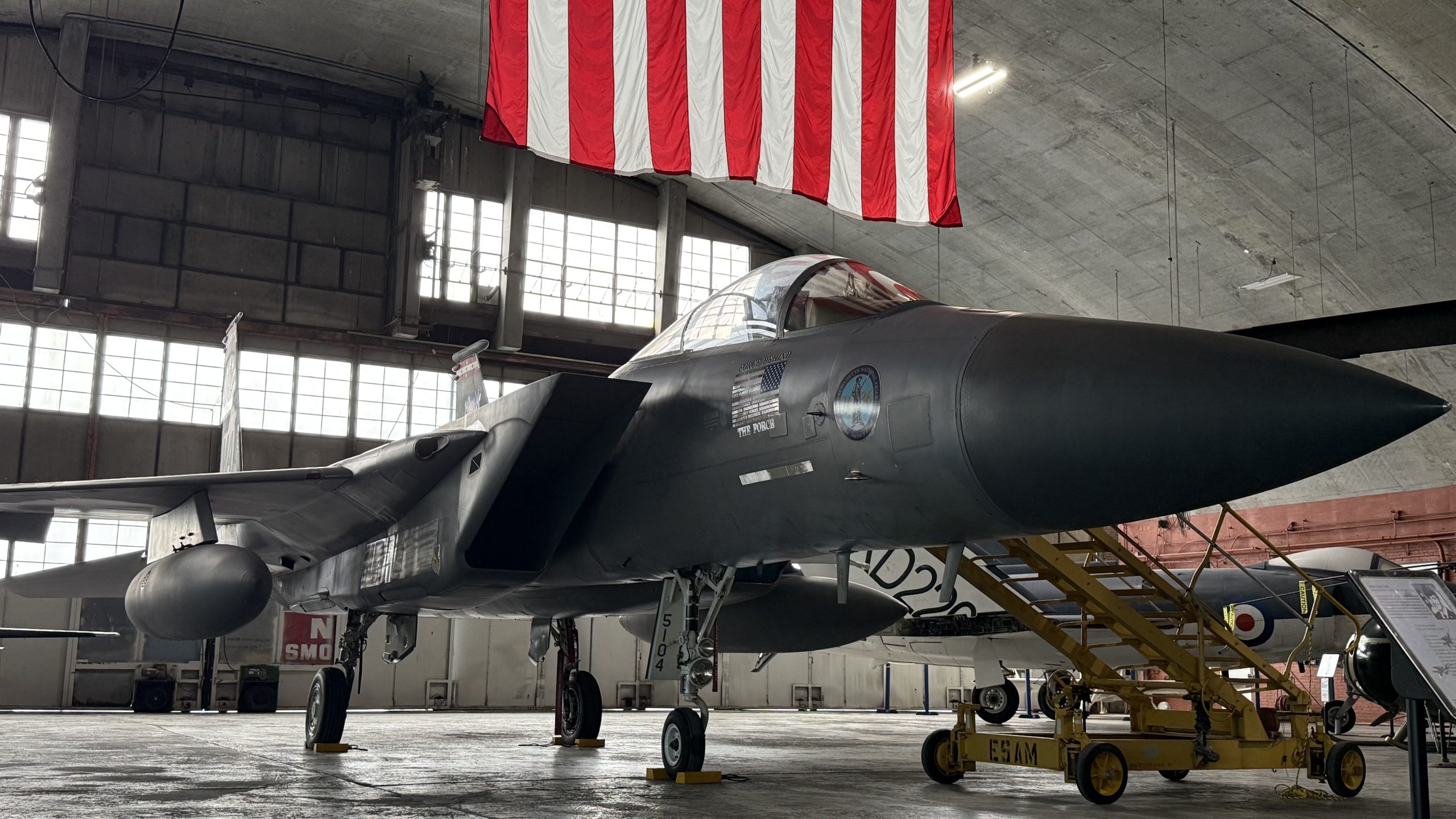
F-15 fighter at Museum. National Security Journal Photo.
It comes amid further escalations in the region after the Iranian-backed Houthi rebels struck airports in Saudi Arabia over the weekend.
Insufficient Compromise
Last month, Iranian officials presented the Trump administration with a proposal to end the conflict. The deal largely resembles the memorandum of understanding that was signed between the two warring nations earlier this year, but ultimately fell through after the U.S. accused Iran of striking commercial shipping in the Strait of Hormuz.
Trump later told reporters he had rejected the deal, and U.S. Ambassador to the U.N. Mike Waltz told NBC News that the U.S. could not allow Iran “to have access to billions in frozen funds.”
The U.S. sent a response to Tehran – the details of which have not yet been made public. However, on Monday, 12th October, Supreme National Security Council Secretary Mohsen Rezaei said the U.S. response was “insufficient.”
“About two weeks ago, we communicated seven conditions to the Americans, stating explicitly that until these conditions are met, the Strait of Hormuz will not be opened to them, and no negotiations will take place,” Rezaei told state media. “The Americans have now responded. While they have accepted some of our conditions, others remain unresolved.”
He added: “We are no longer in the process of responding to the Americans. They have replied, and we consider it insufficient. They must clarify the remaining ambiguities.”
Last month, Rezaei said the proposal included conditions such as “an end to the war on all fronts, the release of our frozen funds and an end to the naval blockade” in an interview with Al Jazeera.
Regional Targets
Rezaei also threatened “cables, data centers, AI facilities, and other sites in the region” in the event of a return to the intensified fighting not seen since the start of the war.
It comes amid a heightened period of Iranian military activity, with the country’s Islamic Revolutionary Guard Corps (IRGC) targeting commercial shipping in the Strait of Hormuz more frequently since the start of October. Over the weekend, the IRGC claimed to have struck three tankers, including an unidentified supertanker.
“A devastating fire is the fate of any tanker that violates the rules and disregards security in the Strait of Hormuz,” the IRGC said in a post that showed the supertanker ablaze.
The U.S. Navy also struck a vessel on Sunday that the U.S. Central Command (CENTCOM) said had tried to breach its ongoing blockade of Iranian ports. “A U.S. military fighter jet struck the stern of Panama-flagged M/V Ocean Molica (also known as the ‘Arika Sun’) with a precision munition, fully disabling the ship’s propulsion without harming the crew,” said CENTCOM in a statement.
Saudi Strikes
Tensions are also growing on the other side of the Persian Gulf, as Saudi Arabia comes under increasing attack from the Houthi rebels in Yemen. Over the weekend, an attack on Riyadh’s King Khalid International Airport by the Iranian-backed militia group saw 13 people killed and more than 300 wounded.
The Associated Press reports that Saudi Arabia is investigating how its air defenses failed to intercept a barrage of missiles and drones that flew over 620 miles to reach its intended target. While the Houthi rebels did not say what they used in the strikes, the group is known to possess ballistic missiles and advanced systems that can challenge Patriot and other air defense systems used by Saudi Arabia.
U.S. “May” Join Fight
The Houthis responded to President Trump’s suggestion that the U.S. may join the conflict by threatening “a swift and painful” response.
After Trump said the group was “misbehaving very badly,” Houthi political bureau member Mohammad Al Bukhaiti said: “If the U.S. becomes involved in the aggression against Yemen, we will not deliberate over the decision to respond.
Rather, there will be a swift and painful response targeting the U.S. and all its interests in the region,” adding that Saudi oil facilities and airports had become “legitimate targets.”
About the Author: Shay Bottomley
Shay Bottomley is a British journalist. He has written for the Western Standard, Business Insider, Maidenhead Advertiser, Slough Express, Windsor Express, Berkshire Live and Southend Echo.