
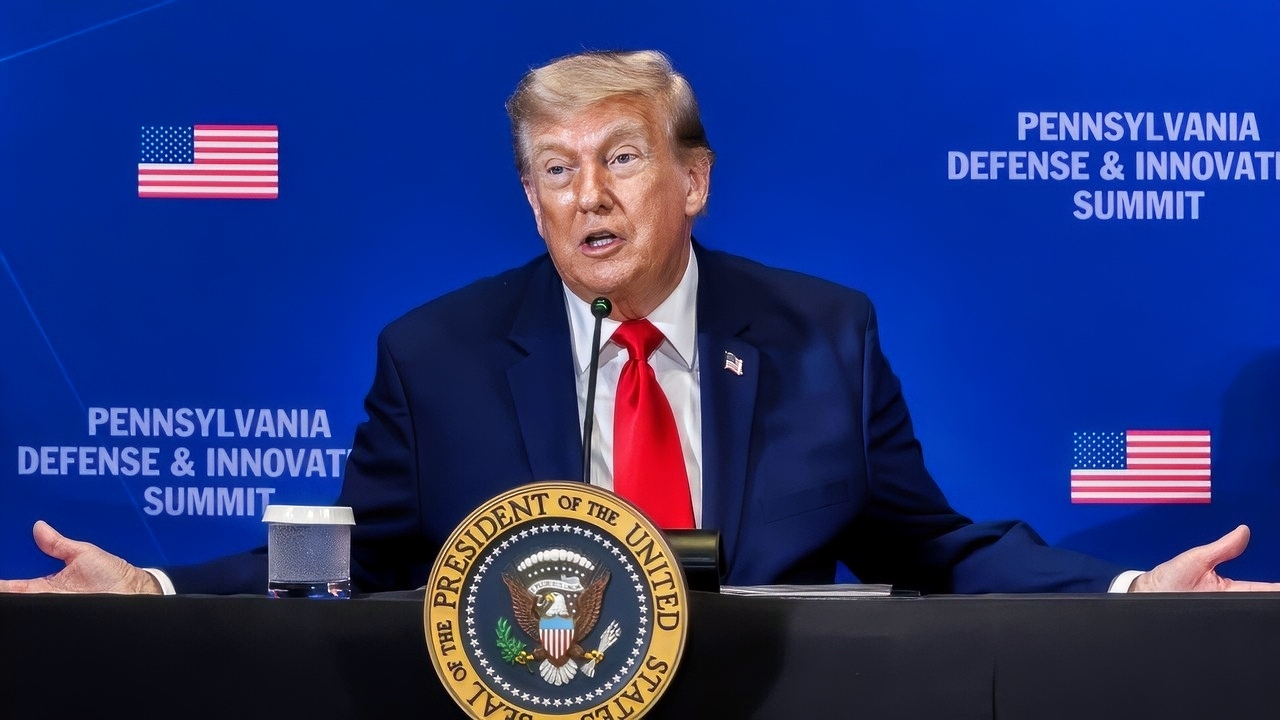
Trump Calls Ukraine Strikes A ‘Disgrace’ – President Donald Trump is again criticizing Ukrainian President Volodymyr Zelenskyy, describing the latest extraordinary Ukrainian attacks on Russian oil refineries as a “disgrace.” President Trump accused the Ukrainian leader of causing further damage to the global economy and making it difficult to negotiate an end to the war during an interview with Newsmax on Thursday, October 15.
What Donald Trump Said

T-80 Tank Russian Army. Image Credit: Creative Commons.

T-80 Tank from Russian Army. Image Credit: Creative Commons.
During an interview with Newsmax, the president said that Zelenskyy is sending oil prices skyrocketing.
“All he’s doing is making the world oil price higher. Well, I think that’s a disgrace,” he said.
“There are a lot of targets you can hit, but when you shoot at diesel refineries where you make, you know, diesel oil, and we need that, and the world needs that, then he’s not doing a good service for the world,” he continued.
Trump’s comments come after his controversial attempt to secure a ceasefire deal between Russia and Ukraine that would prevent continued strikes on energy infrastructure. The deal quickly collapsed when it turned out neither Kyiv nor Moscow had ever agreed to it, but Washington continues to push both sides to stop striking refineries.
And now, Ukrainian officials are claiming that the Trump administration is threatening to restrict American intelligence assistance unless Kyiv stops attacking Russian energy facilities.
Ukraine has also already experienced disruptions to its American satellite communications services, raising additional concerns that Washington may already be preparing to scale back its support for Ukraine’s defenses. As the November 3 midterm elections approach, President Trump is doing all he can to bring global energy prices down, and if he can’t win in Iran before then, and he certainly cannot restore Middle Eastern refining capacity, he’ll need to ensure that refining capacity exists elsewhere.
Trump Announces Controversial Ceasefire
On Sunday, October 11, President Trump announced on Truth Social that Russia and Ukraine had agreed to an immediate ceasefire that covered energy infrastructure. In the post, the president claimed that both parties had agreed.
However, neither Moscow nor Kyiv had agreed to any such measure. Zelenskyy quickly said the announcement was news to him, while Kremlin officials said only that negotiations were continuing.
According to an Axios report, a White House official explained on October 11 that the Trump administration was proposing a narrow ceasefire deal under which both countries would stop attacking oil refineries.
The next step, the report suggests, would have been power stations and electricity networks. But there was a problem: Russia possesses a huge network of operational refineries, while Ukraine’s refining capacity has already been largely devastated by Russian strikes. Nonetheless, Zelenskyy indicated that Kyiv would stop targeting Russian energy infrastructure if Moscow stopped attacking Ukraine’s power stations.
Ukraine Paused, Russia Continued
Despite the initial confusion, Ukrainian forces did temporarily suspend strikes against Russian refineries following Trump’s announcement on October 11. Kyiv reportedly maintained its pause on attacks against Russian energy infrastructure for around three days. But Moscow did not reciprocate, launching missiles and drones against Ukrainian energy infrastructure and causing further damage and blackouts.
Zelenskyy said that Ukraine could not be expected to stop targeting Russian refineries while Moscow continued to attack its electricity supply. The Ukrainian president also told the Financial Times, “We’re done.”
Washington Threatens Intelligence Assistance
Ukrainian officials have already alleged that Washington threatened to suspend intelligence cooperation unless Kyiv stopped attacking Russian energy facilities. According to an Axios report, Washington’s negotiators, special envoys Steve Witkoff and Jared Kushner, discussed the matter with Ukrainian representatives during an October 9 meeting in Miami.
A Ukrainian official then alleged that Washington had threatened to withhold intelligence that would allow Ukrainian forces to prepare for and intercept Russian missiles.
Ukrainian forces also experienced disruptions to their Starlink satellite communications this week, which affected drone operations and air defenses.
In an interview with Piers Morgan in London on October 14, Zelensky said he felt personally betrayed by the president and recent developments.
On October 15, British Defense Secretary Wes Streeting said his American counterpart, Pete Hegseth, assured him satellite communications had been restored.
Ukraine Resumed Strikes
On Thursday, October 15, Ukrainian forces resumed attacks against Russian energy infrastructure. Dramatic footage shared online showed significant damage to a Rosneft-owned refinery in Russia’s Ryazan region. President Zelenskyy said that Ukraine had already demonstrated its willingness to cooperate, but that continued Russian attacks mean that it must resume strikes on Russian infrastructure.
Trump, however, is unhappy and also said this week that Zelenskyy was more difficult to negotiate with than President Vladimir Putin.
“Zelenskyy is not a good guy for us to deal with. Biden gave him hundreds of billions of dollars, billions and billions of dollars,” Trump said. “I think if they’re going to; if they’re going to end up with a settlement of some kind, they’re not going to do it with him. He doesn’t want to settle. He says he wants to settle, but he doesn’t know. I’m not a big fan of Zelenskyy. They’ve destroyed that country,” he continued.
About the Author: Jack Buckby
Jack Buckby is a British researcher and analyst specializing in defense and national security, based in New York. His work focuses on military capability, procurement, and strategic competition, and he produces and edits analysis for policy and defense audiences. He brings extensive editorial experience, with a career output spanning over 1,000 articles at National Security Journal, and has previously authored books and papers on extremism and deradicalization.


