

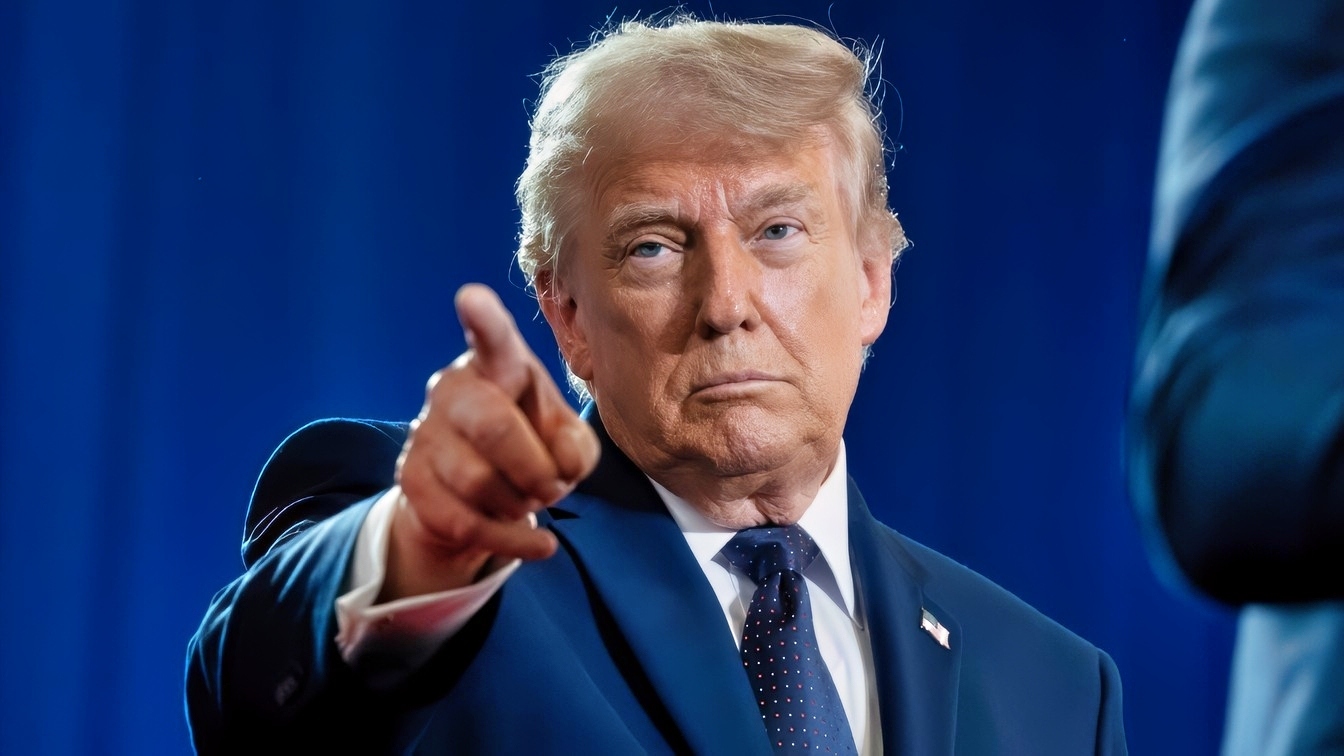
The Trump Administration’s posture towards Ukraine, vis-à-vis its war with Russia, has changed quite a few times throughout the last 20 months.
President Donald Trump returned to office and, on his first day, repeatedly promised to end the war. That didn’t happen, but the president later hosted Ukrainian President Volodymyr Zelensky in the Oval Office, where Trump and Vice President JD Vance dressed him down in front of television cameras.
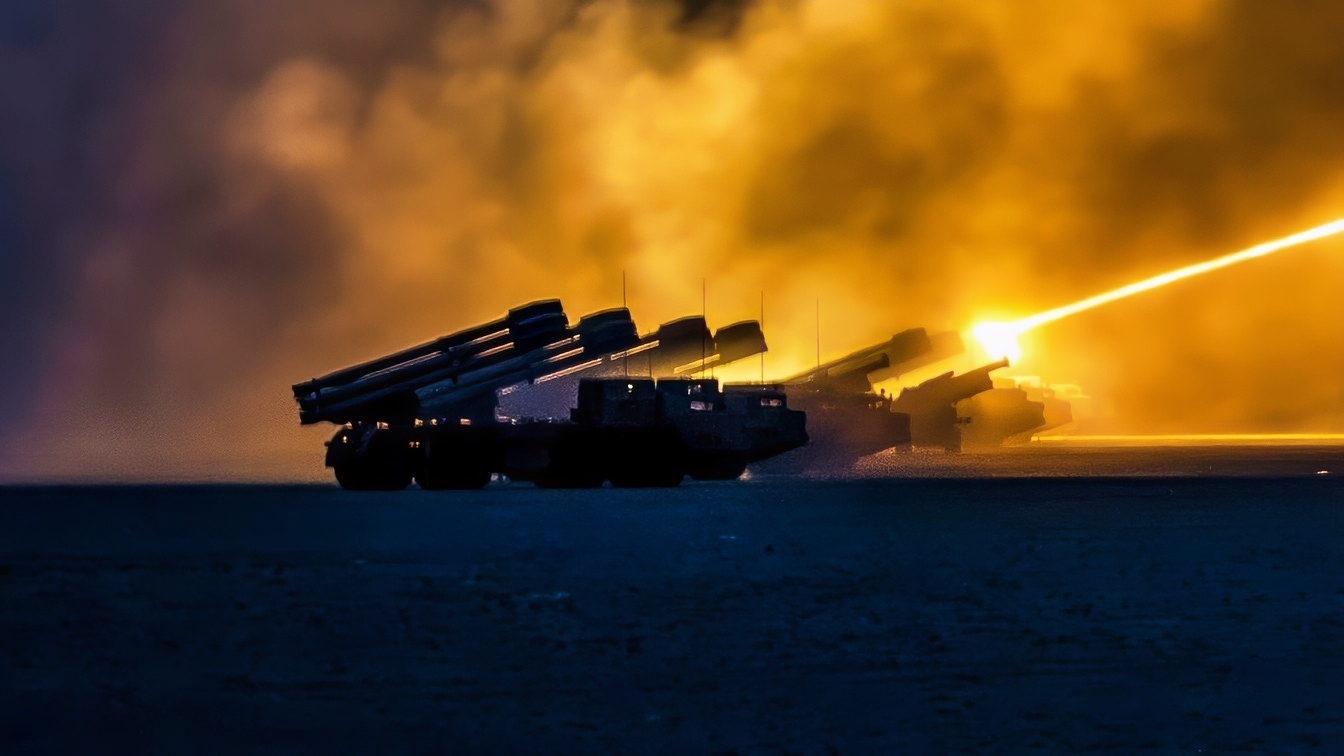
U.S. Soldiers assigned to the 65th Field Artillery Brigade, and soldiers from the Kuwait Land Forces fire their High Mobility Artillery Rocket Systems (U.S.) and BM-30 Smerch rocket systems (Kuwait) during a joint live-fire exercise, Jan. 8, 2019, near Camp Buehring, Kuwait. The U.S. and Kuwaiti forces train together frequently to maintain a high level of combat readiness and to maintain effective communication between the two forces. (U.S. Army photo by Sgt. James Lefty Larimer)
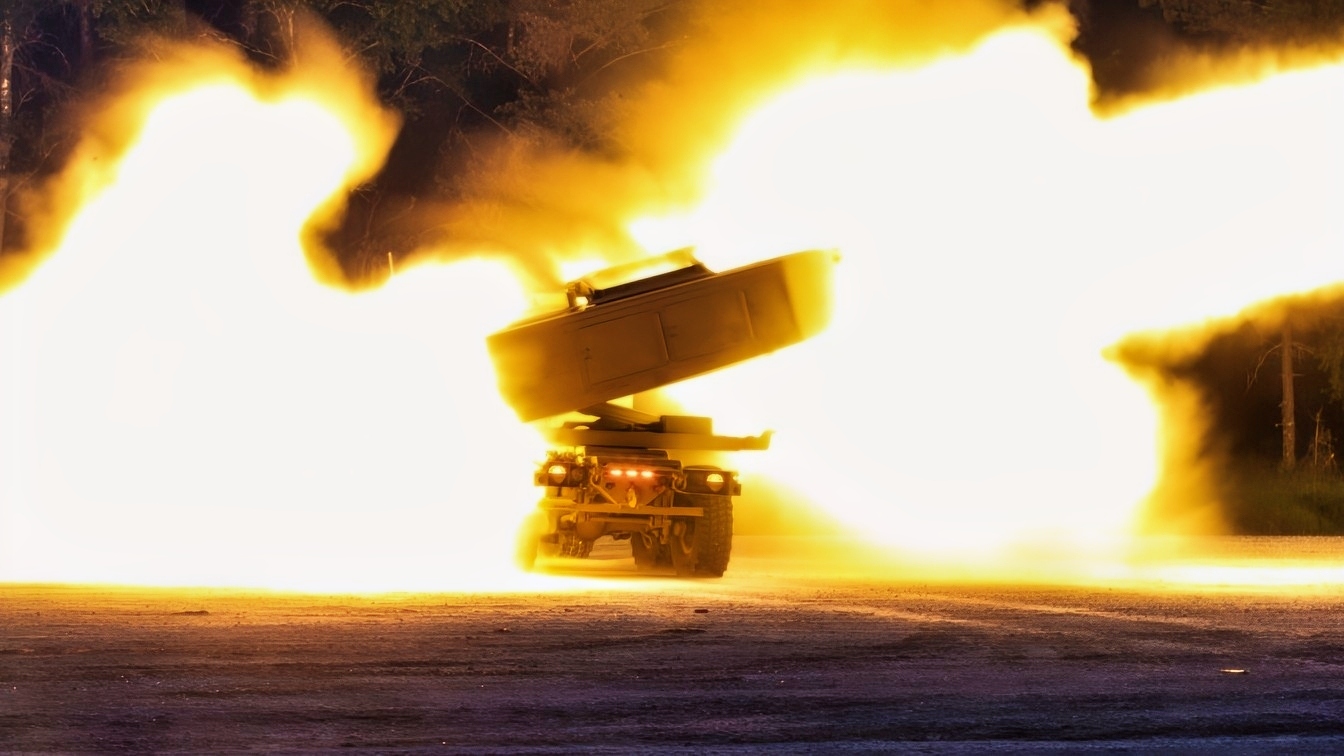
U.S. Soldiers assigned to the Blackhawk Battery, 1st Battalion, 14th Field Artillery Regiment, 75th Field Artillery Brigade, fire an M142 High Mobility Artillery Rocket System during a night live fire training as part of Exercise Spring Storm 23 held at Camp Tapa, Estonia, May 25, 2023. (U.S. Army National Guard photo by Staff Sgt. Agustín Montañez)
Over the next year, things thawed a bit: Ukraine showed some battlefield success with drones, and Trump and Zelensky had more positive meetings, including one on the sidelines of Pope Francis’ funeral.
By this summer, Zelensky traveled to the United States for Sen. Lindsey Graham’s funeral, and Trump, despite some vacillation, at one point promised to make a Patriot missile license available to Ukraine.
However, in recent weeks, relations between the Trump Administration and Zelensky have worsened again.
With Ukraine attacking Russian energy infrastructure, including oil refineries, the Trump Administration, conscious of high energy prices heading into the midterm elections, has put pressure on them to stop.
Trump has claimed on the campaign trail that it is the Ukrainian refinery attacks, and not anything related to Iran or the Strait of Hormuz, that is the real reason gas prices are so high.
First, Trump announced that the sides had agreed to an “energy ceasefire,” even though no such agreement existed.
Then, the president threatened Zelensky that the U.S. would start buying Russian diesel if he didn’t agree to stop attacking refineries; he refused, and then Trump announced he had made such a deal.
Since then, the Trump Administration has denied stopping intelligence cooperation with Ukraine, although Zelensky, in a Financial Times interview this week, said it had. New reporting now says the White House specifically ordered that one crucial tool be restricted for Ukraine.
A Call From the White House
Ukraine has had access to Starshield throughout the war, the military-grade version of SpaceX’s Starlink satellite internet service.
However, it reportedly stopped working in some situations for a time last week.
Starshield offers higher speeds and better connectivity than the Starlink service available to civilians, and has the Pentagon as its biggest client.
Ukraine uses it for its drone campaigns and for battlefield communication.
Reuters reported Thursday that the order to slow down the service “came from inside the White House.” The report cited two U.S. officials and an additional Western official. Reuters said Pentagon leaders received a message that the Starshield service “needed to be slowed.”
The report said it’s unclear who in the White House ordered the system throttled. Still, it was implicitly done in retaliation for Ukraine refusing to stop attacking Russia’s oil facilities.
As of Thursday, Ukraine’s Defense Ministry told Reuters the service was working again.
In the Reuters story, an unnamed senior U.S. official said that “no such request was ever made by the president,” although the reporting did not say the president personally ordered any slowdown.
Elon Musk’s View
Entrepreneur Elon Musk, who is currently providing major financial support to the Republicans’ midterm election efforts, is also SpaceX’s CEO.
Mykhailo Fedorov, Ukraine’s defense minister, wrote this week on X—also a subsidiary, now, of one of SpaceX’s sub-companies—that “removing Starshield’s speed limit entirely is now critical for Ukraine’s defense,” and said he hoped for Musk’s “continued support.”
Musk replied that the Starshield systems are “owned and controlled by the US government,” and that the American military and “ultimately POTUS” would determine the technology’s speed and usage limits.
He added that Starlink technology, unlike the separate Starshield product, is for civilian and defense use only and cannot be used for offensive military purposes.
In 2025, Musk complained about providing Starlink technology to Ukraine and has recently clashed with “oligarchs” in India over making the technology available there.
The Pentagon has bought some of the system’s satellites, Reuters said, including “communications spacecraft for missile-warning missions and a spy constellation for the National Reconnaissance Office.”
About the Author: Stephen Silver
Stephen Silver is an award-winning journalist, essayist, and film critic, and contributor to the Philadelphia Inquirer, the Jewish Telegraphic Agency, Broad Street Review, and Splice Today. The co-founder of the Philadelphia Film Critics Circle, Stephen lives in suburban Philadelphia with his wife and two sons. For over a decade, Stephen has authored thousands of articles that focus on politics, national security, technology, and the economy. Follow him on X (formerly Twitter) at @StephenSilver, and subscribe to his Substack newsletter.


