

Ukraine is feeling the squeeze as the Trump administration is clearly trying to leave the war as quickly as possible, and Europe lacks the reserves in terms of money and arms to support the Ukrainians on their own.
Ukrainian air defense interceptor stockpiles are essentially gone, meaning the Ukrainians have to conserve what little systems they have remaining–or let Russian drones and missiles through–and it makes Kyiv a true frontline city.
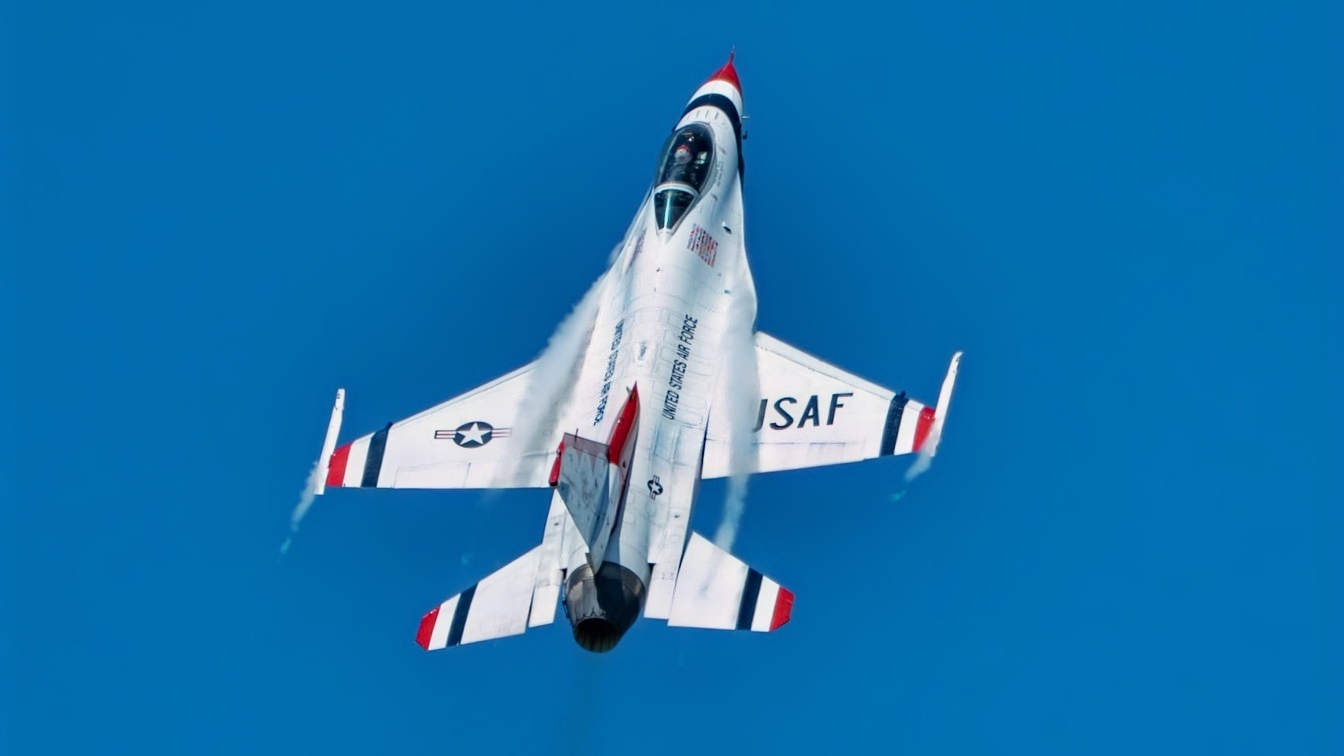
A U.S. Air Force F-16 Fighting Falcon assigned to the United States Air Force Air Demonstration Squadron “Thunderbirds” performs during the 2026 Sioux Falls AirShow: Power on the Prairie at Joe Foss Field, Sioux Falls, South Dakota, July 17, 2026. The Thunderbirds’ demonstration featured close-formation flying and solo routines showcasing the precision and performance of the F-16 Fighting Falcon. (U.S. Air National Guard photo by Master Sgt. Luke Olson)
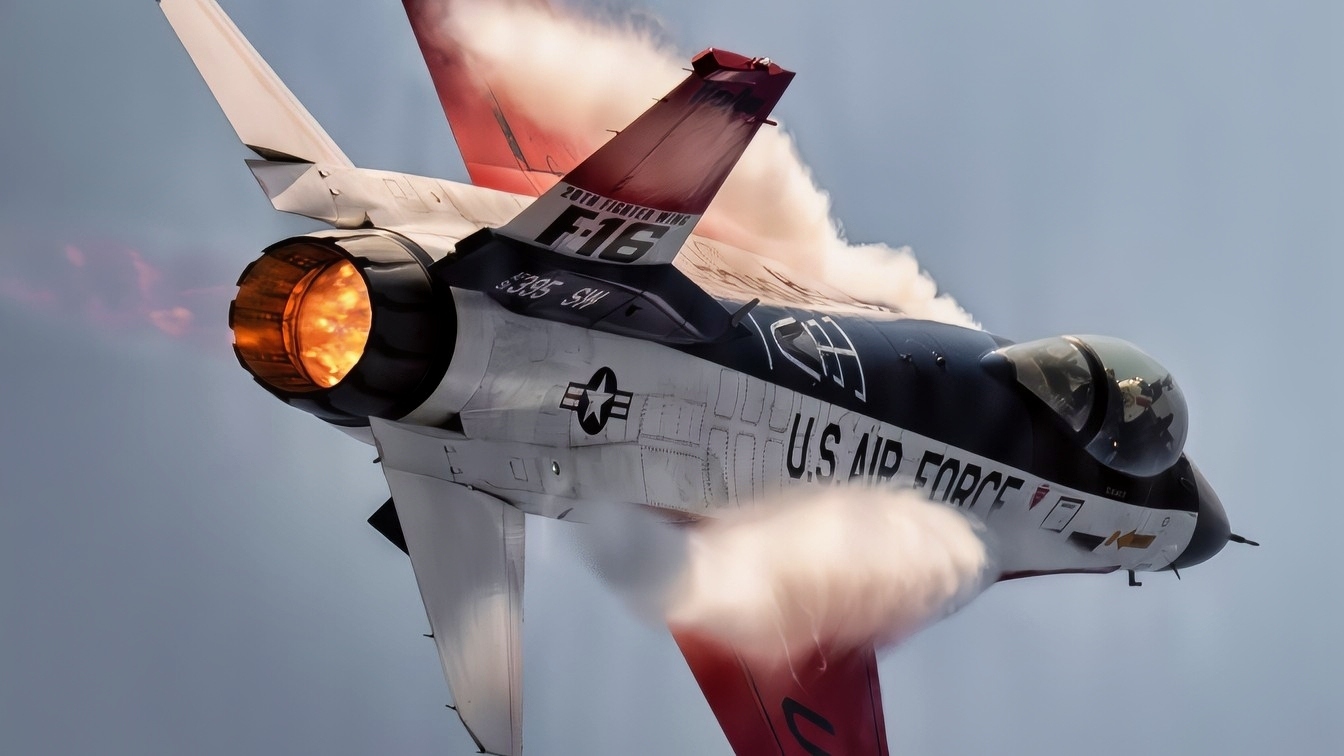
U.S. Air Force Maj. Taylor “FEMA” Hiester, F-16 Viper Demonstration Team commander and pilot, performs aerial maneuvers in a U.S. Air Force F-16C Fighting Falcon during AirVenture at Oshkosh, Wisconsin, July 24, 2026. The F-16 is a multi-role fighter capable of air-to-air and air-to-ground combat operations. (U.S. Air Force photo by Staff Sgt. Steven Cardo)
All this as reports suggest Russian forces have taken the Dobropillia salient (at least for now), meaning the slow-going Russian encirclement of the remaining Ukrainian Fortress Cities is now well underway and will be hard to reverse or break under current circumstances.
Not Cut Out For This Fight
A New York Times report highlights the difficulty that Ukraine is now facing since the depletion of its critical air defense stockpiles and the subsequent pullback of the United States from the fight (especially as the Middle East war intensifies).
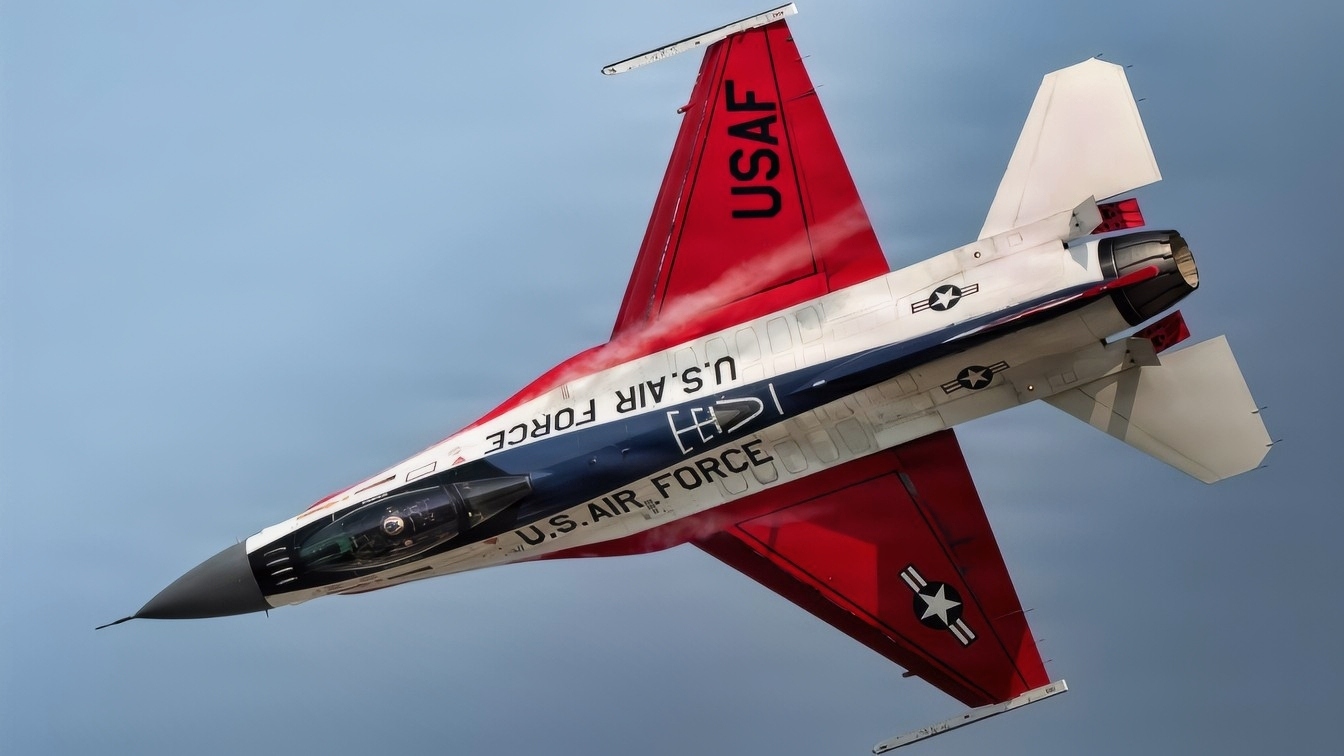
Ukraine is increasingly relying on its older, US-made F-16 fourth-generation warplanes to shoot down incoming Russian drones.
As the NYT points out, though, these repeated missions are wearing down the already aging airframes.
On top of it all, Moscow has deployed jet-powered attack drones that are making life even more painful for the Ukrainians right now.
And while the Ukrainians have proven that the F-16s they possess are effective at shooting down the incoming drone swarms from Russia, their real battle is against time.
At some point, the airframes won’t be able to sustain the operational tempo they’re fighting at. The Russians know that.
That’s likely a key factor in Russia’s war strategy.
The biggest concern is the generational leap Russia has made in drone production. By adding cheap jet engines to its already fearsome Geran-type drones (which are themselves based on the ubiquitous Iranian Shahed-type drones), Russia can push the new jet-powered Gerans to around 373 miles per hour.
That’s three times the speed of the older propeller-driven variants.
These new jet-powered Gerans are the equivalent of cheap cruise missiles, making them much harder for already-stretched Ukrainian air defenders to intercept.
Russia Saturates Ukraine’s Air Defenses With Jet-Powered Drones
According to the Ukrainian-based online publication, Kyiv Post, in September, Russia launched 3,500 jet-powered drones at Ukrainian infrastructure.
They struck the country’s power grid as the region prepared for winter.
Sustained Russian attacks of this nature on the entirety of Ukraine’s civilian infrastructure have led to a near-panic among Ukrainian leaders about how well their side of the dividing line with Russia can hold out, especially if this winter is a bad one.
Continuing with reports from the Kyiv Post, Ukrainian President Volodymyr Zelenskyy reports that nearly 60 percent of all shootdowns of these Russian jet-powered drones have been done by Ukrainian combat aircraft.
These planes employ air-to-air missiles and their onboard 20mm cannons.
The latter weapons are the best option against relatively cheap drones because they are inexpensive.
But using air-to-air missiles to down cheap, expendable jet-powered drones from Russia that can easily be replaced speaks to the severe imbalance in this engagement.
Like Ukraine’s air defenses, those air-to-air missiles will be difficult to replace in the near term, leaving a significant strategic gap in Ukraine’s capabilities.
According to that New York Times piece, Ukraine’s F-16 inventory is around 50 units.
But half are undergoing maintenance. So, only about 30 are available at any time.
That constant interception accelerates the maintenance requirements while depleting the critical ammunition these planes carry into battle.
Can Ukraine Adapt?
When Kyiv requested the initial tranche of aging Western F-16s, the idea was to assist in Ukrainian offensives against Russia in the east.
Some speculated these planes would support offensive operations by the main battle tanks (MBTs) NATO sent to Ukraine two years ago.
When that didn’t come, Ukraine was stuck with F-16s of limited utility.
These planes are not meant to be used primarily as drone interceptors.
But the war has made that necessary, showing that momentum has clearly shifted in Russia’s favor (whether that leads to a Russian victory remains to be seen).
Right now, Ukraine is racing to build a new generation of cheaper, faster interceptor drones and automated gun systems to offload missions from the F-16s to systems more specialized for this role.
Unfortunately, Russia’s introduction of jet-powered drones has, for now, given Moscow a decisive advantage.
That advantage is felt most strongly along the embattled Fortress Cities.
NATO bills itself as technologically superior to Russia.
Yet that purported superior technology gifted to Ukraine over the years has rarely had the impact it was meant to. Indeed, indigenously produced Ukrainian systems and specialized tactics have often proven decisive at the critical moment against Russia.
Ukraine is racing to catch up again.
The question is whether this time they can, especially as Russia is clearly putting what it thinks are the final squeezes on Ukraine’s Fortress Belt.
About the Author: Brandon J. Weichert
Brandon J. Weichert is the Senior National Security Editor. He also manages The Weichert Brief on Substack. Weichert is the co-host for The Mario Nawfal Show on Twitter/X. He is the author of four bestselling national security books, most recently A Disaster of Our Own Making: How the West Lost Ukraine (Encounter Books). His next book, Fortress Americas: A New Monroe Doctrine (Tucker Carlson Books), is due out December 8. Follow him via Twitter/X @WeTheBrandon.


