


Helium is becoming a national security problem.
Most Americans think of it as the stuff in birthday balloons and the party trick that makes your voice squeak.
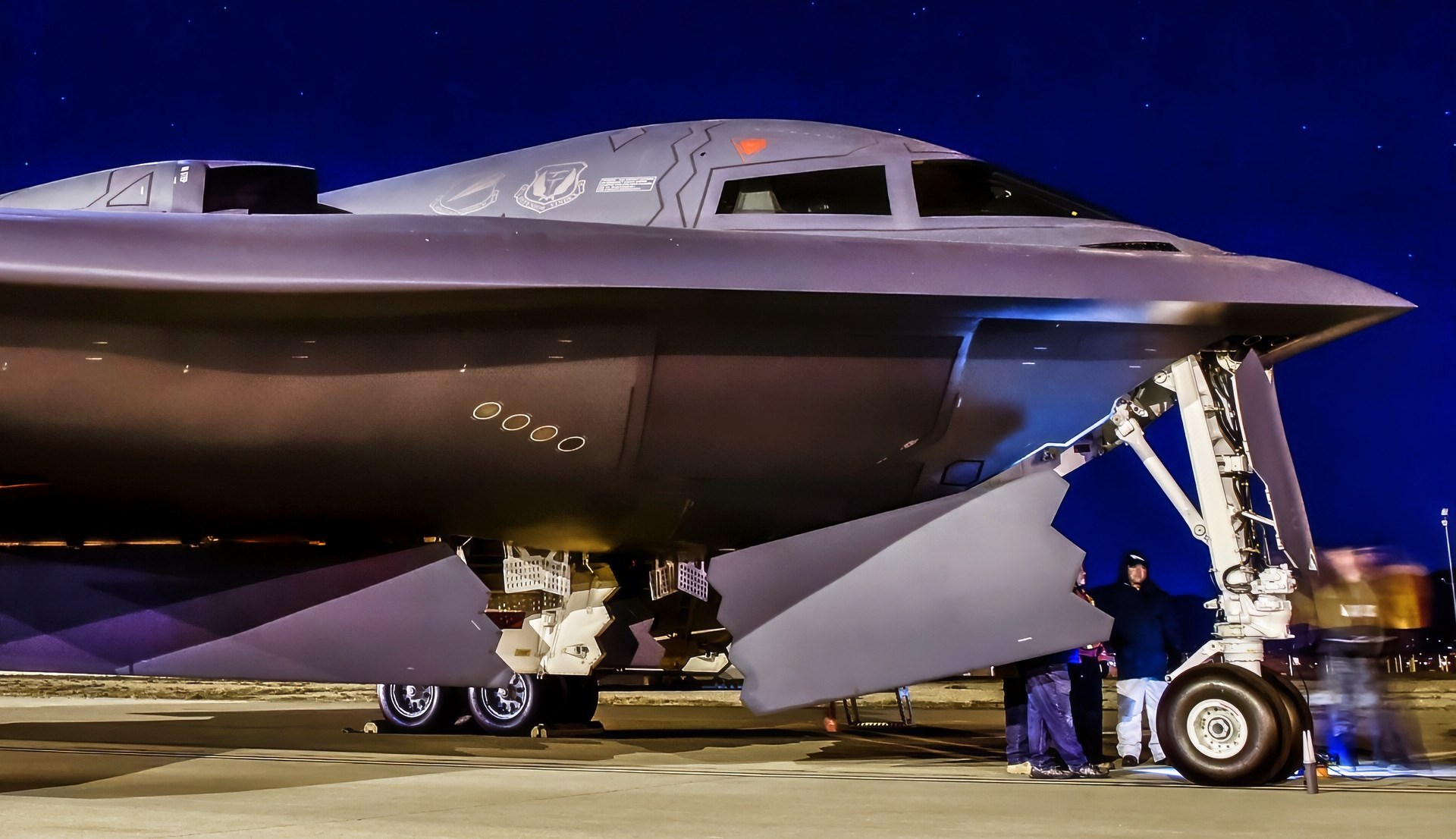
B-2 Spirit Stealth Bomber on Runway. Image Credit: Creative Commons.
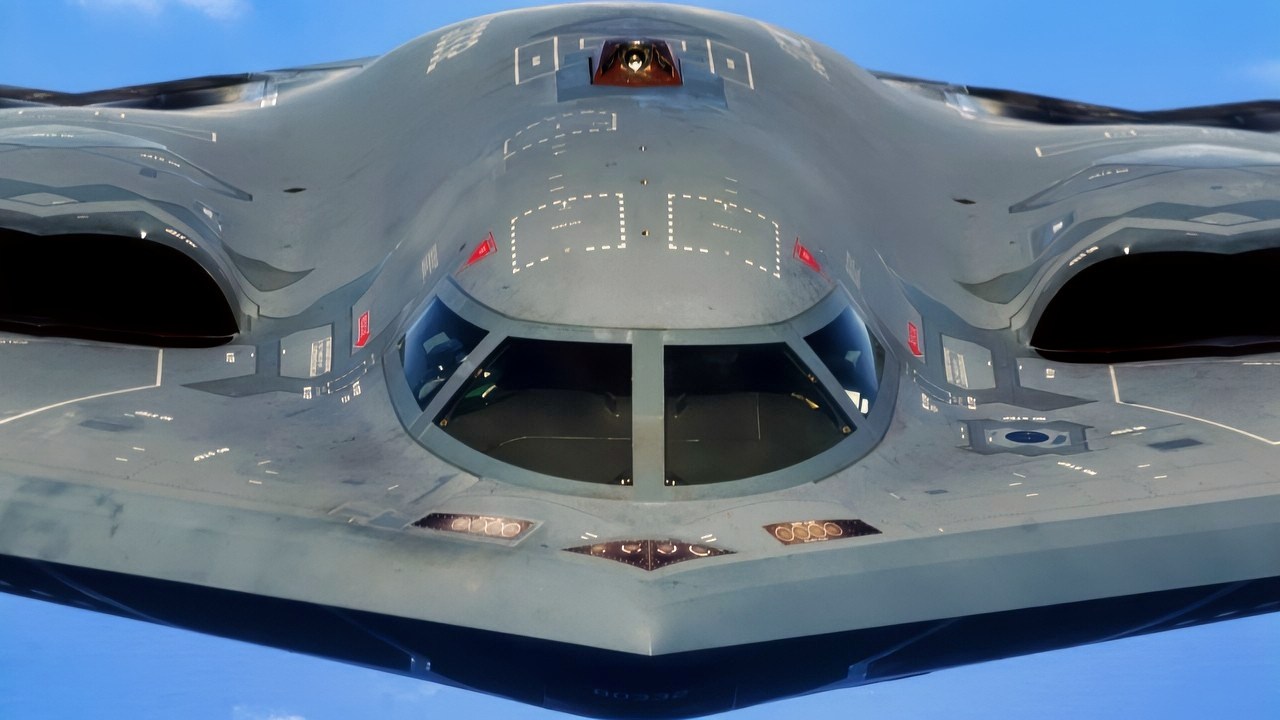
B-2 Spirit Stealth Bomber Flying. Image Credit: Creative Commons.
However, as a recent 60 Minutes report on CBS News made painfully clear, it is one of the most critical, yet overlooked, materials in the modern economy.
No helium means no smartphones, no MRI machines, no rocket launches, and no air defense missiles, which are already in short supply.
Seven months into the conflict with Iran, the world is running short of helium.
How A Third Of The Helium Market Is Now Offline
When Iran effectively closed the Strait of Hormuz in February, it trapped roughly one-third of the global helium supply in the Persian Gulf.
Then in March, Iranian missiles and drones hit Ras Laffan in Qatar, the world’s largest natural gas facility.
Helium is a byproduct of that gas. The Associated Press reported that QatarGas described the damage as extensive and said repairs would take years. According to CBS, the Qataris now say it will take at least three years to restore the facility to pre-conflict production levels.
Since September, nearly two dozen ships have been hit trying to pass through the Strait. No ships carrying helium are leaving Qatar.
Back in March, CBS News reported that the war’s damage went well beyond oil. Vidya Mani, a supply chain expert at UVA’s Darden School of Business, told the network that everyone had been so locked onto gasoline prices that the helium problem slipped right past them. That was the warning shot. We are now living with the result.
The Price Tag Is Already Being Felt
Rich Brooke, a former Air Liquide executive and now an industry consultant, told 60 Minutes that spot market prices for helium have tripled since the war began.
He added that prices could go even higher.
The United States is the world’s largest helium producer, and Qatar was number two before the current conflict began. Most of our helium comes out of a single facility in Wyoming.
U.S. helium exports are up 70 percent since late February, largely to chipmakers in South Korea, Taiwan and Singapore who lost their main supplier overnight.
South Korea alone sourced 64.7 percent of its helium from Qatar in 2025, according to a report published by the International Union of Marine Insurance.
However, the U.S. can’t carry the world indefinitely. Some suppliers are drawing down helium stored in underground salt caverns, two here and one in Germany.
How much is left down there is a closely held secret.
The backstop we used to have, the Federal Helium Reserve (in case you didn’t know we had one), has already been privatized. And Russia, the obvious alternative, imposed helium export controls in April that run through the end of 2027.
So much for Plan B.
The Labs And Fabs Are Rationing
Liquid helium sits at 452 degrees below zero Fahrenheit.
Nothing else gets that cold.
That makes it irreplaceable for cooling the superconducting magnets in MRI and nuclear magnetic resonance machines.
At the University of Chicago, Joe Sachleben’s lab uses NMR machines to research breast cancer drugs, immunotherapies, and Alzheimer’s treatments.
His supplier put the lab on “allocation”, industry-speak for rationing, at 50 percent of last year’s volume. That means deciding which magnets to keep alive and which ones to sacrifice.
His backup supplier recently warned it was about to run dry.
The semiconductor industry consumes about one-fifth of the world’s helium.
At Polar Semiconductors outside Minneapolis, which builds chips for cars, data centers, and the U.S. military, president Surya Iyer said 40 to 50 percent of the fab’s machines use helium in some form.
Hundreds of process steps.
If the helium stops, the plant shuts down. One of Polar’s three suppliers has already put the company on allocation.
Helium: Why This Is A National Defense Problem
Cliff Cain, president of Pulsar Helium, which is developing the Topaz discovery in northern Minnesota, has briefed the Pentagon.
His message was blunt.
Qatar was a single critical point of failure, and it failed.
“You can’t make modern warfare without helium,” Cain told CBS. He pointed to fiber optics, munitions, and the electronics that go into missiles and hypersonic weapons.
All of them need helium somewhere in the production chain.
Now consider the timing.
The U.S. is already dealing with a munitions shortage because of this war, and the Pentagon has asked some defense contractors to quadruple production capacity for certain weapons.
You can’t quadruple output on a supply chain that just lost a third of its feedstock while prices tripled. The math doesn’t work.
Amateurs talk tactics. Professionals talk logistics.
That old line gets repeated far more than it gets heeded, but this is a textbook example.
For decades, people in the helium business have warned that production is concentrated in a handful of countries.
Pulsar has noted that more than 90 percent comes from just five of them. Nobody in Washington treated it as a strategic material. We sold off the Federal Reserve instead. Which is another short-sighted move by Congress
There’s No Quick Fix
New domestic production is coming, but slowly. Cain’s Topaz project is all helium, with no natural gas operation riding on top of it.
However, as he admitted to 60 Minutes, it won’t help next month.
Finding helium is one thing.
Building the plants and the cryogenic logistics to move a liquid that starts boiling off as soon as it ships takes years.
During a shortage, the industry hands out supply based on priority, so chipmakers and medical users go to the front of the line, according to helium consultant Phil Kornbluth.
That’s cold comfort when the front of the line is getting half rations.
Congress and the Pentagon need to treat helium the way they’ve finally started treating rare earths: as a strategic material with a real reserve, domestic production incentives and a plan. But that horse is already out of the barn.
About the Author: Steve Balestrieri
Steve Balestrieri is a National Security Columnist. He served as a US Army Special Forces NCO and Warrant Officer. In addition to writing on defense, he covers the NFL for PatsFans.com and is a member of the Pro Football Writers of America (PFWA). His work was regularly featured in many military publications.


