


At a time when the Ukrainians are in an increasingly desperate situation, Kyiv continues to figure out ways to strike at Russia.
Its critical stockpiles of defensive weapons are dwindling.
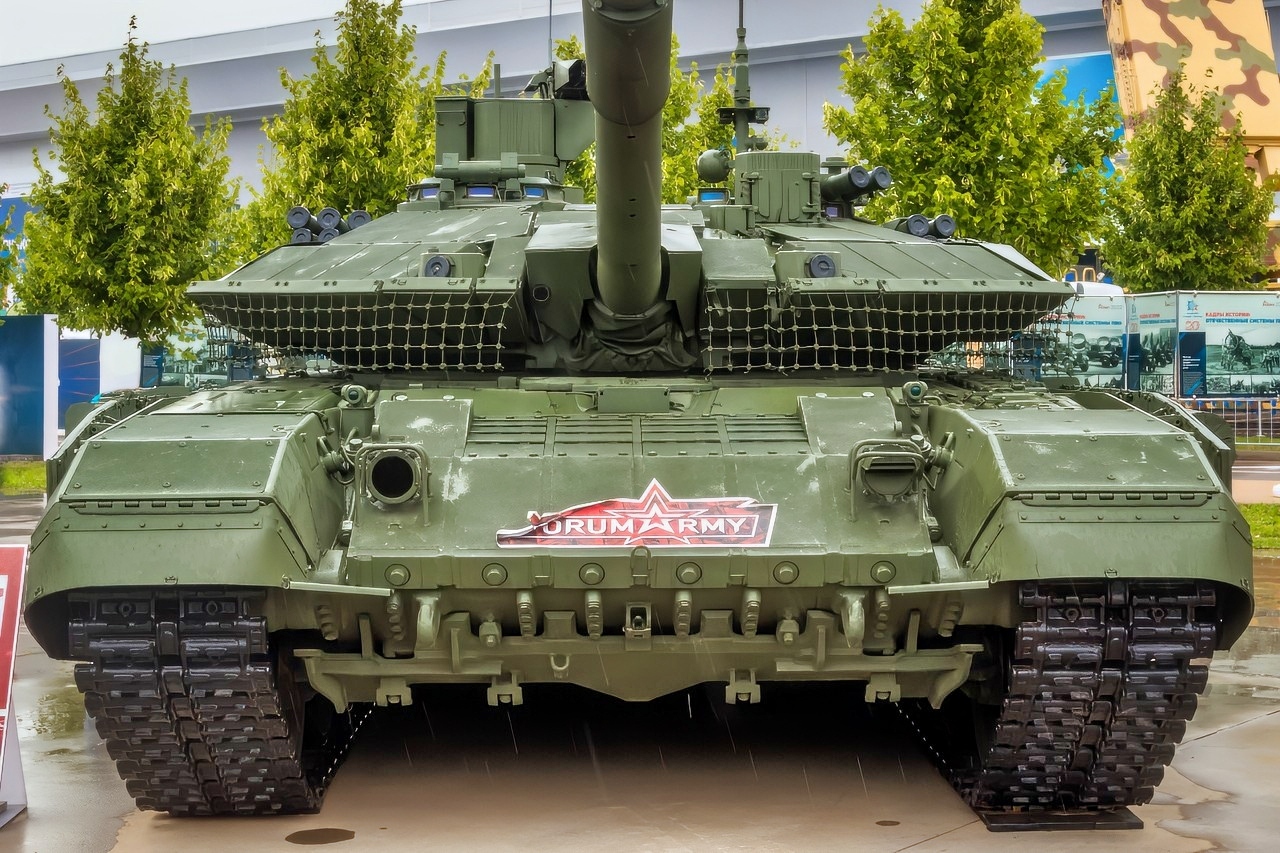
T-90M Russian Army. Image Credit: Creative Commons.

T-90 Tank from Ukraine War. Image Credit: Creative Commons.
The Americans are pulling back from Ukraine.
The Europeans cannot sustain the war on their own.
So, Ukraine is scrambling to keep itself combat-effective, even as the Russian Army slowly encircles those Fortress Cities in the contested Donbas region.
One of the ways the Ukrainians are trying to maintain combat-effectiveness is by continuing their drone war against Russia itself.
On Sunday, October 18, Ukraine launched one of its biggest drone offensives in the war.
They struck key oil facilities, electrical infrastructure, warehouses, and even a data center in St. Petersburg and Leningrad.
This move by Kyiv to strike at the heart of Russia comes after US President Donald Trump told the media that there was a deal between Russia’s Vladimir Putin and Ukraine’s Volodymyr Zelenskyy that would have supposedly ended the attacks on energy infrastructure.
Ukraine says they were retaliating for Russia’s continued strikes on Ukrainian infrastructure, even after Trump told the world a deal to end the attacks on critical energy infrastructure in the war had been hatched.
A Massive Attack
More than 1,000 drones were fired at Russia by Ukraine. Moscow claims that their air defenses shot down 1,015 Ukrainian drones across 15 different Russian regions (as well as occupied Crimea and in the Black Sea).
That number has not yet been independently verified.
Nevertheless, Ukrainian drone strikes hit the St. Petersburg Oil Terminal, a major Baltic export facility, and the Ruchi oil depot.
Approximately 20,000 residents in the Leningrad region lost electricity. Reuters reports that 15 people were injured. There were flight restrictions at the main airport in St. Petersburg because of the Ukrainian drone strikes.
Russia claims that it intercepted 145 drones in Leningrad alone, highlighting how significant the attack was by Ukraine.
By attacking the oil terminal in St. Petersburg, along with other oil terminals and storage facilities, Kyiv has calculated it can disrupt petroleum exports, create additional logistical costs, and likely force Moscow to divert air-defense resources from other areas.
But the extent of damage to Russia’s oil capacity has been limited.
This is not the first time that Ukraine has fired drone swarms at this type of Russian infrastructure.
Effective?
The Ukrainian-based publication, the Kyiv Independent, highlights the way in which Ukraine has both intensified its drone swarm attacks on Russia while also expanding the target sets beyond just energy production facilities.
They note that drone swarms have attacked logistics hubs, the transportation network, data centers, and other non-energy targets.
But that also might indicate how ineffective these sweeping attacks have been. Russia’s energy infrastructure, while vulnerable, is relatively well defended, meaning Ukraine must broaden its attacks to hit targets that are perhaps less well defended.
It increasingly looks as though Ukraine is desperate to shift the narrative away from what appears to be a deteriorating situation to highlighting the way in which Ukraine is still taking the fight to Russia.
But everyone knows Ukraine’s ability to hold on against the renewed Russian onslaught depends on receiving aid from the West.
Europeans Don’t Support Expanding the War
Kyiv has already claimed that Washington is pulling back from the Ukrainians. Allegedly, the US refused to alert Ukraine of a massive Russian drone strike on its territory.
Then, the Ukrainians accuse the Americans of having degraded their access to Starlink, which then led to a slowdown of their drone capabilities for a short time.
On top of that, the Americans appear to be pivoting away from Europe more generally.
That leaves the Europeans, who appear interested in rearming across the continent. But that’s a long-term plan.
And it might not work as expected because the European population is universally opposed to entering direct war with nuclear-armed Russia.
They’re also irate over the declining living standards in Europe. Sending more weapons and money to Ukraine, as the specter of the deployment of ground forces to Ukraine hangs over the continent, is deeply opposed by people in places like Germany, France, Britain, and elsewhere.
These trends in public opinion will negatively harm Ukraine’s ability to continue the war because it will hurt its access to those weapons required to resist Russia.
No amount of dazzling drone swarm attacks on Russia will change those hard realities.
About the Author: Brandon J. Weichert
Brandon J. Weichert is the Senior National Security Editor. He also manages The Weichert Brief on Substack. Weichert is the co-host for The Mario Nawfal Show on Twitter/X. He is the author of four bestselling national security books, most recently A Disaster of Our Own Making: How the West Lost Ukraine (Encounter Books). His next book, Fortress Americas: A New Monroe Doctrine (Tucker Carlson Books), is due out December 8. Follow him via Twitter/X @WeTheBrandon.


