


War again seems to be in the air in the Middle East. An explosive October 21 report from NBC News documents how, according to two unnamed US officials familiar with the matter, Washington has ordered American troops to withdraw from forward bases in Jordan, Qatar, and Kuwait.
The troop movements coincide with additional security measures at American embassies and diplomatic facilities throughout the region.
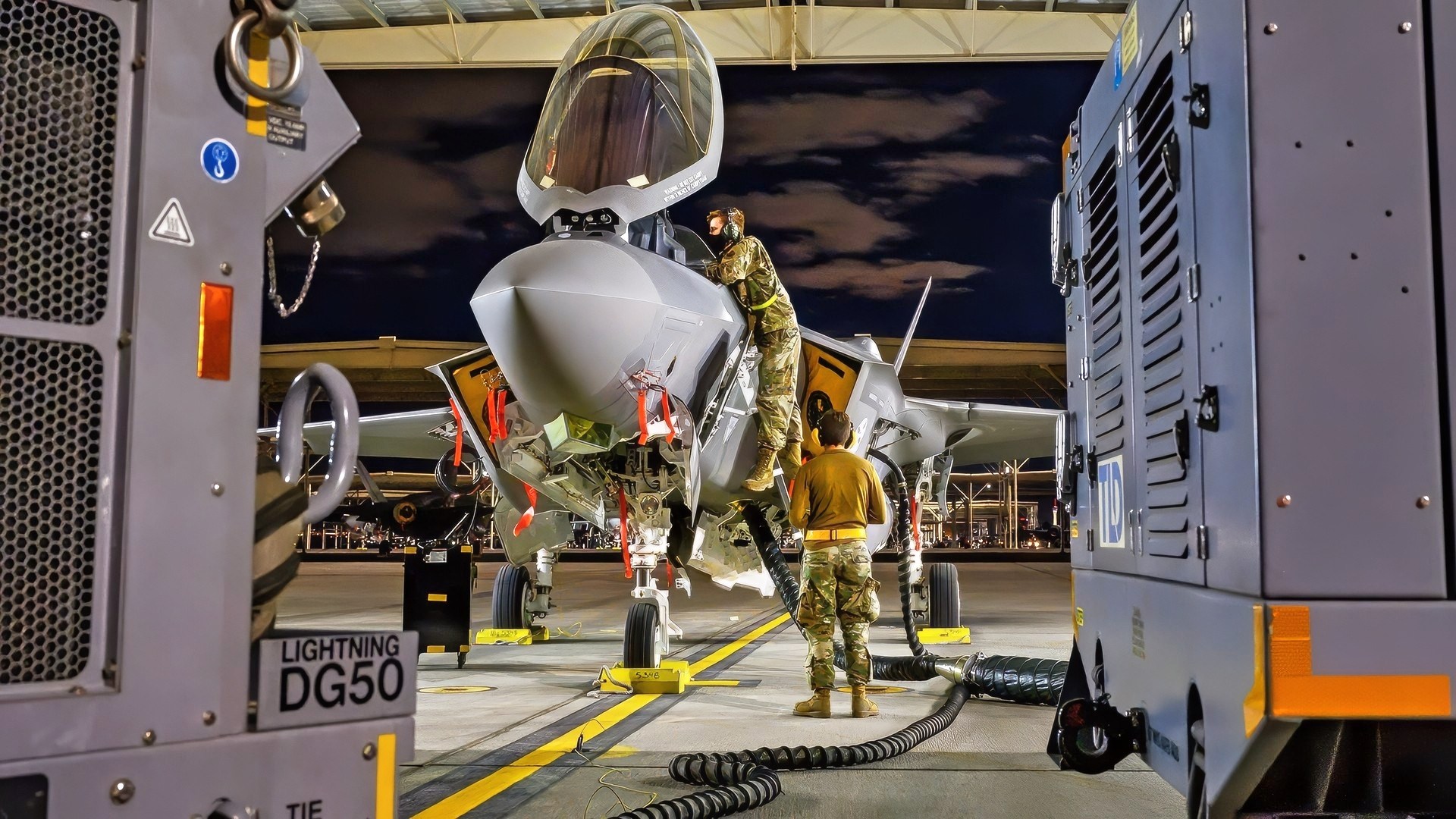
F-35 Fighters Ready. Image Credit: Creative Commons.

F-35 Near the Flag. Image Credit: Creative Commons.
These reductions follow months of military confrontation between Washington and Tehran, which started on February 28.
NBC News said the measures were similar to precautions implemented just before the conflict began earlier this year.
Both the Pentagon and State Department reduced the number of American personnel at vulnerable installations ahead of the initial strikes.
The latest withdrawals are being undertaken in response to continuing security threats, including the possibility of Iranian retaliation if Washington authorizes additional military operations.
Hitting Key US Bases
Kuwait, Qatar, and Jordan are critical facilities.
Qatar is home to the Al Udeid Air Base.
This facility is key for logistics throughout the region.
Kuwait is also essential, as it is a major staging area for US forces operating in CENTCOM.
Then there’s Jordan.
That embattled Middle East nation supports critical intelligence-gathering missions. It also plays a key role in regional security.
Iran has spent months targeting these three nations specifically.
By removing these forces from their bases and reducing personnel at the American embassies and consulates throughout the region, the Americans are signaling they are preparing for a restart of major hostilities.
Of course, the Pentagon has refused to comment publicly on these movements. But this comes amid a major exodus from Saudi Arabia.
US military officials have spoken with the president about what options he has for renewed military strikes on Iran.
Meanwhile, the Israelis have consulted with their American partners about a wider-scope campaign aimed at destroying sensitive targets inside Iran.
These sensitive targets are not only the purported nuclear weapons facilities.
They also include civilian “dual-use” target sets, such as water and energy infrastructure.
The New York Times assessed that the proposed operation could involve a short but intensive bombing campaign.
Trump, however, has not publicly authorized another major operation, and military planning does not mean an attack has been ordered.
Diplomatic efforts are continuing.
Iran says it no longer believes the Americans are truly interested in diplomacy.
And Iran insists that the country is prepared both to endure another round of attacks and that retaliation from Iran toward the entire region will be swift.
Washington is taking these measures because the government understands the nature of this conflict has already hit critical military infrastructure, retaliatory missile (and drone) attacks, overall disruptions to Gulf shipping, and attacks by Iranian-aligned armed groups.
So, Washington is taking every precaution available to preserve its war footing in the region when it knows that Iran will certainly target the critical infrastructure that both supports the US military presence and the surrounding states.
Trying to Preserve Combat Effectiveness
Because of the ongoing strikes and fears of renewed hostilities in the region, Gulf stock markets fell sharply recently. Additional attacks upon Saudi Arabia by the Houthis in Yemen contributed to this collapse in the Gulf stock markets, notably in Saudi Arabia.
The Americans want to maintain their combat effectiveness by preserving whatever they can of their footprint in the region as Iran likely launches one of the most significant counterattacks ever experienced in this conflict.
Iranian retaliation will surely hit US bases in the region.
They will absolutely hit Gulf energy and possibly even water infrastructure.
If the Israelis intervene and hit civilian targets inside Iran, or if the Trump administration follows through on its threats to strike hard against Iranian nuclear facilities, the chances that Iran retaliates by hitting Israel are high.
About the Author: Brandon J. Weichert
Brandon J. Weichert is the Senior National Security Editor at 19FortyFive.com. He also manages The Weichert Brief on Substack. Weichert is the co-host for The Mario Nawfal Show on Twitter/X. He is the author of four bestselling national security books, most recently A Disaster of Our Own Making: How the West Lost Ukraine (Encounter Books). His next book, Fortress Americas: A New Monroe Doctrine (Tucker Carlson Books), is due out December 8. Follow him via Twitter/X @WeTheBrandon.


