


For the last few months, the war in the Middle East has been in a quiet phase as the U.S. and Iran have refrained from attacking each other.
While Iran has continued attacking civilian ships in and around the Strait of Hormuz, the U.S. has not launched any retaliatory strikes in some time.
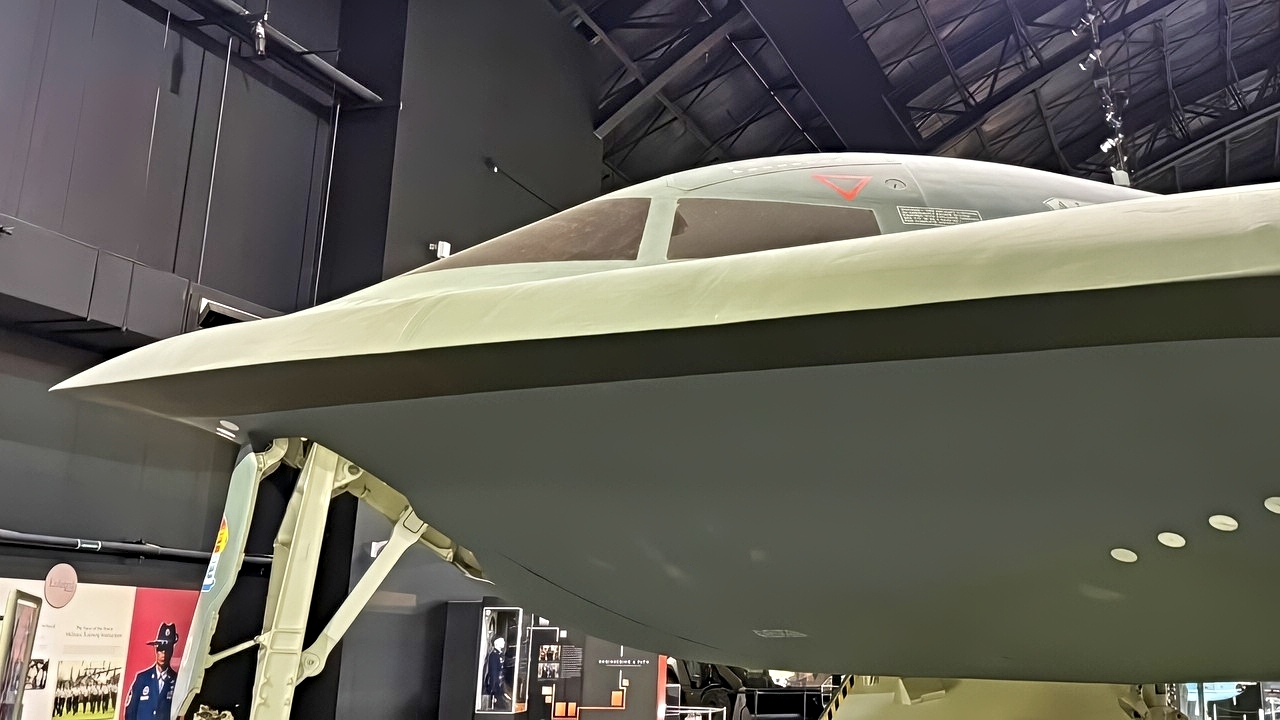
B-2 Bomber Sitting in Museum National Security Journal Photos. All Rights Reserved.

B-2 Stealth Bomber July 2025 National Security Journal Photo.
However, as midterm elections in November approach, there are signs that Trump and Israel may resume attacks against Tehran in early November.
Iran is bracing for a renewed hot phase while remaining willing to engage in diplomacy.
Meanwhile, the energy market, also fearing renewed attacks, is in flux as it expects more strikes on energy infrastructure in the Middle East.
Silently Preparing for the Next Phase of the War
An unnamed official, speaking on condition of anonymity, told NPR that the U.S. and Israel are planning to resume strikes after midterm elections in early November.
The source said that the attacks were initially planned for early October, before Israel’s elections on October 27, but were postponed due to Trump’s objections.
The attacks are set to take place after the U.S. elections on November 3, though an exact date was not specified.
The elections in Israel are highly important for the nation, as they will decide whether Benjamin Netanyahu retains his position.
Netanyahu has been campaigning on a Threat to topple the Iranian regime. “There is only one way to remove this threat once and for all: overthrow the regime in Iran,” the Israeli Prime Minister said at an IDF officer graduation ceremony. “And that is my directive to the IDF, the Mossad, and the security branches.”
The U.S. Military has been quietly strengthening its forces in the Middle East.
According to reports, the USS Theodore Roosevelt (CVN-71) and her CSG were being deployed to the region, joining the USS George H.W. Bush (CVN-77), deployed in April, and the USS George Washington (CVN-73).
Joining Roosevelt is the 13 Marine Expeditionary Unit with the Makin Island Amphibious Ready Group, which is comprised of 4,200 Marines.
The carrier initially departed from her home port in San Diego and, according to U.S. officials, is expected to join her peers by the end of November.
Recently, U.S. Secretary of Defense Pete Hegseth made an unannounced visit to Israel to meet with Prime Minister Netanyahu.
Many suspect that the two discussed future strikes against Iran as the U.S. prepares for the next phase of the war.
Tehran Preparing for the Worst
The recent movements by the U.S., combined with aggressive rhetoric from Trump and Netanyahu, have caused a stir in Iran, as the regime prepares for renewed attacks.
Iran’s Foreign Minister, Abbas Araghchi, said the Islamic Republic was prepared for renewed strikes, but that the door was always open to a diplomatic settlement. “We are just as prepared for diplomacy as we are for war,” said Araghchi. “Any scenario is conceivable, including the possibility of an attack by the U.S. and Israel.”
In response to potential attacks against its infrastructure, Iranian officials have claimed that they will attack oil infrastructure across the region if the war enters a new hot phase.
Likewise, the IRGC claimed that if attacks from Israel and the U.S. resume, undersea internet cables and data centers could come under attack.
Deputy for Political Affairs of the Islamic Revolutionary Guard Corps, Yadollah Javani, said that the IRGC was prepared to destroy undersea internet cables in the Strait of Hormuz. “The Americans must leave the region,” he said. “They no longer have a place here—and they can never restore the situation to what it was before the war.”
There are nine major cable lines that run under the Strait of Hormuz.
Up to this point, undersea internet lines have been safe from attacks.
Whether Tehran intends to follow through on these threats remains to be seen.
Expect Oil Prices to Increase
In the meantime, Iran has continued its attacks against civilian tankers.
Since October 12, the UK Maritime Trade Operations (UKMTO) center has recorded 13 separate attacks against civilian vessels in or around the Strait.
Although some reports indicate that a sizable amount of oil still flows through the vital waterway, ongoing attacks have kept oil prices high, and with new attacks expected to resume in November, the market is unlikely to stabilize anytime soon.
According to International Monetary Fund analysts, if the war continues, oil prices could reach as high as $130 per barrel in 2027.
All eyes are on November’s midterm elections as Trump and the GOP are expected to perform poorly.
Despite the outcome, however, Trump is unlikely to capitulate until he achieves his war aims, or at least walk away claiming victory.
Opinions on the war remain mostly negative among average Americans as gas prices remain high across the country.
The President’s Democrat opponents have been taking full advantage of the war’s unpopularity and have used it as a primary talking point in their push to retake the House and Senate.
About the Author: Isaac Seitz
Isaac Seitz, a Defense Columnist, graduated from Patrick Henry College’s Strategic Intelligence and National Security program. He has also studied Russian at Middlebury Language Schools and has worked as an intelligence Analyst in the private sector.


