
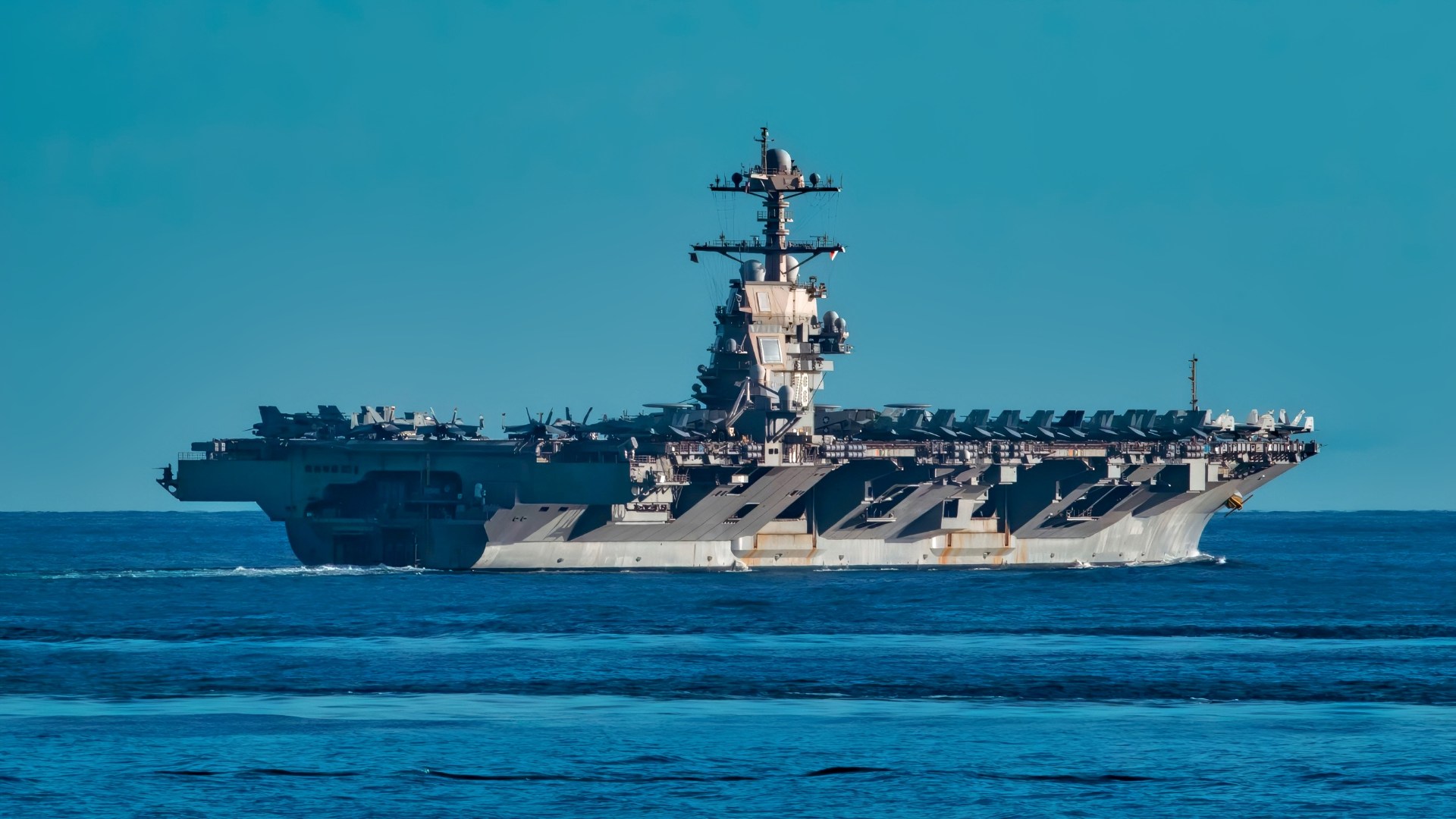
Iran is on the verge of losing all new revenue from seaborne crude oil exports, and analysts now expect its revenues to collapse by December. New reports describe how Tehran has exhausted the enormous volumes it kept stored aboard tankers in Asian waters before the U.S. naval blockade against its ports was implemented.
Energy intelligence firm Kpler now estimates that Iran’s remaining trackable oil reserves kept outside the Strait of Hormuz have fallen to zero. This means Iranian authorities could soon stop receiving payments for oil shipments altogether—and the economic fallout is likely to cause extreme hardship for Iranian citizens, while the Islamic Revolutionary Guard Corps (IRGC) will likely be less affected in the short term.
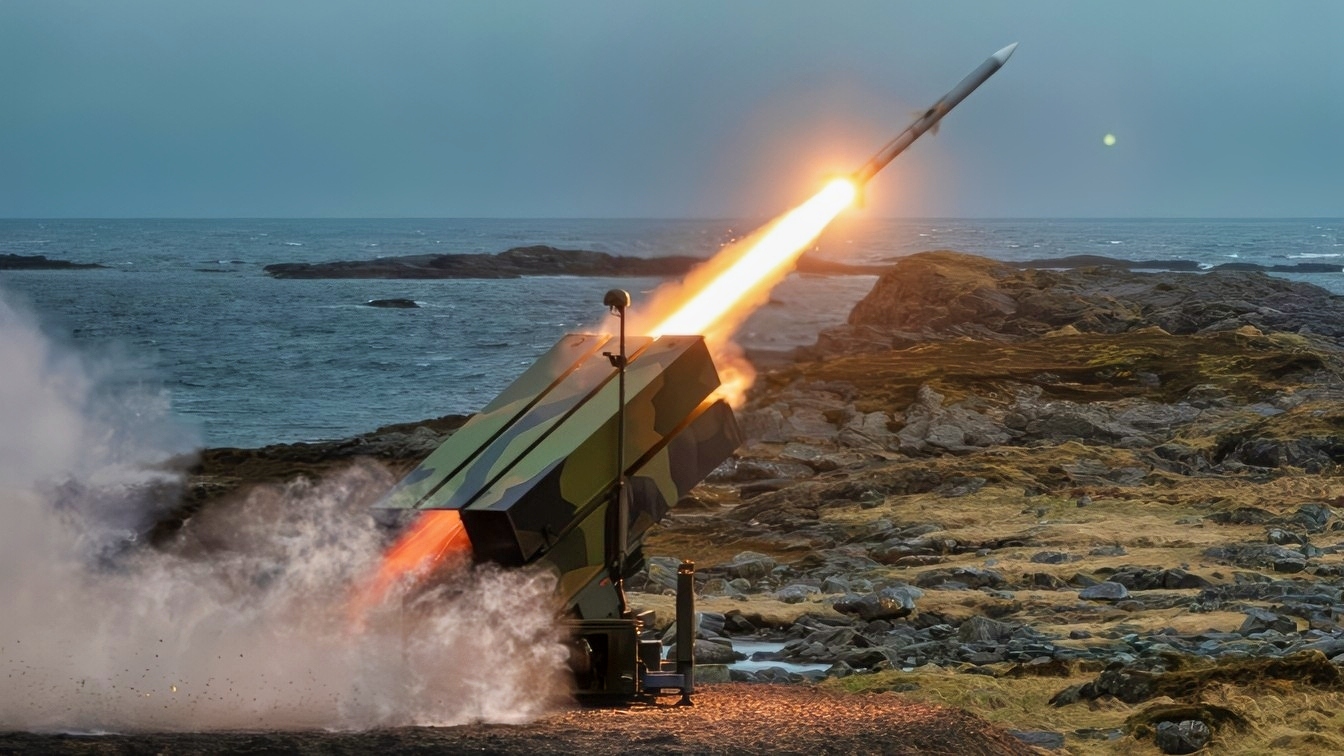
The Norwegian Army fires a National Advanced Surface-to-Air Missile System (NASAMS) from the Andøya Space Range in Andøya, Norway against a simulated threat in support of exercise Formidable Shield 2023, May 10, 2023. Formidable Shield is a biennial integrated air and missile defense (IAMD) exercise involving a series of live-fire events against subsonic, supersonic, and ballistic targets, incorporating multiple Allied ships, aircraft, and ground forces working across battlespaces to deliver effects. (Courtesy photo by Royal Norwegian Navy)

Arleigh Burke-class guided-missile destroyer USS Farragut (DDG 99) arrives at Pier 88 during the International Naval Review (INR) 250 Parade of Sail in New York, July 4, 2026. The Parade of Sail marks the opening of INR 250, a multinational maritime celebration commemorating the 250th anniversaries of the U.S. Navy, Marine Corps, and the nation, honoring the sea services’ enduring commitment to defending the United States and strengthening partnerships with allied and partner nations. For 250 years, our Navy and Marine Corps stood the watch—constant, unabated in mission, faithfully preventing crisis and resolute in defending America’s independence. INR 250 honors the Navy, Marine Corps, and Coast Guard’s enduring role on, under, and above the seas. (U.S. Navy photo by Mass Communication Specialist 2nd Class Janiel Adames)
The news comes as U.S. President Donald Trump continues to ramp up the economic pressure against Tehran with the ever-tightening “Operation Economic Outcast” sanctions campaign, and as the U.S. and Israel reportedly prepare for another round of major strikes that could begin before or soon after the November 3 midterm elections.
Iran’s Overseas Oil Reserves Are Gone
The Wall Street Journal reported on October 22 that Iran was continuing to earn billions of dollars from crude oil stored aboard tankers located near China and Southeast Asia even after the U.S. Navy prevented new shipments from leaving Iranian ports.
But according to Kpler analysts, those reserves have now been depleted, with the final cargoes delivered by mid-October.
“There’s no more oil to discharge to China anymore,” Homayoun Falakshahi, the head of crude-oil analysis at Kpler, told the outlet.
Earlier this month, Iran International reported that Iran’s floating oil reserves had fallen from around 90 million barrels in July to just eight million barrels in October. Kpler data also shows that no Iranian crude oil or condensate was loaded onto tankers throughout September—an unprecedented development driven by the ongoing U.S. naval blockade of Iranian ports.
However, oil payments are not always made immediately upon delivery.
That means Iran could still continue to receive payments for the foreseeable future.
Chinese refiners, for example, typically take one or two months to settle invoices, meaning Tehran could continue to receive money for previously delivered shipments until December. Kpler estimates that Iran now stands to lose anywhere up to $6 billion in monthly oil income once those remaining payments are completed.
$25 Billion Lost
The Trump administration says that the blockade on Iranian ports is having a major impact on Iran’s ability to fund its military and its economy more broadly.
On October 16, U.S. Central Command commander Admiral Brad Cooper announced that American operations had prevented Iran from exporting at least $25 billion worth of crude oil.
Cooper also said that the blockade was forcing Iran-backed proxy organizations to divert money back to Tehran, as the regime struggles to fund its military operations. Axios reported that the U.S. has also frozen about $350 million in cryptocurrency linked to Iran.
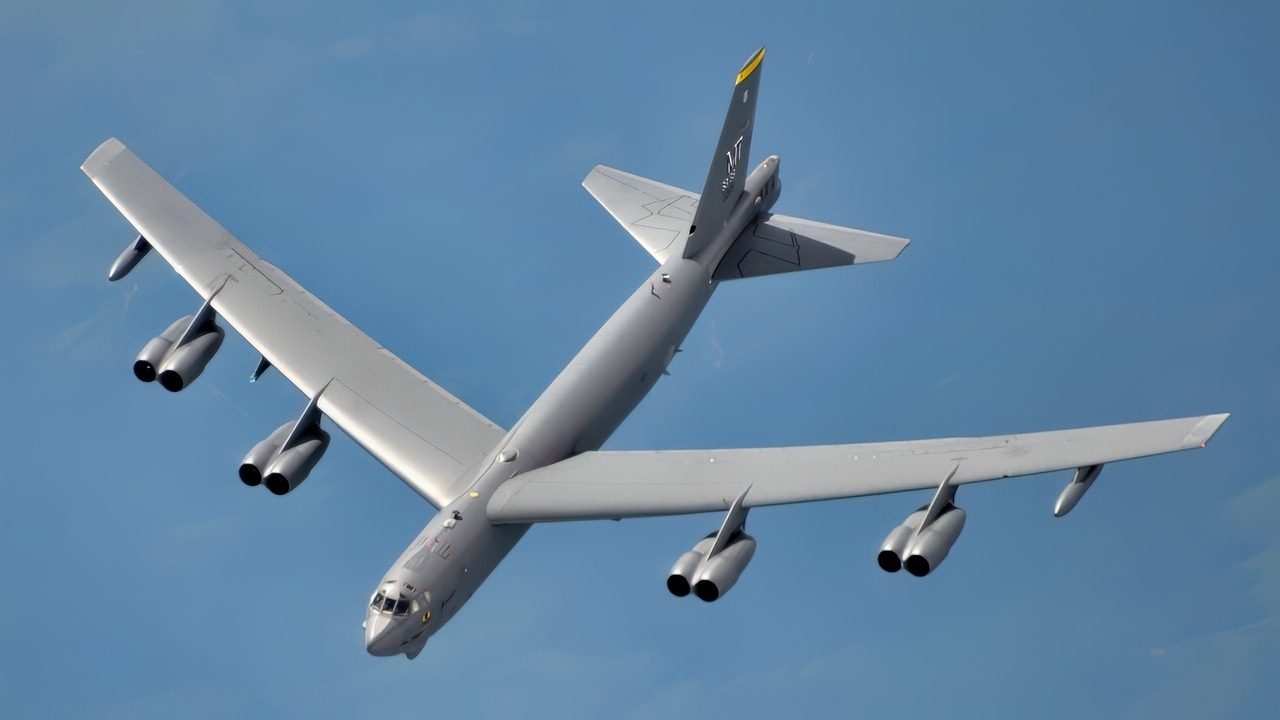
A B-52 Stratofortress assigned to the 5th Bomb Wing, Minot Air Force Base, North Dakota, completes refueling behind a KC-135 Stratotanker assigned to the 134th Air Refueling Wing, Tennessee Air National Guard, during exercise Saber Guardian 19, June 17, 2019. The bombers participated in three exercises in the Baltic and Black Sea regions, providing opportunities for training with our allies and partners. Strategic bomber missions enhance the readiness and training necessary to respond to any potential crisis or challenge across the globe. The USEUCOM, NATO exercise promotes regional stability and security while increasing readiness, strengthening partner capabilities and fostering trust. (U.S. Air National Guard photo by Tech. Sgt. Daniel Gagnon)
Washington’s economic campaign against Iran also goes beyond the blockade.
On October 8, the Treasury Department announced additional sanctions on 17 vessels used to move Iranian-origin petroleum products.
The sanctions also expanded to individuals and organizations accused of helping Tehran avoid existing sanctions.
Ordinary Iranians Set to Suffer the Most
The disappearance of Iranian oil revenue does not mean that Tehran will completely abandon its military ambitions, with ideologues in Tehran likely set to continue fighting for as long as possible — even at the expense of their own citizens’ standard of living.
Gregory Brew, an Iran and energy analyst from Eurasia Group, told Fox News that Iranian authorities may prioritize military expenditures over regular government spending.
Oil also directly accounts for around 30% of Iran’s government budget, according to Brew and Foundation for Defense of Democracies expert Miad Maleki. The government could respond to falling revenues by cutting subsidies and limiting pension spending, or by borrowing more and letting inflation rise, before deciding to end the war.
Economic conditions in Iran are already bad for average citizens. Iran’s annual inflation rate reached 73.6% in September, and the rial had lost nearly 25% of its value against the dollar since the U.S. blockade resumed in July.
Does Iran Still Want A Deal?
On October 24, Iran’s ambassador to Pakistan, Reza Amiri Moghadam, told the Associated Press that Tehran is still willing to resume negotiations under the framework of the interim agreement, the so-called memorandum of understanding (MOU) from June.

The guided-missile destroyer USS Donald Cook (DDG 75) steams behind the aircraft carrier USS Theodore Roosevelt (CVN 71) in the Persian Gulf on Jan. 31, 2006. The Roosevelt Carrier Strike Group is conducting maritime security operations in the Persian Gulf.
(DoD photo by Airman Apprentice Nathan Laird, U.S. Navy. (Released))
The ceasefire collapsed when Iranian forces continued to launch strikes against commercial shipping operating in the Strait of Hormuz, and Washington refuses to return to the terms of the deal unless Tehran makes concessions first. Tehran, meanwhile, is demanding that the United States lift the blockade, end the U.S. military presence in the region, unfreeze overseas assets, and cease military hostilities before ending its campaign against commercial shipping in Hormuz.
On October 20, Reuters also reported that senior Iranian officials were deliberately prolonging negotiations to avoid handing President Trump a political victory before the November 3 midterms.
About the Author: Jack Buckby
Jack Buckby is a British researcher and analyst specializing in defense and national security, based in New York. His work focuses on military capability, procurement, and strategic competition, and he produces and edits analysis for policy and defense audiences. He brings extensive editorial experience, with a career output spanning over 1,000 articles at National Security Journal, and has previously authored books and papers on extremism and deradicalization.


