

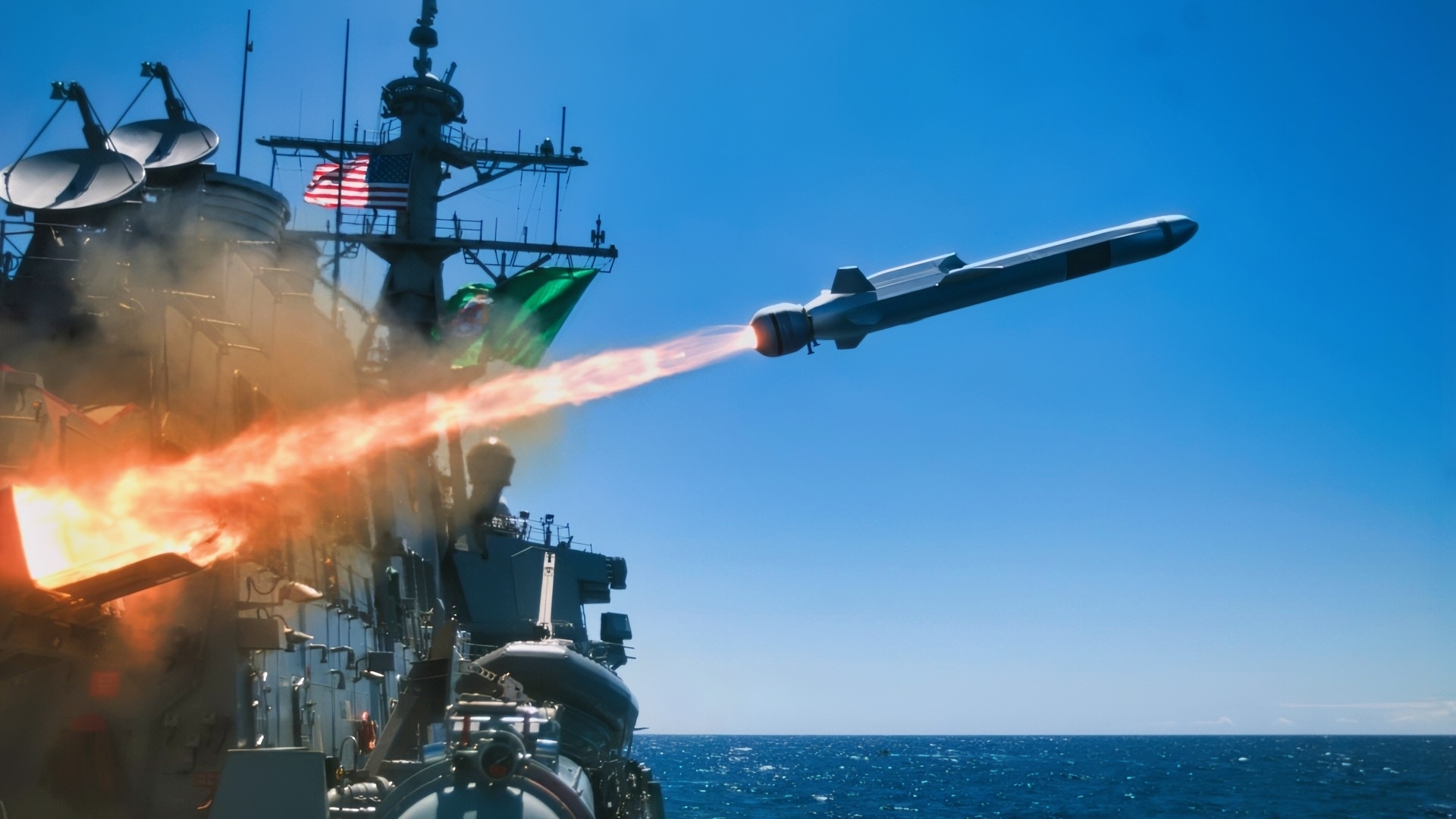
The Pentagon’s top commanders leading the charge against Iran met with American President Donald Trump earlier this week to discuss with the Commander in Chief what his options are against Iran, should he choose to renew strikes against the country’s embattled, notionally Islamist regime there. The president has publicly eschewed renewed attacks on the country before the United States’ looming midterm elections next week, likely to help cool the volatile energy prices seen in recent weeks.
The meeting, first reported by The Wall Street Journal, included Admiral Brad Cooper, Secretary of Defense Pete Hegseth, and Chairman of the Joint Chiefs of Staff General Dan Caine. Other members of the president’s cabinet were also reportedly in attendance.
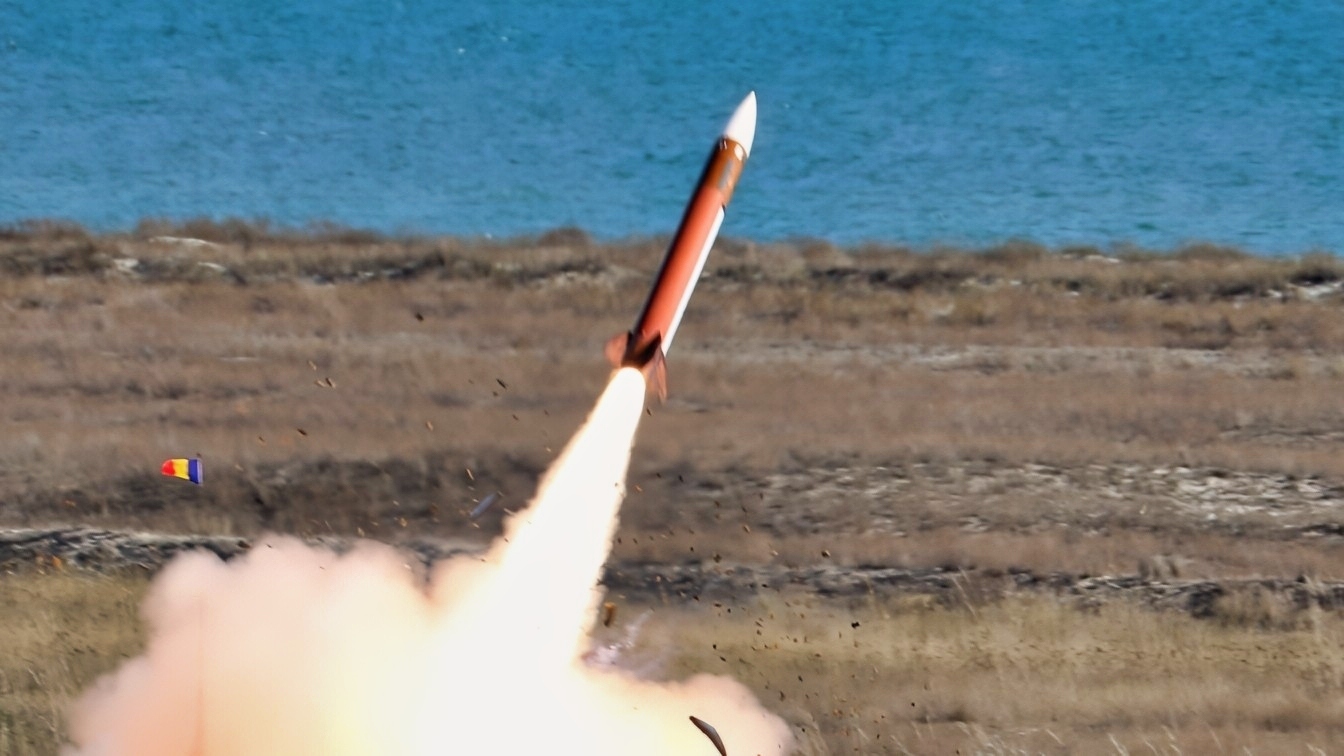
The Romanian Army’s 74th Patriot Regiment conducted the country’s first PATRIOT missile system live-fire exercise at the Capu Midia test firing range in Romania Nov. 14-15, 2023. Romania received the first of seven PATRIOT systems in 2020 through a foreign military sales case executed by the U.S. Army Security Assistance Command. (Courtesy photo)
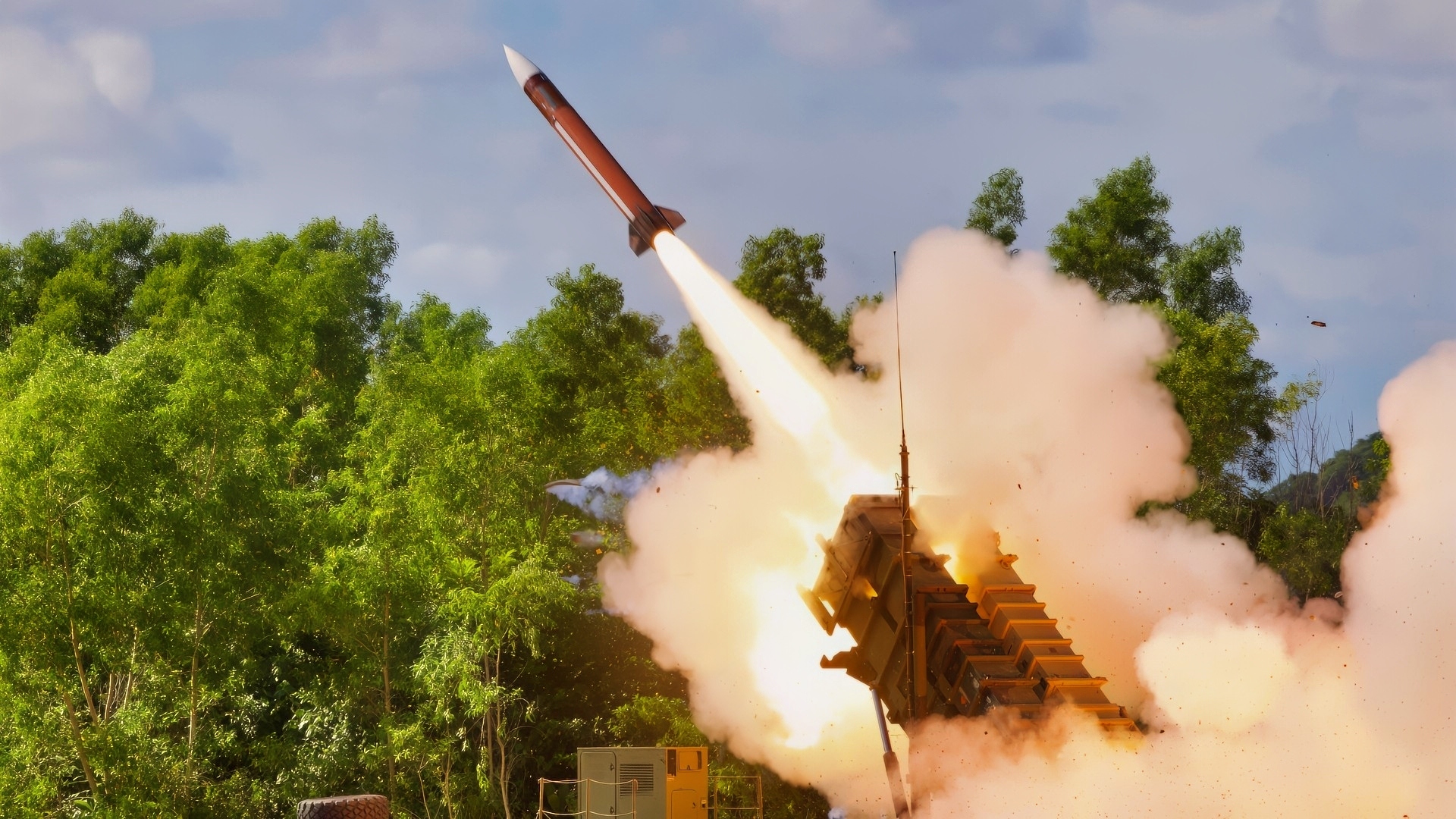
KOROR, Palau — A Patriot Advanced Capability 2 Interceptor missile is fired from an M903 Patriot Launching Station assigned to Battery D, 1st Battalion, 1st Air Defense Artillery Regiment during the patriot live fire portion of Exercise Tenacious Archer 25 on Aug. 21, 2025. Exercise Tenacious Archer 25 is a training event designed to build interoperability, capacity, and relationships that deter aggression and promote peace through strength. The exercise sharpens the brigade’s ability to operate across multiple domains, reinforcing U.S. Army Pacific’s commitment to regional security and stability.(U.S. Army photo by Capt. Frank Spatt)
The president also told leaders of the Gulf, majority-Arab countries in the region, to prepare themselves for a brief but intense renewed bout of fighting after the midterm elections conclude. Speaking at a campaign rally earlier this week, President Trump said: “We may do another little Epic Fury.” “Or,” the president added, “they’ll agree” to make a deal with the United States.
As The Wall Street Journal has noted, General Cooper rarely briefs the president in person, so his meeting with Trump about renewed bombing of Iran is significant. But striking Iran again carries its own risks.
Renewed Strikes?
Much of Iran’s drone and missile strikes have been successfully parried by the United States and its allies in the Middle East. Still, Tehran’s forces have notched some notable successes in their targeting campaign against neighbors in the region. About 800 American service members have been wounded in Iranian strikes, with 15 killed, according to tallies kept by the Department of Defense, and a number of American bases in the region have been destroyed, some of which are unlikely to be rebuilt.
Iran has also targeted important infrastructure in the region. Earlier this month, Iranian munitions rained down on Saudi Arabia’s international airport in Riyadh, the capital. While the damage can certainly be repaired, more than a dozen travelers were killed in the attack, with many more wounded. Terrible as that strike was, however, the more significant damage for Saudi Arabia is the shattering of its international image as a safe travel hub in the Middle East, and a place where tourists and travelers can vacation or transit despite being located in one of the world’s more volatile regions.
Iran’s Options
Badly battered by the opening salvos of Operation Epic Fury, the campaign against the regime, the Iranian regime is nonetheless still clutching to power in Tehran despite losing virtually all of its political and military leadership in the first minutes of strikes. That opening strike, carried out jointly by American and Israeli warplanes, was aimed at decapitating the country’s leadership.
It was successful: Iran’s former Supreme Leader, Ayatollah Ali Khamenei, was killed along with most of the country’s top generals. But the Ayatollah’s son, Mojtaba Khamenei, quickly took up the mantle of leadership. He has, however, not been seen publicly since the attacks, and serious doubts about his mental and physical competency have been raised, leading some to speculate that while he is likely alive, others may be ruling in his stead.
Despite the country’s unclear leadership structure, however, Tehran still has cards to play, even though it holds a bad hand. In both public as well as via private diplomatic channels, Iran has threatened to lash out at its neighbors in the region as well as against the American forces arrayed against it.
During the ongoing lull in fighting, the country took the opportunity to stockpile weapons and ammunition, in particular the ballistic missiles it would use in strikes. Iran has also received military assistance from its two most powerful supporters, China and Russia, including shoulder-fired anti-aircraft missiles with which it could target American and Israeli warplanes, as well as high-quality satellite imagery that provides valuable targeting data for Iran as well as the Houthis, its client rebel group fighting for control of Yemen.
Preparing for Renewed Strikes
In anticipation of a wave of renewed Iranian strikes in the region, the Pentagon has rushed additional air defenses to the region. The U.S. Army is sending a Patriot air defense battery to Israel to help that country better fend off Iranian strikes.
Still, the ongoing Patriot air-defense interceptor shortage significantly complicates defense calculations. Other supplies, including weapons and ammunition, have been shuffled to the region to help American forces, and some bases have been evacuated in part or entirely to get service members out of harm’s way.
The midterm elections are still a few days away, but what comes after could well be the biggest expansion of fighting since the war began in late February.
About the Author: Caleb Larson
Caleb Larson is an American multiformat journalist based in Berlin, Germany. His work covers the intersection of conflict and society, focusing on American foreign policy and European security. He has reported from Germany, Russia, and the United States. Most recently, he covered the war in Ukraine, reporting extensively on the shifting battle lines in Donbas and the war’s civilian and humanitarian toll. Previously, he worked as a Defense Reporter for POLITICO Europe. You can follow his latest work on X.


