

It’s election day in the United States, and as it has been all year, Democrats are expected to have a good night. They’re seen as almost certain to wipe out the small Republican majority in the House of Representatives, and possibly win back the Senate as well.
The biggest question heading into the vote is whether the polls are right, or if we’re looking at another polling miss that underestimates Republican voters.
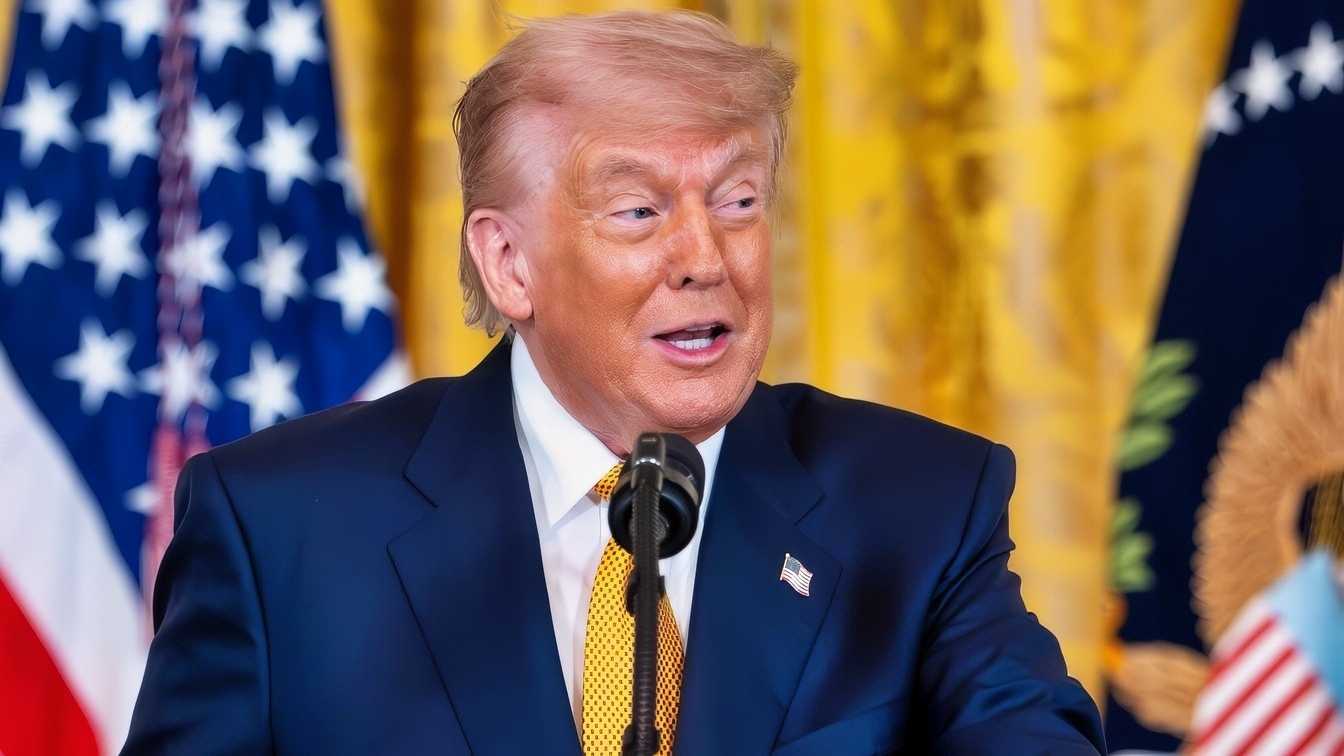
President Donald J. Trump delivers remarks at a Military Mothers’ Day event, Wednesday, May 6, 2026, in the East Room of the White House. (Official White House Photo by Andrea Hanks)

President Donald J. Trump greets Ambassadors David Perdue and Xie Feng, Executive Vice Minister of Foreign Affairs Ma Zhaoxu and Minister of Foreign Affairs Wang Yi at Beijing Capital International Airport, China on Friday, May 15, 2025, before boarding Air Force One en route Washington, D.C. (Official White House Photo by Daniel Torok)
However, one expert sees Democrats getting more than a blue wave on Tuesday, a “blue tsunami.”
Silver Speaks
Nate Silver is the election forecaster who, in 2008, accurately predicted 49 of the 50 states and nailed all 50 in 2012. In 2016, he predicted before the race that Donald Trump had about a one-in-three chance of winning, while most election forecasters saw Hillary Clinton as having more than a 90 percent chance of winning.
In his Silver Bulletin newsletter, the successor to his old FiveThirtyEight site, Silver pointed to the final pre-election survey by the New York Times/Siena poll, which showed Democratic candidates ahead in every major battleground Senate race.
As Silver noted, the Times poll showed Democrat Abdul El-Sayed ahead of Republican Mike Rogers by 11 points in the Michigan Senate race, while Democrat James Talarico led Republican Ken Paxton by 7 points in the Texas Senate race. In Maine, Democrat Troy Jackson leads Republican incumbent Sen. Susan Collins by 6 points, while former Democratic Sen. Sherrod Brown leads Republican Sen. Jon Husted in Ohio by 5 points. In Kansas, Democrat Adam Hamilton leads Republican Sen. Roger Marshall.
If those polls are accurate, Silver says, they point to a “blue tsunami” on Tuesday, not merely a blue wave.
Except for Maine, Trump won all those states in 2024. Several of those states, such as Ohio, have been red or leaning that way throughout the Trump era, while no Democrat has won a statewide race in Texas for a generation.
“Even if Democrats were to lose a couple of these races,” Nate Silver writes. “I think — absolutely no Democrat is going to complain if they only flip the top five races in this chart, especially if it comes along with the Texas governorship.”
Silver does note, however, that the Times shows a +11 Democratic lead on the generic ballot, which is more pro-Democratic than most other polls.
Silver’s model aggregates polls and other data, and he notes that the NYT/Siena survey carries significant weight in his model.
“Democrats could actually absorb a modest-sized polling error and perhaps still prevail given the latest round of surveys,” he writes.
Can the Polls Be Trusted?
Many Democratic partisans are anxious heading into this election, remembering 2016 and other past elections when polls seemed to predict a big win that didn’t materialize. Pollsters themselves, whose reputations depend on being right, are similarly nervous.
The New York Times ran a roundtable this week with pollsters involved in the NYT/Siena poll, as Silver cited above, on how they see things heading into the vote. The story notes that in the 2018 midterm election, while Democrats recaptured the House of Representatives as expected, the GOP did better than expected in some red states, and Republicans kept control of the Senate for the last two years of Trump’s first term.
Also, in 2020, Susan Collins trailed in the polls but ultimately won in Maine, while Democrats have also gotten their hopes up recently about winning Texas, only to have those hopes dashed.
Could something like that happen again this week?
“You can trust the polls to usually be in the ballpark, but you can’t trust them to be exactly ‘right,’” Nate Cohn, a Times pollster who formerly worked for Nate Silver at FiveThirtyEight, said in the article.
William P. Davis, another Times pollster, said in the roundtable that the question is “How good of a year will it be for Democrats? Polls suggest a pretty good one.” But exactly how good it will be will determine the size of their majority and whether the Senate flips to Democratic control for the next two years.
About the Author: Stephen Silver
Stephen Silver is an award-winning journalist, essayist, and film critic, and contributor to the Philadelphia Inquirer, the Jewish Telegraphic Agency, Broad Street Review, and Splice Today. The co-founder of the Philadelphia Film Critics Circle, Stephen lives in suburban Philadelphia with his wife and two sons. For over a decade, Stephen has written thousands of articles on politics, national security, technology, and the economy. Follow him on X (formerly Twitter) at @StephenSilver, and subscribe to his Substack newsletter.


