
If the opinion polls are to be believed, the Republican Party is facing a tremendously difficult election night.
The Democratic Party has led almost all generic congressional ballots — national measures of party preference that do not predict individual races — throughout the campaign.
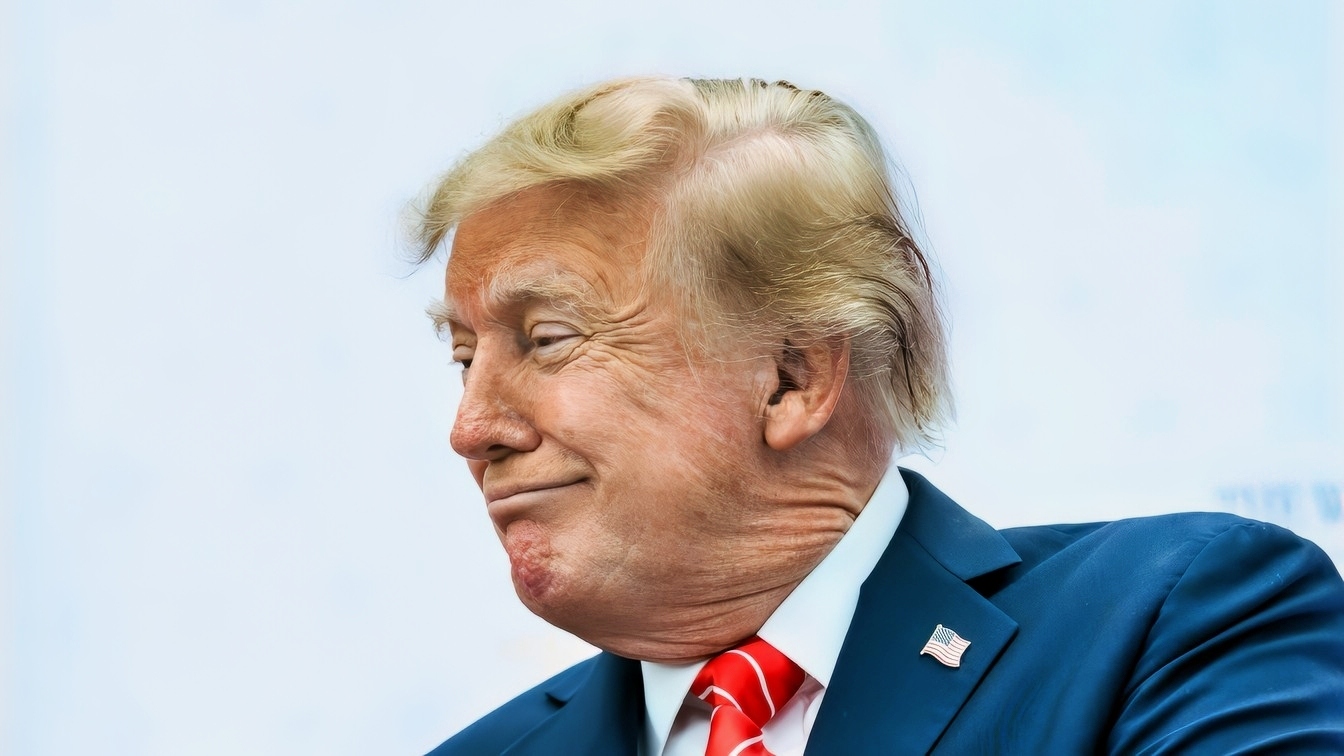
President Donald J. Trump presents the National Medal of Science to tech company leaders at a “New Golden Age” summit with tech and science leaders at the Donald J. Trump Institute of Peace in Washington, D.C., Thursday, October 8, 2026. (Official White House Photo by Daniel Torok)
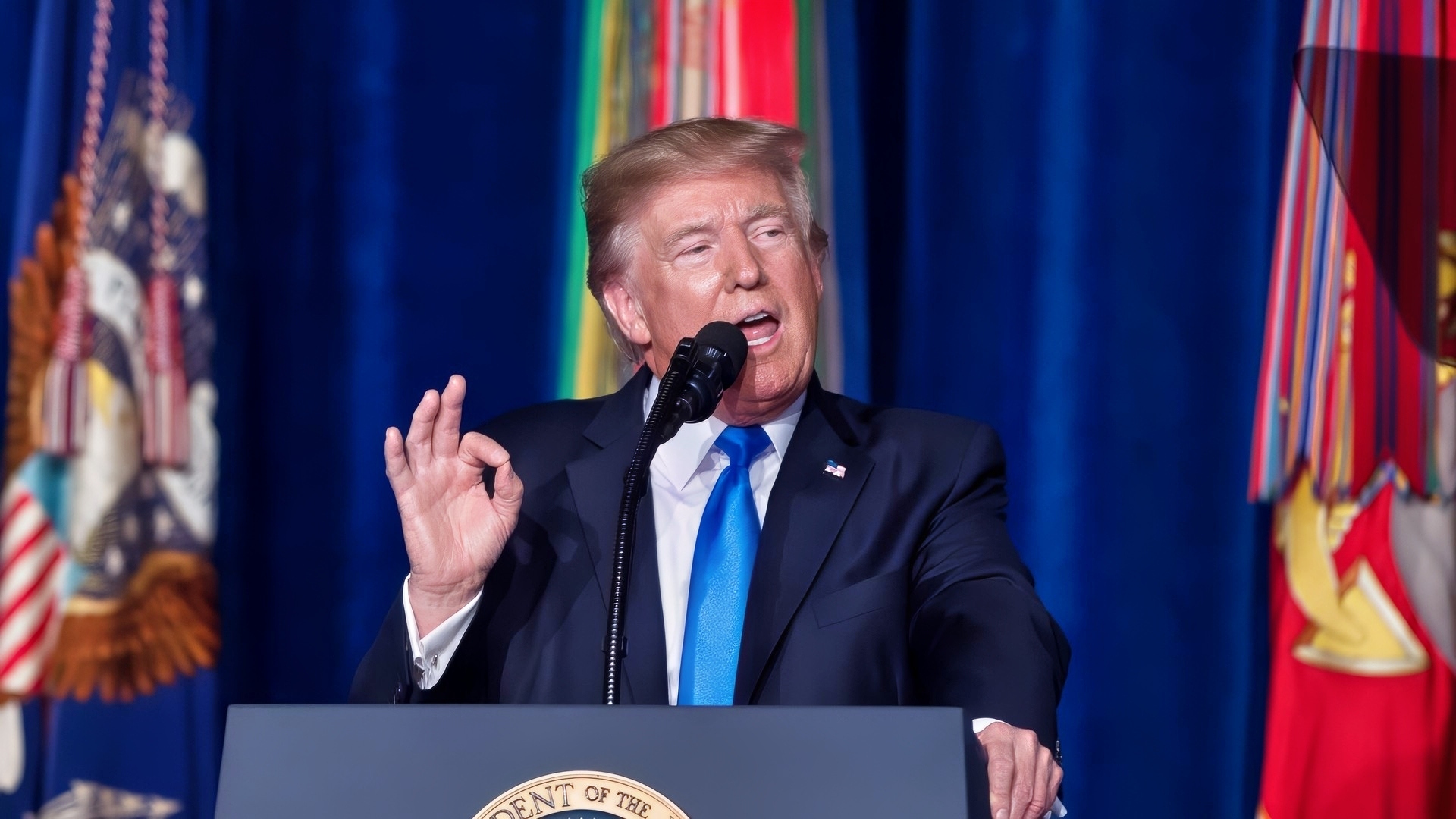
President Donald J. Trump addresses the nation on the South Asia strategy during a press conference at Conmy Hall on Fort Myer, Va., Aug. 21, 2017. (DoD photo by Army Sgt. Amber I. Smith)
Republicans face a substantial polling deficit as they seek to retain both chambers.
Having won two nonconsecutive presidential elections and three successive Republican presidential nominations, President Donald Trump has placed himself at the center of the Republican campaign in hopes of energizing the Republican base.
But it could become the party’s Achilles’ heel.
The Cost of Loyalty
Trump’s influence over the Republican Party extends well beyond its campaign message; he has helped determine the candidates delivering it.
If those candidates struggle, the president cannot reasonably separate their performance from his own decisions.
Texas offers a telling example. Trump endorsed Attorney General Ken Paxton over incumbent Senator John Cornyn, partly because Cornyn didn’t support him when the president faced difficulties.
Paxton’s loyalty counted heavily in his favor, despite the controversies surrounding him.
That preference carries consequences beyond a Republican primary.
Candidates must eventually persuade an electorate that includes independents, dissatisfied conservatives, and voters who attach little importance to their relationship with Trump.
North Carolina presents a similar problem.
Trump’s preferred candidate, former Republican National Committee chairman Michael Whatley, faces Roy Cooper, a former governor with an undefeated statewide electoral record.
Whatley’s closeness to the president gives him credibility among Republican loyalists.
It also ties him to an administration whose economic and foreign policies Cooper has made central to his campaign.
Neither contest proves that another Republican would have won.
The national environment would have challenged alternative candidates too.
But the president has repeatedly treated personal allegiance as evidence of political strength. Polls in both Texas and North Carolina suggest voters disagree.
The Cost of Living
Voters’ economic priorities offer the clearest warning.
In an October AP-NORC survey, 85% of voters identified the economy as one of their most important election issues, while 84% said the same about the cost of living.
Almost four in five disapproved of Trump’s handling of living costs.
Those figures describe a fundamental weakness in the Republican campaign.
Trump returned to office after campaigning on economic dissatisfaction — dissatisfaction that remains two years on.
Presidents cannot control every price, and voters’ judgments do not establish the precise causes of inflation.
But the political standard Trump encouraged was straightforward: judge the government by whether life becomes more affordable.
A September AP-NORC survey found that 65% of adults attributed higher-than-usual prices primarily to his policies rather than circumstances beyond his control.
Whatever the administration’s explanation, much of the public has decided where responsibility lies.
The Cost of War
America’s living cost crisis has been exacerbated by the Iran war, with Tehran disrupting shipping through the Strait of Hormuz and oil prices remaining well above pre-war levels for months.
Trump argues that preventing Iran from acquiring nuclear weapons justifies American action.
That objective does not automatically establish that this war was necessary, well managed, or likely to deliver lasting security.
His own voters were also offered a different expectation. During the 2024 campaign, Trump promised to end “endless wars” and repeatedly presented himself as the candidate of peace.
An eight-month conflict, accompanied by recurring threats of another supposedly decisive strike, sits uneasily with that pitch.
In September, 69% of adults told AP-NORC the war had not been worth fighting. The administration’s justification plainly has not persuaded most Americans.
There is a limit to how often another bombing campaign can be presented as the final step. Voters are entitled to ask what success means, when it arrives, and why previous assurances proved inadequate.
The Cost of Renovation
Monday’s “closing speech” at the Lincoln Memorial Reflecting Pool was arguably symbolic of the Trump-centric GOP campaign.
With control of Congress at stake, Trump spent more than 20 minutes discussing renovations before turning to the election.
Pipes, paint, and landscaping received attention that Republican candidates needed directed toward voters’ financial concerns.
One speech cannot explain an election, and no poll establishes that its audience changed its vote.
But the event illustrated the distance between the president’s preferred conversation and the electorate’s concerns.
Republicans needed a closing argument about cheaper living, credible security, and capable representation. Trump offered another account of his own achievements.
If voters reject that invitation, his party will have to reckon with how much of its campaign it surrendered to him.
About the Author: Shay Bottomley
Shay Bottomley is a British journalist. He has written for the Western Standard, Business Insider, Maidenhead Advertiser, Slough Express, Windsor Express, Berkshire Live and Southend Echo.