

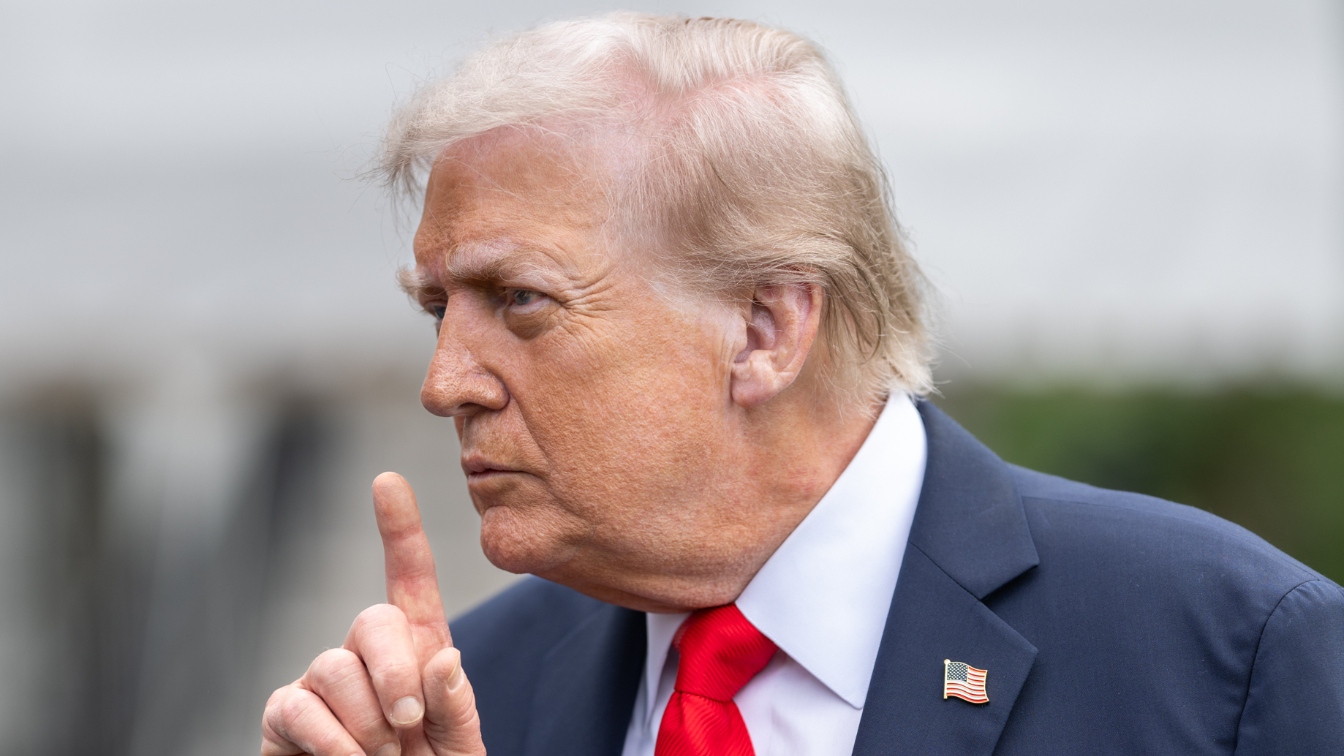
Americans are voting in the Midterm elections today, and nearly every major election forecasting model indicates that Democrats are expected to enjoy a “Blue Wave” this year.
Indeed, some projections even show Democrats capturing both the House of Representatives and the United States Senate.

Donald Trump In New York City White House Photo
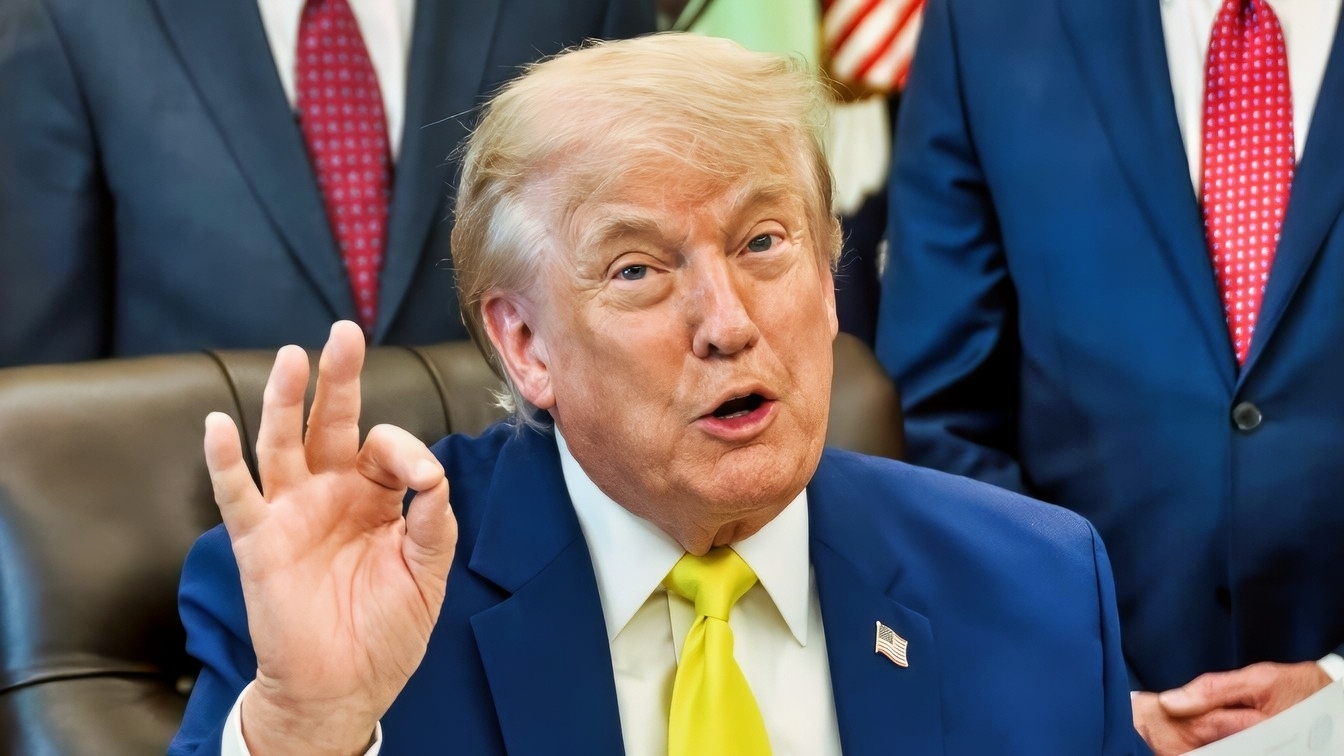
President Donald J. Trump, joined by Secretary of Energy Chris Wright, Secretary of the Interior Doug Burgum, EPA Administrator Lee Zeldin and others, makes an announcement on coal, Thursday, June 4, 2026, in the Oval Office. (Official White House Photo by Molly Riley)
There are some governors’ races–such as the ones in Deep Red Texas and Florida–that are closer than they ordinarily would be, reflecting a serious dissatisfaction with the Republican Party (and President Donald Trump) among average voters.
Game Over
Nate Sivler estimates that Democrats have a 95 percent probability of winning control of the House of Representatives and an 80 percent chance of taking the Senate.
Silver assesses that Democrats will gain 25 House seats. Losing the Senate, though, will be particularly damaging to both the wider GOP and the president himself.
Republicans currently hold a 53-to-47 majority.
If the Democrats gain just four seats, they take control.
All the polls might indicate that Republicans are set to be inundated by the Blue Wave, but historically, Republicans outperform polls especially when Donald Trump is involved.
That said, the president has become deeply unpopular.
He’s at his lowest approval rating in ten years, and he’s approaching President George W. Bush’s low approval ratings from the height of the Global Financial Crisis in 2008.
That’s not good if Trump hopes voters will reelect Republicans to help him. Voters seem angry with Trump.
A New York Times/Siena College survey is particularly damaging for the Republicans. It shows Democratic candidates leading in all seven Senate battleground states.
Democrats are up 11 percentage points in Michigan, seven in Texas, six in Maine, five in Kansas, another five in Ohio, two in Alaska, and one in Iowa.
As a reminder, Trump carried all seven states in 2024.
Then there’s the Cook Political Report that shows Democrats winning as many as 240 seats in the House of Representatives.
That would be the largest Democratic majority in the lower chamber since President Barack Obama was in office.
Even if the Democrats don’t win that many, though, they are slated to win the majority in the House–this is something that not even Republicans dispute.
In prediction markets, Kalshi has assigned a 73 percent probability to Democrats winning both chambers of Congress. Nearly $100 million in contracts have traded on Kalshi’s congressional-control market.
Prediction markets are worth listening to for two reasons: first, they accurately predicted Trump’s victory in 2024 with better accuracy than many polls (although prediction markets merely aggregate polls).
At the same time, people are betting money–lots of money–on these prediction markets, meaning that there’s real skin in the game behind these predictions.
If they weren’t generally accurate, people wouldn’t trust these firms with their money.
Republicans Cope
Republicans are betting on underrepresentation in the various polls conducted heading into this election cycle.
There has been an historical oversampling of Democrats in these polls.
But even Republican pollsters like Rich Baris and Mark Mitchell claim Republicans are slated to lose a lot this election, regardless of sampling errors.
It all comes down to the issues voters care most about: the economy, affordability, and unpopular wars of choice.
Trump’s approval ratings should have gone into George W. Bush territory.
That’s because Republicans at least appear to many voters to have given up on the kitchen-table issues they care most about.
Meanwhile, Republicans generally do wait until election day.
That has to do with a variety of factors, among them the president’s repeated insistence that the elections are rigged. That can depress turnout anyway.
By waiting on election day to vote, though, the Republicans are hoping that their voters have the time or inclination to stand in long lines and wait, while hoping that the weather–a classic vote depressant on election day–remains sunny and clear.
Just look at what happened in Eastern Florida on Election Day today. Historic flooding is occurring across the region.
As of this writing, that flooding has already displaced 19 polling stations across eight counties, which will undoubtedly hurt Republican turnout, since Republicans depend on Florida electorally.
No Enthusiasm On the Right
Don’t forget there’s a real enthusiasm gap, too.
In this election cycle, multiple polls have demonstrated that Democratic voters are more likely to vote than are their Republican counterparts because of the unpopularity of things like the Iran War, the affordability crisis, and the failure of this administration to keep fuel costs down, which have inherently depressed Republican turnout this election cycle.
The fact is that until all votes are counted, we will not know for certain what is coming.
At the same time, the polls indicate the election is not going to go well for the Republicans.
At the very least, the GOP will lose the House.
Although increasingly, it appears as though the GOP will lose the Senate–and probably some key gubernatorial races- meaning that redistricting for the next presidential election will be harmed by those Democratic governors.
About the Author: Brandon J. Weichert
Brandon J. Weichert is the Senior National Security Editor at 19FortyFive.com. He also manages The Weichert Brief on Substack. Weichert is the co-host for The Mario Nawfal Show on Twitter/X. He is the author of four bestselling national security books, most recently A Disaster of Our Own Making: How the West Lost Ukraine (Encounter Books). His next book, Fortress Americas: A New Monroe Doctrine (Tucker Carlson Books), is due out December 8. Follow him via Twitter/X @WeTheBrandon.


