

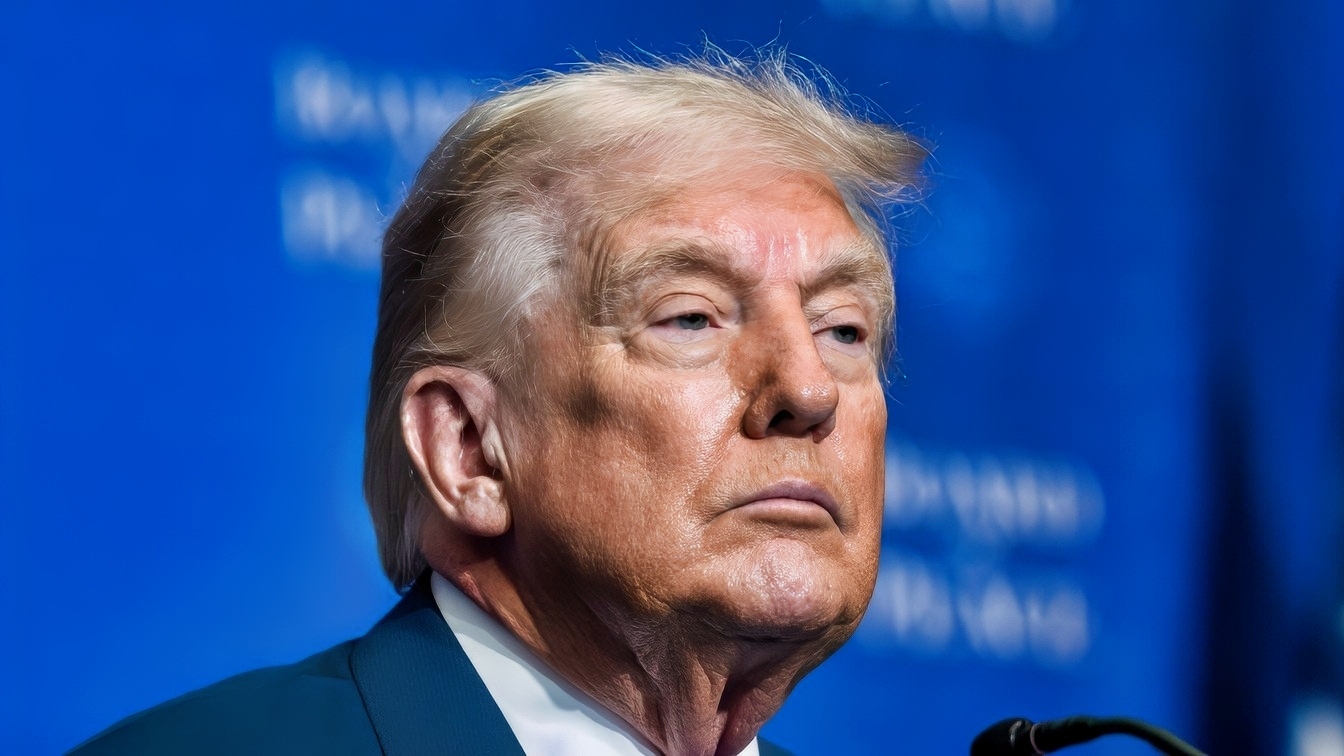
The Republican Party lost badly in yesterday’s midterm election. That wasn’t because of fraud. Or because Americans didn’t just understand the supposed greatness of one Donald Trump. In fact, the American voter understood what was going on all too well.
The president and his party were overwhelmingly elected in 2024 to fix the economy, but over the last two years they did everything but fix it.

A B-52H Stratofortress assigned to the 419th Flight Test Squadron is undergoes pre-flight procedures at Edwards Air Force Base, California, Aug. 8. The aircraft conducted a captive-carry flight test of the AGM-183A Air-launched Rapid Response Weapon Instrumented Measurement Vehicle 2 at the Point Mugu Sea Range off the Southern California coast. (Air Force photo by Giancarlo Casem)

A U.S. Air Force B-52H Stratofortress assigned to the 2nd Bomb Wing prepares to depart for a Bomber Task Force mission at Barksdale Air Force Base, La., May 18, 2025. These bomber missions are representative of the U.S. commitment to our allies and enhancing regional security. (U.S. Air Force photo by Airman 1st Class Jaiyah Lewis)
The final straw for the voters was Trump’s war of choice in Iran. Because of that war, the US economy has basically stalled–and the affordability crisis has been accelerated for everyone.
Here are some interesting data points.
According to NBC News exit polls, only 2 percent of voters described the American economy as being in excellent condition.
89 percent of voters said that the cost of living was a crucial or major factor in selecting their candidate.
Another 88 percent expressed significant concern about grocery prices, describing themselves as very or somewhat concerned.
Another 59 percent said they were very concerned about gasoline prices.
The Importance of the Kitchen Table
Ronald Reagan always reminded Republican politicians that kitchen-table issues determined elections. No idea, no policy, and no talking point could change whether Americans believed things were going badly for them economically.
And Americans are very practical, regardless of age, race, or orientation.
They know when the price of eggs or milk is higher than what it used to be.
They can tell when housing is unaffordable.
The only people who seemed to have forgotten these hard facts of life were Donald Trump and the Republican Party this election cycle.
They became obsessed with another unpopular war of choice in the Middle East.
And in waging that war of choice, the Trump administration and its Republican enablers in Congress ensured that the cost of living would explode, inflation rates and interest rates would skyrocket, and the Democrats would suddenly look more appealing to voters just two short years after voters repudiated the Democrats for being unable (or unwilling) to address those affordability problems.
A shocking element of this election was just how predictable it was.
Democratic pollsters saw it, which is why the Democrats were so enthusiastic.
The longer that the war dragged on, the more the Democrats knew their victory was, on some level, assured (though many did not anticipate this record-setting victory for the Democrats).
Even Republican pollsters who correctly called the MAGA waves of 2016 and 2024, such as Rich Baris and Mark Mitchell, saw the rising likelihood of a Blue Tsunami because of the war and its related economic effects.
They warned the White House. The Trump administration, rather than listening, shouted them down and publicly ostracized them.
A Harvard CAPS/Harris survey that was conducted from October 24-26 found that 38 percent of respondents identified inflation, rising prices, and affordability as the country’s most important problems.
Among likely midterm voters, that figure rose to 40 percent.
Another poll conducted by Reuters/Ipsos found that 48 percent of registered voters considered the cost of living their most important voting issue just before voting began.
That outstripped other concerns, such as 26 percent who said they feared Trump violated democratic norms and 13 percent who worried about immigration.
That same poll found that 49 percent of Americans believed their household finances had deteriorated since Trump returned to the White House in January 2025.
Only 13 percent reported an improvement, while 37 percent said their financial circumstances remained approximately unchanged.
Affordability? We Don’t Need No Stinkin’ Affordability!
Democratic candidates made affordability their central campaign issue early during the campaign, whereas Trump told the world that the affordability crisis was a fake Democrat hoax.
Americans heard this and were enraged at the man who claimed he would save the economy.
House Democratic leader Hakeem Jeffries highlighted the party’s commitment to lowering living costs during his election-night remarks.
Georgia Democrat Sen. Jon Ossoff and Tex. Senate candidate James Talarico both emphasized the economic pressures facing working families.
Some Republicans tried to address similar concerns, although it was hard to convince people while they were still standing in solidarity with the president’s war and trying to argue that people in America were better off under the second Trump administration than they really were.
The 2026 midterms showed how economic dissatisfaction can transcend traditional partisan divisions. Americans entered voting booths not feeling like they were living in a golden age (they were not), but afraid of how they would feed their families.
They worried their children would live less prosperously than they did.
American voters going to the polls yesterday feared that the president might trigger a third world war, because of Trump’s intransigence on the Iran War.
Americans gave the Republicans their chance in 2024 to fix the affordability crisis. The GOP failed royally. We’ll see if the Democrats can address these concerns better. Here’s to hoping they can.
About the Author: Brandon J. Weichert
Brandon J. Weichert is the Senior National Security Editor. He also manages The Weichert Brief on Substack. Weichert is the co-host of The Mario Nawfal Show on Twitter/X. He is the author of four bestselling national security books, most recently A Disaster of Our Own Making: How the West Lost Ukraine (Encounter Books). His next book, Fortress Americas: A New Monroe Doctrine (Tucker Carlson Books), is due out December 8. Follow him via Twitter/X @WeTheBrandon.


