
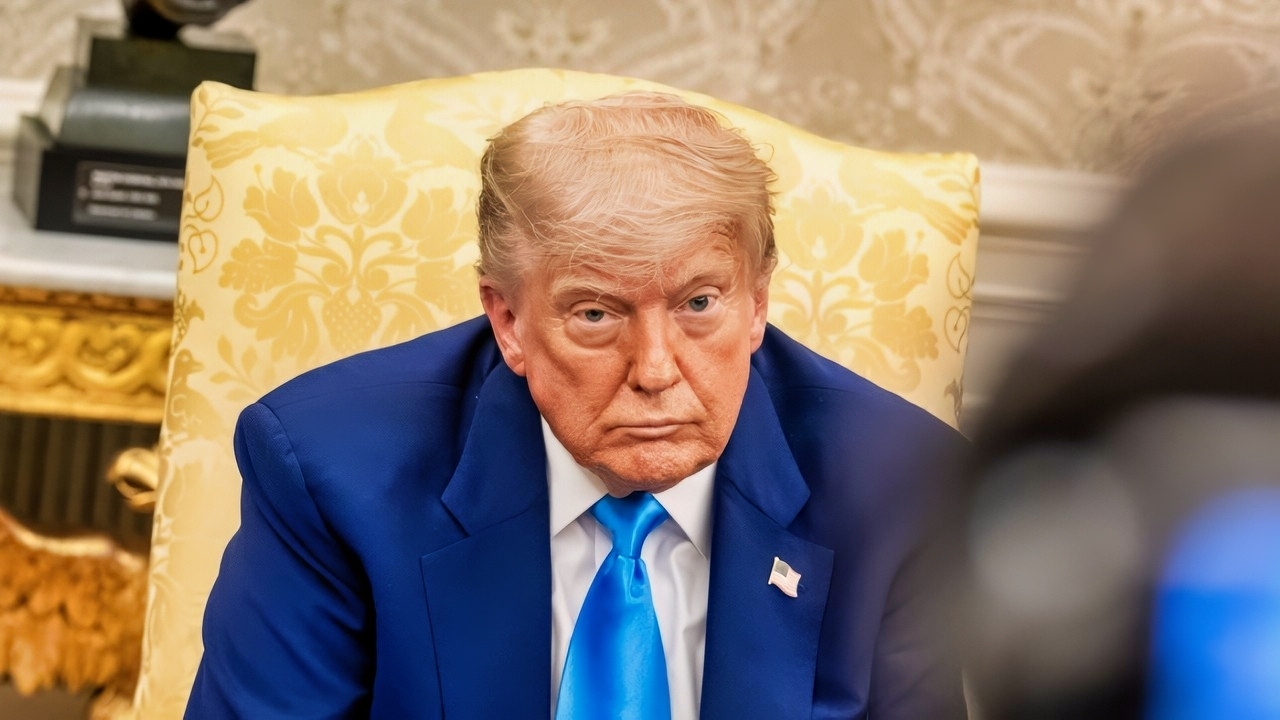
President Donald Trump blamed Fox News for contributing to the devastating losses the Republicans endured in yesterday’s midterm elections, even going as far as to criticize the network’s polling operation despite its surveys having accurately assessed the coming Democratic victories.
In several Truth Social posts on Tuesday, November 3, the president complained about the network’s coverage of the Democrats and suggested that Fox News bore some responsibility for the losses.

President Donald Trump sits for an interview with Fox News journalist Rachel Campos Duffy, Monday, April 14, 2025.(Official White House Photo by Daniel Torok)
In a subsequent telephone interview with the network, he said the network’s polls were “terrible.”
Fox News anchor Bret Baier pushed back, however, responding, “Tonight, actually, the results are pretty close to what the Fox polls showed.”
Numbers across the board suggest that Baier had a point.
Trump’s Comments
Writing shortly before midnight on Tuesday, the president blamed Fox for the Democrats’ massive victories across the country.
“Why does Fox News [six] have Bill de Blasio, the Worst Mayor in the History of New York City, on air, ranting and raving like a Lunatic?” Trump wrote on Truth Social.
“He left the City in disgrace, and the damage he caused was incalculable — it has never been the same, and now he’s telling us how to run America. Fox News bears responsibility for these losses by constantly and consistently putting on the Democratic opposition, and worse. GOD BLESS AMERICA!” he added.
The president also opined about the network’s declining ratings and attributed the drop in viewership to its coverage of Democrats, rather than wider dissatisfaction among Republicans who watch the network’s programming.
“It’s them, not me — My numbers are better than they have ever been,” he said.
The president issued the criticisms in multiple statements as exit polls came in, revealing that Democrats had secured control of both chambers of Congress, leaving him a lame-duck president with substantial obstacles to passing any legislation over the next two years.
But President Trump’s comments are hard to reconcile not only with the findings from Fox’s pollsters, but also with reality.
What Fox Predicted
A Fox News survey from October 9-12 found that 54% of registered voters supported Democratic congressional candidates.
The poll found that 45% of Americans backed Republicans, a nine-point advantage larger than the seven-point lead the network had previously reported.
The poll also found that President Trump’s approval rating had fallen to 36%, and that his approval on inflation, in particular, had dropped to 22%.
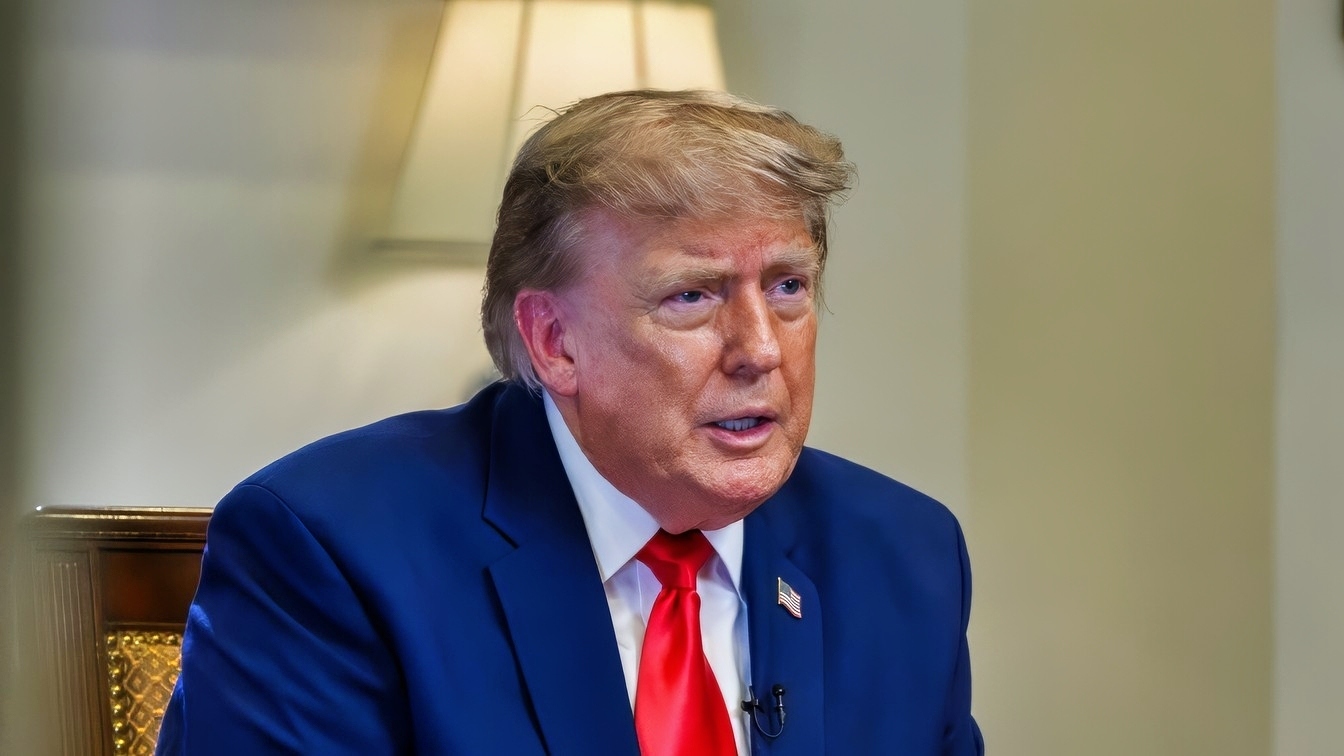
President Donald J. Trump participates in an interview with Trey Yingst, foreign correspondent for Fox New, in the Roosevelt Room of the White House, Tuesday, July 14, 2026. (Official White House Photo by Joyce Boghosian)
Fox was not the only network or aggregator making these predictions, either.
The final RealClearPolitics average was particularly devastating also, putting Democrats ahead by 8.8 percentage points, 52.1% to 43.3%.
A Reuters/Ipsos survey conducted between October 29 and November 1 gave Democrats an eight-point advantage.
A YouGov poll also gave them a nine-point lead.
Polling this year has been largely consistent, with most major pollsters predicting that Democrats were closing in on a double-digit percentage-point advantage nationally.
Then the election came — and the pollsters were broadly right.
How Accurate Were the Polls?
The polls have broadly been proven correct, though some significantly underestimated the scale of the Democrats’ victories in some races.
In Maine, for example, the New York Times/Siena survey put Democrat Troy Jackson ahead of Republican Senator Susan Collins by six points — 51% to 45%.
Jackson defeated Collins, with the latest results showing him ahead by approximately seven points on Wednesday. The polls, then, were largely accurate.
Michigan was interesting, too. A New York Times/Siena poll predicted an 11-point lead for Democrat Abdul El-Sayed over Republican Mike Rogers.
With more than 95% of the votes counted, Decision Desk HQ puts El-Sayed ahead by around seven points. In that instance, the prediction was somewhat overstated. The Democratic candidate did win, though.
Other races revealed some substantial errors, however. In Texas, for example, Fox News put Democrat James Talarico and Republican Ken Paxton in a dead heat, 49%-49%. The final polling average then gave Talarico a lead of just 2.6 points, but with the results in, Talarico won by around ten points.
In North Carolina, the final AtlasIntel poll predicted that Democrat Roy Cooper would defeat the Republican candidate Michael Whatley by 14 points. Cooper won the election by almost 20 points.
What do the polls tell us? Well, they show that pollsters not only captured the so-called “Shy Trump” or “Shy Republican” vote, but also avoided overstating the likely scale of the Democrats’ victories.
Are Pollsters Getting Better?
As President Trump prepares for his final two years in the White House and the GOP looks for a new leader, pollsters seem to have finally overcome the challenges they faced in 2016 and the years that followed.
After failing to predict Republican turnout accurately, polls this year show surveys are more accurate at predicting results, even as Republicans remain less likely to engage with polling firms.
About the Author: Jack Buckby
Jack Buckby is a British researcher and analyst specializing in defense and national security, based in New York. His work focuses on military capability, procurement, and strategic competition, and he produces and edits analysis for policy and defense audiences. He brings extensive editorial experience, with a career output spanning over 1,000 articles at National Security Journal, and has previously authored books and papers on extremism and deradicalization.


