


The Iran War began on February 28, with little discussion or even fanfare. Whereas the George W. Bush administration took months to make its (flawed) case for the Iraq War, the Trump administration was ambivalent–almost glib–in its decision to initiate a costly war against the Islamic Republic of Iran.
Dubbed a “short excursion” by President Donald Trump and his allies, the war is now in its ninth month (and counting).
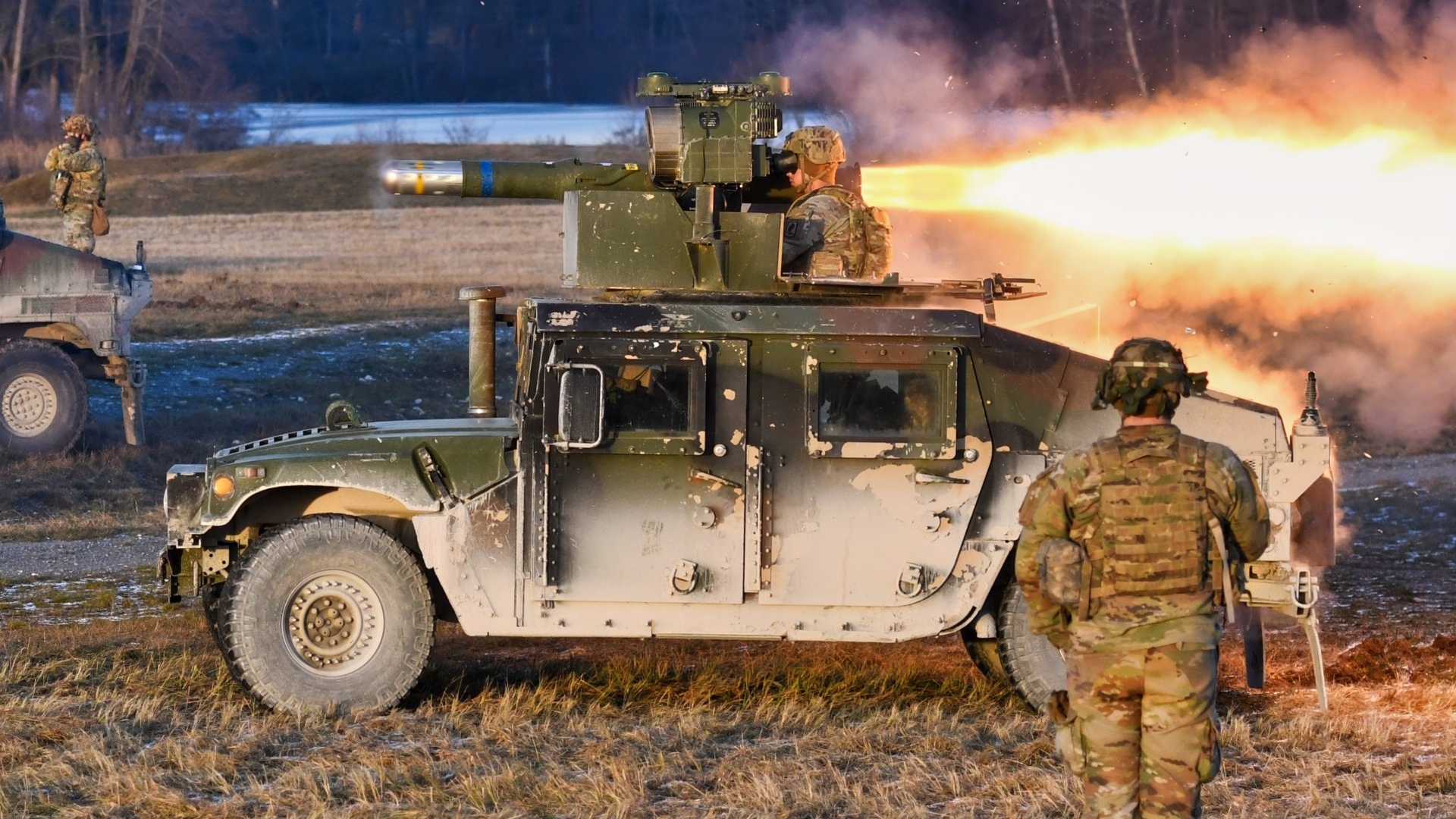
U.S. Paratroopers, assigned to 1st Squadron, 91st Cavalry Regiment, 173rd Airborne Brigade, fire a Tube-launched, Optically tracked, Wire-guided (TOW) missile at the 7th Army Training Command’s Grafenwoehr Training Area, Germany, Dec. 13, 2022. The 173rd Airborne Brigade is the U.S. Army Contingency Response Force in Europe, capable of projecting ready forces anywhere in the U.S. European, Africa or Central Commands’ areas of responsibility.
(U.S. Army photo by Markus Rauchenberger)
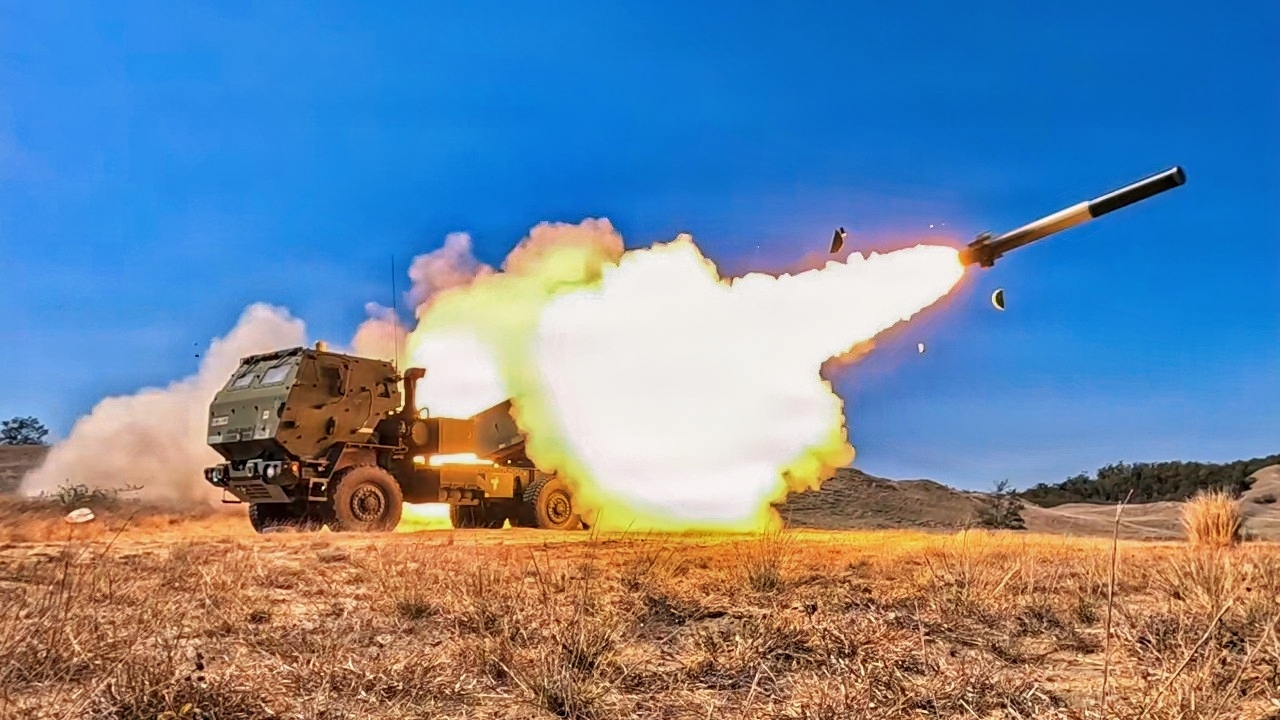
U.S. Soldiers assigned to 2-11 Long Range Fires Battalion, 25th Infantry Division Artillery, fire a High Mobility Artillery Rocket System during a counter-landing live-fire exercise as part of Exercise Balikatan 2026 at La Paz Sand Dunes, Laoag City, Philippines, May 4, 2026. Balikatan is a longstanding annual exercise between the Armed Forces of the Philippines and U.S. military that represents the strength of our alliance, improves our capable combined force, and demonstrates our commitment to regional peace and prosperity. (U.S. Army photo by Sgt. Duke Edwards). Ukraine has such missiles to fight Russia.
The fallout has been profound, and I am not only referring to last night’s stunning electoral defeat of the Republican Party in this year’s Midterm elections.
Donald Trump was effectively resuscitated politically after his shambolic handling of the pandemic in 2020 and his embarrassing displays after the 2020 elections to become president again.
His promises were simple and profound.
The Economy of Failure
Trump and the Republican Party said that if Americans, struggling in 2024 through a turgid economy defined by high prices, high inflation, and slow growth, voted for him, he would enact policies to repair the economy for all Americans.
Trump also leaned heavily into his long-time non-interventionist beliefs, reminding people that during his first term, he started no new wars.
Before Trump’s ill-fated Iran War began, in fact, the economic situation in the United States–while far from perfect–was trending in the right direction (even with the drag of tariffs slowing that recovery down).
At the start of the Iran War, the average price of diesel in the United States was a little north of $3 a gallon. Regular gas was just under $3. Today, diesel is above $6.
On February 27, the consumer price index was around 2.4 percent (almost exactly matching its low in the second Trump administration).
Today, it is at 3.7 percent (and rising).
It gets better (I mean, worse), too.
In February, before the war started, interest rates were around 5.9 percent, whereas in November they were 7.23 percent.
Again, that number is expected to rise at the Federal Reserve’s next meeting in early December (in response to exploding inflation).
The change in the yield on the 10-year Treasury note is particularly stunning.
When the war started, it was around 3.7 percent.
The bond yield is around five percent today.
Of course, inflation is a major driver.
But other factors also affect bond yields, including massive AI investments.
Regardless, bond yields likely would not be as high as they are today without the war.
Higher bond yields mean more tax dollars go toward paying interest on the debt, leaving less money for more popular policies that would be more impactful for ordinary Americans today.
Mortgage prices, too, exploded.
Before the war, mortgage prices were less than six percent. After the war, they’re north of seven percent.
Once more, there is no indication that these will come down soon, compounding the affordability crisis and the belief among Americans that the American Dream for them and their children is dead.
Why Did Trump Win?
In 2016, Donald Trump caught a populist wave that had been brewing on the Right since the Tea Party days. Several factors fueled his unexpected rise.
The first was voters’ unrequited opposition to the Iraq War.
The second was the outrage many felt over the bailouts of major banks during the 2008 Great Financial Crisis.
The third was a desire to get back at the neoliberal elite who spent the previous 40 years gutting the American heartland of good-paying manufacturing jobs.
The fourth was anger over the perception of lawlessness along our southern border.
The fifth was that Americans were tired of the fixation on obscure cultural issues that Obama-era Democrats obsessed over.
Donald Trump happened to catch that wave in 2015.
It was a fluke.
He had no plan for anything.
All Trump understood was the crowd.
And he used that ability to read the room to catapult his unlikely candidacy ahead of two of the most powerful dynasties in American politics–the Bush Family in the GOP and the Clinton Family in the Democratic Party.
Trump was independently wealthy and famous.
He had heterodox views (or so he presented himself).
As the Left-wing filmmaker Michael Moore said at the time, Trump was the Molotov cocktail thrown into the heart of an establishment that many Americans believed no longer cared about them or what they wanted.
At some point, though, Trump abandoned that populist ethos.
Once elected, he hired people who were far too obsequious to him or people who actively worked against the will of his populist base.
A fight for the soul of his presidency played out in his first term and continued until the ignominious end of that term’s ignominious end.
Then came the Left’s perception of overreaction to Trump that manifested itself in what Trump supporters referred to as “Lawfare” directed against Trump, his followers, and Trump’s ability to run for reelection.
Again, Trump caught a wave in 2024.
Why Did Trump Win In the First Place?
People were tired of the establishment’s fixation on “getting Trump,” even though he had no political power at that point. They wanted Washington to focus on the economy.
When Washington proved it could not do this, they started peeling off for Trump, viewing him again as an outsider who would right the ship of state simply by being an aggrieved outsider with financial independence.
Trump has permanently lost the populist wave.
That wave has decisively shifted left.
The Democrats are riding that wave with great alacrity–and because of the superior organizational capacity and the ideological framework governing the DNC, the Democrats are unlikely to lose their newfound hold on power in two years.
There is no figure on the Right like Trump, who can galvanize voters and mix things up the way that Trump did for the Right over the last decade.
The craziest thing of all is how disconnected Trump has gotten from the American voter.
The American people militated against Trump and his party because their economic fortunes worsened under him more than under Joe Biden.
But that worsening was largely the result of Trump’s ill-fated war of choice in Iran.
The War Is to Blame
Throw in the fact that Trump’s tariff policies totally backfired, that Trump is far too beholden to special interests, and that many Americans perceive Trump and his administration to be corrupt–more corrupt than they believed Biden was–and you’ve got the perfect storm of defeat for the Republican Party.
Trump is now a lame duck president.
He is a hostage in the White House.
The question is whether Trump will stick it out for the last two years as a glorified house guest of the Democratic Party, or resign later this year (in exchange for a pardon from Vice President JD Vance).
If Trump stays, life for him and the country will get worse because the investigations into his administration will be so intense.
About the Author: Brandon J. Weichert
Brandon J. Weichert is the Senior National Security Editor. He also manages The Weichert Brief on Substack. Weichert is the co-host of The Mario Nawfal Show on Twitter/X. He is the author of four bestselling national security books, most recently A Disaster of Our Own Making: How the West Lost Ukraine (Encounter Books). His next book, Fortress Americas: A New Monroe Doctrine (Tucker Carlson Books), is due out December 8. Follow him via Twitter/X @WeTheBrandon.


