

President Donald Trump is set to meet Qatari Prime Minister Sheik Mohammed bin Abdulrahman bin Jassim Al Thani at the White House today, Monday, November 9, as the Middle Eastern nation pursues an agreement to end hostilities between the U.S. and Iran.
Sheik Mohammed, also Qatar’s foreign minister, is visiting Washington after talks with Iranian officials over a proposal that would condense a series of concessions into two days.

OVER NEVADA — A B-1B Lancer from the 37th Bomb Squadron, Ellsworth Air Force Base, S.D., streaks through the sky. Carrying the largest payload of both guided and unguided weapons in the Air Force inventory, the multi-mission Lancer is the backbone of America’s long-range bomber force. It can rapidly deliver massive quantities of precision and non-precision weapons against any adversary, anywhere in the world, at any time.
(U.S. Air Force photo by Master Sgt. Lance Cheung)

A U.S. Air Force B-1B Lancer flies in the U.S. Central Command area of operations, Oct. 25, 2019. The bomber flew directly from its home station of Ellsworth Air Force Base, S.D., demonstrating the U.S. Air Force’s ability to rapidly deploy strategic bombers anywhere in the world. U.S. Strategic Command regularly tests and evaluates the readiness of strategic assets to ensure we are able to honor our security commitments. (U.S. Air Force photo by Master Sgt. Joshua L. DeMotts)
It comes after U.S. Secretary of State Marco Rubio told reporters yesterday (Sunday, November 8) that an imminent breakthrough remained unlikely.
Qatar Seeks Commitments
Qatar has carried messages between Washington and Tehran throughout the conflict, acting as a mediator in the absence of face-to-face negotiations between the two warring nations.
Last Thursday, Iran presented a new nuclear and peace proposal to the U.S. via Qatari mediators to be discussed after Washington meets Tehran’s seven demands, including the removal of economic sanctions, lifting of the U.S. naval blockade, and an end to the war on all fronts.
The two-day proposal would see Washington lift its naval blockade and release some frozen Iranian funds on the first day.
Tehran would formally invite International Atomic Energy Agency inspectors to bombed nuclear facilities.
The second day would bring the reopening of Hormuz, followed by nuclear negotiations focused on Iran’s highly enriched uranium stockpile.
Following Friday’s Phone Call
The leaders of Washington and Doha spoke by phone before the weekend.
Trump spoke to Qatari emir Sheik Tamim bin Hamad al-Thani, who “emphasized the importance of continuing dialogue and embracing diplomacy as a means of resolving disputes; preventing further escalation in the region” in a call on Friday, according to a Qatari statement.
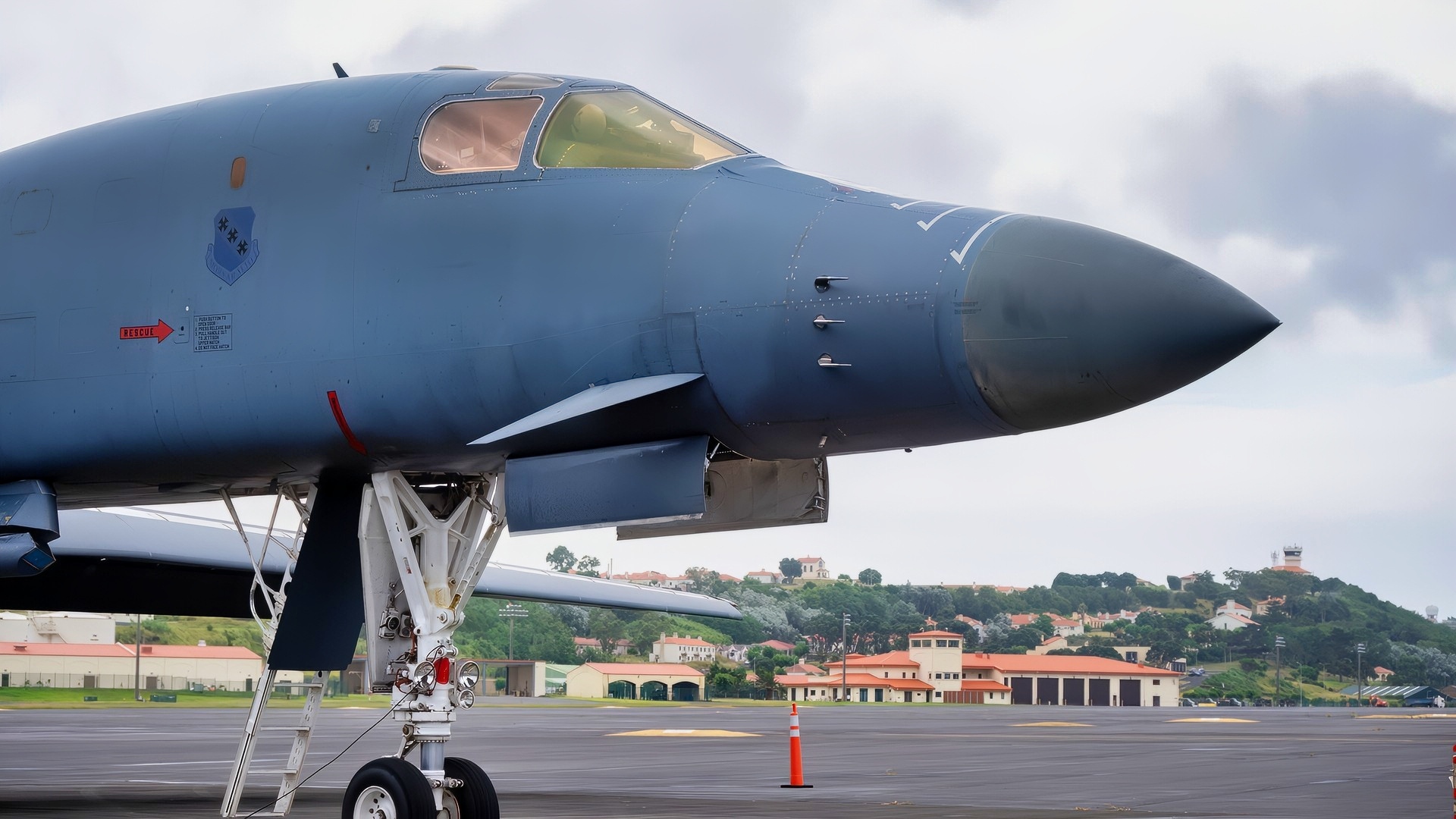
A U.S. Air Force B-1B Lancer sits on the flightline at Lajes Field, Azores, Aug. 22, 2025. The aircraft landed for a hot pit refuel during a Bomber Task Force Europe mission. (U.S. Air Force photo by Cristina Oliveira)
The two leaders also discussed Qatar’s initiatives “to bridge the gaps between the concerned parties and support the negotiation process, to pave the road for reaching a comprehensive agreement that resolves the crisis and ensures security and stability in the region.”
Rubio Dismisses Imminent Deal
Speaking in Florida before traveling to Paris for a G7 foreign ministers’ meeting, Secretary of State Rubio said negotiations with Iran had been unproductive and were not approaching a breakthrough.
“I wouldn’t say we’re on the verge of a breakthrough,” Rubio said. “The president would always prefer to solve this and every problem diplomatically. Sometimes that’s not possible, unfortunately, but if there’s a chance to do it, we’ll explore it.”
He continued: “Right now, it hasn’t been very productive, because the Iranian demands are simply not just unacceptable, but, in some cases, outrageous and ridiculous, and really not realistic.”
In response to Rubio’s remarks, Iranian Foreign Ministry spokesperson Esmaeil Baghaei said Washington should lift sanctions as well as its naval blockade, and end the war on all fronts before negotiations begin.
“Is it unreasonable that Iran demands that U.S. illegal sanctions and its naval blockade must be lifted before negotiations start and that the war should end on all fronts?” Baghaei told reporters at a weekly press conference on Monday.
Speculation Mounts as Trump Mulls Options
Speaking to CNN on Sunday, President Trump said it is “highly unlikely” he would need to order a renewed military campaign in Iran so long as there is progress over Tehran’s nuclear program and the reopening of the Strait of Hormuz.
“It depends on whether or not they sign a very strong agreement,” Trump told CNN’s Jim Sciutto. “The answer is highly unlikely it’s going to be necessary. They’re a failing nation. It just came out, you saw this year, 301% inflation. Highly unlikely it will be necessary. I would, if necessary, but we hit them really hard. I hit them so hard. You don’t know how hard I hit them.”
He continued: “So it’s highly unlikely I’ll have to. They’re withering away financially. We’ve hit them militarily. We could finish them off.”
It followed a report from the Wall Street Journal that Defense Secretary Pete Hegseth and the U.S. Central Command chief Adm. Brad Cooper were pressing Trump to resume military action against Iran. The Journal reports that outside advisers have told the president that his legacy depends on forcing Iran to abandon its nuclear program.
Rubio and Treasury Secretary Scott Bessent are said to be pushing for tightened economic sanctions instead and continuing the ongoing blockade of Iranian ports.
About the Author: Shay Bottomley
Shay Bottomley is a British journalist. He has written for the Western Standard, Business Insider, Maidenhead Advertiser, Slough Express, Windsor Express, Berkshire Live and Southend Echo.