

Months ago, there seemed to be a way out of the war with Iran. Iranian President Masoud Pezeshkian said back on September 1 that Tehran was prepared to return to the interim ceasefire with the United States.
But there’s a catch: Washington must first resume compliance with its commitments under the agreement.
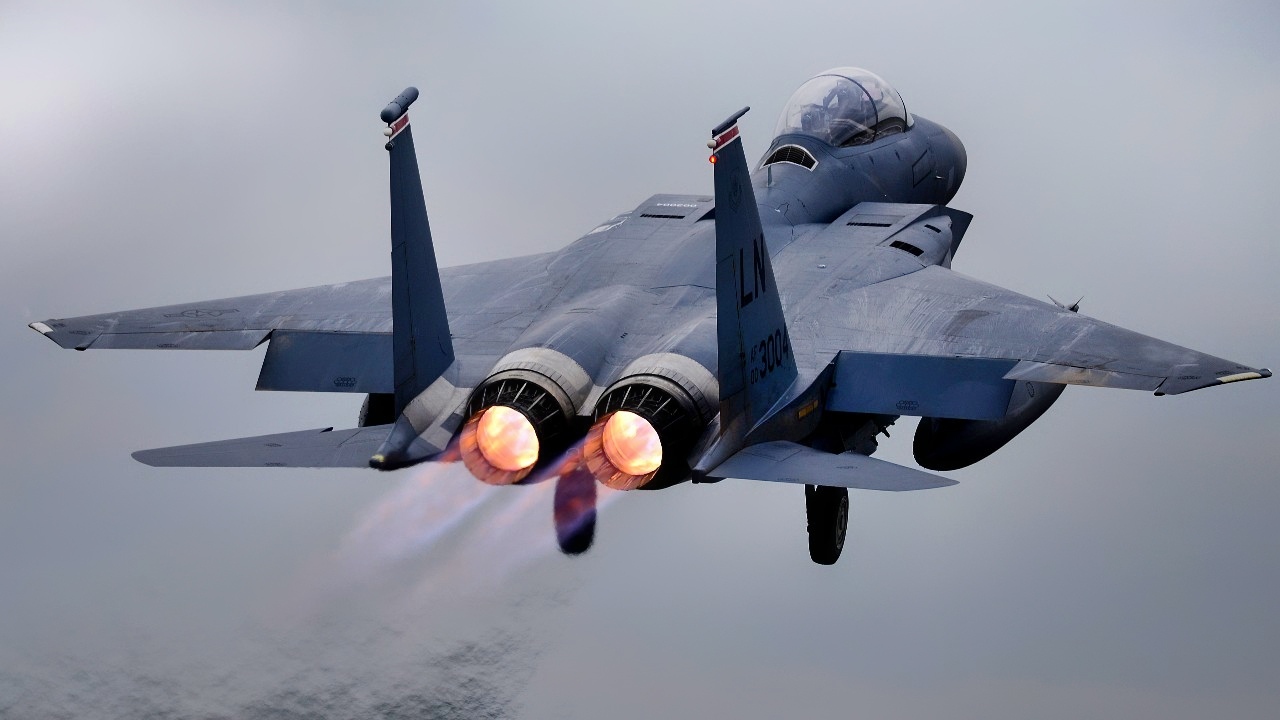
An F-15E Strike Eagle assigned to the 494th Fighter Squadron takes off for a training sortie at Royal Air Force Lakenheath, England, Oct. 26, 2018. The 494th trains regularly to ensure RAF Lakenheath brings unique air combat capabilities to the fight. (U.S. Air Force photo/ Tech. Sgt. Matthew Plew)

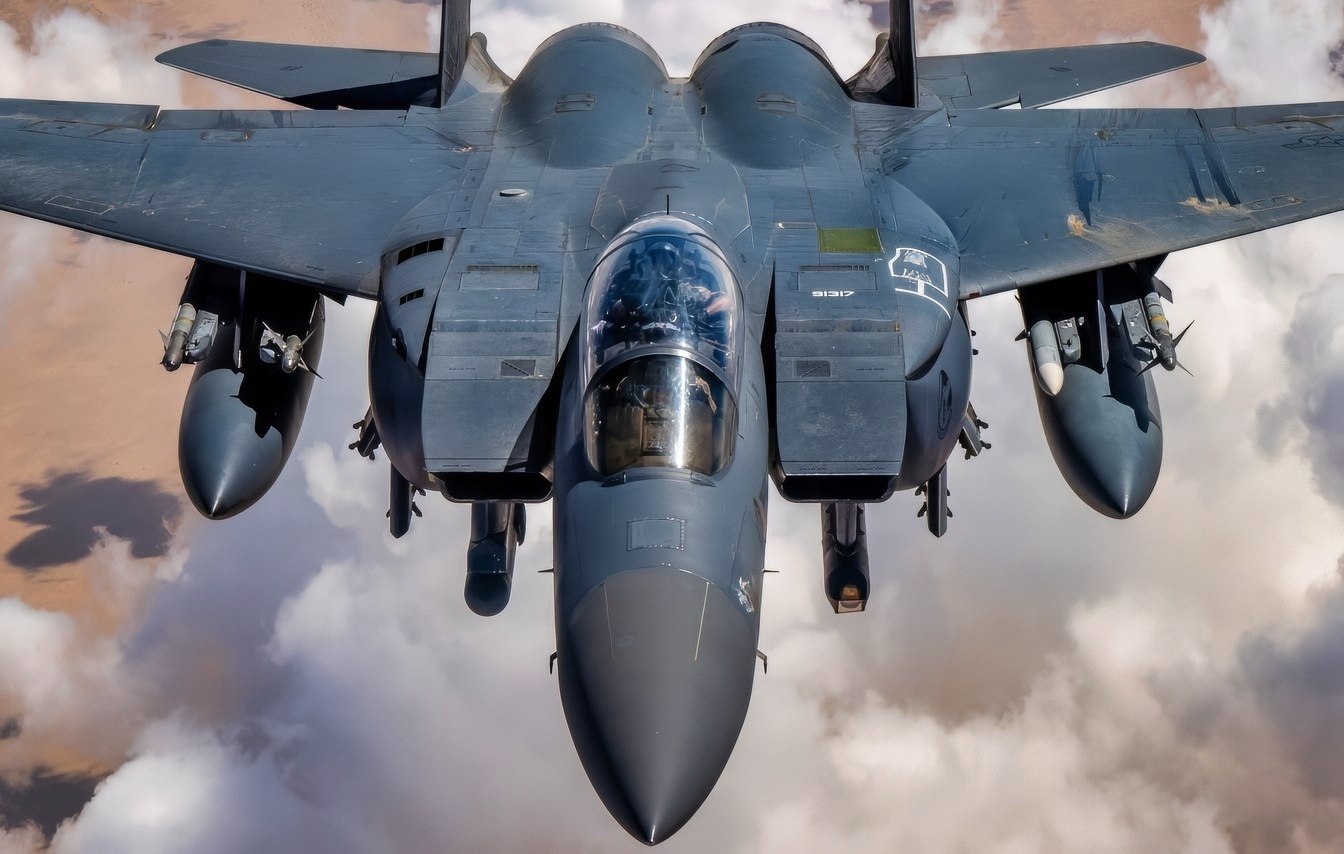
The F-15EX, the Air Force’s newest fighter aircraft, arrives to Eglin Air Force Base, Florida March 11. The aircraft will be the first Air Force aircraft to be tested and fielded from beginning to end through combined developmental and operational tests. The 40th Flight Test Squadron and the 85th Test and Evaluation Squadron personnel are responsible for testing the aircraft. (U.S. Air Force photo/1st Lt. Karissa Rodriguez)
Pezeshkian announced this on September 1 on the sidelines of the Shanghai Cooperation Organization (SCO) summit in Bishkek, Kyrgyzstan.
His offer follows renewed US-Iran military exchanges after more than a month without direct clashes.
What Pezeshkian Said
“I state explicitly that if the United States returns to its commitments under the…memorandum of understanding, the Islamic Republic of Iran will immediately take reciprocal action.” Pezeshkian accused the United States of reneging on its commitments.
His language was deliberately conditional.
Iran did not announce an immediate, unilateral cessation of hostilities. Rather, Tehran offered reciprocal compliance if the US acted first.
The report announced no new ceasefire agreement.
Why the June Ceasefire Collapsed
The US and Iran reached an interim ceasefire arrangement in June 2026, according to DW.
The agreement quickly unraveled amid disputes over implementation, with both governments accusing the other of violating its terms.
Washington would later resume strikes against Iranian targets, citing continued aggression against commercial shipping in the Strait of Hormuz.
One incident involved an Iranian drone striking a Panama-flagged tanker. Iran has repeatedly insisted it will permit commercial navigation through the strait, but on terms Tehran considers acceptable.
The underlying disagreement is that Washington wants to protect shipping from Iranian interference, while Tehran continues to assert leverage over the waterway.
Renewed Fighting in the Strait
Pezeshkian’s remarks followed a fresh exchange of strikes between the two countries.
On Sunday, August 30, US forces struck what Washington described as Iranian minelaying forces on Larak Island, which lies in the Strait of Hormuz, giving the incident direct relevance to commercial maritime security.
Iran retaliated by targeting US forces elsewhere in the Middle East, according to the report.
The exchanges represented the first direct US-Iran fighting in more than a month. President Donald Trump told reporters on August 31 that there would be a US “response” to the Iranian attacks.
However, Trump also indicated that the latest fighting did not necessarily mean a return to full-scale war. As of today, both governments are maintaining the ability to escalate militarily while leaving open the possibility of renewed diplomacy.
Why the Strait Matters
The Strait of Hormuz connects the Persian Gulf to the Gulf of Oman and the wider Indian Ocean.
It is one of the world’s most important maritime energy chokepoints, carrying roughly one-fifth of global petroleum liquids consumption in recent years.
However, the exact share varies by year and measurement.
Iran’s geographic position gives it the ability to threaten traffic in the strait using mines, missiles, drones, and small naval vessels.
Larak Island’s location enables minelaying activity.
As Iran has demonstrated, even limited fighting can affect shipping insurance, commercial routing, energy markets, and regional military readiness.
So the implications for the dispute between the US and Iran are profound, with implications for the security of the global energy market.
Russia, China, Diplomacy
Pezeshkian delivered his remarks during the SCO summit, a gathering associated with Russia and China and increasingly promoted as an alternative forum to Western-led institutions.
Iran is an SCO member alongside Russia, China, India, Pakistan, and other Eurasian states. Pezeshkian met Russian President Vladimir Putin during the summit.
Putin expressed solidarity with Iran and emphasized the continuation of economic trade relations.
Pezeshkian thanked Russia for opposing sanctions on Iran and criticized Washington’s use of sanctions.
Putin also met Chinese President Xi Jinping, with both leaders emphasizing the desire for stronger bilateral relations.
Effectively, the summit offered Tehran an international platform to criticize US policy and present its ceasefire proposal.
Pezeshkian opened the door on Sept. 1 to restoring the June arrangement, but the two sides remain divided over who violated it and who must act first.
Fast forward to November, what happens now?
Renewed fighting near Hormuz exposes the ceasefire’s fragility, with neither side publicly abandoning military options, raising immediate questions about whether Washington and Tehran can agree on enforceable terms rather than exchanging conditional offers.
About the Author: Harrison Kass
Harrison Kass is a writer and attorney focused on national security, technology, and political culture. His work has appeared in Tablet, City Journal, The Hill, The Spectator, and The Cipher Brief. He holds a JD from the University of Oregon and a master’s in Global & Joint Program Studies from NYU—more at harrisonkass.com.


