


For the last four and a half years, Russia has been at war in Ukraine, with NATO and other Western countries backing Ukraine.
There have occasionally been instances of drones landing in NATO airspace and “hybrid warfare” attacks that have taken place in Western countries, with Russia holding some plausible deniability about its direct involvement.
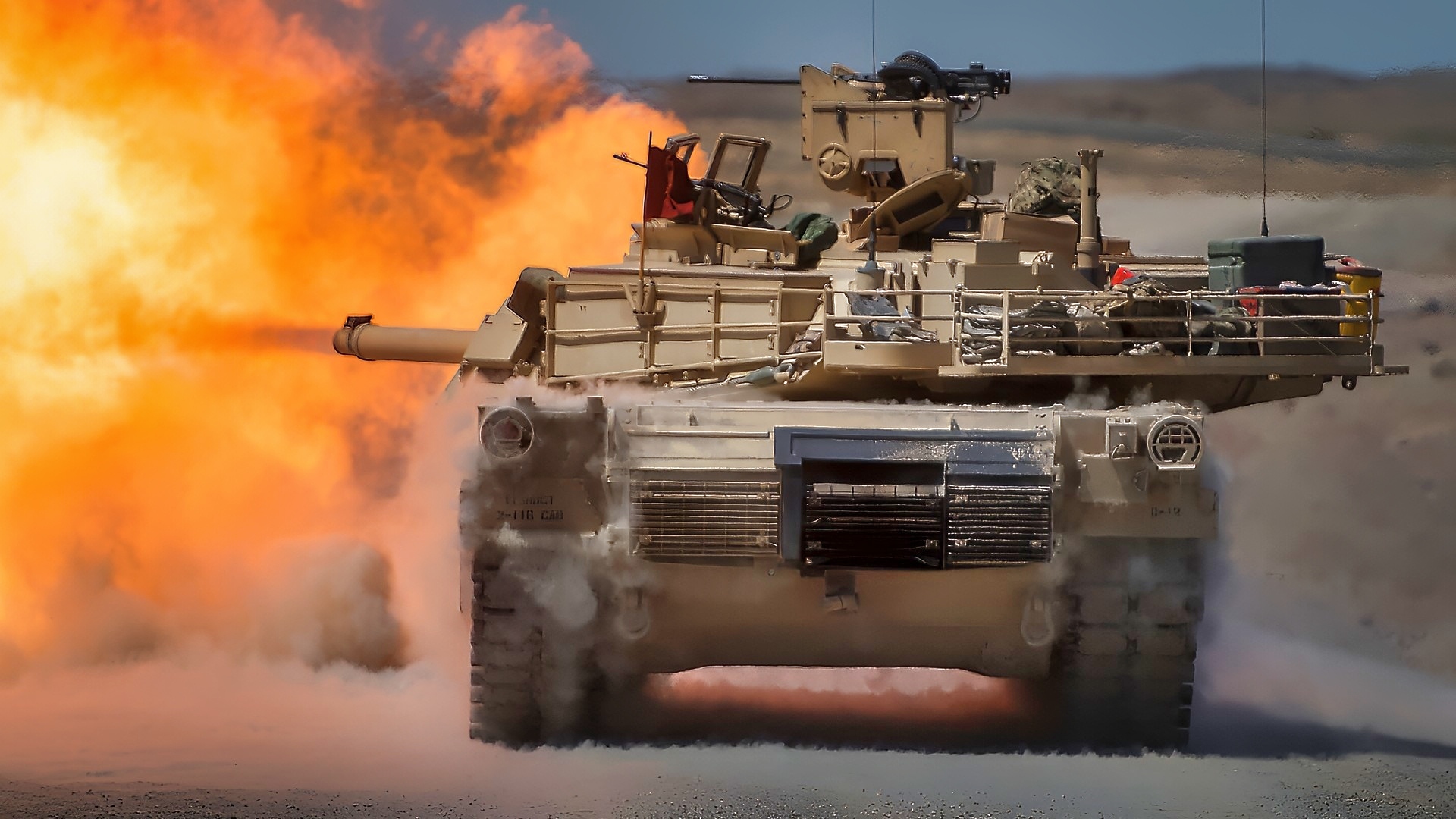
M1 Abrams Tank Firing In Test Run. Image Credit: Creative Commons.
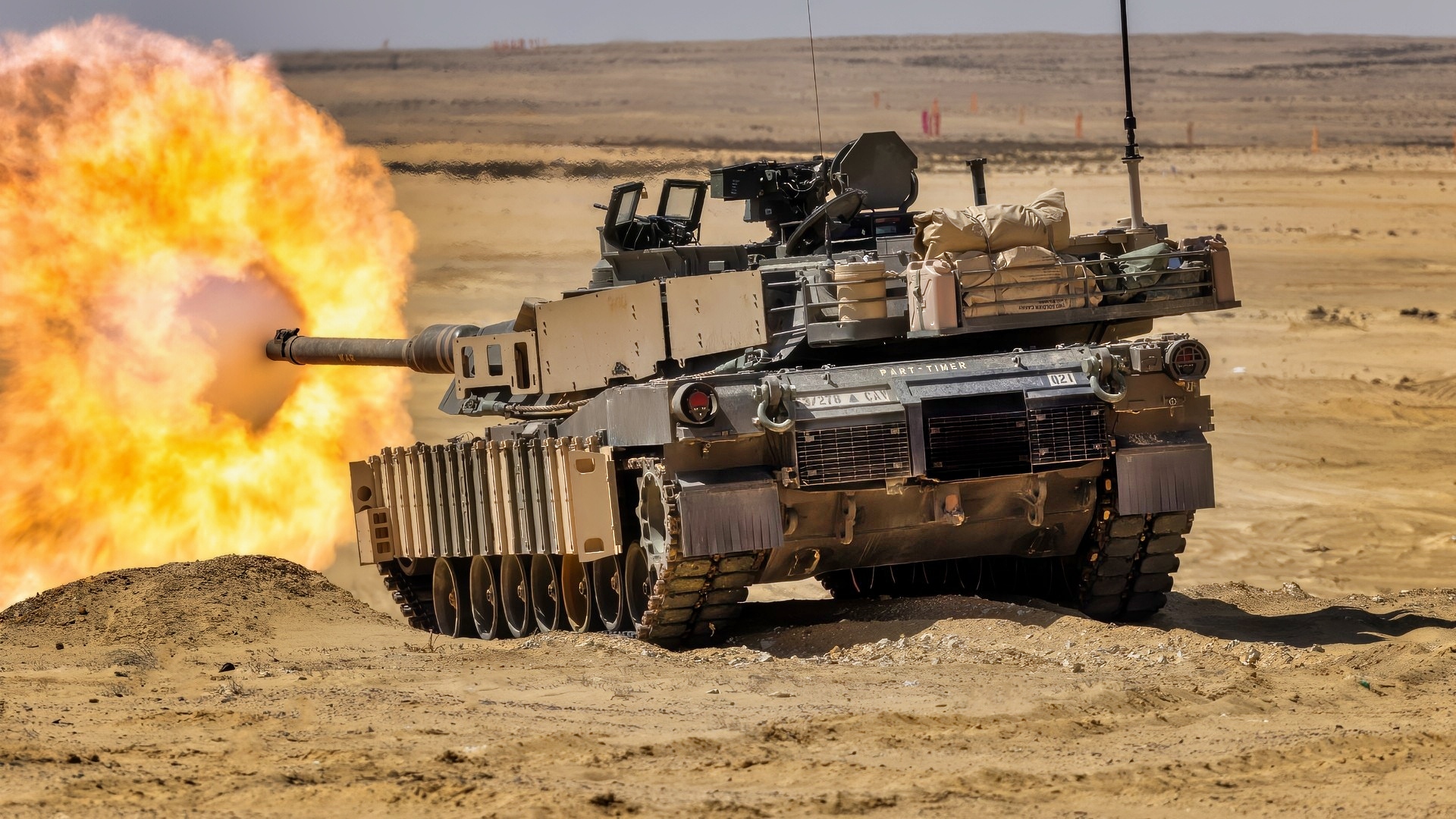
U.S. Army soldiers assigned to 3-278 Armored Cavalry Regiment, Task Force Reaper, fire the 120mm cannon on an M1A2 SEPv3 Abrams tank during live fire training for exercise BRIGHT STAR 25 at Mohamed Naguib Military Base (MNMB), Egypt, Sep. 2, 2025. BRIGHT STAR 25 showcases our unified resolve and ability to respond to evolving challenges together. Strong defense partnerships like BRIGHT STAR build lasting capacity, improve interoperability, and send a clear message of deterrence to those who threaten (our partners) and regional peace and stability. (U.S. Army Photo by Joseph Kumzak)
However, the situation has not devolved into a full-on war in Europe.
But it could.
And a RAND Europe report this week laid out a scenario in which that could happen.
The 56-page RAND report is titled “Ready for War 2030: A Scenario Bolstering the UK and NATO’s Preparedness.” Published earlier this week and authored by James Black, Kiran Suman-Chauhan, and Leanne A. Lorio, the paper argues that while such a scenario is not inevitable, full-on war in Europe by 2030 is very possible.
What the Paper Says
The authors state that with the Russian war in Ukraine continuing to rage and hybrid attacks also taking place in European countries, things are heading in the direction of a full war.
The paper is structured mostly as advice to the U.K. and its allies on how to deal with the threat from Russia going forward.
“Threat assessments and warnings from NATO, the EU and national governments suggest there is now a credible threat of peer-level war in Europe by 2030,” the authors argue.
There are a few different levels of potential war, the authors say, from a continuation or escalation of the status quo, to a “transition-to-war” phase, to conventional war, to “in the most extreme scenarios – various forms of nuclear escalation.”
The latter was hinted at in September, after a Sky News broadcast discussed war-game scenarios involving Russia’s exclave of Kaliningrad.
This led Russia to threaten Western countries with the use of nuclear weapons if they talked again about threatening Kaliningrad.
What About the United States?
The RAND authors state that the U.K. and other NATO countries in Europe need to be prepared for a world in which the U.S. is less involved in Europe’s defense, as has been the case during the two presidencies of longtime NATO skeptic Donald Trump.
Those nations, the report advises, “need to be prepared to handle this array of threats – and crucially, to do so without relying as heavily on the military and industrial contributions of the United States.”

A U.S. Army tank crew assigned to 2nd Battalion, 5th Cavalry Regiment, 1st Armored Brigade Combat Team, 1st Cavalry Division, maneuvers an M1A2 Abrams tank at a railhead in preparation to transport it to Hohenfels, Germany during a railhead operation, Corbu, Romania, October 24, 2018. The Battalion has deployed to Europe in support of Atlantic Resolve, an enduring training exercise between NATO and U.S. Forces. (U.S. Army National Guard photo by Sgt. Jamar Marcel Pugh, 382nd Public Affairs Detachment/ 1st ABCT, 1st CD/Released)
The authors also suggest a “mindset shift” regarding European countries’ defense budgets.
The British armed forces are at their smallest size in memory, while the current force is “heavily weighted towards exquisite capability and precision at the expense of mass, a structure designed for the limited wars of choice fought by the previous generation.”
A “Hypothetical Scenario”
RAND also laid out one potential scenario for how a war could play out, through a series of 12 vignettes. The organization is not calling this a prediction, but rather a possibility.
And that scenario is somewhat surprising: It involves President Vladimir Putin passing away in early 2027, leading to a struggle for succession at the Kremlin.
This would be followed by the Russian security services winning the struggle and a hardliner, in the form of a former Federal Security Service (FSB) general, becoming Putin’s successor as head of the Russian Federation.
The new president then agrees to a ceasefire in Ukraine in April 2027, but by July the talks stall, with Russia continuing to hold some Ukrainian territory.
Then, in early 2028, the new Russian leader continues to consolidate power, a scenario in which “military hardliners advocating for harsher measures against NATO are seen as potential threats with dangerous power bases.” The president responds by continuing to ramp up hybrid warfare against NATO countries, who soon start talking about retribution.
In the summer of 2029, under RAND’s scenario, a “South American crisis” emerges, and the U.S. begins treating it as a priority, taking its eye off Europe.
Then, in 2030, these trends converge, leading Russia to take “limited military action in the Baltic States,” aiming to prove that NATO “does not have the unity nor the will to defend Eastern Europe,” and thus trying to nullify Article 5.
Then, the war begins in May of 2030, as Russia riles up Russian-speaking populations in Baltic countries, starting with Estonia, with Russian plans once again aimed at showing that Europe lacks the will to defend itself.
Europe, however, rises in defense of Estonia, leading to a full-on war that summer, and a ceasefire in November.
“The ceasefire remains in effect as peace talks stall for months. Faced with the prospect of another frozen conflict and an increasingly destabilized Europe, NATO’s credibility is damaged, and the result is an uncertain and volatile security environment – leaving the future of European security in the balance,” is how RAND sees the conflict ending.
The argument is that NATO nations, including the U.K., should better prepare for a scenario like that.
About the Author: Stephen Silver
Stephen Silver is an award-winning journalist, essayist, and film critic, and contributor to the Philadelphia Inquirer, the Jewish Telegraphic Agency, Broad Street Review, and Splice Today. The co-founder of the Philadelphia Film Critics Circle, Stephen lives in suburban Philadelphia with his wife and two sons. For over a decade, Stephen has authored thousands of articles that focus on politics, national security, technology, and the economy. Follow him on X (formerly Twitter) at @StephenSilver, and subscribe to his Substack newsletter.


