

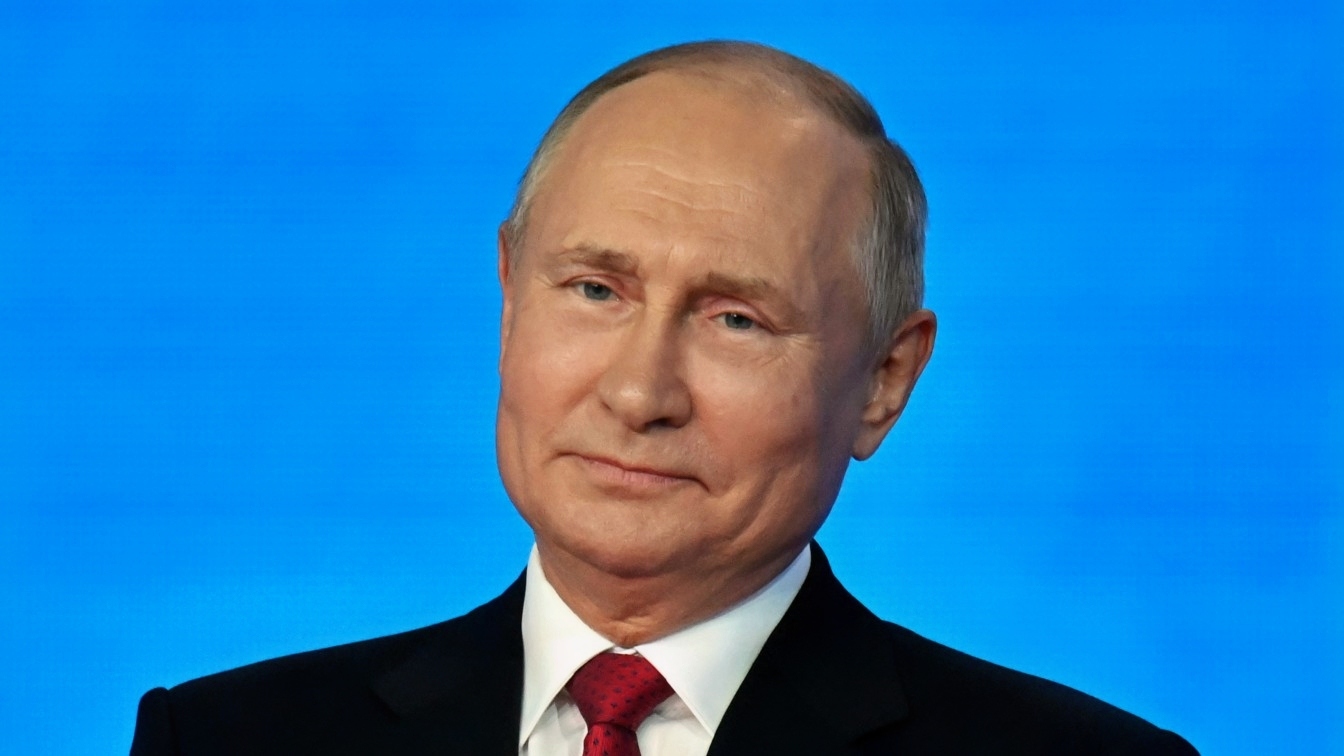
As the Russian Federation grinds down the Ukrainians on the battlefield, with the Americans looking to bail out of the European front, and the Europeans themselves unable to sustain Ukraine’s military and financial needs on their own, the American defense intellectual class has concocted a Hollywood scenario of where they think the war is going to keep them busy.
A new report from the RAND Corporation outlines a disturbing (or hilarious, depending on your view) scenario in which Russian President Vladimir Putin dies in early 2027. Never mind that there is no evidence that Putin is ill or that he is struggling with any significant ailments at all (other than old age, which has not appeared to impact him too negatively, contrary to what the increasingly absurd intelligence services and corporate media claim in the West).
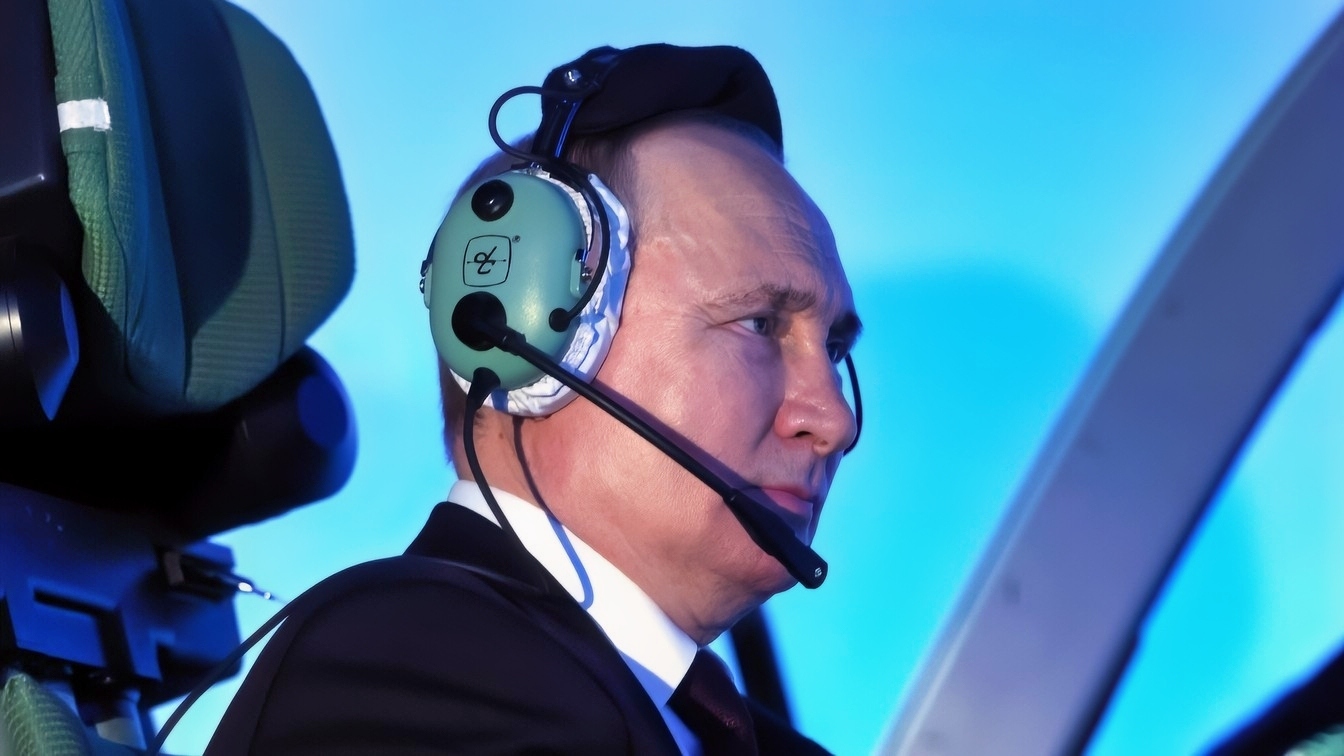
Putin In Airplane Simulator Russian Government Photo
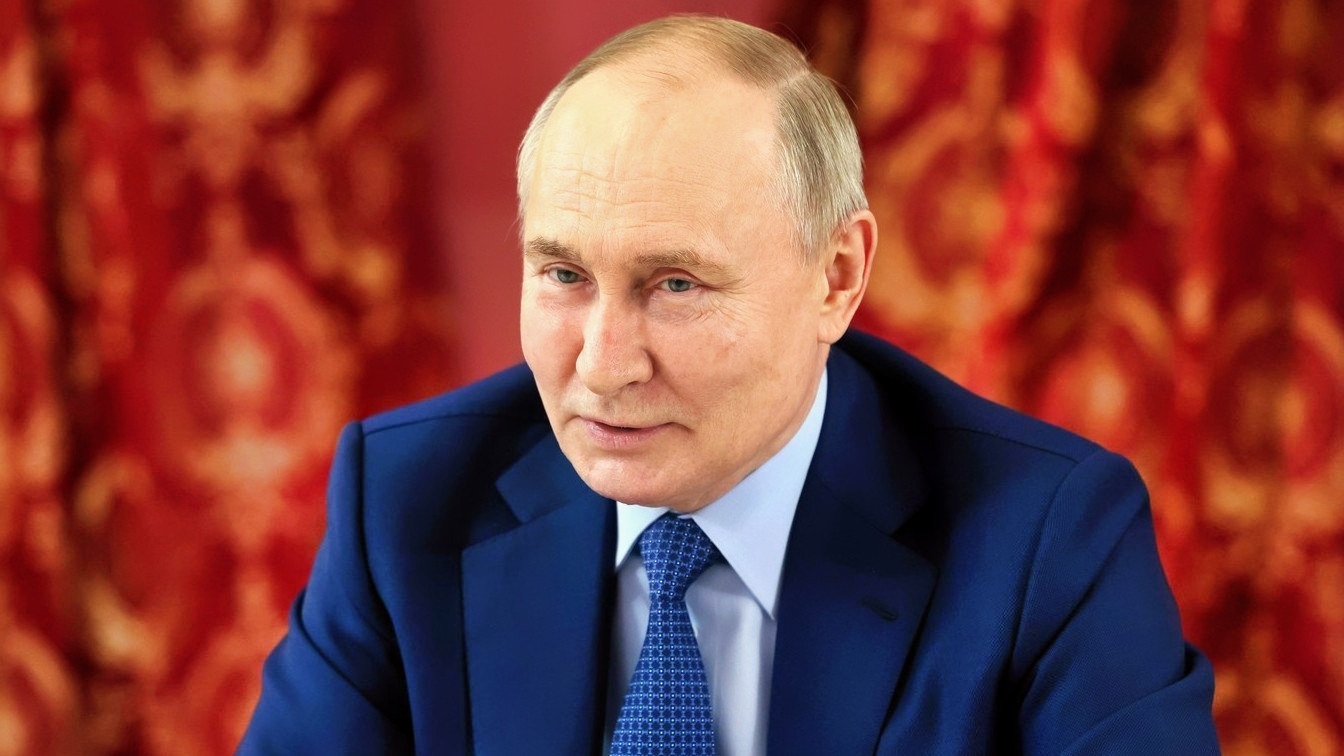
Putin in March of 2024. Image Credit Russian Federation Government
A Ridiculous Plot
In RAND’s new B-movie, Putin’s unexpected death triggers a series of geopolitical developments that culminate in the major war between Russia and the North Atlantic Treaty Organization (NATO) that European elites have been pining for since 2022. According to the scenario, that war would erupt in 2030.
After Putin’s death, he dies of natural causes in January of 2027. An internal struggle ensues, and a former Russian Federal Security Service (FSB) general assumes the presidency. In real life, Alexander Bortnikov has led the FSB since 2008. He is an old-school apparatchik, deeply loyal to Vladimir Putin. While powerful, it is unclear whether he could muster the support to succeed Putin. Anyway, this flight of fancy gets more incredible.
Those pesky Russians under the new leader get a ceasefire with the West, and in that time they rebuild their military while retaining control over the Eastern portion of Ukraine (that Russian forces have held since 2014) and Crimea. The key takeaway is that replacing Vladimir Putin would not produce a more conciliatory Russian government toward the West.
Of course, RAND’s assumption is undercut by the fact that the would-be Russian leader’s first move is to seek a ceasefire.
Ah, you see, this Russian FSB leader (likely Bortnikov) would be so desperate to consolidate power that they would rely on Russian military and intelligence officials who favor war with the West.
Again, keep in mind that this nameless Russian FSB general who succeeds Putin would immediately seek a ceasefire with the West. As head of the FSB, one would assume this individual would know who else holds power and who to get advice from (and ostensibly who to push out a window).
No Fighting In the War Room
RAND believes that under these conditions, the end of the Ukraine War — a blessed thought for the tens of millions of Ukrainians who have been displaced or sent to fight on the front lines — would be a mere pause in the wider warfare with Europe that is to come. RAND’s top-tier analysts want us to ignore the fact that a succession of Russian leaders, notably hawkish leaders, have insisted that they want nothing to do with Europe at all.
In fact, they are so dismissive of Europe, Russian leaders don’t even want to speak to them (preferring instead to speak to the Americans, whom they justifiably believe are the true rulers of Europe). Russian leaders, even the hardliners, have made clear that the only way Russian forces would strike European targets would be if the Europeans attacked the Russians.
But don’t let reality get in the way of a well-funded wargame.
For some randomness, the RAND wargame scenario has the United States getting bogged down in a South American crisis in June 2029. No evidence suggests such a crisis is coming. What’s more, the evidence strongly suggests that the crisis will emanate from the Middle East, where President Donald Trump has mired the American military in another unwinnable quagmire against Iran.
So, they concoct a poorly defined South American crisis meant to “distract” the US military from the more important theater of Europe. Of course, the folks at RAND miss the point entirely. As unlikely as it might be, a South American crisis would necessarily demand greater attention of the United States military than anything in Europe because South America is in America’s sphere of influence.
Anyway, the report’s authors want readers to understand that America must choose between its own strategic interests and Europe’s (to fight the mythical Russian threat), and, of course, Americans must choose to defend distant Europe over their own hemisphere. After all, per the RAND scenario, Russia will invade Estonia (because that’s what Russians do. They drink Vodka and invade Estonia, apparently).
The scenario portrays Russia exploiting ethnic tensions in Narva to justify a limited military intervention. NATO easily invokes Article V, but the wild-eyed fantasies of the neoliberal set ruling over Europe include the expansion of the war into the Arctic and North Atlantic — with Britain itself coming under Russian attack (it’s a good thing that the British are talking conscription!).
By January 2031, those darned Russians ask for peace again. And, of course, the naive Americans who are far too busy minding their own strategic interests in the Western Hemisphere grant the Russians that ceasefire. But the Russians were left in command of Narva, meaning that the threat to NATO was existential.
Things are looking grim for Team NATO in this high-stakes drama created by RAND.
With Russia holding tiny Narva, having weaponized peace by seeking a ceasefire, Eastern European governments would reconsider the reliability of Western guarantees, potentially encouraging independent military buildups or accommodation with Moscow. In other words, European states would start exercising their sovereignty. We cannot have that.
Why Russia Could Win a War Against Europe
RAND fixates on many deficiencies in British military preparedness, including inadequate ammunition reserves, maintenance problems for vehicles and other platforms, an insufficient force size, and complications arising from Britain’s inability to adequately incorporate unmanned technologies. European militaries remain stuck in the twentieth century when it comes to preparing their forces for war. European militaries prefer technologically advanced— expensive— weapons platforms while failing to develop the concomitant industrial infrastructure needed to sustain prolonged combat operations.
On the other hand, Russia has an efficient war economy. Because of years of Western economic sanctions and Russia’s abundant natural resources, the Russian Federation has essentially gone in the opposite direction from European states when it comes to military readiness. There is no doubt that if a war between European NATO members and Russia erupted, the Russian military would beat the Europeans handily.
Getting Europe primed for a regional war with nuclear-armed Russia, given all the political and economic problems plaguing Europe today, will take more than a few years. Indeed, neither RAND nor any elected European or British leader is asking whether they should even be provoking the Russians with delusions of grandeur like this RAND study.
The European project was predicated on a simple, innovative idea: that the main thrust of international relations in the twenty-first century would be geoeconomics, not geopolitics. Judging from how the United States rose to power and how modern China became dominant, that assumption was correct. Europe was once a robust society, with high citizen happiness and a healthy social safety net that ensured college education and basic needs were met. It can go back to that. It should go back to that (while working to become more competitive on the global market).
Toy Soldiers
Instead, Europeans want to play toy soldiers with their citizens.
Russia did not invade Ukraine because Vladimir Putin woke up one day twirling an invisible mustache. He did it because he believed Russian security interests were at stake due to what he assumed was NATO expansion into his periphery—a clear violation of promises made to a succession of Russian leaders since Mikhail Gorbachev.
Rather than understand the real security reasons behind why Putin has launched his limited war in Ukraine, Europeans and their American enablers keep fantasizing about a third world war with nuclear-armed Russia. It’s quite embarrassing.
About the Author: Brandon J. Weichert
Brandon J. Weichert is the Senior National Security Editor. He also manages The Weichert Brief on Substack. Weichert is the co-host of The Mario Nawfal Show on Twitter/X. He is the author of four bestselling national security books, most recently A Disaster of Our Own Making: How the West Lost Ukraine (Encounter Books). His next book, Fortress Americas: A New Monroe Doctrine (Tucker Carlson Books), is due out December 8. Follow him via Twitter/X @WeTheBrandon. The opinions expressed in this op-ed are the author’s own.


