

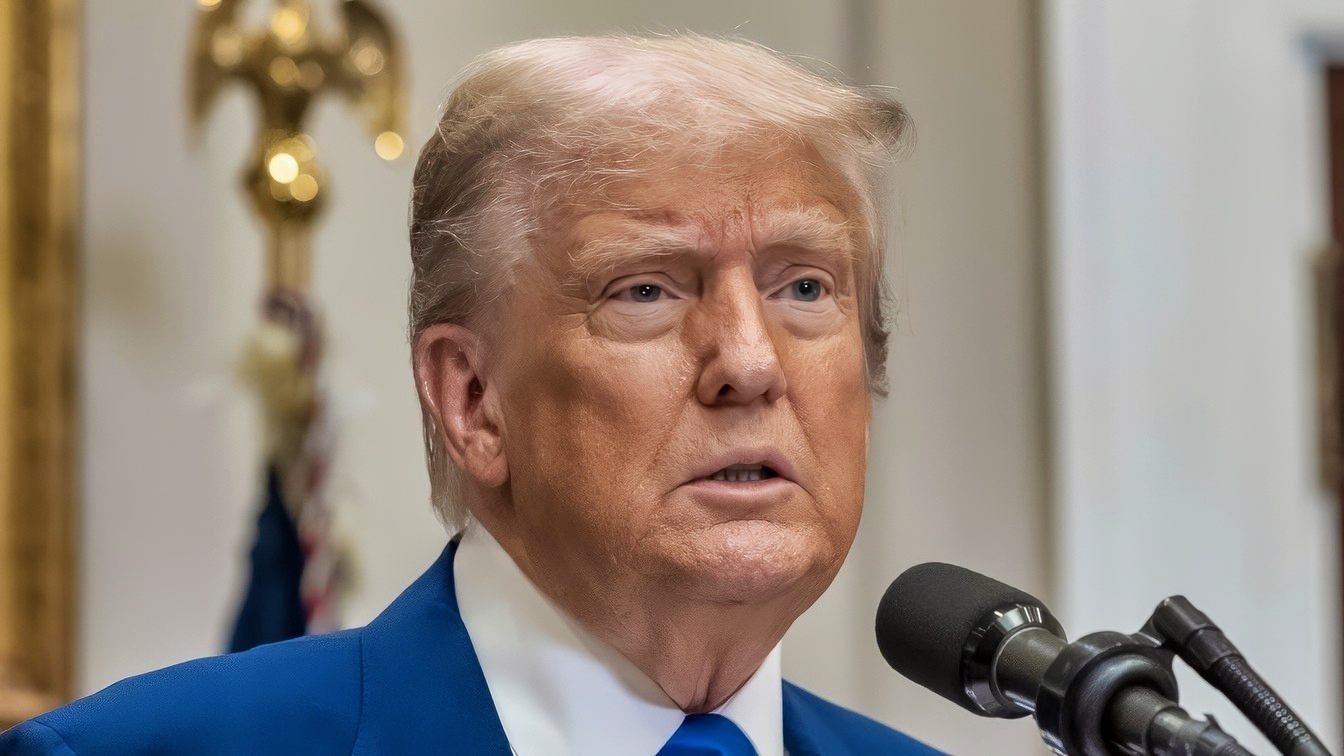
Secretary of the Treasury Scott Bessent is the architect of Operation Economic Outcast, a series of economic pressure measures meant to hurt Iran’s economy. And in a TV appearance over the weekend, Bessent claimed an Iranian economic collapse is on the way.
Appearing on Fox Business with host and former Trump official Larry Kudlow, Bessent compared Iran’s leaders to “rats in a sewer pipe” and accused them of not being aware of the economic conditions in their own country because of time spent in their “underground bunkers.”

B-2 Bomber Sitting in Museum National Security Journal Photos. All Rights Reserved.

B-2 Stealth Bomber July 2025 National Security Journal Photo.
Bessent went on to predict that between March of this year and March of 2027, Iran will “collapse 25 percent in one year,” which he saw as a larger collapse of the Russian economy in the three years after the Soviet Union’s collapse.
“This is the greatest economic isolation in the history of the world against a single country,” Bessent added in the interview.
It’s not clear whether Bessent was quoting some official government assessment, his own personal predictions, or if the 25 percent collapse figure comes from somewhere else.
Two days earlier, in a different interview on CNBC, Bessent had said that the Federal Reserve should not raise interest rates due to the “energy supply shock” tied to the conflict.
“I’m not going to tell the Fed what to do. I am going to say they should have an open mind,” the Treasury Secretary said on CNBC. However, Al Jazeera reported that at least some Fed members support a rate hike when they meet in December.
Meanwhile, last week, President Donald Trump touted what he considers the success of his Administration’s current Iran strategy.
Status Quo
According to The Washington Post, while Trump hinted before the midterm elections that the war would “end” not long after the vote, either through a restarted war or an agreement, the administration appears to have settled on a different strategy: One that seeks to turn Iran’s economy by continuing to “blockade and sanction Iran’s economy and wait for economic pressure to build.”
First, Trump announced last week that he was pulling Vice President JD Vance off the Iran negotiations portfolio, in favor of a focus on “corruption” in blue cities and states. Trump does not appear likely to seriously pursue further negotiations. But following the midterm election wipeout, which was largely blamed on the administration’s Iran policy, he doesn’t seem very interested in re-launching the war.
“It’s become pretty clear that Trump does not want to go back to war for now,” one U.S. official told the Post, citing things said in closed-door meetings.
“We’re just keeping it the status quo,” Trump told reporters last week, following a meeting with Prime Minister Mohammed bin Abdulrahman Al Thani, who is both prime minister and foreign minister of Qatar, which has been supervising mediation in the conflict.
Rubio Speaks
Speaking last week at the G7 meeting in France, Secretary of State Marco Rubio was more explicit about the U.S. strategy for Iran going forward.
Disagreeing with the notion that the war has reached a “stalemate,” Rubio told the press that the pressure on Iran was working as planned.
“The pressure and the devastation that our economic campaign is having on the Iranian regime is working so well that the president really doesn’t have any need to conduct major combat operations,” the Secretary of State told reporters in France.
The Status of Talks
Talks between the U.S. and Iran have continued in recent weeks.
According to the Post, which cited an official briefed on the negotiations, the Iranian side has agreed to “consider the nuclear issue,” while the Americans have said they are “open to discussing Iran’s demand for economic incentives.” However, the two sides remain far apart, with the U.S. unwilling to take Iran’s requested steps, such as lifting its Strait of Hormuz blockade and unfreezing Iranian assets, before talks can begin on the nuclear issue.
Rubio, in Paris, described Tehran’s demands as “absurd.”
Iran has continued to attack ships in and near the Strait of Hormuz, but Greg Brew, a Middle East energy analyst with the consultancy Eurasia Group, told the Post that such attacks have been priced into oil markets.
About the Author: Stephen Silver
Stephen Silver is an award-winning journalist, essayist, and film critic, and contributor to the Philadelphia Inquirer, the Jewish Telegraphic Agency, Broad Street Review, and Splice Today. The co-founder of the Philadelphia Film Critics Circle, Stephen lives in suburban Philadelphia with his wife and two sons. For over a decade, Stephen has authored thousands of articles that focus on politics, national security, technology, and the economy. Follow him on X (formerly Twitter) at @StephenSilver, and subscribe to his Substack newsletter.


