

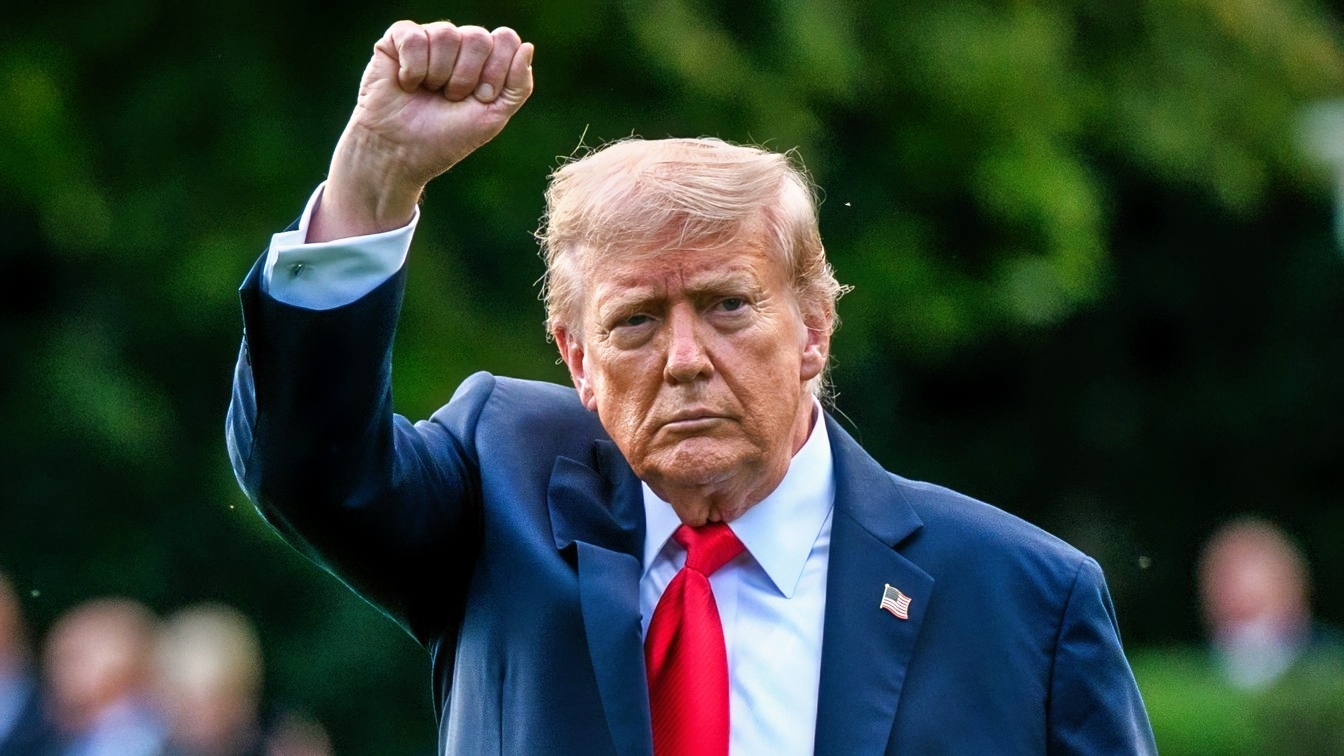
Land for a membership card. That’s the trade the Trump Administration just floated to Kyiv. According to Ukrainian President Volodymyr Zelenskyy, American negotiators at last week’s trilateral talks in Abu Dhabi asked his team a question nobody had put on the table before.
As Reuters reported, he quoted them directly: “What if Ukraine joins NATO? Would Ukraine withdraw from Donbas?” The Telegraph and others picked it up, and within hours the “peace in our time” crowd had their headline.
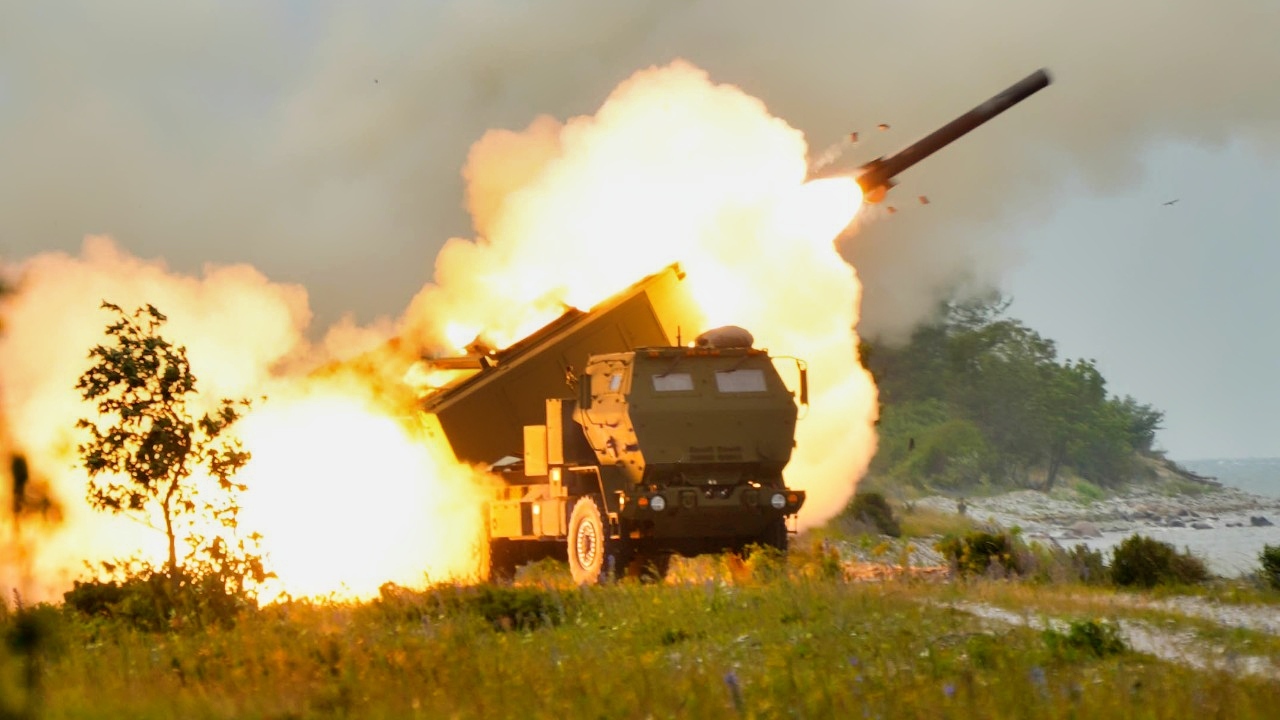
An Estonian Defense Forces M142 High Mobility Artillery Rocket System (HIMARS) fires a training rocket during a live-fire exercise in Undva, Estonia, July 11, 2025. U.S. Army elements from Bravo Battery, 1st Battalion, 14th Field Artillery Regiment, 75th Field Artillery Brigade, supporting Task Force Voit, assisted in the training process. The task force was originally formed in 2023 to support the Estonian Defense Forces in the creation of a HIMARS unit. Task Force Voit works closely with the Estonian Armed Forces, sharing critical defense strategies, training, and military readiness support. The presence of U.S. troops in the region serves as a cornerstone of NATO’s commitment to security in the Baltic region. The task force provides combat-credible forces to V Corps, America’s only forward-deployed corps in Europe. (U.S. Army photo by Staff Sgt. Rose Di Trolio)

A U.S. Air Force F-16 Fighting Falcon assigned to the 480th Fighter Squadron taxis at the 86th Air Base, Romania, in support of NATOs enhanced Air Policing (eAP) capabilities, Sept. 22, 2023. European partners and U.S. forces continue to conduct engagements and multinational exercises, which enhance interoperability to improve regional cooperation, maritime security and stability in the region. (U.S. Air Force photo by Airman 1st Class Albert Morel)
Anytime a Western power leans on a smaller democracy to hand ground to an aggressor, Neville Chamberlain’s umbrella comes out of the closet. However, this one deserves a harder look than a historical cliché.
If the offer is real, it’s the first proposal in nearly a year of talks that gives Ukraine something Putin genuinely fears, but likely won’t agree to.
What Was Actually Said
Zelenskyy described the US negotiators’ point as more a question than an offer and said no concrete proposal exists.
He told reporters the specifics “do not exist yet” and that any package would have to combine NATO membership, binding security guarantees, and reconstruction money. If it ever got that far, he’d put it to the Ukrainian people.
He also didn’t budge on the core issue. Ukraine won’t legally recognize occupied territory as Russian. And on the Donbas itself, he was blunt: “This is a country of our nation; it is not real estate.”
That’s the context. A trial balloon floated by Steve Witkoff and Jared Kushner, in a round that otherwise produced agreement in principle on the largest prisoner exchange of the war, roughly 1,000 per side, and not much else.
Why The 1938 Munich Comparison Doesn’t Quite Fit
In September 1938, Britain and France let Hitler carve the Sudetenland out of Czechoslovakia. Prague wasn’t even in the room. The Czechs got nothing in return except a dictator’s promise, and six months later the Wehrmacht marched into Prague.
That’s what appeasement looks like. You feed the aggressor territory, and the victim walks away with nothing but hope. Or as Mr. Churchill said, “An appeaser is one who feeds a crocodile, hoping it will eat him last.”
The Donbas-for-NATO idea is structurally different. Ukraine is in the room. Ukraine gets a vote. And what it would get in return is Article 5, the same guarantee that has kept Russian tanks out of Tallinn, Riga and Vilnius for more than two decades.
Zelenskyy himself calls full membership the best way to prevent another invasion, and Article 5-style guarantees the absolute minimum.
Think about what Moscow has spent four years demanding. Putin has repeatedly insisted that Ukraine renounce NATO and withdraw from the roughly 10 percent of the Donbas it still holds.
The Kremlin said it felt “satisfaction” when Washington signaled Ukrainian membership was excluded, calling the alliance one of the “root causes” of the war. A deal that hands him the Donbas but plants NATO on his doorstep is the opposite of what he went to war for.
Can Washington Guarantee NATO Membership? No
However, paper isn’t terrain. But the remaining Donbas held by Ukraine actually is strategic.
The slice of Donetsk that Ukraine still holds is the fortress belt. Sloviansk, Kramatorsk and the towns around them sit behind years of trench lines, minefields and hardened positions that have cost the Russian army dearly.
The Insider has argued that a voluntary withdrawal would endanger the entire half of Ukraine east of the Dnipro. You don’t hand that over unless what you get back is ironclad.
That’s where the idea starts to wobble.
First, NATO membership isn’t Washington’s to give. Accession requires the unanimous consent of all 32 members. Hungary and Slovakia have spent years slow-rolling anything that helps Kyiv. Zelenskyy says Denmark and the Nordics are on board. That’s a long way from 32.

An AH-64 “Apache” attack helicopter assigned to 1st Battalion, 211th Aviation Regiment, flies overhead during Training Exercise Hydra on Utah Test and Training Range, Utah, May 7, 2025. Exercise Hydra is a Utah National Guard-led, joint, multi-domain combat training exercise designed to simulate real-world operations across air, land, and cyber domains. The exercise brings together the 151st Wing (KC-135), 419th Fighter Wing (F-35), 19th Special Forces Group, 65th Field Artillery Brigade, and multiple Army and Air Force elements to test joint targeting, rapid insertion, battlefield communication, and dynamic problem-solving.
(Utah Army National Guard photo taken by Spc. Dustin B. Smith)
Second, this administration hasn’t sounded like it believes in Ukrainian membership. Vice President JD Vance said flatly that he doesn’t think Ukraine should be in NATO.
A year ago, the American framework would have had Kyiv suspend its NATO push for years. One question asked in Abu Dhabi doesn’t erase that record.
Third, Putin has already said no. In the same week, he restated that NATO cannot expand further, that he won’t soften his demand for the territory Russia claims to have annexed, and that foreign peacekeepers are a non-starter.
Last December, Russian Deputy Foreign Minister Sergei Ryabkov made clear that blocking membership isn’t enough. Moscow wants no NATO presence in Ukraine at all, not even as observers.
So the realistic sequence looks like this. Ukraine gives up the fortress belt now. NATO membership comes later, pending 32 parliaments, a Kremlin vowing to wreck it, and an American administration that’s been lukewarm at best. Only one of those two halves is guaranteed. Guess which.
The Timing Matters
The battlefield reality favors Kyiv. Before the latest talks, Zelensky argued Ukraine’s leverage was growing due to recent battlefield gains, including ground retaken in Donetsk. Meanwhile, Russia has hit Ukrainian energy facilities more than 310 times since early November, trying to freeze the country into concessions before winter.
You don’t trade your best defensive terrain while the enemy is burning through men trying to take it. Not unless the price is paid up front.
So Is It Appeasement?
Not yet. The question Washington asked is the biggest thing the American team has floated in this entire process, because it finally attaches a real cost to Putin’s land grab.

An F-15E Strike Eagle stands static on the flightline before morning takeoffs at Royal Air Force Lakenheath, England, Jan. 5, 2021. The 48th Fighter Wing conducts daily flying operations in order to ensure the Liberty Wing can deliver unique air combat capabilities when called upon by its NATO allies. (U.S. Air Force photo by Senior Airman Madeline Herzog)
It becomes appeasement if the US insists that Ukraine leaves the Donbas as a “pathway,” or a “framework,” for NATO membership. Kyiv will have traded the fortress belt for a promissory note from Washington. That’s the Sudetenland with better branding.
We’ve seen this movie before. In 1994, Ukraine gave up the world’s third-largest nuclear arsenal under the Budapest Memorandum in exchange for security assurances.
In 2014 and 2015, it signed the Minsk agreements. Russia tore up both. Each time, the paper was worth exactly what Moscow decided it was worth.
Before one Ukrainian soldier withdraws from the Donbas, Ukrainian membership or, at a minimum, a ratified, Congress-approved Article 5 guarantee has to be locked in. Simultaneously, at worst. Never after. It sounds simple on paper, but it is not.
Zelenskyy’s instinct to put any final deal to a public vote is the right one. Ukrainians paid for that ground. They should decide what it’s worth.
Chamberlain flew home waving a piece of paper. The test for this deal is whether Ukraine gets more than paper.
About the Author: Steve Balestrieri
Steve Balestrieri is a National Security Columnist. He served as a US Army Special Forces NCO and Warrant Officer. In addition to writing on defense, he covers the NFL for PatsFans.com and is a member of the Pro Football Writers of America (PFWA). His work was regularly featured in many military publications.


