


American Vice President JD Vance said that the war between Iran and the United States will not morph into the kind of “forever war” that he and American President Donald Trump campaigned on not getting involved in, particularly in the Middle East.
Speaking to host Laura Ingraham on Fox News, the Vice President said neither he nor President Trump were “going to let this become a forever war.” Furthermore, Vance promised the war with Iran would end before the two men leave office in 2028. “We told the American people we would do no more forever wars,” Vance said.
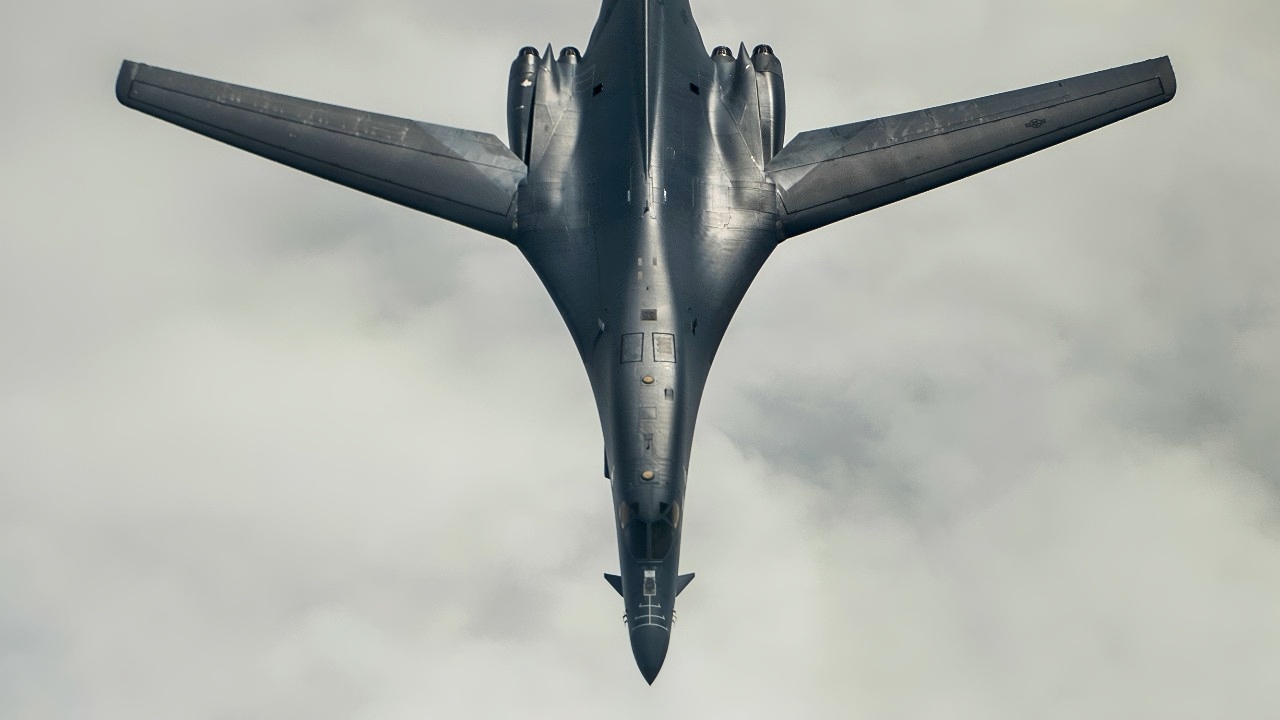
A U.S. Air Force B-1B Lancer, assigned to the 37th Expeditionary Bomb Squadron, Ellsworth Air Force Base, S.D., flies over the East China Sea, Jan. 9, 2018. The Lancer serves as premier platform for America’s long-range bomber force, carrying the largest conventional payload of guided and unguided weapons in the Air Force inventory. (U.S. Air Force photo by Staff Sgt. Peter Reft)

A B-1B Lancer aircraft from the 34th Bomb Squadron departs from Al Udeid Air Base, Qatar, April 8, 2017. This departure marks the airframe’s first mission in the U.S. Air Force Central Command’s area of operations in more than two years. (U.S. Air Force photo by Staff Sgt. Joshua Horton)
“Yes, the president felt he had to destroy the nuclear program. And yes, the Iranian nuclear program is a threat to the United States of America,” Vance also said. “But we are not going to allow this to become a 10- or 15-year commitment, or frankly even a two-year commitment — even though a lot of neoconservatives and a lot of other people want us to stay there forever.”
Operation Epic Fury
While both the president and vice president were vocal about not involving the United States in open-ended wars that defined American involvement in the Middle East in the immediate aftermath of the 9/11 terror attacks, the Commander-in-Chief decided to launch the opening salvos of Operation Epic Fury against Iran in close coordination with Israel.
The beginning of that ongoing campaign was enormously successful and saw much of Iran’s political and military leadership killed, including the former Supreme Leader of Iran, Ali Khamenei.
While his son, Mojtaba Khamenei, has taken the reins of power from his father, it is unknown if Iran’s newest Supreme Leader is physically and mentally competent, or if the military is ruling on his behalf.
Repeated Strikes on the Middle East
In the meantime, Iran is ramping up its strikes against its neighbors in the region.
On Wednesday, the country lashed out at nearby Kuwait and Bahrain, both of which host American military elements. Posting to X, the Kuwaiti Army confirmed the attack, writing that “Kuwaiti air defenses are currently countering hostile drone attacks,” and that “the General Staff of the Army notes that any explosion sounds heard are the result of air defense systems intercepting hostile attacks.”
Indeed, Bahrain was forced to sound the alarm on two occasions and fired its air defenses at incoming Iranian munitions.
However, it was not immediately clear if Iran had fired drones at Bahrain or missiles as well.
Saudi Arabia, one of Iran’s arch-rivals in the region, also parried strikes from the Houthis, the Iran-backed rebel group vying for control over Yemen, to the south of Saudi Arabia.
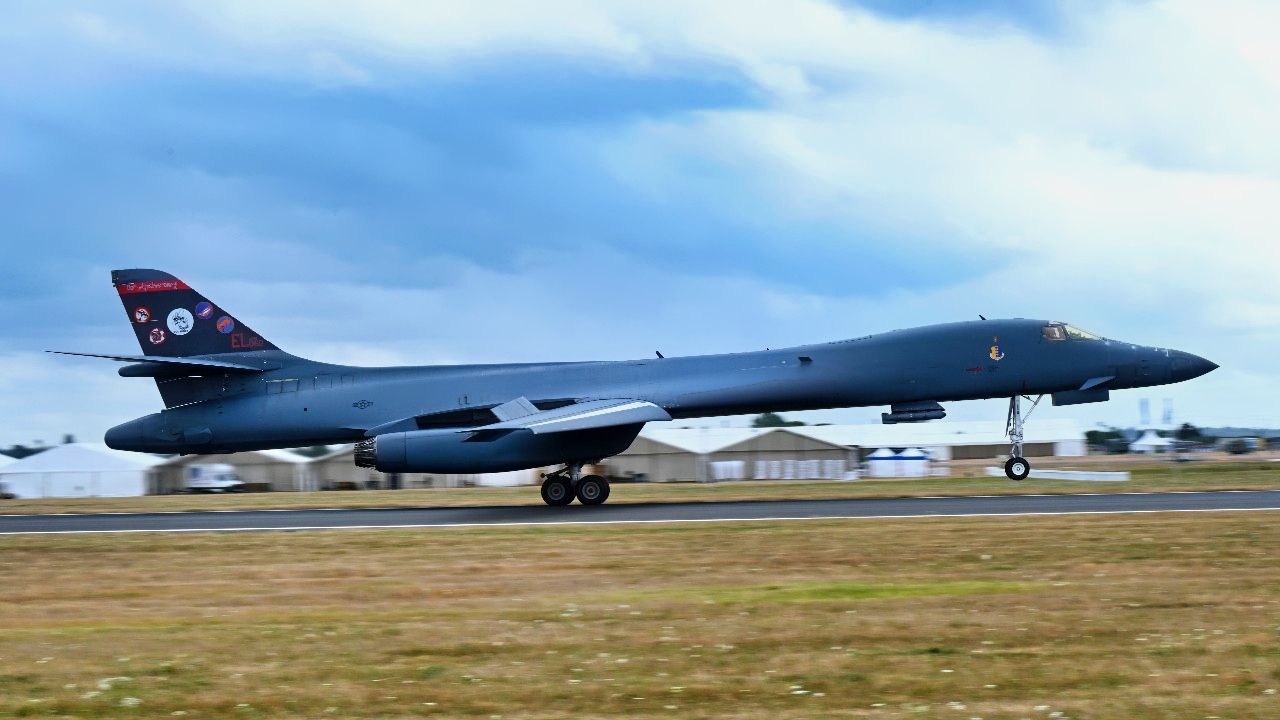
B-1B Lancer Bomber. Image Credit: Creative Commons.
American forces have struck targets within Iran too, and launched strikes against Iran’s Qeshm Island located within the Strait of Hormuz. With intermittent strikes ongoing, however, the Pentagon is seemingly preparing for a much greater, more concerted effort against Iran.
Earlier this week, the USS Theodore Roosevelt, a Nimitz-class nuclear-powered aircraft carrier of the United States Navy, reported to Central Command, bringing the total number of aircraft carriers available to Central Command to three — a remarkable assemblage of American naval power arrayed around Iran.
The USS George Washington and the USS George H. W. Bush were already within Central Command’s area of responsibility.
While the American President previously hinted that renewed strikes against Iran of an enormous scope could be expected after the American midterm elections earlier this month, that threat has not yet materialized.
However, with this third carrier now in the Middle East, President Trump has more options.
Targets, should fighting erupt again, could include Iran’s Pickaxe Mountain and Natanz, both of which are fortified Iranian complexes buried deep underground.
Earlier in November, the United States Central Command announced that it had created a new task force, Task Force Iron Gate, aimed at sealing Iran’s large land borders from the outside world.
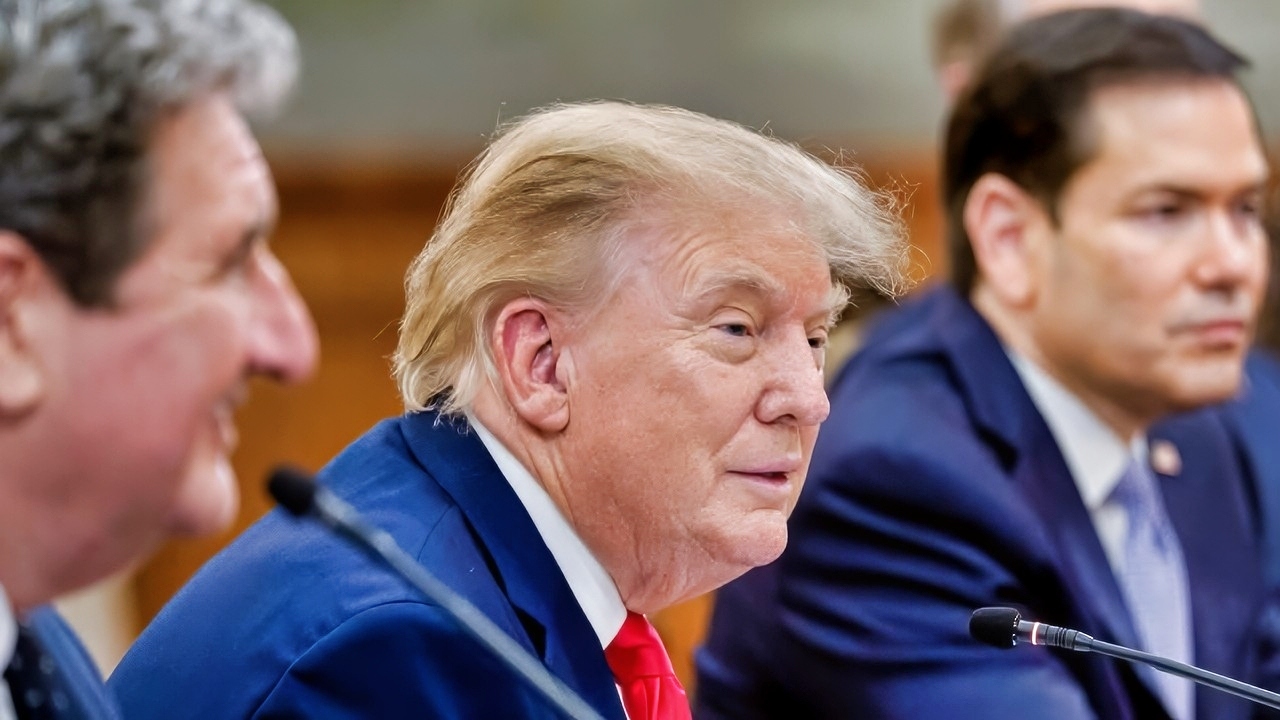
Donald Trump In Asia. Creative Commons Photo.
With Tehran’s ability to ship oil out throttled by the ongoing blockade of the country’s ports by the United States Navy, Tehran has pivoted to its land borders and the Caspian Sea shoreline to acquire weapons and ammunition and ship some goods out of the country.
Though the routes can hardly make up for Iran’s lost oil flows via the Strait of Hormuz — one oil tanker is roughly equivalent to around 1,300 tanker trucks, depending on size — both China and Russia are believed to have shipped dual-use goods to Iran, products that include drone parts, missile components, and explosives.
About the Author: Caleb Larson
Caleb Larson is an American multiformat journalist based in Berlin, Germany. His work covers the intersection of conflict and society, focusing on American foreign policy and European security. He has reported from Germany, Russia, and the United States. Most recently, he covered the war in Ukraine, reporting extensively on shifting battle lines in Donbas and writing about the war’s civilian and humanitarian toll. Previously, he worked as a Defense Reporter for POLITICO Europe. You can follow his latest work on X.


