
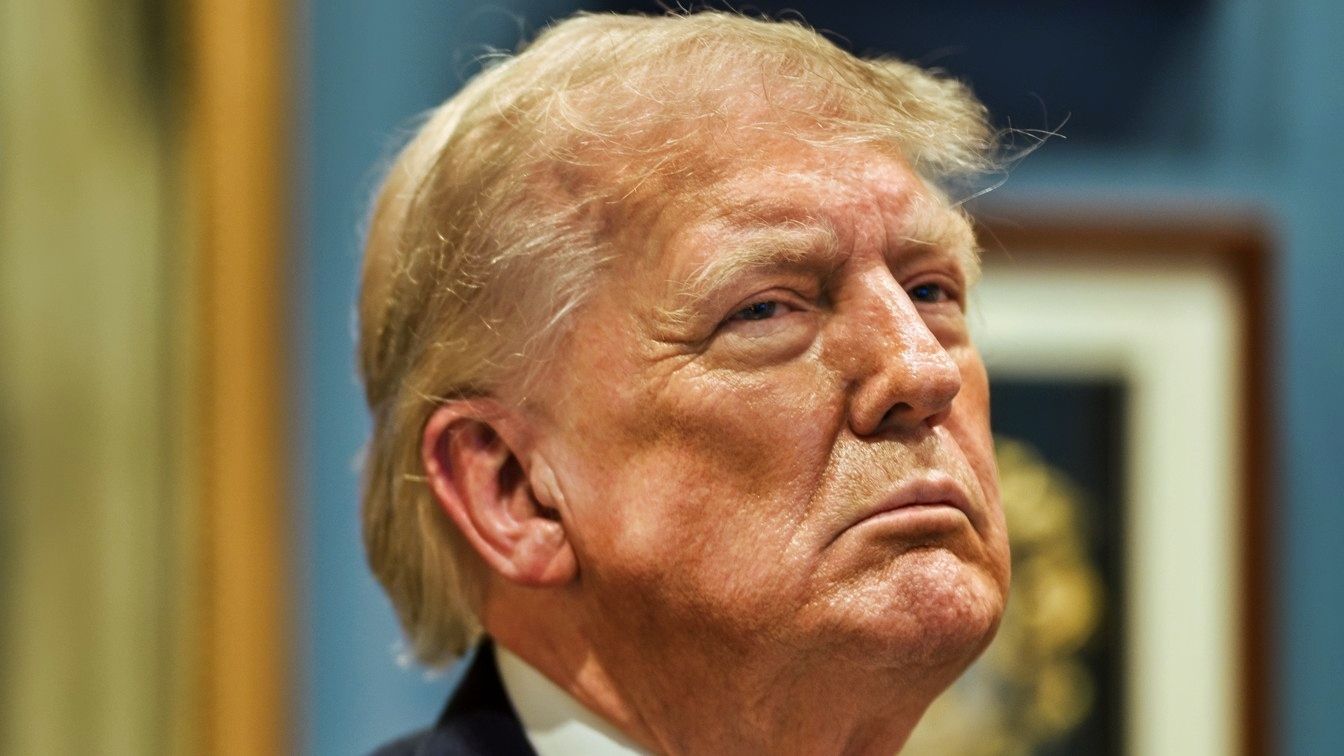
President Donald Trump this week described Venezuela as a new American “acquisition,” echoing comments he made about Greenland, following two separate deals with the country.
During a meeting with Philippine President Ferdinand Marcos Jr. in Manila on Wednesday, November 18, the U.S. president made the claim while discussing America’s growing energy resources and his plans to expand U.S. energy exports to the Pacific.
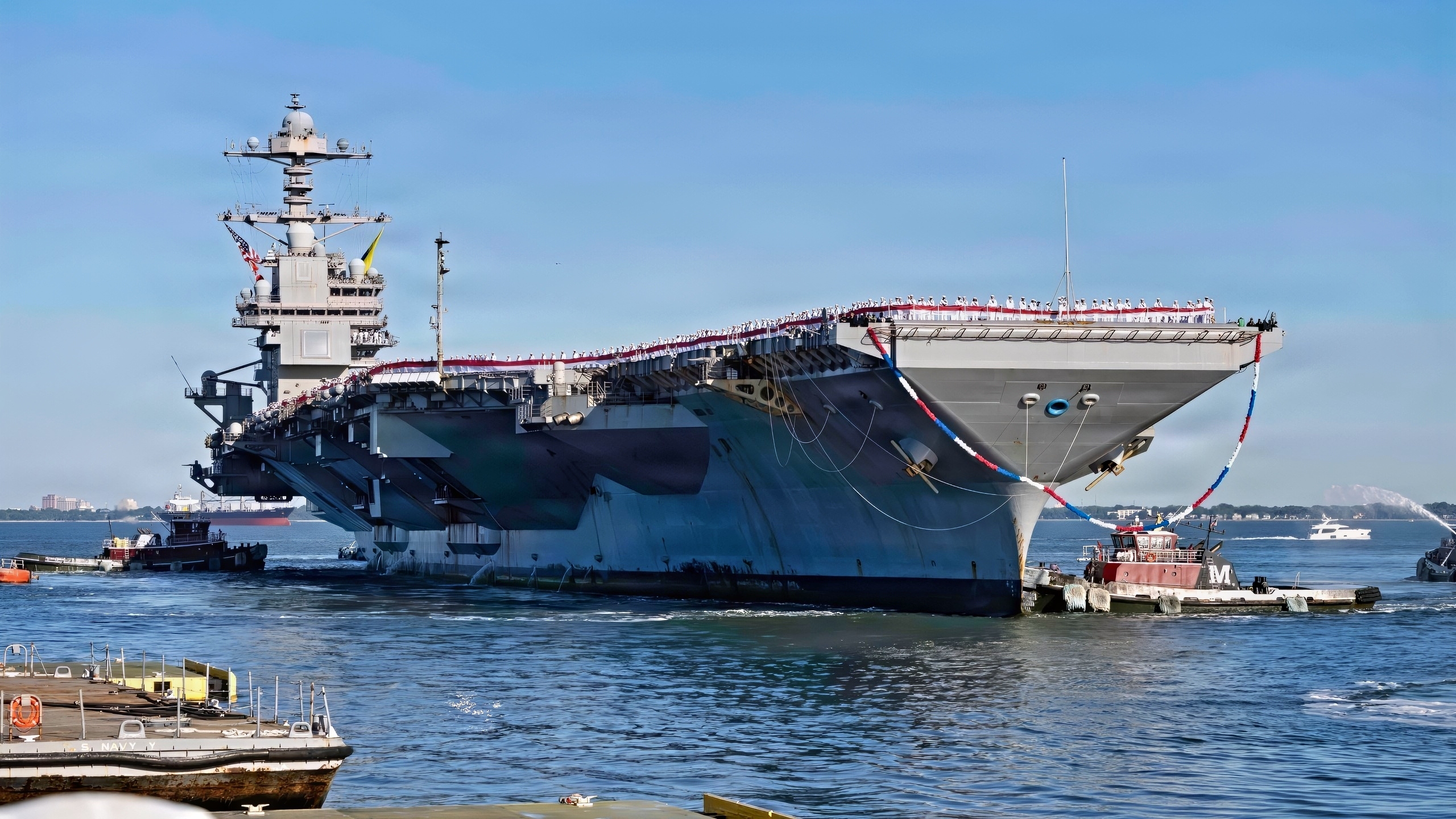
260516-N-EE423-1027 NORFOLK, Va. (May 16, 2026) – The world’s largest aircraft carrier, USS Gerald R. Ford (CVN 78), returns to Naval Station Norfolk, May 16, 2026, following a historic 11-month deployment to U.S. 2nd, 4th, 5th, and 6th Fleets as part of the Gerald R. Ford Carrier Strike Group. Before returning to Norfolk after 326 days, the Gerald R. Ford crew conducted 23 replenishments-at-sea, sailed over 57,713 nautical miles, and safely transferred 14 million gallons of fuel. Embarked Carrier Air Wing 8 logged more than 5,760 flight hours and 12,200 flight launches. (U.S. Navy photo by Mass Communication Specialist 1st Class Sophie Pinkham)
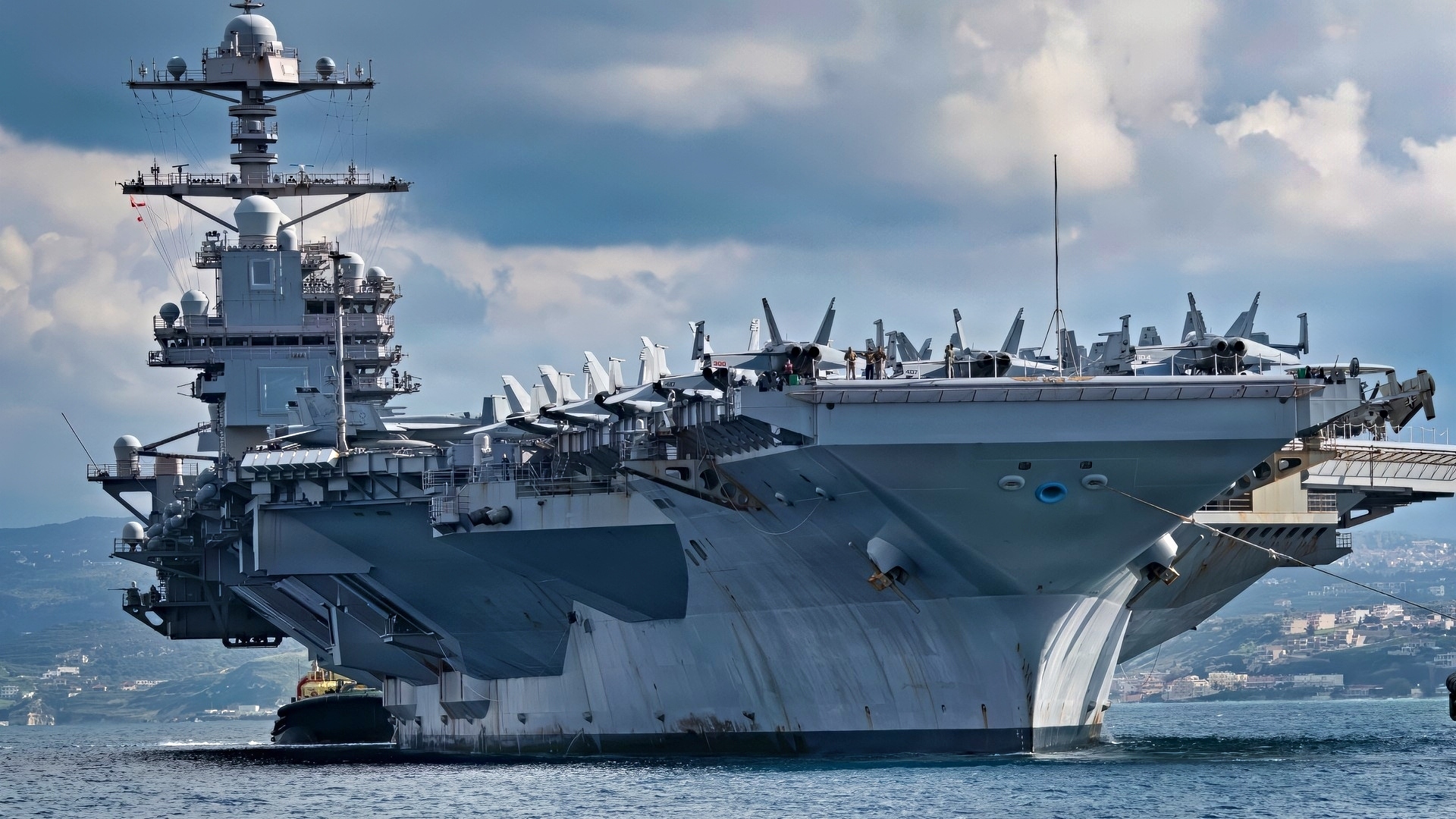
NAVAL SUPPORT ACTIVITY SOUDA BAY, Greece (Feb. 23, 2026) The world’s largest aircraft carrier, Ford-class aircraft carrier USS Gerald R. Ford (CVN 78) arrives at the NATO Marathi Pier Complex in Souda Bay, Crete, Greece, during a scheduled port visit on Feb. 23, 2026. NSA Souda Bay is an operational ashore installation that enables and supports U.S., Allied, Coalition, and partner nation forces to preserve security and stability in the European, African, and Central Command areas of responsibility. (U.S. Navy photo by Mass Communication Specialist 3rd Class Hannah Donahue)
The comments come almost a year after U.S. forces captured Venezuelan President Nicolás Maduro in Caracas, and as Washington continues to exercise control over the South American country’s oil industry.
The Trump administration has negotiated agreements with the country’s interim government that give the United States significant influence over oil production, operations, and exports. However, the agreement does not include any transfer of territory.
What Trump Said
During a meeting at Malacañang Palace in Manila on Wednesday, the president said the United States has gained a significant advantage over other major energy-producing nations, including Saudi Arabia and Russia, through the deal signed with Venezuela.
The president reportedly described the country as America’s “new acquisition” while discussing how the United States could provide energy to its allies.
“We have more energy than any country in the world,” Trump said, adding, “if you add Russia and Saudi Arabia together, we’re much bigger than those two combined.”
“And then you add Venezuela, which was our new acquisition,” he said.
The comments come after months of negotiations over Venezuela’s oil industry in the wake of Maduro’s arrest.
Maduro’s government previously controlled the industry and is now set to receive significant U.S. investment.
President Trump has not, however, announced a new territorial arrangement, and his description of Venezuela as an “acquisition” can be attributed to both his characteristically boastful way of describing deals and the fact that the U.S. will now have significant control over Venezuela’s oil industry.
Since January, U.S. involvement in Venezuela’s oil industry has grown substantially, with Washington and American oil companies working closely together to revitalize the struggling industry.
Washington has overseen oil sales and negotiated agreements that give U.S. companies access to untapped reserves.
The True Nature of the Deal
The agreement President Trump referenced was signed on August 28 after negotiations involving U.S. Secretary of State Marco Rubio, Defense Secretary Pete Hegseth, and Venezuelan interim President Delcy Rodríguez.
Under the agreement, the United States gains substantial control over oil production in partnership with North American Blue Energy Partners (NABEP), a private company run by Venezuelan businessman Alejandro Betancourt.
A White House fact sheet published on August 31 describes how Venezuela granted NABEP 100-year concessions covering 17 oilfields that contain approximately 65 billion barrels of proven reserves.
The Pentagon receives a 35% stake in NABEP’s parent company, and the State Department also secured the right to purchase 20% of production at cost and first refusal on the remainder.
Washington also gained influence over the company’s board.
On August 29, Rodríguez said that the agreement was intended to increase production to more than 1.5 million barrels per day from the 17 fields over the next 25 years.
Progress has been made, too, with NABEP assuming control of 14 additional fields on October 1 — although Reuters reported on October 30 that the parent company is facing significant infrastructure and staffing problems.
Production across its entire operation stood at approximately 224,000 barrels per day in mid-October, meaning work still needs to be done.
On November 4, reports revealed that Venezuela had exported approximately 1.08 million barrels per day in October.
U.S. Expands Its Influence
The president’s comments also come as the United States expands its new relationship with Venezuela beyond the energy industry.
Defense Secretary Pete Hegseth made an unannounced visit to Caracas on November 18, where he met with interim President Delcy Rodríguez and announced a new agreement to establish military cooperation between the two countries.
The visit and the plans discussed may well have influenced President Trump’s decision to refer to the new agreements with Venezuela as an “acquisition.”
The new agreement will deepen military ties, and reports suggest the deal could also extend to training and intelligence sharing.
Hegseth is the highest-ranking Pentagon official to visit Venezuela since the American military operation that captured the country’s former president.
It’s good news for the Trump administration, but Democrats are demanding answers, and the new agreement will face congressional scrutiny once the new Democratic-led Congress convenes in January.
Democrats are preparing investigations into the $100 billion oil deal, with lawmakers set to demand answers about the Trump administration’s relationship with NABEP, the Pentagon’s ownership stake, and plans for managing oil revenues.
About the Author: Jack Buckby
Jack Buckby is a British researcher and analyst specializing in defense and national security, based in New York. His work focuses on military capability, procurement, and strategic competition, and he produces and edits analysis for policy and defense audiences. He brings extensive editorial experience, with a career output spanning over 1,000 articles at National Security Journal, and has previously authored books and papers on extremism and deradicalization.


