


Iran targeted a U.S. base in Kuwait and locations in Bahrain on November 18, a day after U.S. forces attacked an Iranian missile site.
For now at least, President Donald Trump has chosen to keep the blockade and economic sanctions in place rather than conduct another large-scale aerial assault.

Iran’s Drones That Russia Is Using. Image Credit: Creative Commons.
‘Stalemate’?
Iran has launched attacks on Ali Al Salem Air Base in Kuwait on Wednesday, while Bahrain intercepted further attacks, the AP news agency reported.
Multiple drone attacks were intercepted in Kuwait, and its government described the repeated attacks as “criminal.” No damage was immediately reported in Kuwait, and no immediate damage assessment was made in Bahrain.
After Iran claimed it had attacked U.S. radar installations in Bahrain, a U.S. fighter plane attacked a missile launch site belonging to the Revolutionary Guard on Qeshm Island, according to Reuters. In a separate incident, ADNOC, a state-owned oil company in the UAE, reported that one crew member was missing and 11 were injured after an attack on its vessel in the Strait of Hormuz.
Hamidreza Azizi of the International Crisis Group warned via X of the “risk of miscalculation and escalation.” Meanwhile, Danny Citrinowicz, a former Israeli intelligence specialist, described Iran’s actions as “deliberate, calibrated escalation,” aimed at raising the cost of the blockade imposed by Washington.
By imposing economic pressure on Iran, Trump believes he can weaken the country without engaging in risky large-scale aerial attacks. “We’re just keeping it the status quo,” Trump told reporters after last week’s White House talks with the Qatari president.

Iran F-14 Tomcat Fighter. Image Credit: Creative Commons.
Secretary of State Marco Rubio told a news conference in Paris last week that economic pressure was “working so well” that further major operations were unnecessary.
There are now three U.S. aircraft carriers in the region, and limited attacks have taken place.
Republicans suffered major losses in November’s midterm elections, with Democrats set to take control of both chambers of Congress in January.
Trump has remained resolute in his approach to the negotiations. “We’ve got their money,” he wrote last Thursday.
“We’ve got their Strait!” Trump also wrote on his Truth Social platform on November 12.
Ali Vaez of the International Crisis Group told Reuters back in May that while Iranian officials agree the blockade is causing problems and cannot continue indefinitely, they believe they will be pressed into making “painful concessions.”
Tehran Demands Concessions
Iran is demanding that trade through its ports is reinstated, its frozen assets are returned, and oil is allowed to be exported before serious negotiations over its nuclear program, according to a recent Reuters investigation.
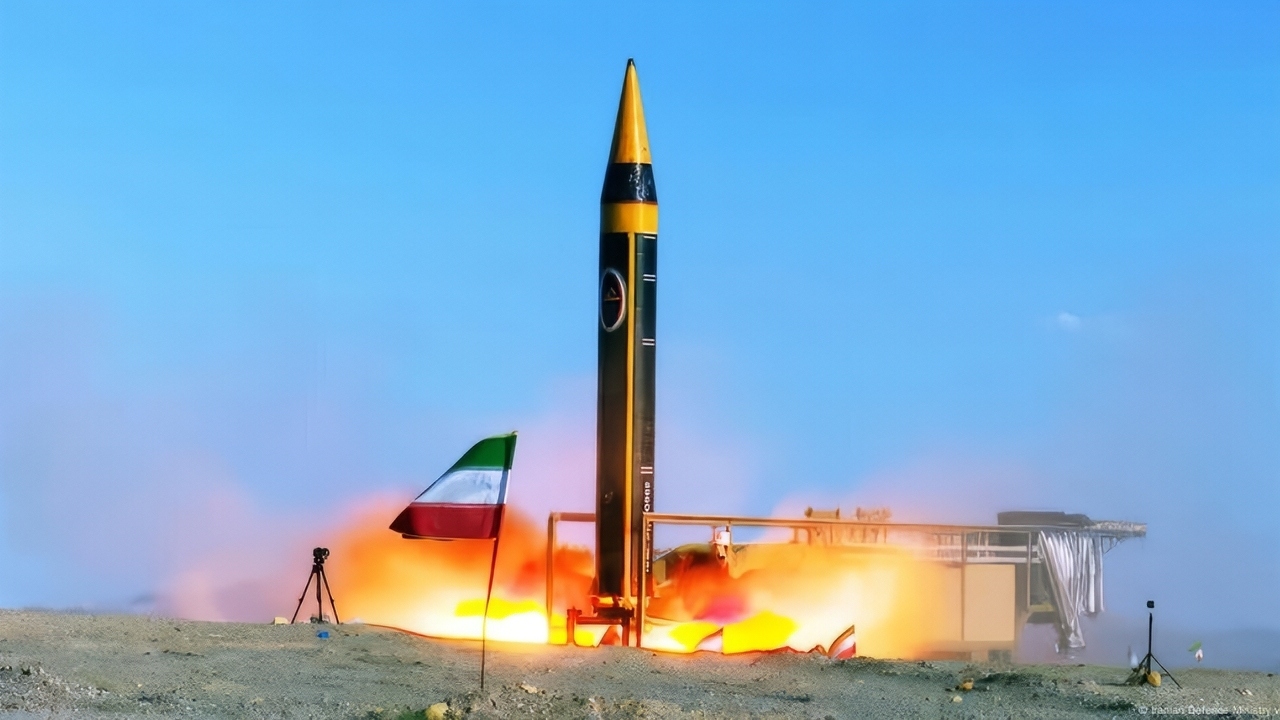
Iran Missiles Test Firing. IRGC Photo Handout.
Washington is requesting that Iran offer concessions in return, along with concrete commitments on its nuclear program.
Speaking to reporters before departing for France on November 8, Rubio described these conditions as “outrageous and ridiculous and really not realistic,” Reuters reported on November 9.
Iranian Foreign Minister Abbas Aragchi held a meeting with his Omani counterpart on Tuesday to improve maritime security and to explore what Oman’s state news agency called “diplomatic options available to contain tensions.”
Does Iran Still Have Enriched Uranium? The Pickaxe Mountain Problem
Intelligence assessments suggest that a “significant portion” of highly enriched uranium could be hidden at the intensely fortified Pickaxe Mountain site in central Iran.
The International Atomic Energy Agency (IAEA) cannot confirm the state or location of Iran’s nuclear material stockpiles and has said this is a “serious proliferation concern” that should be addressed with the “utmost urgency,” according to Iran International.
On Wednesday, Polymarket traders placed the likelihood of an IAEA visit to a nuclear site in Isfahan, Fordow, or Natanz by the end of 2026 at just 8 percent.
Iran denies wanting to acquire nuclear weapons, but extensive evidence to the contrary has circulated for decades.
‘Iran Will Escalate’
If the U.S. launches another large-scale attack on Iran, Gulf states may become targets. Ebtesam Al-Ketbi, an analyst in the UAE, told Reuters that when the U.S. attacks Iran, Iran “strikes the Gulf.”
Alan Eyre, an erstwhile U.S. negotiator, warned Reuters on Tuesday that if the blockade continues, “Iran is going to escalate because they can’t last.”
It is clear that the Islamic Republic seems keen to capitalize on the GOP’s skittishness about further military action, given November’s election results.
One senior European official told Reuters on Thursday that this year’s military action had “achieved the opposite of what was intended,” strengthening Tehran’s hardliners.
All is not well within the regime, however. As Simon Mayall, a retired British Army officer and former Middle East Adviser to the British government, explained in a Telegraph column on Monday: “the nuclear program has been severely degraded, as have the ballistic missile and drone programs.” Still, he noted that “small numbers of both [weapons] can continue to cause disproportionate damage and disruption.”
About the Author: Georgia Gilholy
Georgia Gilholy is a journalist based in the United Kingdom who has been published in Newsweek, The Times of Israel, and the Spectator. Gilholy writes about international politics, culture, and education.


