

This current phase of the war in Iran is a kind of waiting, a limbo — one that threatens to become the very kind of forever war in the Middle East that the current administration vehemently campaigned against ever pulling Washington back into.
While the United States is prosecuting some military targets in Iran and launching the occasional air strike against targets on the ground there, the president seems mostly alright with enforcing the ongoing blockade of Iran’s ports and waiting out Tehran.

Two F-35C Lightning II carrier variant joint strike fighters conduct the first catapult launches aboard the aircraft carrier USS Nimitz (CVN 68). The F-35 Lightning II Pax River Integrated Test Force from Air Test and Evaluation Squadron (VX) 23 is conducting initial at-sea trials aboard Nimitz. (U.S. Navy photo courtesy of Lockheed Martin by Dane Wiedmann/Released)
US Navy Warship. Image Credit: Creative Commons.
It is a bet that the country’s looming economic collapse will cause the regime ensconced in Iran to collapse as well.
Posting to social media, the president struck a defiant note. After seemingly directing Vice President JD Vance to “focus his complete and total attention” on domestic corruption issues, the president then pivoted to the war in Iran. “We don’t need a deal with Iran,” the president wrote. “Those days have long since passed. We’ve got their money, Hundreds of Billions of Dollars, and we’ve got their Strait!” But the president’s position is hardly the steady, secure one he projected.
Coming off of a bruising midterm election cycle in which the president’s Republican Party emerged rather battered, the current administration must also deal with elevated energy costs, thanks in large part to the war in Iran.
One of the burning questions — not only in Washington, but worldwide — is how much longer this war will go on. And who will blink first, Trump or the theocratic class ruling over Iran?
Poised for Fresh Strikes
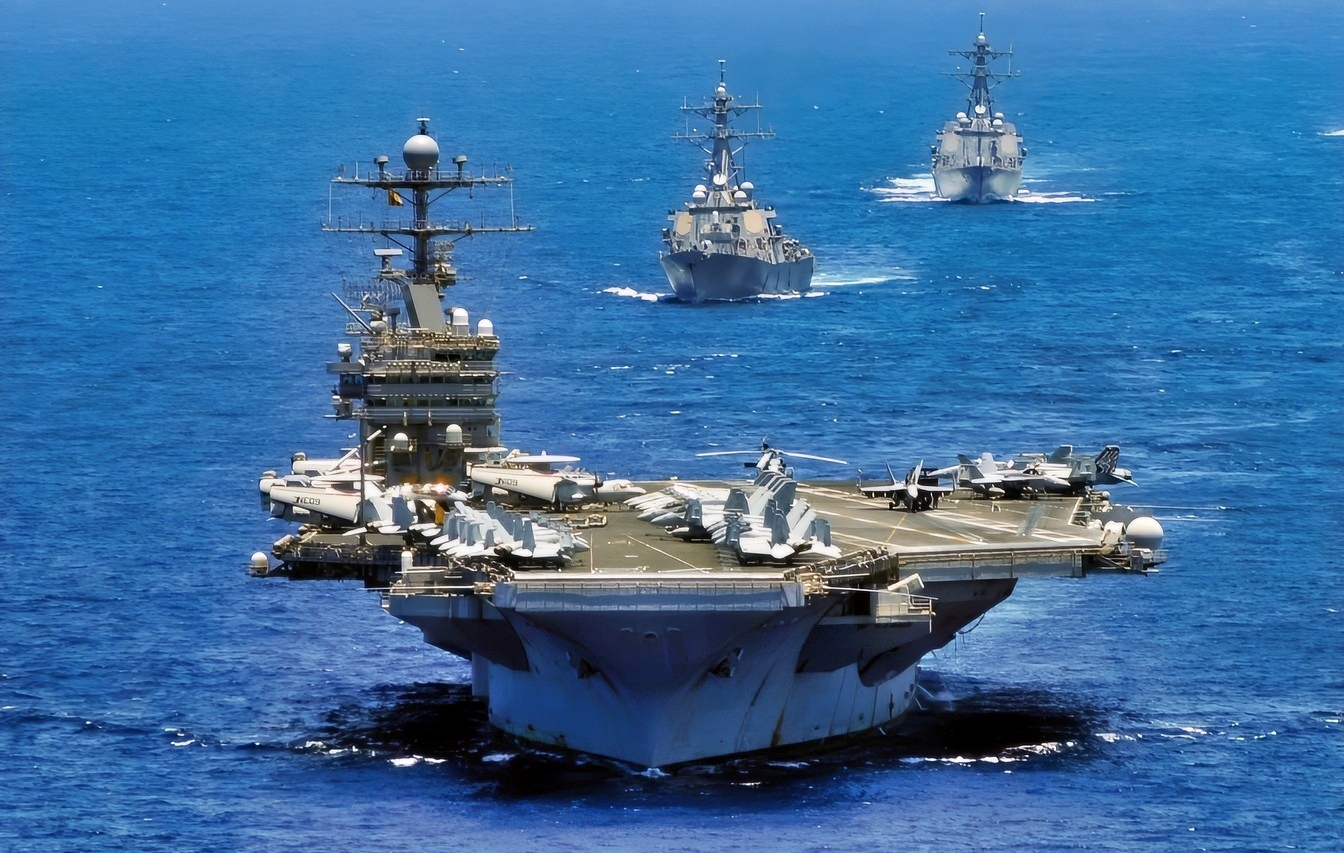
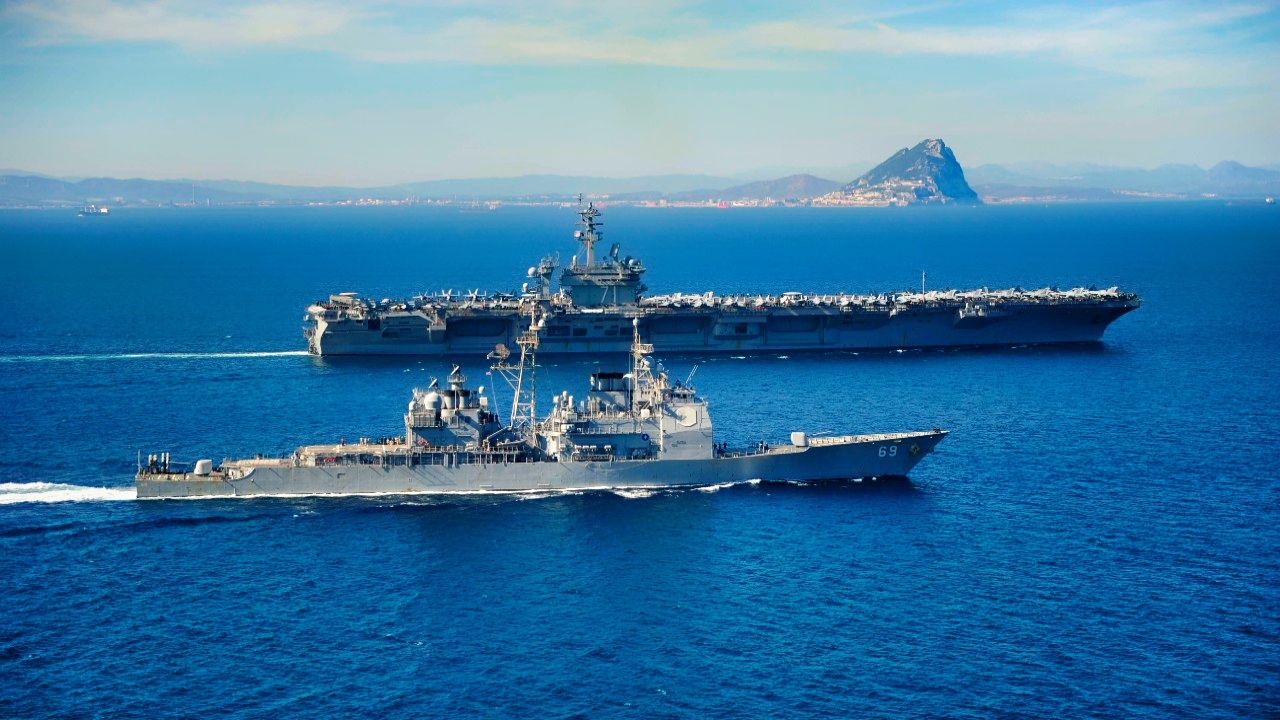
The naval armada arrayed around Iran is one of the most singular assemblages of American military power gathered in decades.
About 17 warships are now under the auspices of United States Central Command, the command whose area of responsibility includes the Middle East.
Two of those vessels are nuclear-powered aircraft carriers: the USS Theodore Roosevelt and the USS George H. W. Bush. The USS Boxer, part of a larger Amphibious Ready Group, complements them.
The options available to the Commander-in-Chief for renewed strikes against Iran, as presented by the Pentagon, are formidable.
Potential targets in Iran include Pickaxe Mountain as well as Natanz, both heavily fortified underground facilities centered around Iran’s clandestine nuclear enrichment program.
While oil flows from the Persian Gulf surpassed pre-war levels in October, they have since dipped somewhat thanks to Iranian targeting of ships attempting to pass through the Strait of Hormuz and onward to international markets.
According to Bloomberg reporting, flows from the Middle East have been crimped by a dearth of spare tanker capacity to move oil out of the region. Since August, spare tanker capacity has dipped by forty percent.
Land Corridors
Iran shares a border with seven countries: Armenia, Azerbaijan, Turkey, Afghanistan, Turkmenistan, Iraq, and Pakistan.
It also has a long shoreline with the Caspian Sea, which facilitates access to Russia and Kazakhstan.
Central Asia is a vital conduit for Iran to access aid from Beijing, which has sent a large amount of dual-use goods to Iran, wares that include drone parts and components for missiles as well as explosives.
China has also provided Iranian forces with access to its Baidu satellite network for honing the precision of the munitions it has launched at its neighbors in the region as well as American service members in the area. Russia is also believed to have provided Iran with aid in the form of weapons and other aid.
It is for this reason that the Pentagon stood up Task Force Iron Gate earlier this month, part of an effort to “prevent Iran from using ground routes to transport advanced weapons and other materials.” But staffed with only “approximately 20 civilian and military personnel,” the task force lacks the workforce and firepower to effectively secure Iran’s land borders, which would likely require assistance from the aforementioned countries that share borders with Iran.
Summit in China
Fresh from the tripartite summit in China, the APEC forum, the leaders of China, Russia, and the United States met. While the three have no doubt discussed the wars in Iran and potentially in Ukraine, to a certain extent, the likelihood of the three superpowers forging an agreement that sees an end to the fighting in Iran is unlikely.
In the meantime, Washington and Tehran seem to be content to wait each other out, hoping for an opening to exploit, a pressure point to squeeze and gain additional leverage.
About the Author: Caleb Larson
Caleb Larson is an American multiformat journalist based in Berlin, Germany. His work covers the intersection of conflict and society, focusing on American foreign policy and European security. He has reported from Germany, Russia, and the United States. Most recently, he covered the war in Ukraine, reporting extensively on shifting battle lines in Donbas and writing about the war’s civilian and humanitarian toll. Previously, he worked as a Defense Reporter for POLITICO Europe. You can follow his latest work on X.


