

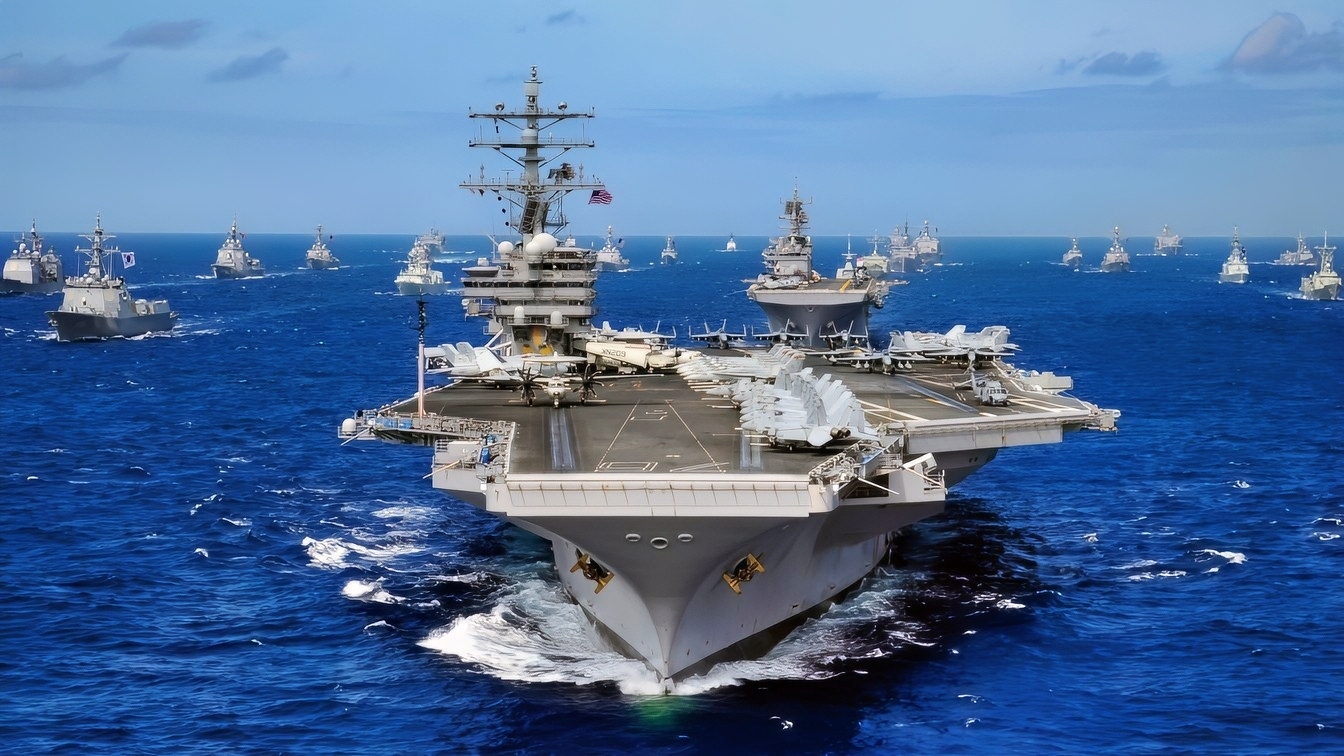
Bahrain and other Gulf states have been “devastated” by President Donald Trump’s ongoing war against Iran, according to a new report, with Bahraini locals reportedly begging the United States to “stop interfering” in the region.
As the war against Iran approaches its ninth month, Arab states in the Persian Gulf continue to be hit hardest as a result of the ongoing closure of the Strait of Hormuz, the global oil crisis, and Iranian strikes on U.S. military bases in the region.
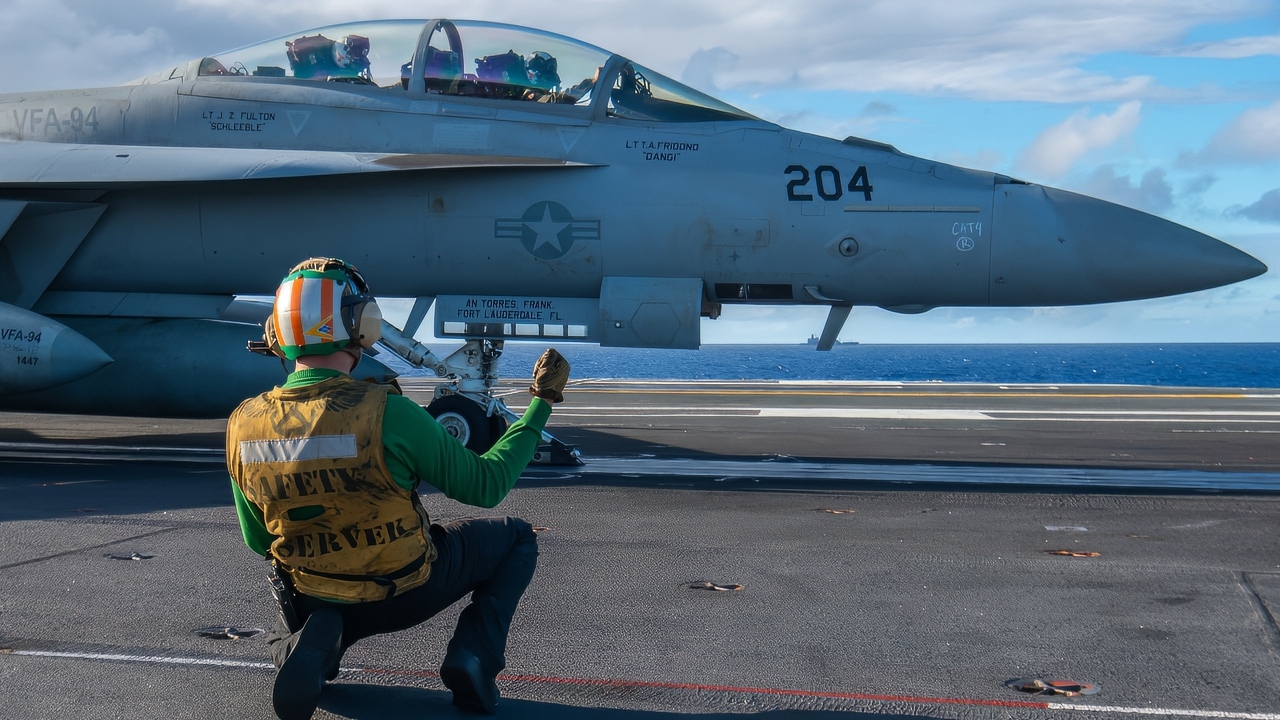
(Dec. 31, 2022) An F/A-18E Super Hornet assigned to the “Mighty Shrikes” of Strike Fighter Squadron (VFA) 94 prepares to launch from the aircraft carrier USS Nimitz (CVN 68) to participate in a long-range maritime strike demonstration. Nimitz is in 7th Fleet conducting routine operations. 7th Fleet is the U.S. Navy’s largest forward-deployed numbered fleet, and routinely interacts and operates with 35 maritime nations in preserving a free and open Indo-Pacific region. (U.S. Navy photo by Mass Communication Specialist 2nd Class Justin McTaggart)
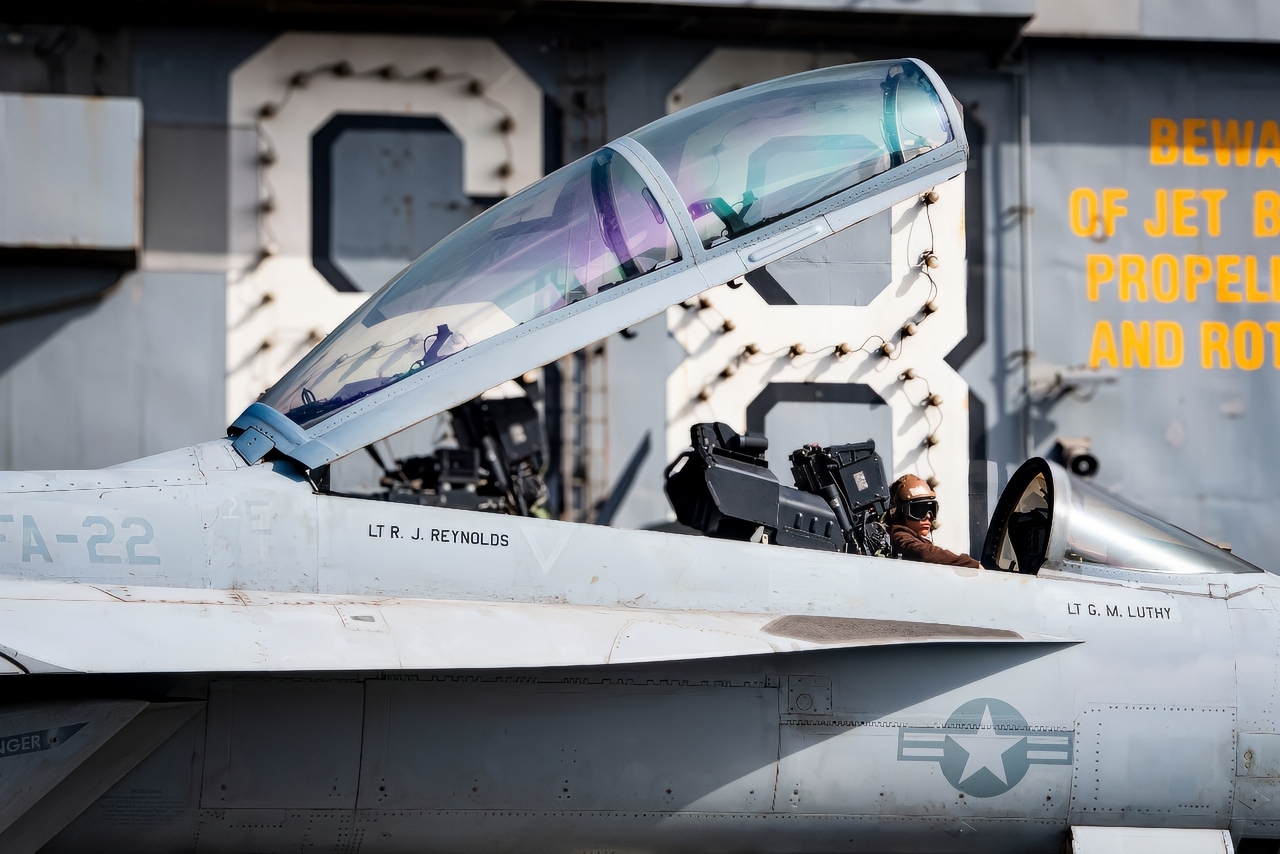
U.S. CENTRAL COMMAND AREA OF RESPONSIBILITY (July 22, 2025) An F/A-18F Super Hornet, attached to Strike Fighter Squadron (VFA) 22, taxis across the flight deck of the Nimitz-class aircraft carrier USS Nimitz (CVN 68) in the U.S. Central Command area of responsibility. (Official U.S. Navy photo)
Economy Decimated in Bahrain’s Capital City, With Stores Empty and Businesses Destroyed
The Washington Post reported on Wednesday that Bahrain had “seen its economy devastated by continued turmoil in Hormuz,” with many storefronts in the capital of Manama closed and for rent.
“A supermarket manager said residents are only filling half their carts because of price hikes,” the newspaper reported. “Hair stylists said that their salon, empty on a recent Thursday afternoon, would have been bustling before the war.”
One unnamed artist told the Washington Post, “We just want the U.S. to stop interfering,” and added, “I am nervous all the time.”
Another merchant, who used to sell goods to U.S. military personnel who have long since evacuated, protested that the market had “died because of the war and because of Hormuz.”
“I don’t know until when we will suffer,” he told the newspaper. “But we just want things to be normal again.”
Bahrain Has Repeatedly Come Under Fire From Iranian Missiles Targeting a U.S. Naval Base in the Country
Bahrain has also been caught up militarily in the conflict, with a U.S. naval base in the country, among other targets, repeatedly coming under attack from Iranian drones and missiles.
On Sunday and Tuesday, air raid sirens rang across the country, with Bahraini residents directed to seek shelter, as Iranian drones launched a fresh wave of attacks.
Bahrain, which has a population of less than two million people, was designated a “major non-NATO ally” by the U.S. following the September 11, 2001 terrorist attacks, and since then has worked closely with the U.S. during American military operations in the region.
According to the U.S. State Department, Bahrain “hosts the U.S. Navy’s Fifth Fleet and U.S. Naval Forces Central Command, and participates in U.S.-led military coalitions.”
Bahrain Cut Relations With Iran in 2016 and Has Since Established Relations With Israel
Bahrain cut diplomatic relations with Iran in 2016, and in 2020, during Trump’s first administration, the country established relations with Israel as part of Trump’s Abraham Accords.
On Tuesday, U.S. Secretary of State Marco Rubio “condemned Iran’s attacks on Bahrain and reaffirmed the commitment of the United States to the security of Bahrain and all our Gulf partners” during a call with the country’s foreign minister Abdullatif bin Rashid Al Zayani, according to the State Department.
Other Arab states in the Persian Gulf, including Qatar, have also been heavily impacted by the ongoing war and closure of the Strait of Hormuz.
Trump Has Rejected Calls For a Peace Deal With Iran
While Qatar has been attempting to broker a peace agreement between Iran and the U.S.—which would see the strait reopen in exchange for various U.S. concessions, including lifting the naval blockade of Iranian ports—Trump explicitly rejected making any peace deal with the country last week.
“We don’t need a deal with Iran. Those days have long since passed,” he wrote in a Truth Social post. “We’ve got their money, Hundreds of Billions of Dollars, and we’ve got their Strait! Thank you for your attention to this matter.”
Despite the fact that Trump’s war has proven very unpopular among voters in the U.S., with polls showing that the conflict and its economic consequences played a huge role in the Republican Party’s catastrophic defeat during the midterm elections this month, Trump has expressed reluctance to bring the war to an end as soon as possible, and has even floated the possibility of starting another military operation in Cuba before the end of his second term.
“I want to get Cuba done before I leave,” said Trump last week after being asked if he was working on “freeing” the country from its government.
About the Author: Charlie Nash
Charlie Nash is a journalist and author whose work has appeared in The Spectator, Mediaite, New Statesman, and the American Conservative, among other major publications. His reporting has been featured by The Washington Post, Fox News, the Daily Beast, MS NOW, NewsNation, Hannity, and more. You can follow Charlie on X at @CharlieNash and on LinkedIn.


