

Ukrainian drone strikes have reduced Russia’s combined crude oil refining volumes by an estimated 45 percent since late October, according to two industry sources cited by Reuters on Wednesday.
The sources said daily crude processing volumes fell from more than five million barrels per day at the end of October to about three million barrels per day.
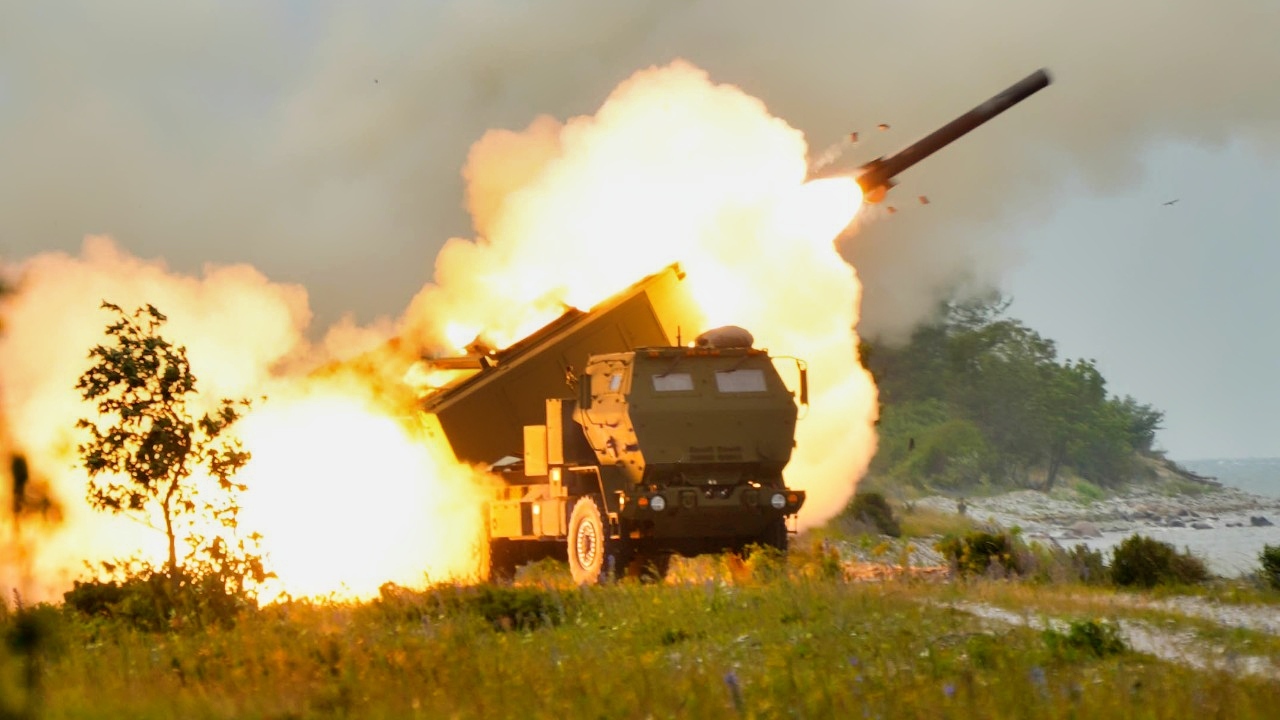
An Estonian Defense Forces M142 High Mobility Artillery Rocket System (HIMARS) fires a training rocket during a live-fire exercise in Undva, Estonia, July 11, 2025. U.S. Army elements from Bravo Battery, 1st Battalion, 14th Field Artillery Regiment, 75th Field Artillery Brigade, supporting Task Force Voit, assisted in the training process. The task force was originally formed in 2023 to support the Estonian Defense Forces in the creation of a HIMARS unit. Task Force Voit works closely with the Estonian Armed Forces, sharing critical defense strategies, training, and military readiness support. The presence of U.S. troops in the region serves as a cornerstone of NATO’s commitment to security in the Baltic region. The task force provides combat-credible forces to V Corps, America’s only forward-deployed corps in Europe. (U.S. Army photo by Staff Sgt. Rose Di Trolio)
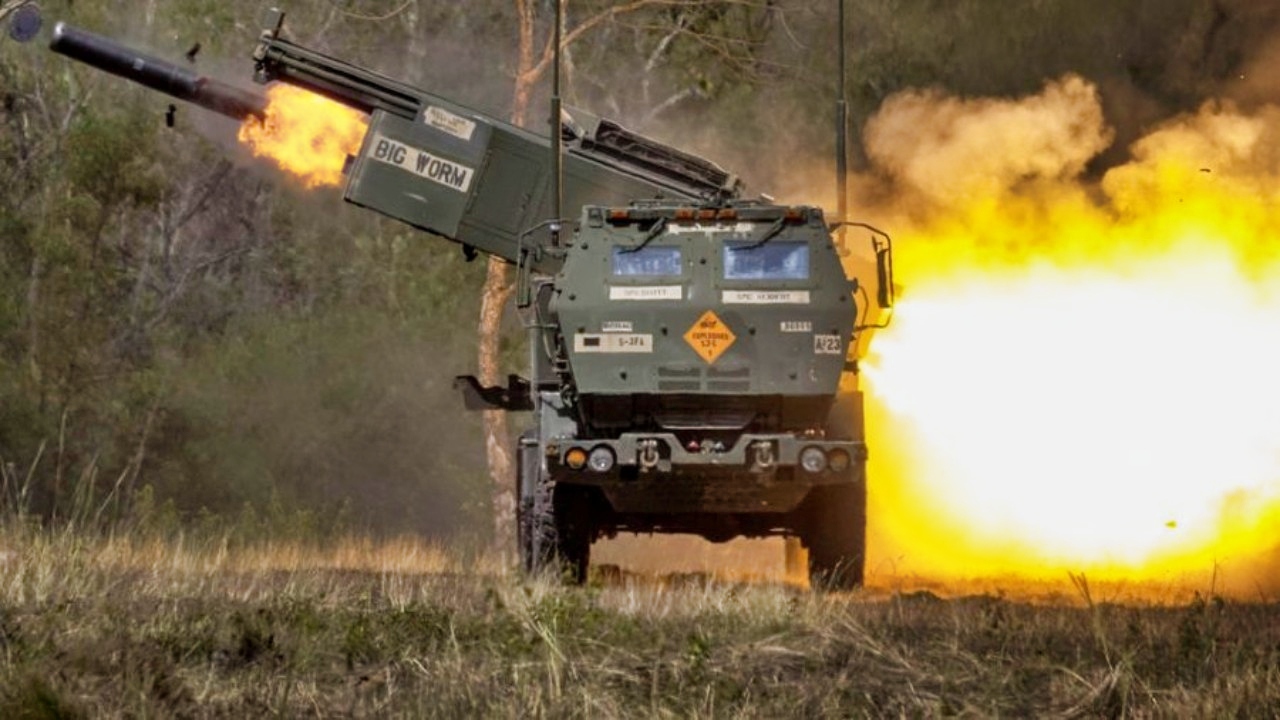
HIMARS. Image Credit: U.S. Government.
15 Key Refineries Impacted
Fifteen major refineries in Russia have been disrupted or shut down due to Ukrainian drone attacks, up from nine in the middle of last week.
Because the reductions occurred gradually, average daily crude processing volumes in November remained just 5 to 10 percent below September and October levels, the sources explained.
Ryazan, Yaroslavl, Kirishi, Volga and Krasnodar Refineries Attacked
Refineries in Ryazan, Yaroslavl, Kirishi and the Volga region have been hit. On November 17 and early November 18, two refineries in Krasnodar, Ilsky and Afipsky, were also attacked by drones.
In a November 18 statement, Ukraine’s General Staff reported that “Storage tanks were hit” at the Ilsky refinery. The statement noted that the assessment was preliminary, but that the two refineries have a combined annual crude processing capacity of approximately 13 million metric tons. They supply fuel to Russian forces fighting in southeastern Ukraine.
“These refineries provide the shortest fuel supply route for the occupiers,” Ukraine’s Defense Ministry said on Wednesday.
“Every tonne of fuel that does not leave Kuban means one less Russian armored vehicle on the battlefield,” it went on.
Russian officials reported fires at two industrial sites in the wake of drone attacks. They did not specify precisely where the strikes occurred.
Difficult To Repair
Ukraine has increasingly targeted energy infrastructure to reduce Russia’s ability to convert crude oil to fuels as part of its campaign of so-called “long-range sanctions.”
In an October 11 investigation, The Washington Post analyzed 54 refinery strikes carried out between April and August and found that more than half appeared to have damaged key desalting and distillation units.
“We aim at the most important parts of the oil refinery,” Tango, a Ukrainian drone commander, told The Washington Post back in October.
But Alexander Kolyandr, Europe director at Eurasia Group, told the newspaper that “the frequency of attacks is shorter than the time needed for repair.”
Even experts monitoring Ukraine’s attacks on energy infrastructure are surprised.
“The sheer speed of the process is quite incredible,” Sergey Vakulenko, an oil expert at the Carnegie Endowment for International Peace, told the Post this week.
He said continued attacks could see Russia move into “a fundamental new reality.”
Ukraine Creates Problems: Russia Rushes To Maintain Fuel Supplies
The Russian regime has ordered oil firms to speed up infrastructure repairs, increase fuel imports, and produce more fuel below normal Euro-5 environmental standards to maintain fuel supplies.
Ministers met with Deputy Prime Minister Alexander Novak on November 17, according to The Moscow Times.
Previously, production of lower-grade fuel was permitted to address fuel shortages.
However, wholesale gasoline sales on Russia’s main commodities exchange fell 31 percent between November 9 and 13, while diesel fell 10 percent, the newspaper said.
Despite this, President Vladimir Putin said at an Asia-Pacific business summit on Wednesday that attempts to isolate Russia economically had failed.
Ukraine says it attacked Russian energy infrastructure in retaliation for repeated bombardments of Ukrainian energy facilities.
Earlier this month, President Volodymyr Zelenskyy issued a statement accusing Russia of having “refused the de-escalation steps that our partners talked about.”
New Pressure On Oil Exports and Trump Deal
In addition to damaging refining capacity, Ukraine has attacked Russian oil export facilities and infrastructure.
If sufficient oil is not being refined or exported, Russia may be forced to reduce crude oil production further.
“Intensifying Ukrainian attacks on Russian energy infrastructure are keeping supply risks elevated for both crude oil and products, with production and exports falling,” ANZ analysts said on Thursday.
Uncertainty surrounds a recent deal struck by President Donald Trump to bring Russian diesel into the U.S.
Six weeks after the deal was struck, no oil tankers carrying the expected diesel supply have arrived in the U.S.
Last week, Matt Smith, director of commodity research at the Kpler intelligence firm, noted that buyers could be concerned about appearing to support Putin’s government.
Reduced refining capacity in Russia is affecting fuel supplies within the country and export revenue. If Ukraine continues to attack facilities at the current pace, it could make continued production difficult for Moscow.
About the Author: Georgia Gilholy
Georgia Gilholy is a journalist based in the United Kingdom who has been published in Newsweek, The Times of Israel, and the Spectator. Gilholy writes about international politics, culture, and education.


