
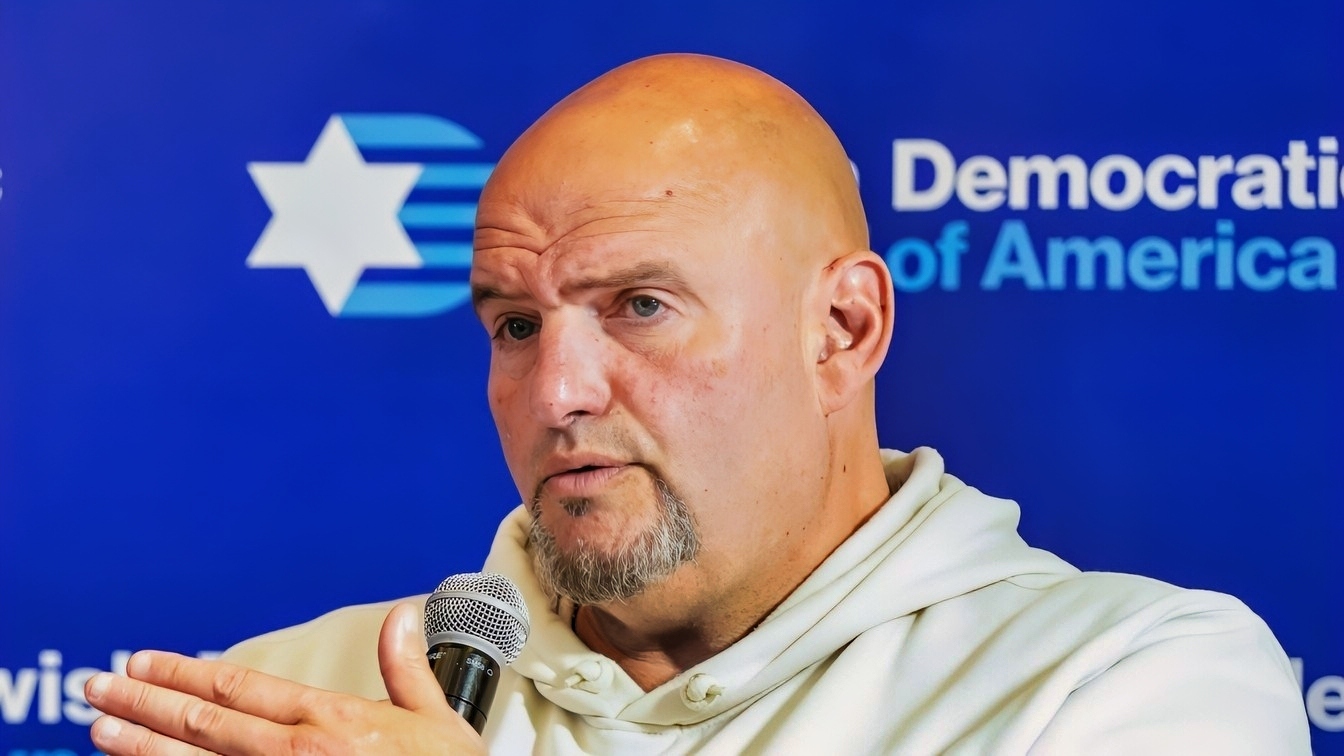
Senator John Fetterman of Pennsylvania has broken with his colleagues in the Democratic Party again, this time in support of President Donald Trump’s ongoing military campaign against Iran.
Fetterman voted against a congressional resolution that would have directed the president to end American military operations against Iran.
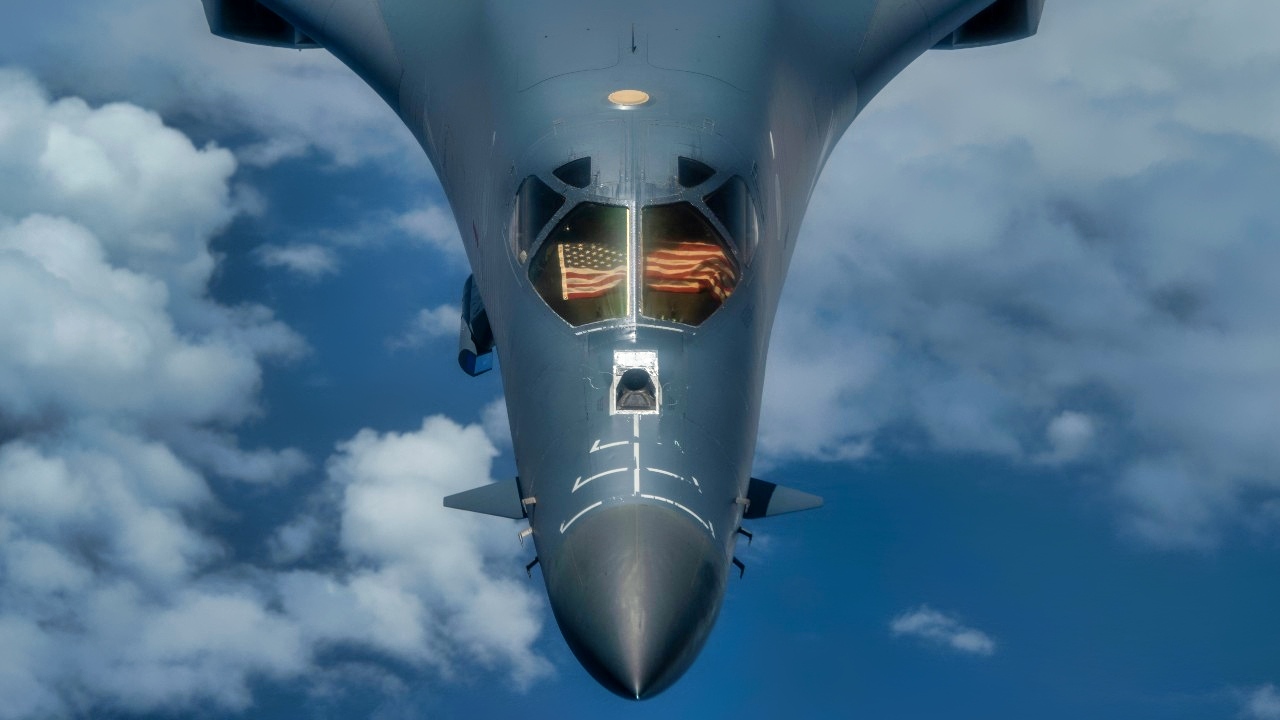
A 9th Expeditionary Bomb Squadron B-1B Lancer flies over the East China Sea May 6, 2020, during a training mission. The 9th EBS is deployed to Andersen Air Force Base, Guam, as part of a Bomber Task Force supporting Pacific Air Forces’ strategic deterrence missions and commitment to the security and stability of the Indo-Pacific region. (U.S. Air Force photo by Senior Airman River Bruce)

U.S. Air Force Senior Airman Colby Delia, 9th Expeditionary Bomb Squadron crew chief, and Airman 1st Class Olivia Ward, 9th Expeditionary Bomb Squadron crew chief, prepare for a B-1B Lancer to take off for a mission at Misawa Air Base, May 9, 2025. BTF missions provide opportunities to train and work with our allies and partners in joint and combined operations and exercises. (U.S. Air Force photo by Airman 1st Class Mattison Cole)
The vote was held Thursday, November 19, and Fetterman was the only Democrat to oppose the measure, which failed 51-48.
The vote comes weeks after Democrats won control of both chambers of Congress in the November 3 midterm elections, following months of growing public anger with the war and its economic consequences.
Three Republican senators also voted in favor of the Democratic-backed resolution, but Fetterman sided with the majority of Republicans to defeat it.
The news suggests that President Trump’s war plans could be in trouble in January once Democrats take control of both chambers of Congress.
Fetterman Votes With Republicans
The November 19 vote was the 21st such congressional vote on a war powers resolution since the war with Iran began on February 28.
The most recent measure, which passed the House in September by 220 votes to 204, would have directed the president to withdraw American forces from the war with Iran.
Republican Senators Susan Collins of Maine, Rand Paul of Kentucky, and Lisa Murkowski of Alaska joined the Democrats in supporting the resolution.
Fetterman opposed it, however, marking the latest in a long string of incidents in which Fetterman has broken with his Democratic colleagues.
Democratic Senator Chris Murphy of Connecticut also did not vote on the resolution after suffering a stroke last month.
The vote, however, would have been largely symbolic.
The White House has previously disputed the validity of similar measures pushed through Congress.
Fetterman’s decision should come as no surprise.
The Pennsylvania senator has repeatedly defended the military campaign and argued, like President Trump, that preventing Iran from obtaining nuclear weapons is more important than satisfying the demands of his party’s political base.
What Fetterman Says
Fetterman has supported the military campaign against Iran since it began. On the first day of the war, the Pennsylvania senator posted on social media platform X, praising President Trump for announcing the operation.
“President Trump has been willing to do what’s right and necessary to produce real peace in the region,” he said. “God bless the United States, our great military, and Israel.”
On March 1, Fetterman appeared on CNN’s State of the Union with Dana Bash. During the interview, he defended the strikes and argued that years of diplomatic efforts with Iran had failed to prevent the regime from advancing its nuclear program.
While he said that his support for military action was not unlimited, he said that he believes President Trump made the right decision.
Speaking about the strikes that killed Iranian Supreme Leader Ayatollah Ali Khamenei, Fetterman said, “I don’t understand why we can’t just say, thank God.”
“And there wasn’t any kind of outcry from parts of the left after Iran executed about 30,000 of their young people who were just simply protesting for democracy,” he continued.
On preventing Iran from building a nuclear weapon, he said, “President Trump was the guy willing to do that, to make sure that didn’t happen.”
On March 11, he told CBS News chief White House correspondent Major Garrett that the campaign had been successful and that it was moving toward the right conclusion, arguing that Iran’s ability to retaliate against American and Israeli forces had been weakened.
He did, however, acknowledge the political consequences of supporting a campaign initiated by a Republican president.
He has since challenged Democrats to recognize what he describes as the Trump administration’s military successes, arguing that preventing Iran from acquiring nuclear weapons should be a bipartisan objective.
Democrats Prepare to Cut Off War Funding
While the vote on Thursday failed, Democrats are preparing different options to restrict the president’s ability to fight the war in Iran, including legislation that would cut off funding for the campaign.
Democratic Senators Tammy Duckworth of Illinois and Kirsten Gillibrand of New York are pushing legislation to prohibit federal funding for offensive military operations against Iran.
The proposal may be introduced as an amendment to the next government funding bill, which needs to pass before December 11 to prevent a shutdown ahead of Christmas.
The push comes as the Pentagon reveals new details about the rising cost of the conflict.
On November 19, senior Pentagon budget official Arthur Miller said that the war had cost $48.3 billion as of November 13. Those figures exclude damage to U.S. military facilities across the Middle East.
Meanwhile, Democrats remain divided over whether to demand immediate restrictions or wait until they control Congress in January, when they will have greater power to rein the president in.
About the Author: Jack Buckby
Jack Buckby is a British researcher and analyst specializing in defense and national security, based in New York. His work focuses on military capability, procurement, and strategic competition, and he produces and edits analysis for policy and defense audiences. He brings extensive editorial experience, with a career output spanning over 1,000 articles at National Security Journal, and has previously authored books and papers on extremism and deradicalization.


