

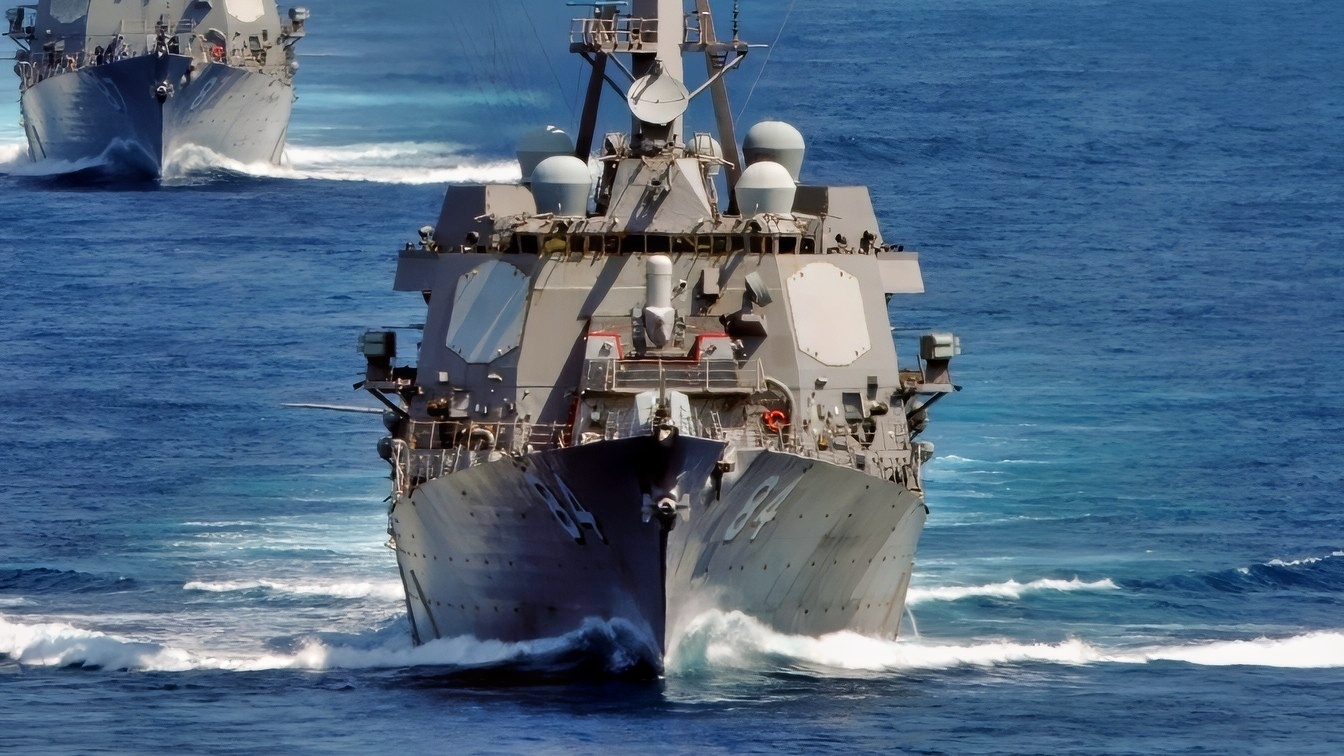
Iran has begun using anti-ship cruise missiles to attack shipping in the Strait of Hormuz, a U.S. official told The Jerusalem Post on November 19.
A maritime advisory issued on Thursday reported four incidents in the strait within 96 hours, describing the weapon in some cases as an “unknown projectile.”

ATLANTIC OCEAN (June 14, 2011) The Nimitz-class aircraft carrier USS Dwight D. Eisenhower (CVN 69) conducts rudder turns during sea trials. Dwight D. Eisenhower completed a nine-month planned incremental availability at Norfolk Naval Shipyard on June 10 and is scheduled to resume underway operations this summer. (U.S. Navy photo by Mass Communication Specialist 1st Class Christopher Stoltz/Released)
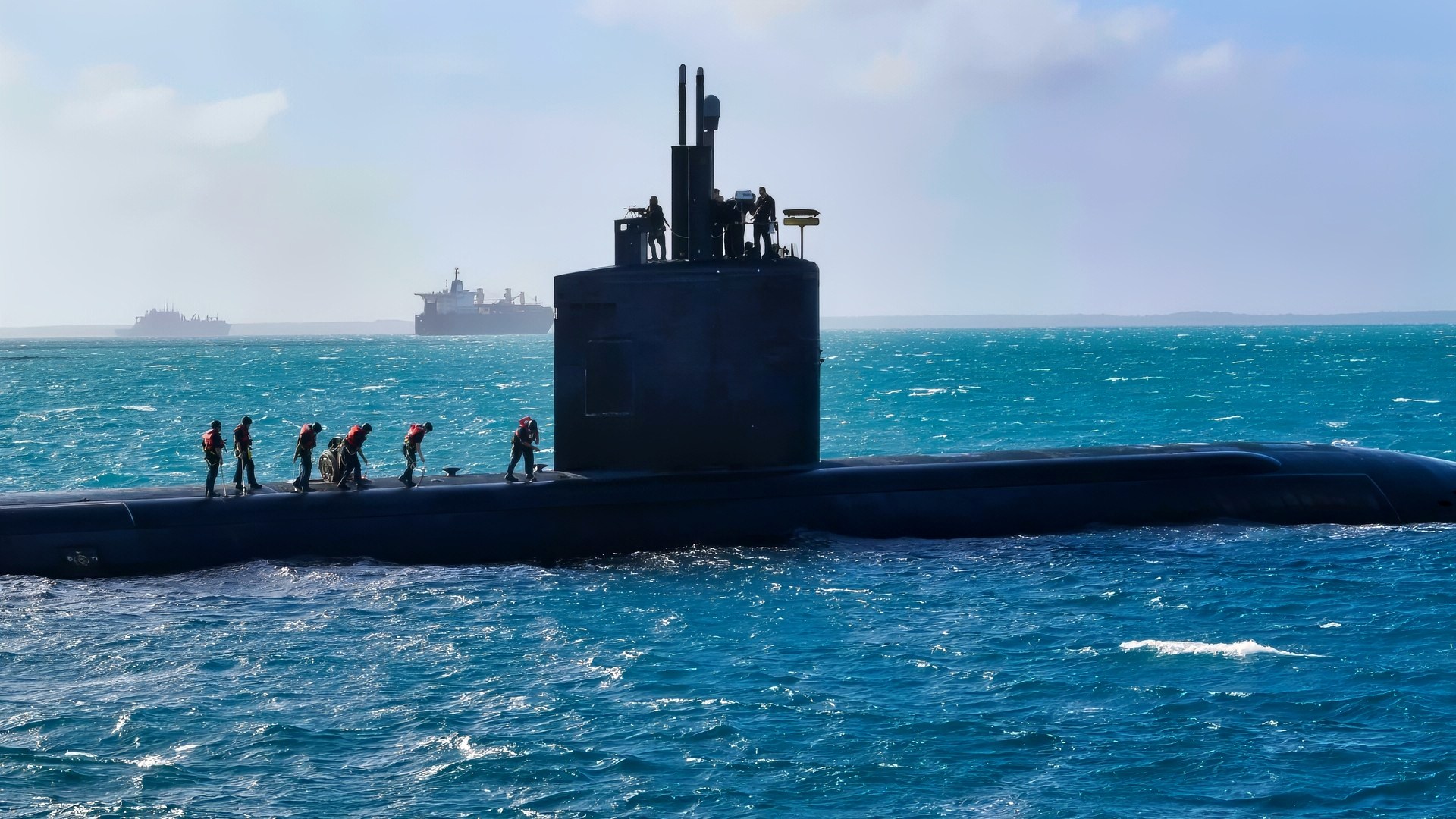
DIEGO GARCIA, British Indian Ocean Territory (Aug. 21, 2020) – USS Greeneville (SSN 772) enters Diego Garcia’s harbor Aug. 21, 2020. Sailors assigned to U.S. Navy Support Facility (NSF) Diego Garcia provided mail delivery and trash disposal for Greeneville. NSF Diego Garcia provides logistic, service, recreational and administrative support to U.S. and Allied Forces forward deployed to the Indian Ocean and Arabian Gulf. U.S. Navy Photos by Mass Communication Specialist Seaman Michael T. Porterfield. (Released)
Although the official did not specify the targets of the cruise missiles, Iran’s Islamic Revolutionary Guard Corps (IRGC) Navy, which Washington lists as a terror group, claimed in a statement published via state media on Thursday that two oil tankers had struck mines and “are burning,” according to Reuters. However, the Joint Maritime Information Center (JMIC) said it had not been confirmed by any official sources or national authorities.
Two Tankers Targeted
On November 16, the Panama-flagged liquefied petroleum gas (LPG) tanker Tara Gas was attacked. The attack caused serious damage, and a fire erupted in the engine room. On the following day, a second attack occurred.
As a result, the crew abandoned the vessel.
Twenty-four members of the crew were rescued by Oman.
As of Thursday, the Indian Foreign Ministry said that one person was still missing from the incident, and that the attacks represented “a serious threat to the safety of civilian seafarers.” Two crew members were hospitalized in Khasab.
A tanker operated by ADNOC Logistics & Services based in Abu Dhabi was attacked on Tuesday evening. “One crew member remains unaccounted for,” the company said.
Eleven people were injured, although all other crew members were safely evacuated. The vessel involved was identified as the Navig8 Messi.
On the same day, an unnamed tanker was attacked. A projectile reportedly hit the engine room, but the ship’s crew members were safe.
28 Million Barrels Got Through Strait on Wednesday
28 million barrels of oil were transported via the Strait of Hormuz on November 18, according to an unnamed U.S. official who spoke to the Jerusalem Post.
This figure is far higher than any pre-war daily averages.
It is unclear how exactly this figure was reached.
The International Energy Agency has said that the average amount of crude oil and petroleum transported through 2025 is 20 million barrels per day.
Overall, commercial shipping volumes have been low compared with 2025, but that does not tell the full story.
While ship numbers are down, barrel volumes are not directly comparable as fewer vessels may carry comparable volumes if larger tankers are used.
Crude oil volumes have returned to near pre-conflict levels in the Strait, Reuters said Friday.
However, Brent crude futures dropped to $91.45 by 11:45 GMT, showing a third straight week of falls.
Aldo Spanjer, a commodity strategist at BNP Paribas, cited “relatively strong export flows out of the Middle East,” but told Reuters that he still sees potential for price increases.
UOB Group analysts said in a recent client note that approximately one tanker has been attacked every day in November.
Pressure on Washington
Commercial vessels have been under attack as hostilities between the U.S. and Iran have resumed.
On Tuesday, Iran attacked a radar station in Bahrain with drones.
Just hours later, a U.S. fighter aircraft attacked a missile site belonging to the IRGC in the Strait of Hormuz, according to a U.S. official speaking to the Associated Press.
However, governments in the region have increased efforts to prevent a wider conflict as Israeli Prime Minister Benjamin Netanyahu urged a joint air operation against Iran, the AP reported.
Qatar said in a statement that Iran’s renewed attacks “undermine diplomatic efforts.” Speaking at a briefing in Doha, Foreign Ministry spokesman Majed Al Ansari warned that further escalation posed an “extremely grave danger” to the chances of reaching an agreement. An Israeli official told the Post on Thursday that “the final decision rests with Trump.”
U.S. Naval Blockade Remains in Force
The level of threat in the region remains high – “severe” – according to the JMIC’s blockade advisory on November 19. Further intentional hostile activity is likely, meaning crews in the area face potentially dangerous circumstances.
This comes despite crude oil volumes returning to near pre-conflict levels.
About the Author: Georgia Gilholy
Georgia Gilholy is a journalist based in the United Kingdom who has been published in Newsweek, The Times of Israel, and the Spectator. Gilholy writes about international politics, culture, and education.


