


Iran has a dam problem. It has far too many. For years, water scientists have puzzled over why the Islamic Republic kept pouring concrete in places where the hydrology, the economics, and the farming math never added up.
This week, The New York Times floated a theory that will sound familiar to anyone who has spent time staring at a map board in a TOC.
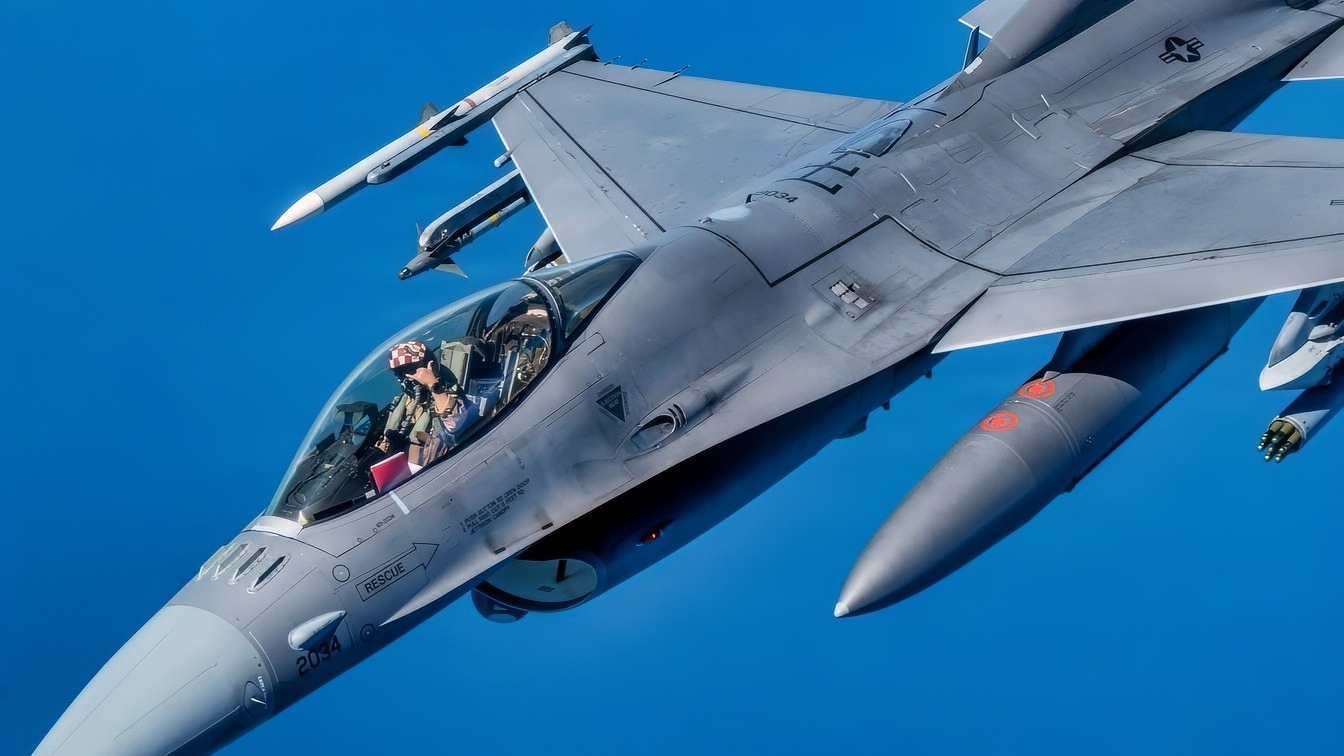
A U.S. Air Force F-16 Fighting Falcon aircraft flies in the U.S. Central Command area of responsibility Oct. 7, 2026. (U.S. Air Force photo by Tech. Sgt. Tiffany A. Emery)
U.S. Air Force Capt. Ethan Smith, Pacific Air Forces F-16 Demonstration Team commander, performs aerial demonstrations during the Arctic Thunder Open House airshow July 21, 2024, at Joint Base Elmendorf-Richardson, Alaska. The demonstration team primarily travels across the Pacific Air Forces area of responsibility, inspiring goodwill and promoting positive relations between the U.S. and partner nations throughout the U.S. Indo-Pacific region. (U.S. Air Force photo by Staff Sgt. Peter Reft)
Some of those dams, pipelines, and water-transfer tunnels may have been built, at least in part, to keep Iran’s underground missile bases supplied with water and power.
The piece, headlined “War May Answer Longtime Riddle of Iranian Dams Built for No Clear Reason,” was written by Sanam Mahoozi and Erika Solomon, the paper’s bureau chief for Iraq and Iran.
It set off a firestorm almost immediately. Several of the experts it quoted have publicly pushed back on how their work was framed. Tehran is calling it propaganda. And Iran’s parliament speaker has already turned it into a threat.
So let’s walk through what the reporting actually says, what holds up, and where I think the real danger lies.
The Map That Started It All
The central figure is Nima Shokri, a water security researcher at Hamburg University of Technology. His team had documented at least 533 dams across Iran, an unusually high number for the region.
This spring, Shokri looked at a map of US and Israeli strikes on suspected missile installations. The targets formed a broad arc running north to south across the country. It looked an awful lot like his dam map.
The Times pointed to two regions as examples.
The first is Yazd province in central Iran, home to a massive project moving water out of the Zagros Mountains. Amir AghaKouchak, a water expert at UC Irvine, had questioned the project’s justification for years.
After the March airstrikes and reports of a major missile facility in the area, he started to wonder whether there was a military reason behind it.
The second is Hormozgan province in the south. That’s where members of the Persian Wildlife Heritage Foundation were studying Laristan wild sheep before the IRGC’s intelligence arm rounded up dozens of conservationists in 2018 and accused them of spying for the US and Israel.
Morad Tahbaz, a co-founder who spent more than five years in prison, said his interrogators zeroed in on the Hormozgan work. He was also accused of training lizards to spy. National Geographic ran a story on these “atomic wave” reptiles.
On July 14, US aircraft struck targets in that same region, which the US military described as military infrastructure and coastal defenses.
According to the Times, seven water and military experts said siting large military complexes near the steady water and power that dams provide would make sense.
Farzin Nadimi of the Washington Institute estimates Iran has at least 30 so-called “missile cities.” Danny Citrinowicz, a former senior Israeli military intelligence official now at INSS, argued that Tehran has every incentive to keep critical military sites from depending on civilian utilities.
The Military Logic Is Sound
On its face, none of that is crazy.
Hardened underground facilities are hungry beasts. They need power for ventilation, lighting, and cooling.
They need water for the crews, for the equipment, and for fuel handling. A tunnel complex in the middle of the Zagros can’t run on a hope and a prayer.
Any Iranian planner tasked with keeping 30 hardened sites alive while his national grid was getting hammered would want his own water and his own power source.
Especially a water and power source that can be easily explained away as a civilian site.
Redundancy is one of the first things you look for when you’re trying to survive a sustained air campaign. The Iranians have watched what happened to Iraq in 1991 and 2003.
They’ve had plenty of time to plan.
So is it possible that some water projects were sited or sized with the military in mind? Absolutely. However, possible and proven are two very different things.
The Evidence Is As Thin As Day-Old Soup
The Times itself called any link speculative given the secrecy around Iran’s missile program. Kaveh Madani, director of the UN University’s water institute and a former deputy head of Iran’s Department of Environment, put it bluntly.
“Speculation is not evidence. Spatial proximity is not causality.” He also said his own quoted comments had nothing to do with dams or missiles.
Shokri, whose research anchors the whole story, followed up on X, saying the proximity of dams to military targets doesn’t establish why they were built, nor does it justify attacking them. AghaKouchak said he fully agreed.
Esfandyar Batmanghelidj of the Bourse & Bazaar Foundation landed the hardest punches. He noted that fewer than 50 of Iran’s 500-plus large dams even have turbines to generate electricity.
He called the pattern a classic third-variable problem. Dams get built in mountains. Military sites get built in mountains. Of course they overlap. He also argued that many of these dams exist because vested interests, including IRGC construction companies, use infrastructure budgets to generate rents.
China has built thousands of unnecessary dams, he pointed out, and nobody assumes those are missile bases in disguise.
That last point best explains the riddle. The IRGC is as much a business conglomerate as it is an army, and its Khatam al-Anbiya engineering arm has gotten fat on public works contracts for decades.
Pork is pork, whether it’s in Tehran or Washington. Meanwhile, Iran’s water crisis is largely self-inflicted. Iranian hydrologists estimate that roughly half the country’s ancient qanats have gone dry as wells and poor maintenance drained the water tables. Officials have warned that Tehran, a city of more than 10 million, could become uninhabitable if the drought persists.
Corruption and bad planning explain most of those 533 dams. The military may well have taken advantage of some of them along the way. Both things can be true.
Many scientists believe this massive amount of dam-building will only worsen the water shortage, making many areas of the country uninhabitable in the next 40 years.
The Double-Edged Sword Of Attacking “Military Purpose Targets
Say what you will about the Times’ motives here. The real issue is what happens when a respected newspaper attaches the words “military purpose” to civilian water infrastructure in the middle of a shooting war.
Iran’s parliament speaker, Mohammad Bagher Ghalibaf, wasted no time. He posted the story and declared that any dam, port, or power plant near a US or Israeli base is dual-use.
That’s a thinly veiled threat aimed squarely at the Gulf states hosting American forces. And Iran has already shown it will hit civilian energy facilities across the region. And it also drives home the point that where there’s smoke, there’s fire.
On our side of the ledger, US strikes have already damaged water facilities in Hormozgan, and President Trump has said key Iranian infrastructure could be destroyed within three days if the fighting resumes. Iran’s reservoirs are already low after a brutal drought year.
Dams fall under a special category in the laws of armed conflict. Article 56 of Additional Protocol I bars attacks on dams that could release “dangerous forces” and cause severe civilian losses.
Neither Washington nor Tehran is a party to that protocol, so as the Lieber Institute at West Point notes, customary law governs here instead. That still requires particular care to avoid unleashing those forces on civilians.
Targeting an underground missile city tunnel portal and the war moves on. However, breaching a dam sends a wall of water into farms and villages downstream, wrecks irrigation for a region, and hands the regime a propaganda gift that lasts a generation. It’s a bad trade militarily and a worse one morally.
What Happens Next
None of this means the Times shouldn’t have asked the question. It’s a legitimate one, and good intelligence analysts should be asking it too. But a geographic overlap on a map is a starting point for collection, not a conclusion. Are some of those dams sourcing “underground missile cities” with power and water? You can bet the house on it. But assessing which is which is tricky, as is the collateral damage done to civilian infrastructure.
About the Author: Steve Balestrieri
Steve Balestrieri is a National Security Columnist. He served as a US Army Special Forces NCO and Warrant Officer. In addition to writing on defense, he covers the NFL for PatsFans.com and is a member of the Pro Football Writers of America (PFWA). His work was regularly featured in many military publications.


