
Oil pollution from damaged vessels is threatening marine habitats around Iran and Oman, with researchers warning that the consequences could outlast the war.
According to a report from the Guardian published on Thursday, November 12, oil slicks visible from space were spreading across the Gulf amid repeated attacks on commercial shipping by Iran.

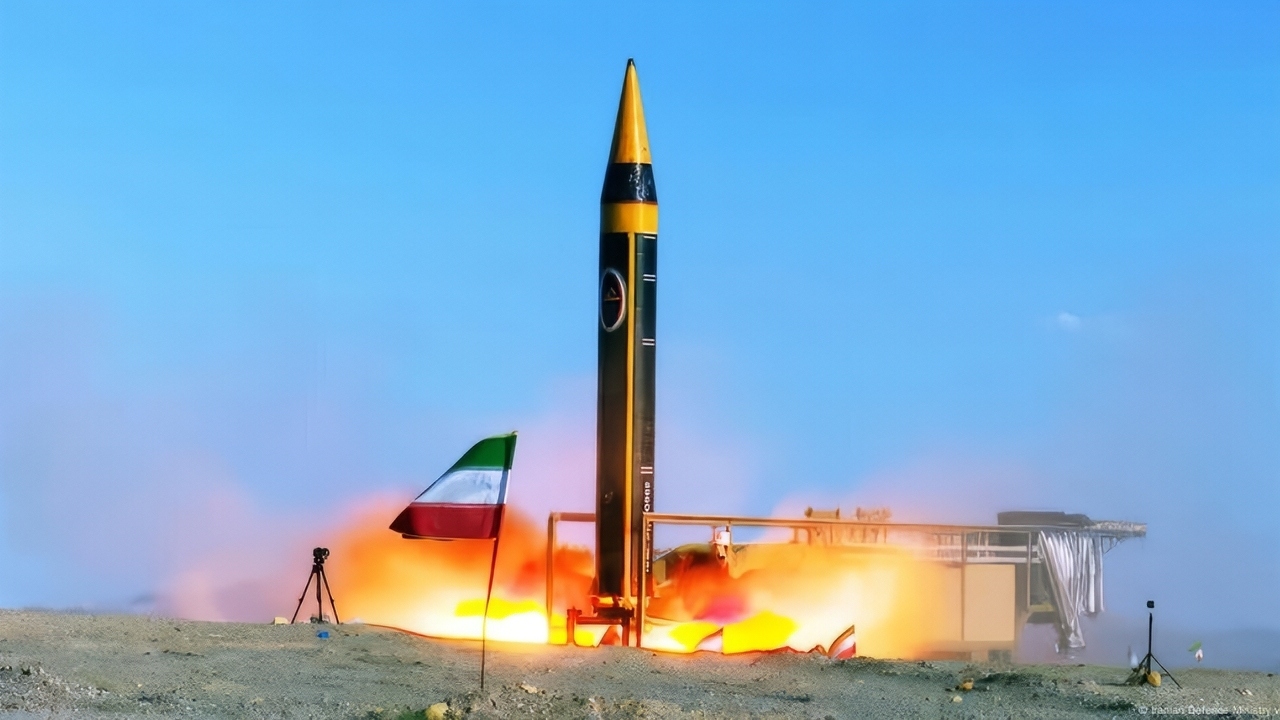
Iran Missiles. Image Credit: Creative Commons.
Separate satellite assessments have documented contamination near protected islands and mangrove forests, while attacks on commercial shipping intensified during October.
Shipping Attacks Intensify in October
Iran, which closed the Strait of Hormuz when the conflict with the U.S. and Israel began at the end of February, maintains that the international waterway is closed, and that any vessel that attempts to transit through will be targeted by the Islamic Revolutionary Guard Corps (IRGC).
Tehran intensified attacks on shipping in the Strait of Hormuz after an increase in traffic saw Gulf oil exports return to pre-war levels at the end of September for the first time since the war began.
This led to 37 ships being attacked in October — the most in a single calendar month since the war began in February. The previous record was 22, set in March.
Environmental concerns emerged early in the conflict.
In March, Greenpeace warned that tankers stranded by passage restrictions faced increased spill risks from hostilities and disrupted position signals.
Its monitoring project subsequently mapped slicks using satellite imagery, noting that their size and location change with currents, wind, and evaporation.
Military vessels have also leaked fuel.
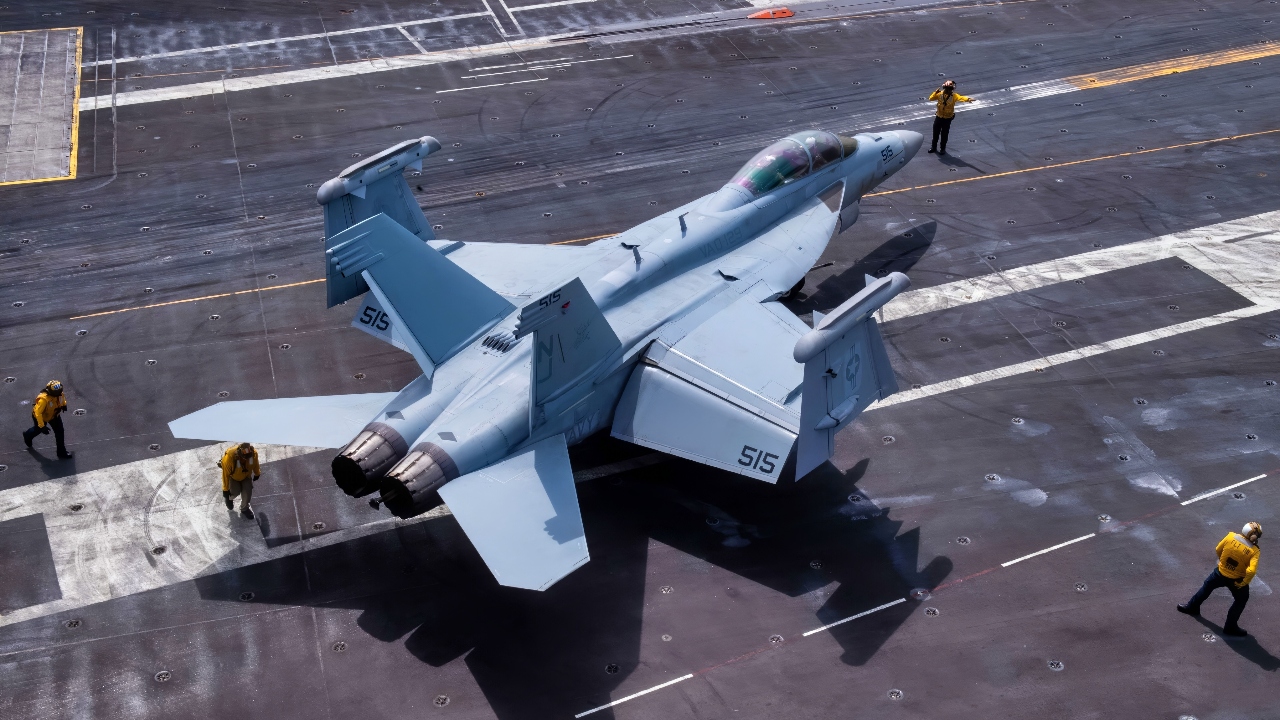
PACIFIC OCEAN (Aug. 11, 2025) – U.S. Navy Sailors direct an E/A-18G Growler, assigned to the “Vikings” of Electronic Attack Squadron (VAQ) 129, on the flight deck of the Nimitz-class aircraft carrier USS Theodore Roosevelt (CVN 71), Aug. 11, 2025. Theodore Roosevelt, flagship of Carrier Strike Group (CSG) 9, is underway conducting exercises to bolster strike group readiness and capability in the U.S. 3rd Fleet area of operations. (U.S. Navy photo by Mass Communication Specialist Seaman Apprentice Cesar Nungaray)

(July 28, 2017) An F/A-18F Super Hornet assigned to Air Test and Evaluation Squadron (VX) 23 approaches the aircraft carrier USS Gerald R. Ford (CVN 78) for an arrested landing. The aircraft carrier is underway conducting test and evaluation operations.(U.S. Navy photo by Erik Hildebrandt/Released) 170728-N-UZ648-161
An April Anadolu report, citing earlier reporting and satellite analysis, described pollution from the damaged Iranian drone carrier Shahid Bagheri moving toward the Hara mangrove reserve.
Damage to Protected Waters
Researchers at the United Nations University Institute for Water, Environment and Health documented two separate pollution events in August.
An August 7 satellite image showed approximately 300 square kilometers of contamination near Oman’s Hallaniyat Islands. An observation three days later identified roughly 100 square kilometers near Iran’s Qeshm and Hengam islands.
The researchers identified the damaged bulk carrier Minoan Pioneer as a likely source of some pollution near Iran, although that did not establish responsibility for all contamination.
Off Oman, Greenpeace reported that oil from the stranded Caroline Bezengi had spread across approximately 600 square kilometers on August 4.
That assessment and the later university observation captured different dates, rather than providing interchangeable measurements.
The tanker reportedly carried about 800,000 barrels of crude. Greenpeace warned that pollution threatened coral reefs, seagrass meadows, nesting turtles, and seabirds, as well as waters inhabited by the rare Arabian Sea humpback whale.
Cleanup Underway Across the Persian Gulf
Some countries are already working to clean up the pollution.
After a strike on the Gem No. 2 tanker, the United Arab Emirates closed some beaches as a precaution and continued coastal surveys and cleanup operations, even after the leak had stopped and pollution had declined. Shipping sources told Reuters that a projectile struck the vessel on October 9, although authorities had not identified the spill’s cause.
The UAE also said fish and food products sold in markets remained safe for consumption and precautions protecting drinking water would not affect distribution.
However, stopping a leak does not resolve every problem on shore. Mangrove roots and fine sediments can retain oil, leaving organisms exposed after surface slicks disappear.
Decades of Damage from Strait Strikes
Previous spills offer a warning about the work that lies ahead.
A 2022 study examined residual oil along Saudi Arabia’s Abu Ali Island using fieldwork conducted in October 2020, and researchers found oil in three-quarters of the 1,434 test pits.
They concluded that most residual contamination was highly likely to originate from the 1983–85 Nowruz spills during the Iran-Iraq war.
Nina Noelle, a Greenpeace expert on environmental damage, told the Guardian that spilled oil “could remain trapped in sediments, shorelines and mangrove roots long after slicks disappear, damaging marine food chains and threatening coastal communities dependent on fishing.”
“Mangroves and coral reefs can take decades to recover, particularly when oil persists in sediments,” she added. “Repeated spills, such as those in the Strait of Hormuz, risk worsening the damage.”
Bernhard Riegl, a marine biologist at Nova Southeastern University who has studied the Gulf for more than three decades, told the publication that the “effects of large-scale oil pollution remain detectable for decades.”
About the Author: Shay Bottomley
Shay Bottomley is a British journalist. He has written for the Western Standard, Business Insider, Maidenhead Advertiser, Slough Express, Windsor Express, Berkshire Live and Southend Echo.