

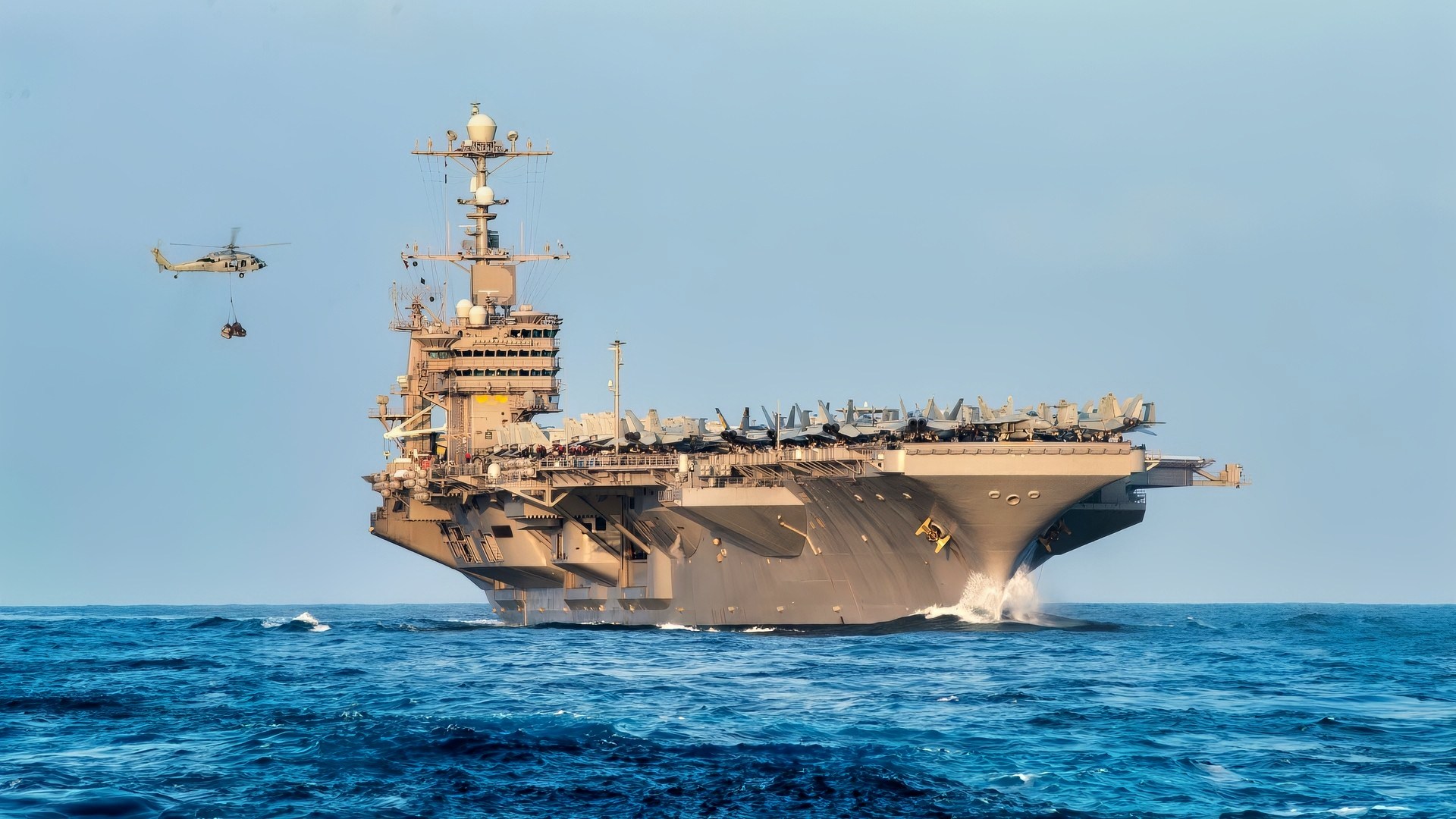
For the past eight months, the Strait of Hormuz and the surrounding area have been turned into a battlefield as the U.S. wages its war against Iran.
Since the conflict’s outbreak in late February, both sides have attacked numerous oil tankers and civilian vessels attempting to sail through the vital waterway.
USS Eisenhower Aircraft Carrier. Image Credit: U.S. Navy.

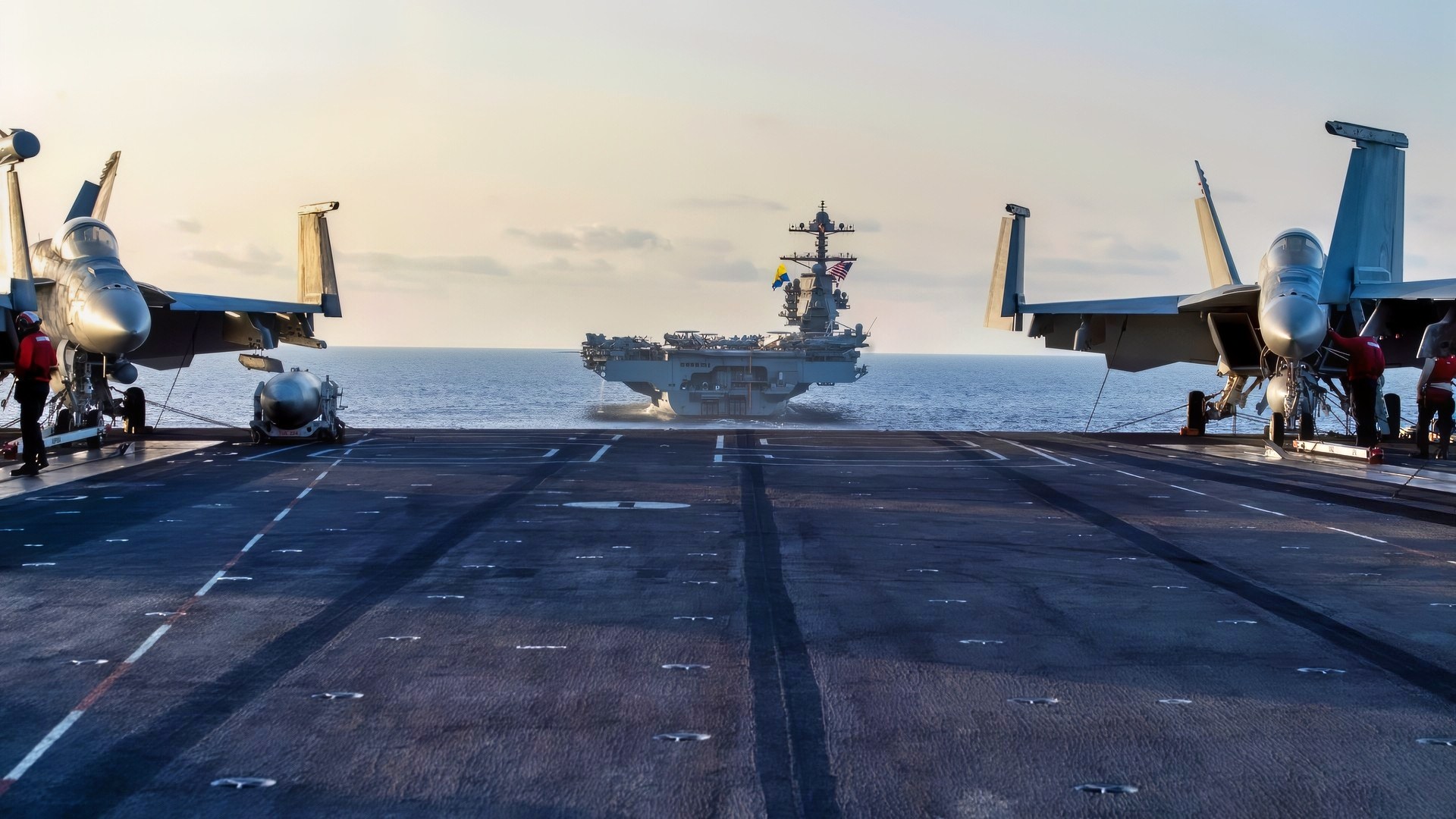
USS Ford Aircraft Carrier U.S. Navy Photo
In October and November, Iran ramped up its strikes against civilian tankers crossing through American-approved maritime trade routes.
As a result, oil from the affected ships has contaminated the environment around the Strait of Hormuz and threatened lasting damage to the fragile ecosystem that is home to countless marine species.
The Unseen Consequences of the Iran War
Recently, dark oil slicks in the Strait of Hormuz were spotted in satellite imagery from tankers recently struck by Iranian or American munitions.
The region is home to thousands of marine species, including dolphins, sea turtles, and countless fish species.
The contamination has spread into the Persian Gulf, affecting its marine ecosystem. Because of the ongoing Iranian blockade, scientists have been unable to survey the pollution from the ground.
However, environmental experts and marine biologists are concerned that the ongoing war will have long-term consequences for the Gulf region’s fragile marine environment.
The Strait of Hormuz is the only maritime passageway connecting the Gulf and the Arabian Sea. It is home to a rich undersea ecosystem, including coral reefs, seagrass meadows, and mangrove forests that support a wide range of species.
The Strait also plays a vital role in circulating water and nutrients and serves as a migration route for several species.
According to Bernhard Riegl, a marine biologist at Nova Southeastern University in Florida, the ongoing war could have serious long-term effects on an already strained ecosystem. “Since the Gulf is shallow, and summer is the least windy period of the year, atmospheric heat is rapidly translated into ocean heat. That heat kills corals, algae, and fish. There is no cold, deep water that could mix and buffer this heat,” he told The Guardian. “Everybody knows that oil in water is not good. The potential for additional damage is significant. There is no such thing as a ‘clean war.’ Not for the unlucky humans that are drawn into it, nor for the unlucky environment in which the conflict takes place.”
More Than 133 Oil Tankers Struck
Since February, scientists have identified more than 500 oil spills through satellite imagery across the Gulf, the Strait of Hormuz, and the Arabian Sea.
According to data compiled by the U.S.-based environmental organization Greenpeace, most spills are tied to attacks on oil tankers.
Other oil spills occurred around the time of strikes, but their exact origin could not be confirmed. “Adding together the daily mapped footprints [of the spills] gives a cumulative total of approximately 20,000 square kilometers—almost the size of Wales,” said Nina Noelle, an expert on environmental disaster relief working for Greenpeace.
Since February, the organization has confirmed more than 133 attacks on oil tankers during the war. Interestingly, October was the worst month, with more than 30 reported attacks in and around the Strait of Hormuz.
Oil pollution has become visible from space, as satellite imagery has revealed massive black oil slicks along multiple coastlines.
Oil slicks have been spotted near Oman’s Musandam National Park and Iran’s Minab River Delta, both of which are home to abundant wildlife.
Musandam is home to numerous coral reefs and is an important breeding ground for several seabird species, while the Minab Delta has protected mudflats and mangrove forests.
The ongoing war has made it difficult for scientists to evaluate the full scale of the environmental damage, as Iran still maintains its blockade of the Strait of Hormuz.
Long-Term Environmental Effects
Determining who is responsible for the environmental damage is complicated, as the ongoing war has involved multiple parties, all of whom have contributed to the pollution.
However, by all accounts, the majority of attacks against oil tankers have been carried out by the IRGC.
The U.S. has also carried out attacks against Iranian-flagged tankers and Iranian naval vessels, contributing to the damage.
Interestingly, however, one of the largest oil spills was caused by an attack carried out by the UAE.
According to The Wall Street Journal, the UAE Air Force carried out a strike against Iranian oil tanks on Lavan Island, causing several tons of crude oil to flow into the Gulf and affecting coastal areas and the nearby Shidvar nature reserve.
Although some Gulf states have launched efforts to clean up their coastlines, the environmental damage could persist for decades, especially if the war ramps up again in the near future.
Similar events occurred during the Iran-Iraq War in the 1980s and the first Gulf War, when tankers and coastal oil infrastructure were constantly attacked.
Studies have shown that many beaches in the Gulf region are still heavily contaminated by oil spills from the 1980s, which collectively leaked around 80 million gallons of crude oil into the sea.
With fears of further escalation spreading, scientists are concerned that the fragile Gulf ecosystem could deteriorate further if Iran and the U.S. decide to continue large-scale attacks against each other.
About the Author: Isaac Seitz
Isaac Seitz, a Defense Columnist, graduated from Patrick Henry College’s Strategic Intelligence and National Security program. He has also studied Russian at Middlebury Language Schools and has worked as an intelligence Analyst in the private sector.


