

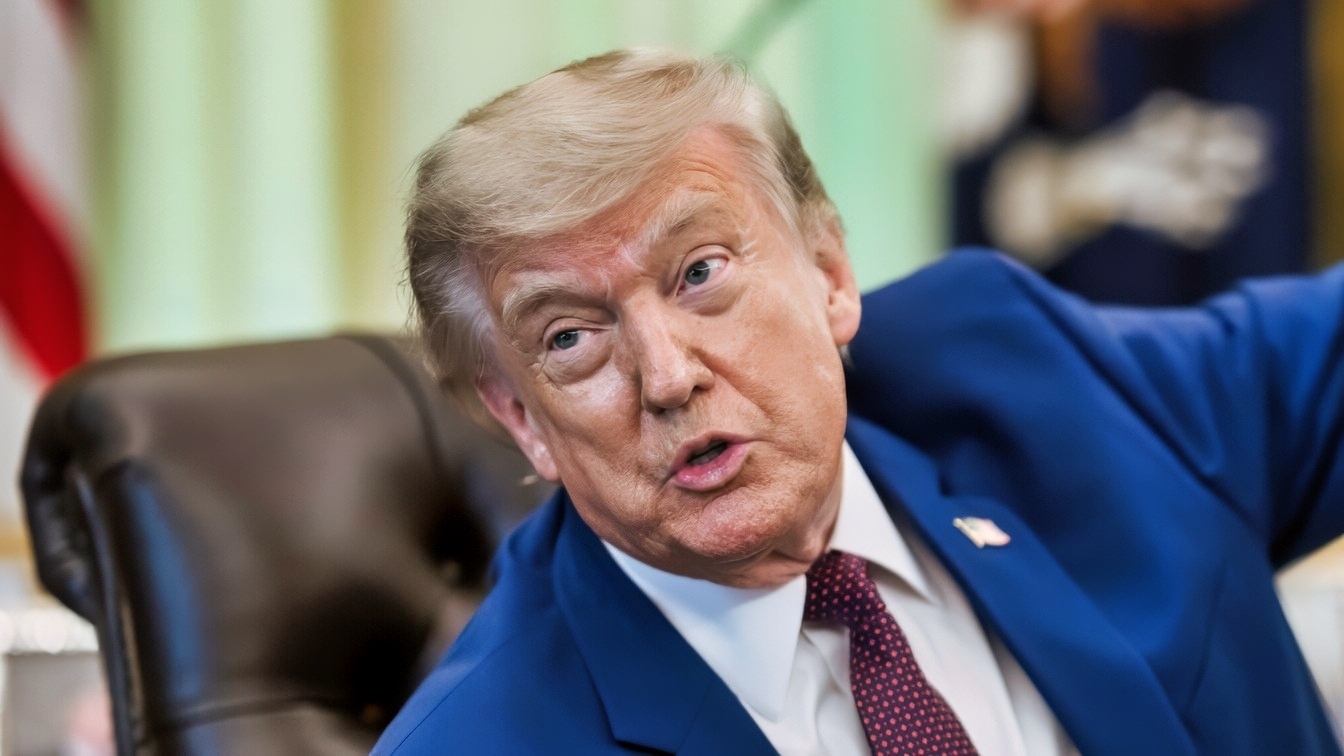
Iran has publicly stated that it is “not worried” about President Donald Trump’s ongoing U.S. naval blockade of Iranian ports, despite food prices skyrocketing in the country over the past year.
In a statement on Wednesday, Iran’s First Vice President Mohammad Reza Aref said, “The increase in the unloading and customs clearance of goods through borders other than the south sends a message that we are not worried about the enemy’s maritime blockade.”
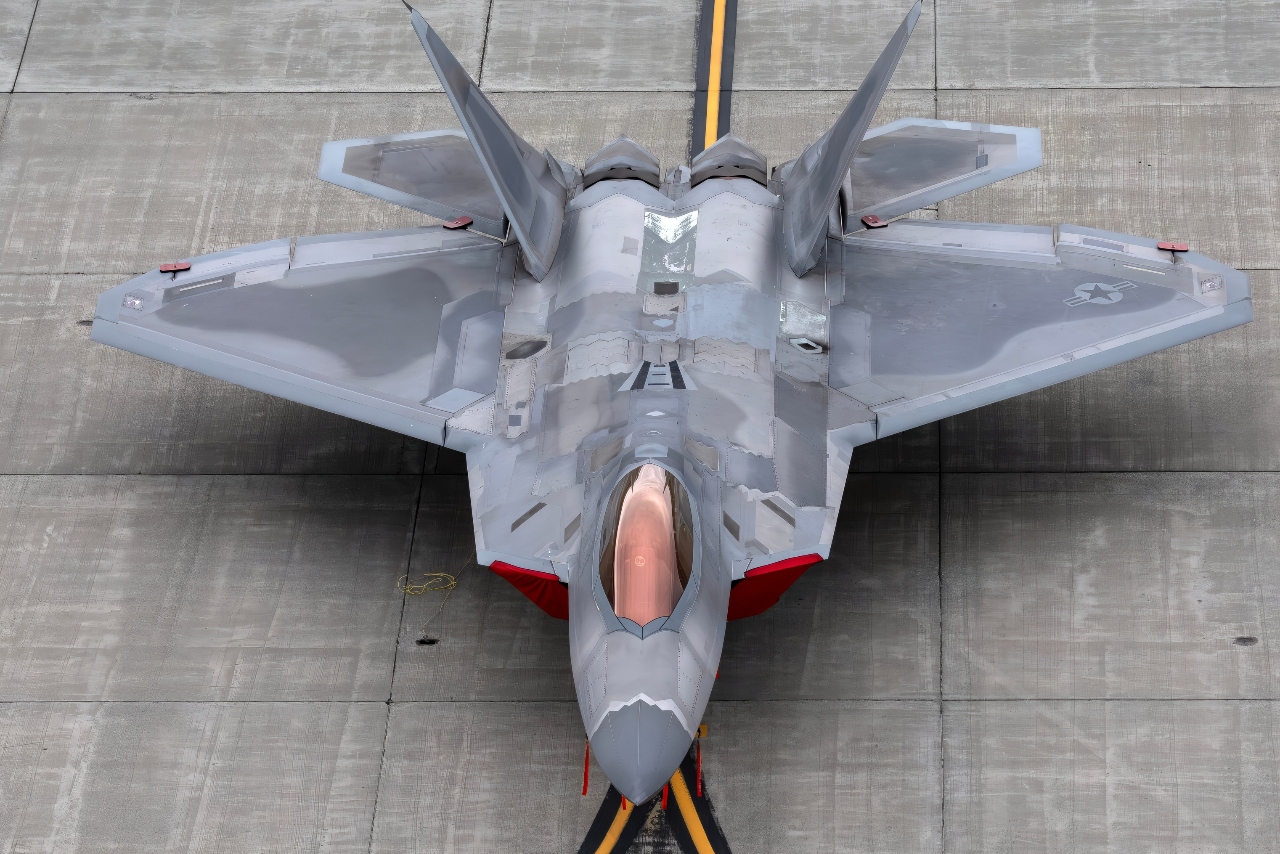
A U.S. Air Force F-22 Raptor is displayed on the flight line during a summit between U.S. President Donald J. Trump and Russian President Vladimir Putin at Joint Base Elmendorf-Richardson, Aug. 15, 2025. (Alaska National Guard photo by Seth LaCount)

U.S. Air Force Maj. Paul “Loco” Lopez, Air Combat Command F-22 Raptor Demonstation Team commander, flies the F-22 Raptor, demonstrating its combat capabilities at FIDAE (Feria Internacional del Aire y del Espacio) in Santiago, Chile, April 7, 2018. The Raptor is a multirole fighter capable of supporting both air-to-air and air-to-ground missions worldwide.
Food Costs in Iran Have Risen by 112.6%
Aref insisted that supplies and stockpiles in the country were sufficient to weather the U.S. naval blockade and added that the government was working to prevent further price hikes in consumer goods over the next three months.
According to Reuters, Iran is currently experiencing “one of its worst inflation surges in decades” as Trump’s war — which was initially supposed to last just four-to-six weeks — enters its ninth month.
The cost of consumer goods in Iran reportedly rose by 88.7% in October, with the cost of food and drink skyrocketing by 112.6% since last year.
“In a separate meeting, President Masoud Pezeshkian said the government was seeking to direct more budget resources and energy savings towards improving living standards in poorer communities,” reported Reuters.
Trump Has Refused to Lift the U.S. Naval Blockade of Iranian Ports
Trump has refused to lift the ongoing U.S. naval blockade of Iranian ports, despite Tehran offering to re-open the Strait of Hormuz to commercial vessels within 48 hours should the blockade be lifted, among other Iranian demands.
After Iranian state media suggested this week that Iran could soon seek to test the strength of the naval blockade, Trump threatened to send Iran’s ships to “the bottom of the sea like the rest of Iran’s navy” should they make such an attempt.
In a statement to Fox News, the president also described the Iranians as “professional tap dancers,” claiming, “They talk all the time. All they do is talk, but it’s all B.S.”
Iran Has Become ‘More Aggressive’
Earlier this month, Trump announced that the U.S. would no longer go out of its way to make a deal with Iran, writing in a Truth Social post: “We don’t need a deal with Iran. Those days have long since passed. We’ve got their money, Hundreds of Billions of Dollars, and we’ve got their Strait! Thank you for your attention to this matter.”

U.S. Air Force Maj. Josh Gunderson, F-22 Demo Team commander, performs the Raptor Slide during the Abbotsford Airshow, Aug. 5, 2021, at Abbotsford International Airport, Abbotsford, British Columbia, Canada. During the Raptor-slide the aircraft actually slides down and backwards under control before Gunderson adjusts the aircrafts position and powers out of the maneuver. (U.S. Air Force photo by Staff Sgt. Don Hudson)
This week, the president also revealed that he was planning “to resume strikes on Iran after the new year if no deal is reached,” Fox News reported.
After Trump’s Republican Party was defeated in the midterm elections this month, Iran took a victory lap, boasting that the country had handed the president a “POLITICAL DEFEAT” in Washington, D.C. after polls found that Trump’s unpopular war had played a big role in the results.
In a Truth Social post on Sunday, Trump claimed that Iran had become “more aggressive in their attacks” following the Republican Party’s defeat in the election and had “launched more drones and missiles in the last week than at any time for over a year.”
“Iranian leaders consider the Democrats weak, ineffective, and country-destroying, but I won’t let that happen!” he wrote. “Both the Dems and Iran fought like hell to keep the Oil price up as long as possible and, since the Election, the Oil price has dropped to a record low.
Too bad the Voters didn’t understand this before they pulled the trigger, but the whole Election was very ‘strange.’ In the end, America will win! Thank you for your attention to this matter.”
As the Ongoing Conflict Costs Iranians, Americans Are Also Paying For the Expensive War
As consumer goods prices continue to rise in Iran, the cost of living in the U.S. is also rising.
So far, Trump’s war against Iran has cost American taxpayers more than $48 billion, with that number not including the damages to U.S. military bases and installations in the region, which have repeatedly come under Iranian drone and missile fire.

F-22 Raptor at USAF Museum. Image Credit: National Security Journal.
The conflict has also burned through a large chunk of the U.S. military’s munitions and drone stockpile.
About the Author: Charlie Nash
Charlie Nash is a journalist and author whose work has appeared in The Spectator, Mediaite, New Statesman, and the American Conservative, among other major publications. His reporting has been featured by The Washington Post, Fox News, the Daily Beast, MS NOW, NewsNation, Hannity, and more. You can follow Charlie on X at @CharlieNash and on LinkedIn.


