


Notwithstanding U.S. President Donald J. Trump’s recent pronouncements that “Iran militarily is effectively over” and that the Iran War—aka Operation Epic Fury in the United States and Operation Roaring Lion in Israel—has already been “won,” the war is still very much ongoing.
The kinetic phase, i.e., the “shooting” war, now mostly consists of tit-for-tat, back-and-forth pinprick strikes. Still, the non-kinetic phase, as in economic sanctions and blockades against the Islamic Republic of Iran, is more intense than ever. So, how badly is the theocratic totalitarian regime being hurt by this economic warfare?

Iran F-14 Tomcat Fighter. Image Credit: Creative Commons.
Bottom Line Up Front (BLUF)
According to a 25 November 2026 Al Jazeera report, it’s proving to be quite painful.
The article, penned by Yashraj Sharma—winner of the Thomson Foundation’s Young Journalist Award 2022—does more than merely delve into abstract stat sheet figures and number-crunching.
Instead, he starts with two anecdotal examples that dramatically demonstrate how even the highest levels of the Iranian government are feeling the squeeze:
“Wearing a blue jacket to protect against the cold, Iranian President Masoud Pezeshkian pores over paperwork under a table lamp in his dimly lit office as he asks millions of Iranians to conserve electricity as an energy crisis compounds the country’s economic battering…During a televised interview with state broadcaster IRIB [Islamic Republic of Iran Broadcasting; Seda o Sima] at the presidential office on Tehran’s Pasteur Street, the chandeliers are switched off and curtains drawn aside to let in daylight instead.”
From there, Mr. Sharma does go into the statistical figures that provide a bigger picture of the pain of the pinch:
-Iran’s gas shortfall could reach 430 million cubic meters a day this winter, compared with about 300 million in previous years, according to government spokeswoman Fatemeh Mohajerani, the first woman in the Islamic Republic to hold such a position.
-According to National Iranian Gas Company (NIGC) managing director Saeed Tavakoli, four processing plants had been damaged during the initial phase of the conflict, which initially reduced capacity by 230 million cubic meters, of which about 100 million had so far been restored.
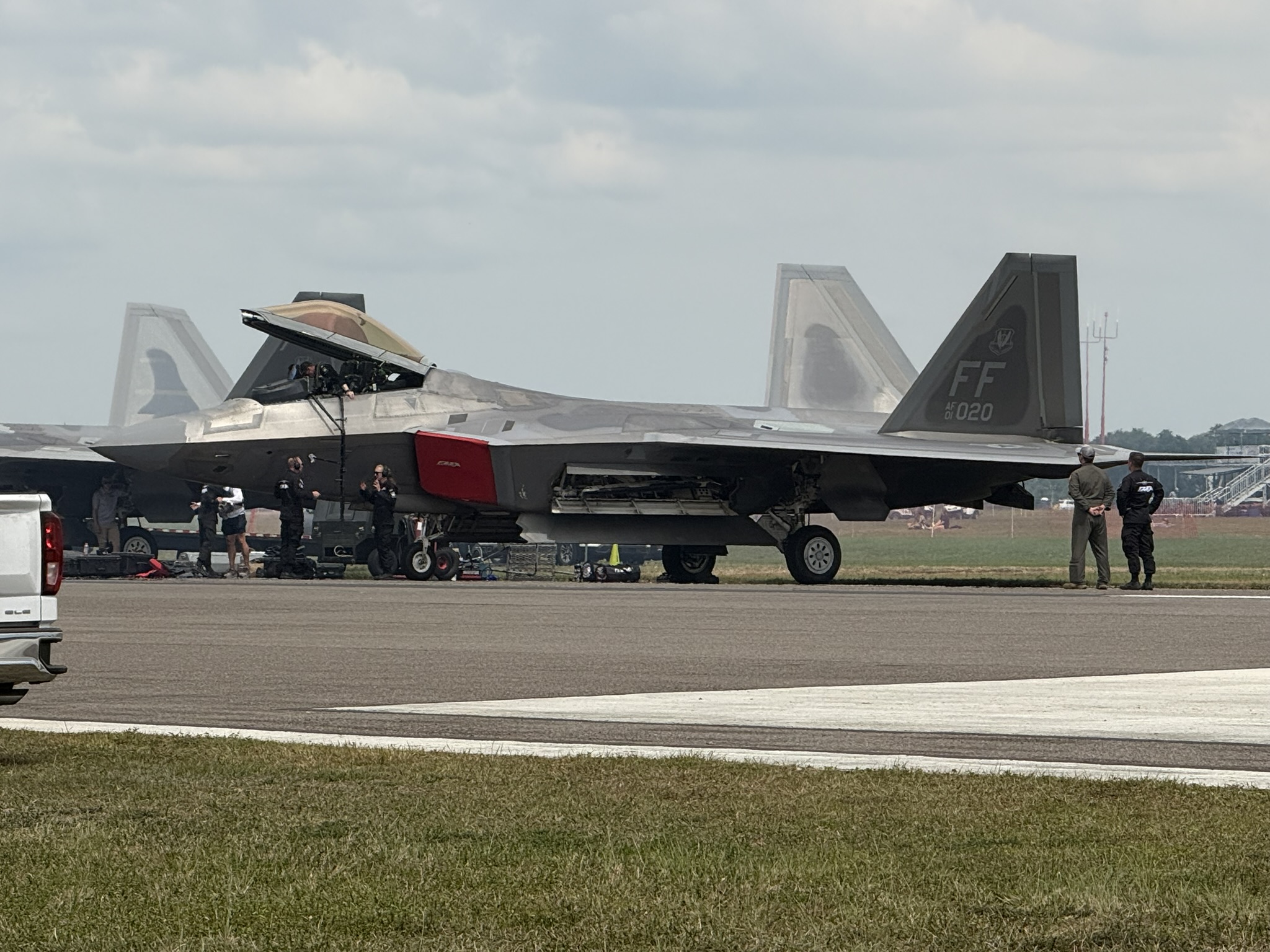
F-22 Raptor in Lakeland, Florida. Original National Security Journal Photo.
-NIGC also warned that 11 of Iran’s 31 provinces could face supply shortages this winter, especially Mazandaran on the Caspian Sea, and Golestan and North Khorasan along Iran’s border with Turkmenistan.
Meanwhile, as noted in a separate Al Jazeera report dated 23 November 2026, visible Iranian crude exports decreased to near zero in recent months on account of the blockade.
Deeper Dive: Academic Experts and Political Pundits Weigh In
In President Pezeshkian’s own words, delivered to the Iranian Students News Agency (ISNA), “the attack on the country’s gas infrastructure has aggravated the situation, and we should therefore expect difficulties this winter.” Separately, he told a group of investors and producers on 21 November that his country is facing a “silent economic war” that is “tougher than a war with missiles.”
Meanwhile, Iranian economist Mohammad Reza Farzanegan, a professor at Philipps-Universität Marburg in Germany, noted that “Energy imbalance was also a serious issue in Iran even before these wars…Higher energy consumption driven by subsidized prices, waste, inefficiencies, and mismanagement could not be met with a proportional increase in energy production due to a lack of investment under sanctions, and now wars.” Farzanegan identifies the biggest pre-war culprits as “fragmented governance, structural inefficiencies, and price distortions as the key drivers of chronic energy insecurity in Iran.”
Additional Observations
Not surprisingly, as is pretty much always the case when a country faces sweeping economic sanctions and/or a blockade, it’s the ordinary citizenry that feels the brunt of the blows.
Case in point: electricity shortages have resulted in a mind-numbing 600,000 job losses due to the reduction of industrial production during the war.
However, as this writer noted earlier in this article, even the government bigwigs are feeling the pain this time, including the president himself.
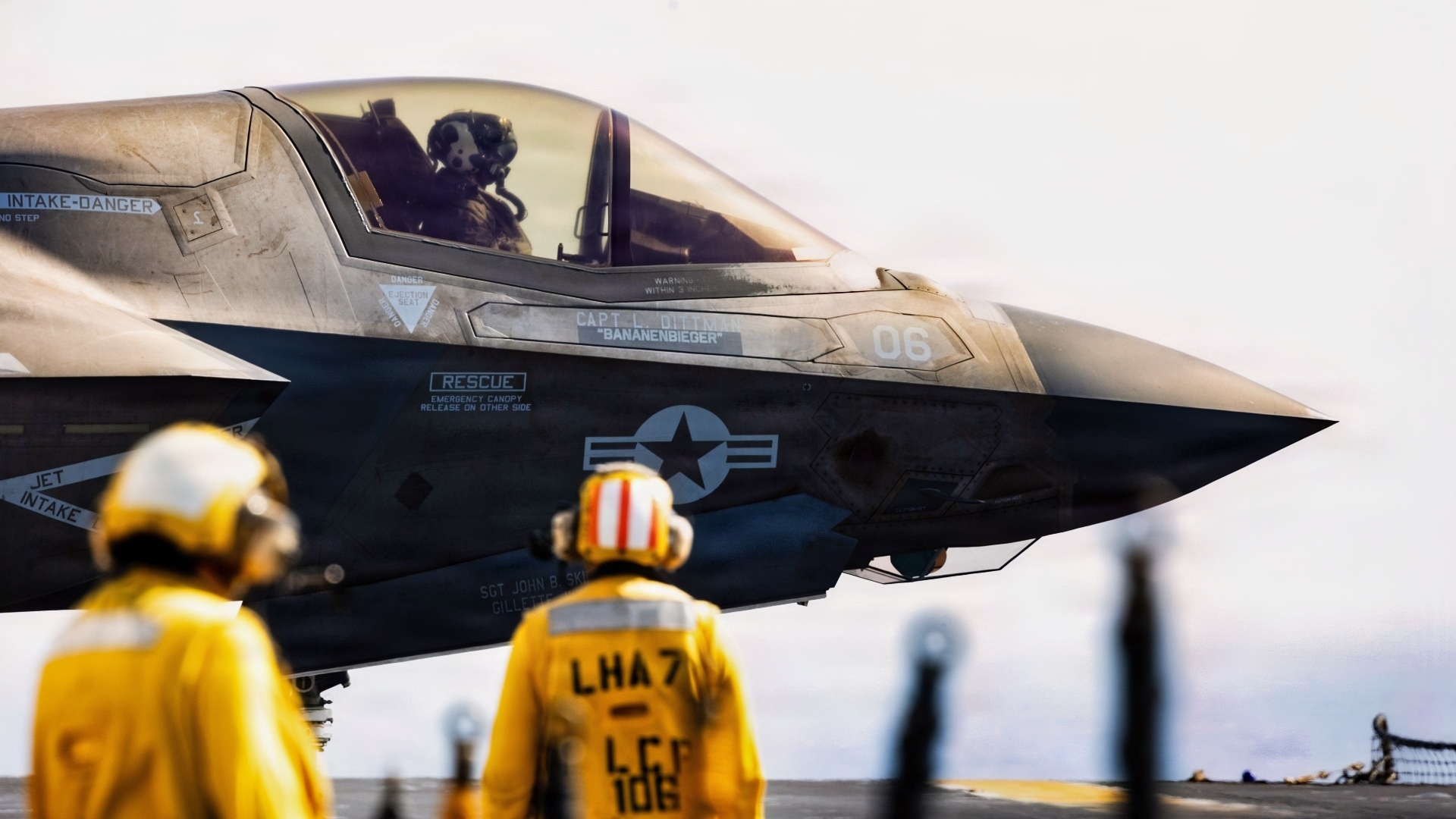
An F-35B Lightning II taxis on the flight deck of the amphibious assault ship, USS Tripoli (LHA 7) during flight operations in the U.S. Central Command area of responsibility, May 4, 2026. (U.S. Marine Corps Photo)
This stands in noteworthy contrast to, say, the sanctions imposed on Iraq between the 1991 Persian Gulf War, aka Operation Desert Storm, and the 2003 Iraq War, aka Operation Iraqi Freedom; therein, ordinary Iraqi people suffered whilst then-strongman Saddam Hussein, his sons Uday and Qusay, and his Ba’ath Party cronies continued to live high off the hog and in the lap of luxury.
Whether that high-level suffering will be enough to cause regime collapse along the lines of the Soviet Union’s economic collapse in 1991 remains to be seen.
About the Author: Christian D. Orr
Christian D. Orr is a Senior Defense Editor. He is a former Air Force Security Forces officer, Federal law enforcement officer, and private military contractor (with assignments worked in Iraq, the United Arab Emirates, Kosovo, Japan, Germany, and the Pentagon). Chris holds a B.A. in International Relations from the University of Southern California (USC) and an M.A. in Intelligence Studies (with a concentration in Terrorism Studies) from American Military University (AMU). He is also the author of the book “Five Decades of a Fabulous Firearm: Celebrating the 50th Anniversary of the Beretta 92 Pistol Series,” the second edition of which was recently published.


