

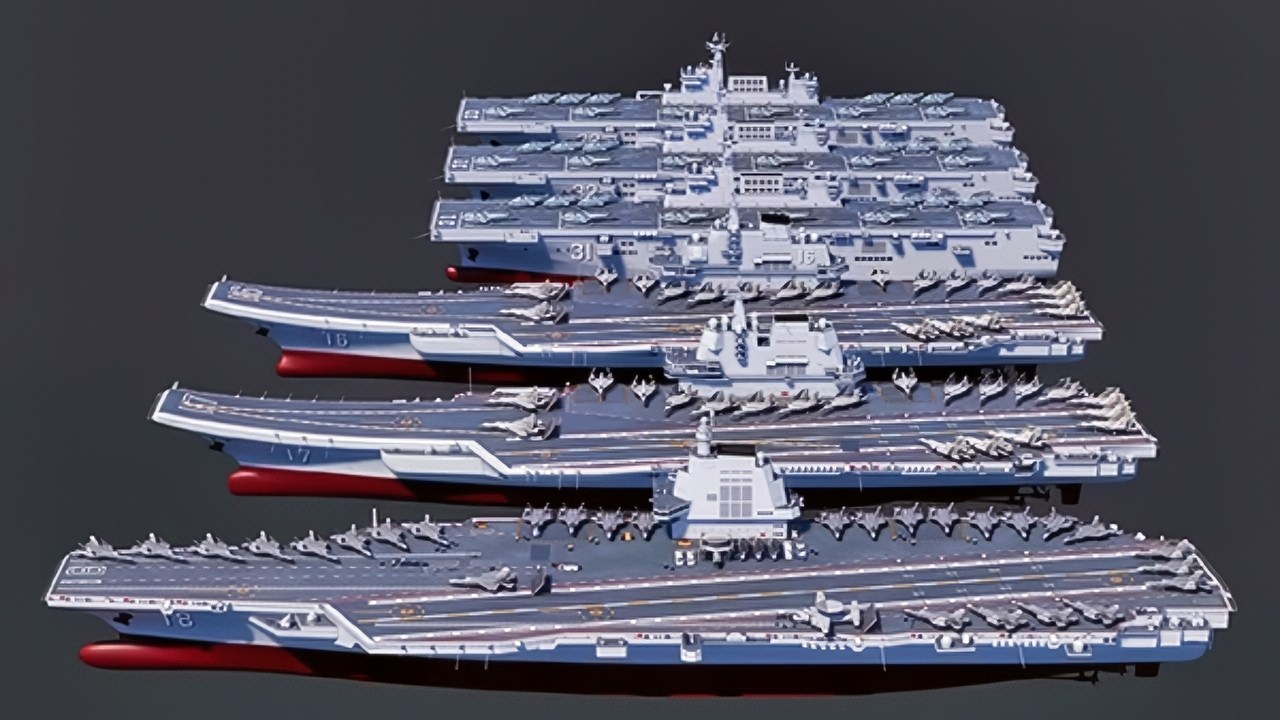
China is approaching another milestone in its efforts to challenge American naval dominance.
The country’s fourth aircraft carrier, currently known as the Type 004, is under construction in the northern Chinese port city of Dalian.
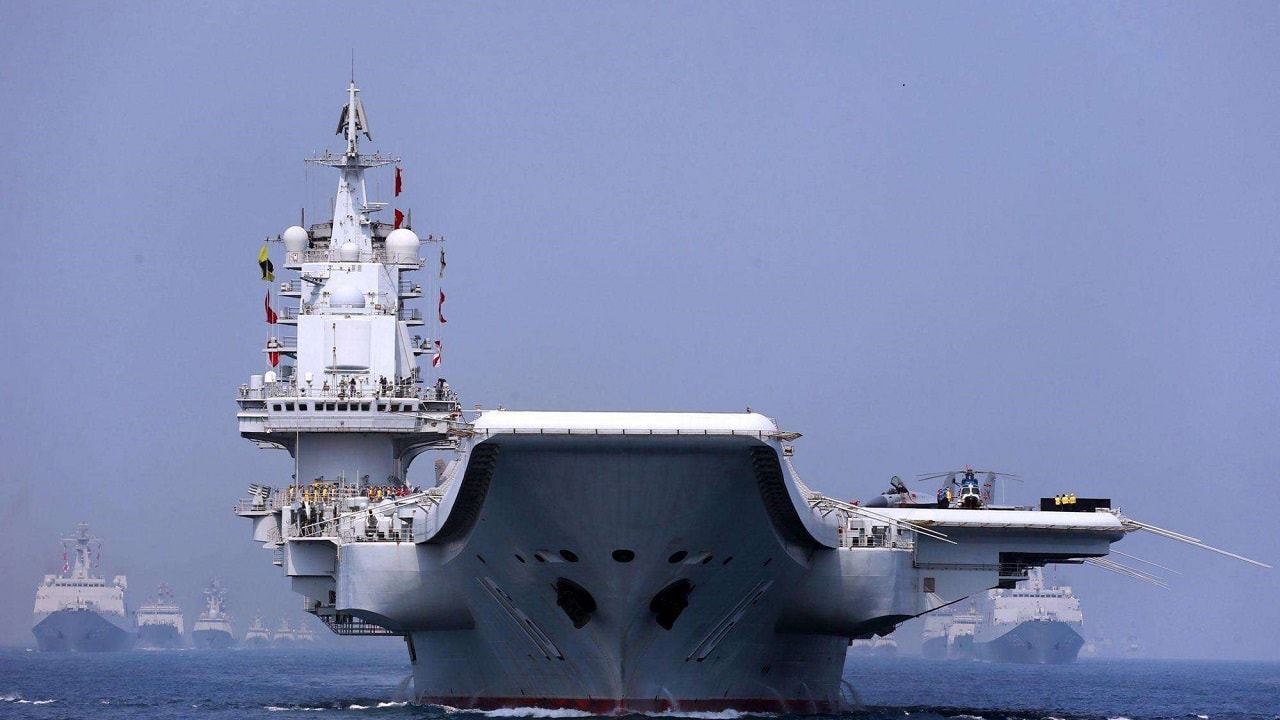
China Aircraft Carrier on the High Seas. Image Credit: Creative Commons.
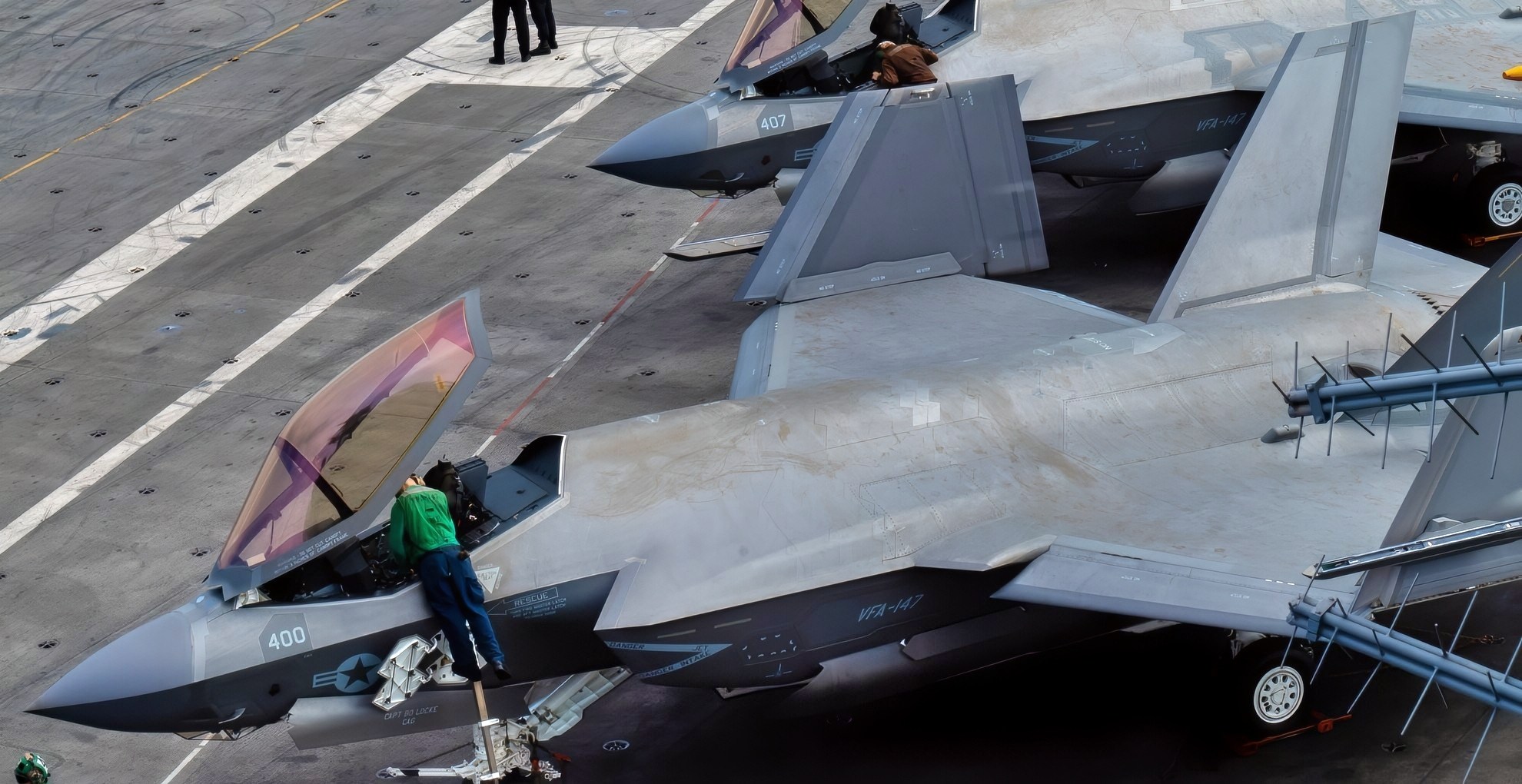
SOUTH CHINA SEA (Jan. 15, 2022) Sailors preform pre-flight checks on several F-35C Lightning II’s, assigned to the “Argonauts” of Strike Fighter Squadron (VFA) 147, on the flight deck of Nimitz-class aircraft carrier USS Carl Vinson (CVN 70), Jan. 14, 2022. Carl Vinson Carrier Strike Group is on a scheduled deployment in the U.S. 7th Fleet area of operations to enhance interoperability through alliances and partnerships while serving as a ready-response force in support of a free and open Indo-Pacific region. (U.S. Navy photo by Mass Communication Specialist Seaman Apprentice Derek Kelley)
Analysts expect the vessel to be larger than any previous Chinese aircraft carrier and equipped with nuclear propulsion.
The carrier could be launched as early as 2027, according to analysts speaking with Defense News.
If expectations are correct, the Type 004 would be China’s first nuclear-powered aircraft carrier, giving Beijing greater flexibility to conduct military operations far from Chinese territory.
This would have significant implications for the United States, Japan, and other Pacific powers.
What We Know So Far
Satellite and aerial imagery suggest the construction of the carrier’s basic hull is well advanced.
According to the Center for Strategic and International Studies (CSIS), the unfinished hull measures approximately 1,056 feet long and 151 feet wide.
Those dimensions suggest the Type 004 will be comparable in size to America’s Nimitz- and Ford-class aircraft carriers.
The vessel could accommodate 75 to 90 aircraft, with some estimates reaching 100, representing a substantial increase in aviation capacity over previous Chinese carriers.
The vessel is expected to qualify as a supercarrier based on its size, aircraft capacity, and anticipated technology, though the final specifications remain unconfirmed.
Nuclear Propulsion
The most significant anticipated difference between the Type 004 and China’s existing carriers is the addition of nuclear propulsion.
All of China’s existing aircraft carriers are conventionally powered and depend on large quantities of fuel, requiring periodic replenishment and limiting their range and endurance.
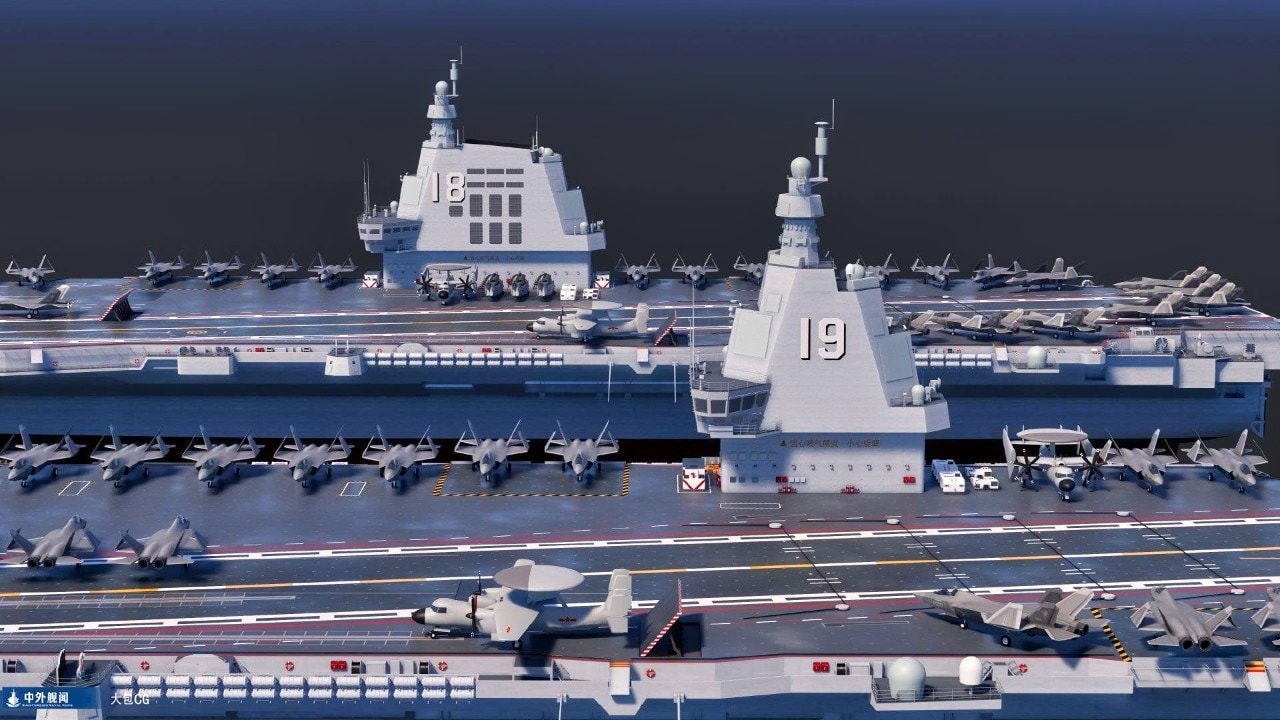
China Aircraft Carriers. Image Credit: Creative Commons.
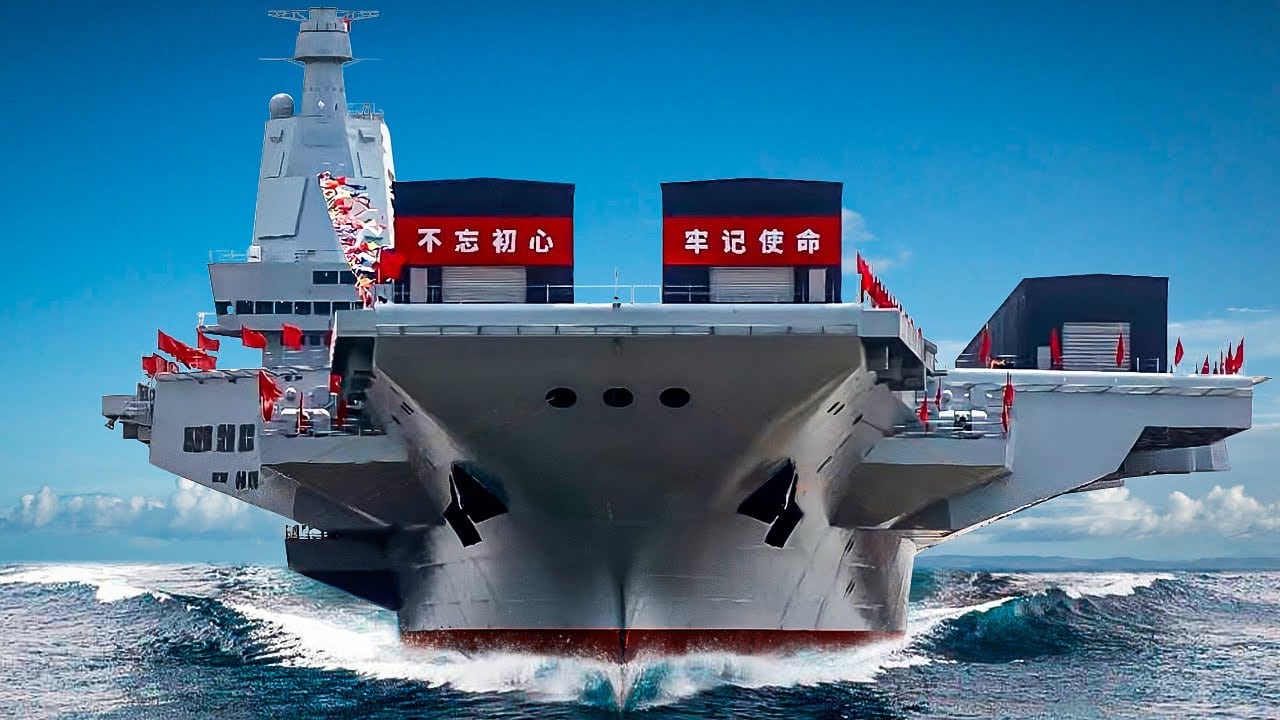
China Aircraft Carrier Creative Commons Image.
Nuclear-powered carriers can operate for years between reactor refuelings, greatly reducing their dependence on propulsion fuel and allowing them to remain at sea longer and operate farther from home ports.
Nuclear propulsion can also support the substantial electrical requirements of modern aircraft carriers, including electromagnetic aircraft launch systems.
Generating more electrical capacity could support sustained flight operations (although sortie rates depend on a variety of factors).
Nuclear propulsion does not make a carrier entirely self-sufficient; it still requires aviation fuel, and crews need food and supplies.
Nevertheless, the technology would give China considerably greater flexibility when conducting distant naval operations—a capability China’s current carriers lack.
Rapid Upgrades
China has developed its aircraft carrier capabilities in a relatively short period. Its first aircraft carrier, Liaoning (Type 001), entered service in 2012 after China acquired and refurbished an unfinished Soviet carrier.
China’s second carrier, Shandong (Type 002), entered service in 2019 and was China’s first domestically built aircraft carrier.
Both carriers use ski-jump ramps to launch aircraft. China’s third carrier, Fujian (Type 003), represented a major technological advance of adopting electromagnetic catapults, allowing greater flexibility in aircraft weights and types than ski-jump launches.
The Type 004 would represent the next major technological progression by introducing nuclear propulsion. In sum, in just two decades, China has progressed from refurbishing a Soviet-era carrier to constructing an anticipated nuclear-powered supercarrier. That’s a rapid, compressed pace of progress.
Compared to America
The United States currently operates 11 aircraft carriers, all nuclear-powered.

SOUTH CHINA SEA (Jan. 17, 2025) – The Nimitz-class aircraft carrier USS Carl Vinson (CVN 70) transits the South China Sea during a Maritime Cooperative Activity with the Philippine Navy, Jan. 17, 2025. The U.S. and Philippines work together as allies, enhancing the interoperability of maritime forces and supporting their shared goal of a free and open Indo-Pacific. Carrier Strike Group ONE, is underway conducting routine operations in the U.S. 7th Fleet area of operations. (U.S. Navy photo by Mass Communication Specialist 3rd Class Brianna Walker)
The Nimitz and Ford-class carriers are among the largest warships ever constructed.
The Type 004’s estimated dimensions and aircraft capacity suggest China is approaching American standards in individual carrier size, but matching the physical dimensions of an American carrier does not necessarily mean matching its operational capabilities.
The United States has conducted intensive carrier operations for decades, including the rigors of training pilots and flight deck crews, conducting maintenance, and managing escort operations and logistics.
China is still developing many of those capabilities—the little, quiet things that enable global carrier operations.
Nevertheless, a nuclear-powered Chinese supercarrier would narrow an important technological gap between the two navies.
Chinese carrier developments have implications extending beyond potential conflict over Taiwan or territorial disputes in the South China Sea; a nuclear-powered carrier would help China develop a genuine blue-water navy, capable of sustained operations across the world’s oceans.
About the Author: Harrison Kass
Harrison Kass is a writer and attorney focused on national security, technology, and political culture. His work has appeared in Tablet, City Journal, The Hill, The Spectator, and The Cipher Brief. He holds a JD from the University of Oregon and a master’s in Global & Joint Program Studies from NYU—more at harrisonkass.com.


