
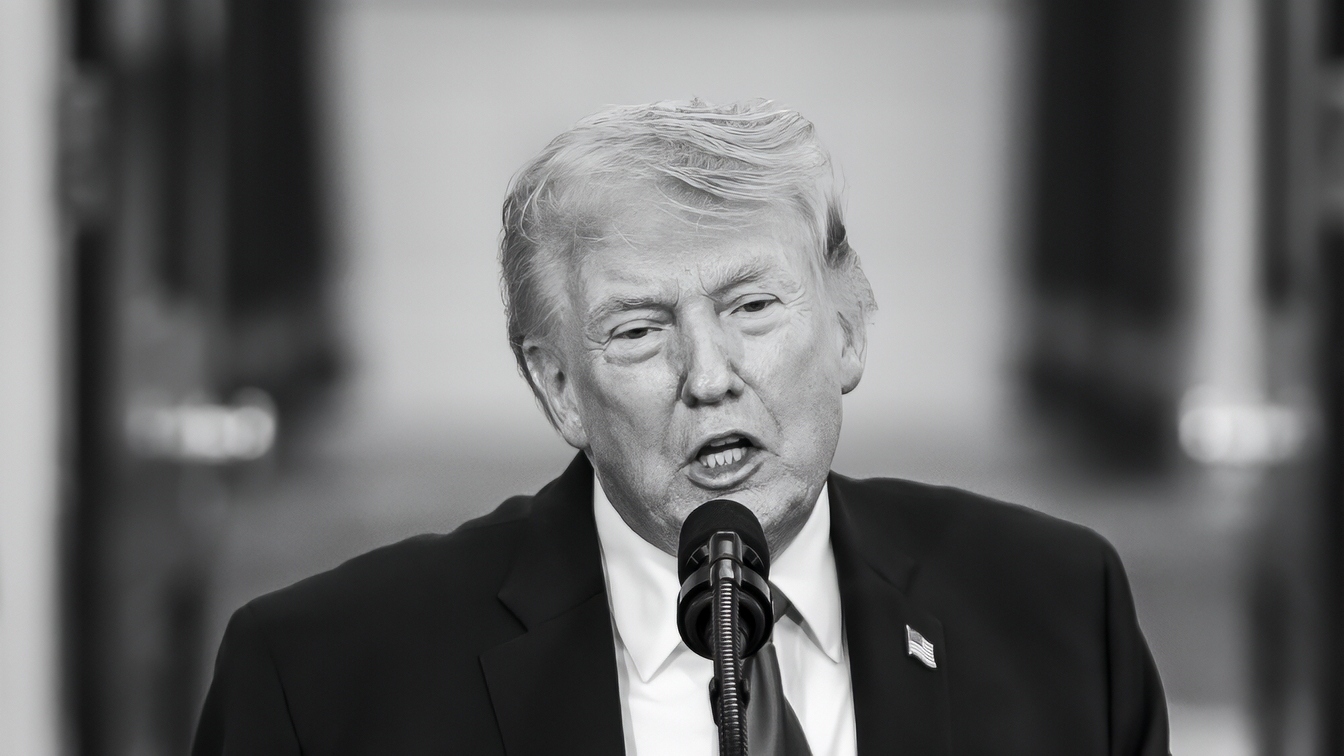
President Donald Trump appears to be walking into a strategic trap set by Iran, Jerusalem Post analyst Amir Bohbot argued Tuesday, warning that the standoff threatens the gains of Israel’s Operation Roaring Lion.
Bohbot wrote that Washington believed sanctions, a naval blockade, and threats of new strikes on infrastructure would force Tehran to negotiate on terms of surrender after the military campaign.

U.S. Air Force Maj. Kristin “BEO” Wolfe, F-35A Lightning II Demonstration Team pilot and commander, flies an F-35 assigned to the 421st Fighter Generation Squadron at the Wings Over Houston Airshow, Tx., Oct. 15, 2023. Wings Over Houston showcases vintage World War II aircraft alongside the thrills of modern aviation, and has supported a variety of local and national charities during its 39-year history. (U.S. Air Force photo by Staff Sgt. Kaitlyn Ergish)

A U.S. Air Force F-35A Lightning II assigned to the 60th Fighter Squadron, flies overhead after conducting a live weapons drop at Camp Shelby, Miss., Oct 25, 2023. During the exercise, pilots tested various munitions including the GBU-12s, GBU-31v1s, and 362 rounds of 25mm Training Munitions from the gun.
Instead, he argued, the pressure turned the regime into a “wounded, desperate, and dangerous animal.”
Bohbot Says Hardliners Gained the Upper Hand
According to Bohbot, Iran’s hardliners overtook its pragmatists once Trump appeared reluctant to launch another military campaign.
They now push a tougher line and refuse to meet U.S. demands, he wrote.
Iranian President Masoud Pezeshkian, a relative moderate, has come under fire from hardliners opposed to any deal with Washington.
He has said Supreme Leader Mojtaba Khamenei gave his government “certain powers” over the negotiations.
Khamenei’s office said he met top military commanders, including IRGC chief Ahmad Vahidi, to give them directives on handling U.S. threats.
Hardliners also helped sink an earlier peace deal in part because Khamenei, the one figure with authority to settle such disputes, has rarely appeared since taking office in March.
Bohbot argued it is in Khamenei’s interest to break the rules gradually while keeping the door open to talks. Iran can now choose between a controlled escalation that wears down American deterrence or a surprise move that breaks the blockade and intimidates the Gulf states, Bohbot wrote.
Iran’s Three Cards, According to Bohbot
Bohbot wrote that Iran’s economy is collapsing, but that the regime still holds three cards against the United States.
The first is the Strait of Hormuz, where he argued that declaring a blockade is easy but keeping tankers moving is far harder, since Iran can disrupt shipping with simple means.
The United Kingdom Maritime Trade Operations said Tuesday that three vessels were struck by unidentified projectiles Monday while sailing east through the strait.
All three continued their journeys, and all crew members were accounted for.
The second is the roughly 50,000 American troops at bases across the Middle East, which Bohbot wrote are exposed to Iranian fire.

U.S. Air Force Maj. Melanie “Mach” Kluesner, the pilot for the F-35A Demonstration Team, performs aerial maneuvers in a USAF F-35A Lightning II during the practice day before the airshow at Jacksonville Naval Air Station, Florida, on 18 October, 2024. The practice day ensures that the team is able to safely and properly display the power, agility, and lethality of America’s 5th generation fighter jet. (U.S. Air Force photo by Senior Airman Nicholas Rupiper)
The third is the Gulf states, whose oil facilities Bohbot wrote are within reach of an Iranian arsenal of missiles, rockets and drones that has been replenished since the ceasefire.
Combined with Iran’s proxies across the region, that threat could pose a serious challenge, he wrote.
Western intelligence assessments found in June that Iran had rebuilt much of its missile arsenal during an eight-week ceasefire and likely added new Russian-made weapons, Bloomberg reported.
Iran-backed Houthi forces have also hit Saudi Arabia, damaging Riyadh’s PIF Tower on Nov. 19.
Trump Threatens New Strikes as Talks Drag On
Bohbot wrote that the White House wants to avoid a major escalation and is trying to wear Iran down economically until its economy collapses and Iranians take to the streets.
Daily life in Iran has already become unbearable, he wrote.
Trump said this week that he is inclined to resume strikes on Iran after the new year if no deal is reached. He told Fox News that indirect talks continue but called Iranian officials “professional tap dancers.”
The dollar broke through 2.85 million rials on Iran’s open market Tuesday.
Treasury Secretary Scott Bessent said Monday that Iran’s leaders were panicking over the economy, as the Treasury Department sanctioned 22 entities and eight individuals tied to Tehran’s shadow banking network.
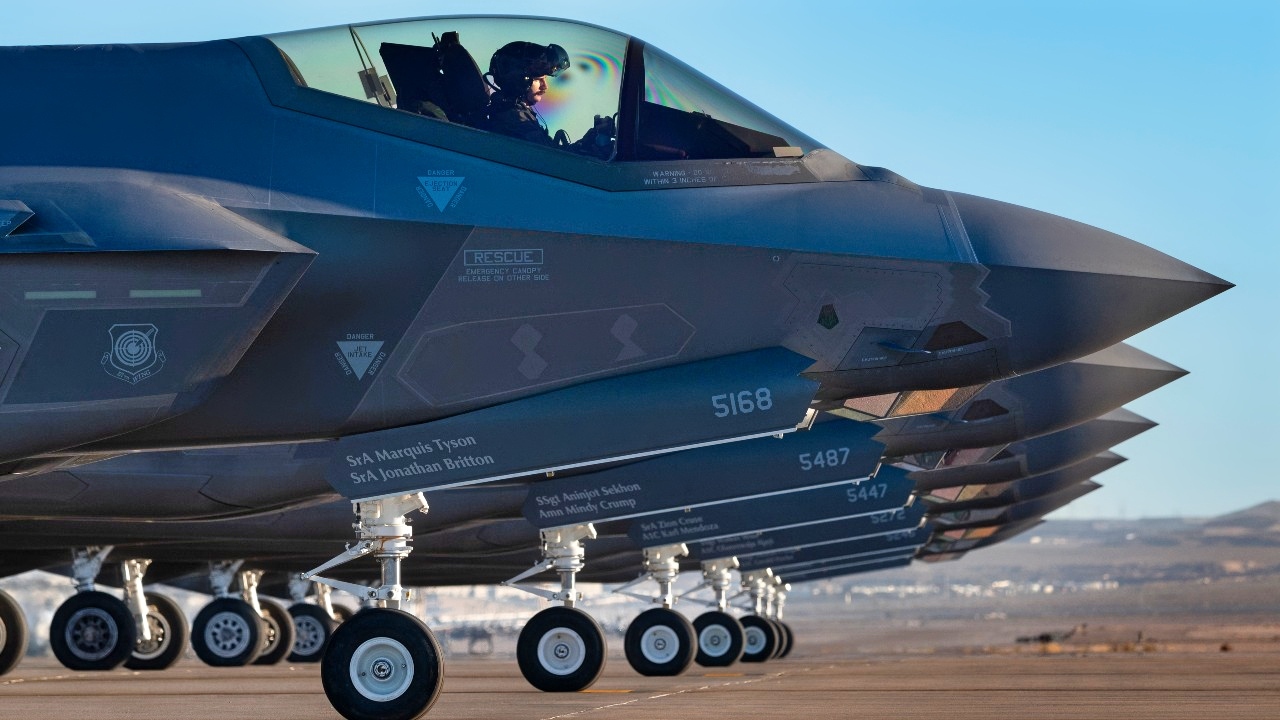
Seven F-35 Lightning II aircraft wait to take off for a U.S. Air Force Weapons School training mission at Nellis Air Force Base, Nevada, Jan. 31, 2024. The U.S. Air Force Weapons School teaches graduate-level instructor courses that provide advanced training in weapons and tactics employment to officers and enlisted specialists of the combat and mobility air forces. (U.S. Air Force photo by William R. Lewis)
Iran’s chief negotiator and parliament speaker, Mohammad Bagher Qalibaf, said Tuesday that Tehran will not negotiate with the U.S. “until Iran’s seven conditions are met,” the Associated Press reported, citing Iranian state television.
Iran has not publicly listed the conditions, but state media have said they include lifting sanctions, ending the U.S. naval blockade and releasing seized Iranian assets.
Iranian Foreign Ministry spokesperson Esmaeil Baghaei said Monday that Iran will use all available tools to confront the blockade.
Bohbot Says Israel Faces a Dilemma
Bohbot argued that while Washington can wage a war of attrition from afar, the delay could become an existential threat for Israel.
Every day without a decisive outcome lets Iran rebuild its missiles and strengthen its position as a nuclear threshold state, he wrote.
Bohbot concluded that Israel must decide whether to keep waiting on Washington or move first to catch Iran off guard.
About the Author: Lulia Lupse
Lulia Lupse is a journalist and Young Voices senior contributor whose work has appeared in The Washington Post, the New York Post, Reason, The National Interest, and Fox News Digital. She writes across politics, focusing on foreign policy, energy, and national security, and her reporting draws on original interviews with policymakers and national security experts, including former Deputy National Security Advisor Victoria Coates. She spent five years in the Fox News newsroom and served as editor-in-chief of Clear News Daily. She holds a B.S. in Diplomacy and International Relations, with a minor in Russian and Eastern European Studies, from Seton Hall University.