

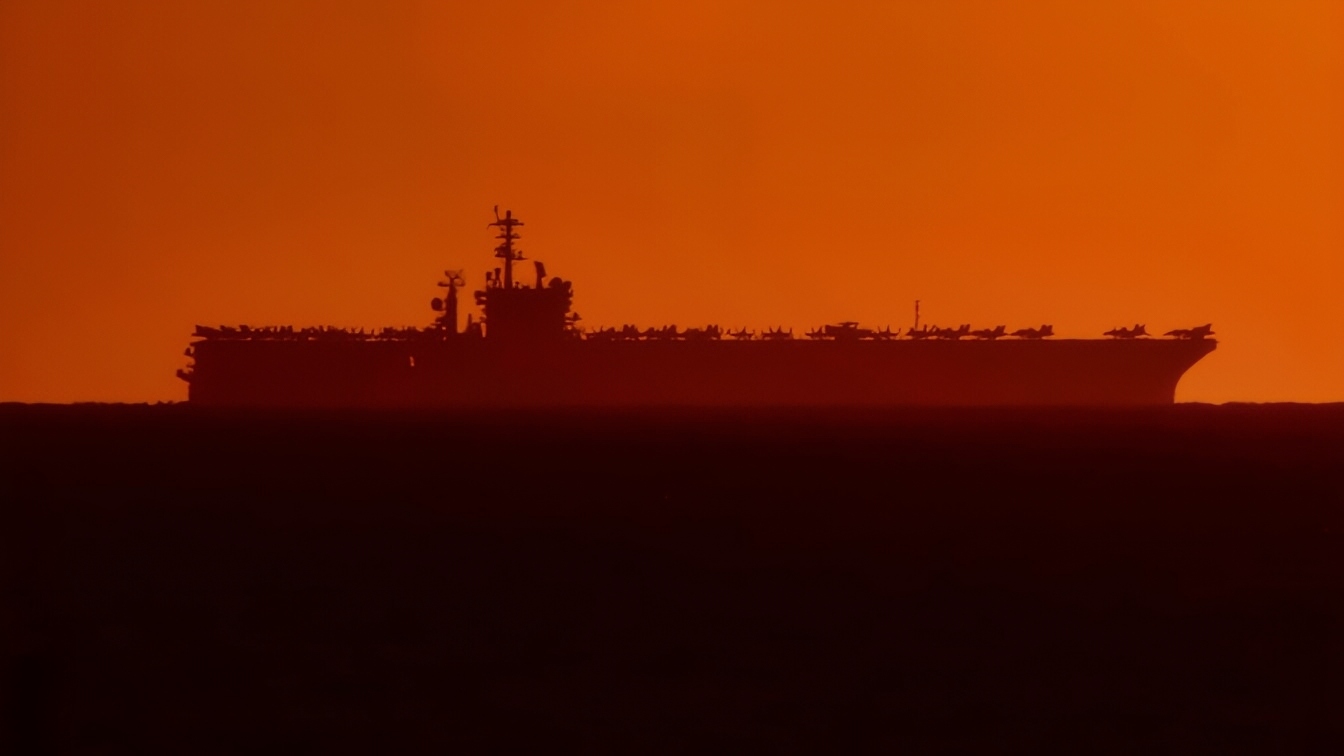
After more than 50 years of service, the USS Nimitz (CVN-68) still has a role to play in American naval power. Rather than sitting idle while awaiting retirement, the nuclear-powered supercarrier is being prepared to train the next generation of naval aviators.
Now operating out of Naval Station Norfolk, Virginia, the Nimitz is temporarily serving as an East Coast training carrier, giving both new and returning naval aviators opportunities to qualify aboard an operational aircraft carrier.
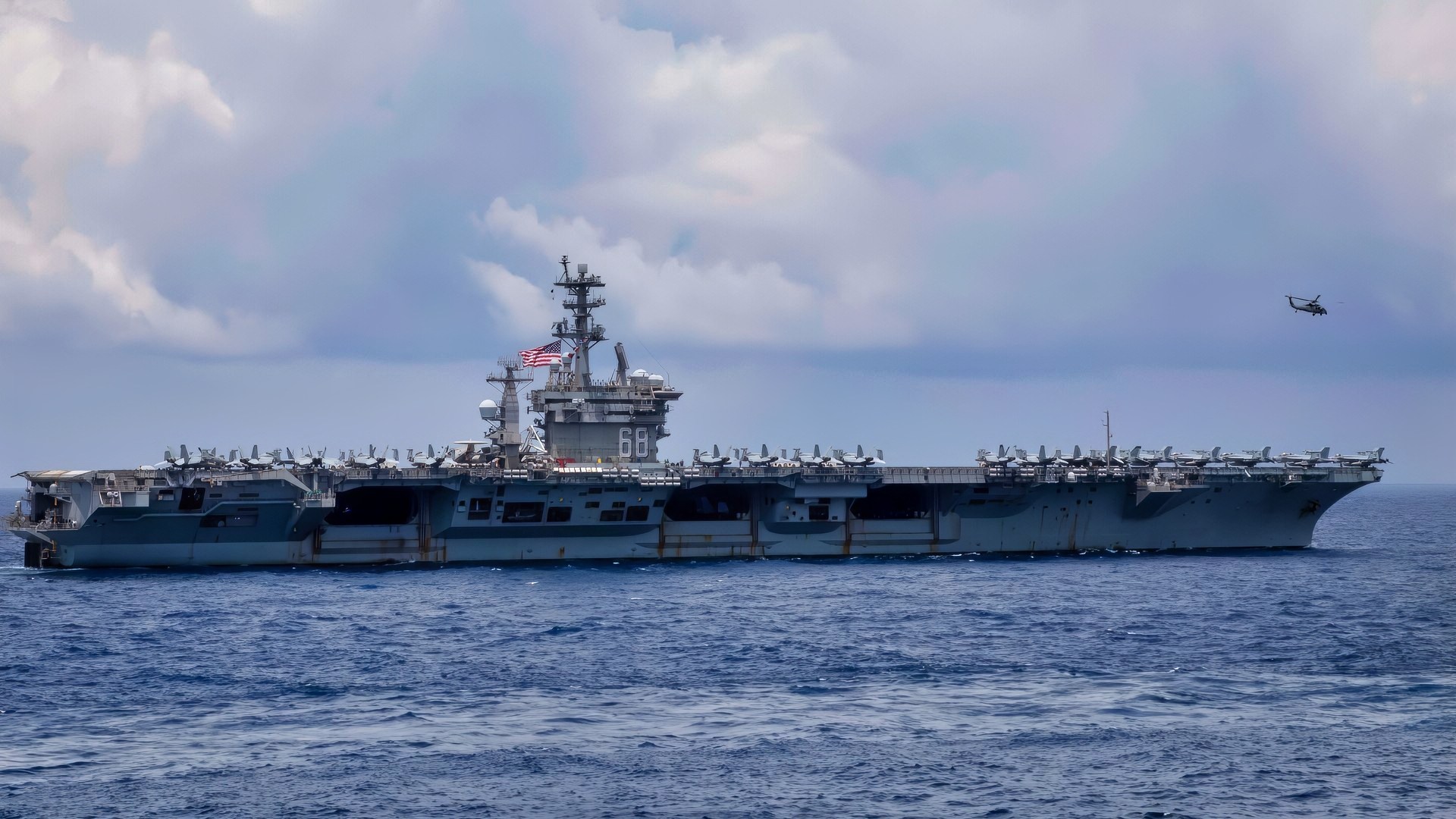
(Feb. 15, 2023) U.S. Navy aircraft carrier USS Nimitz (CVN 68) flies the battle ensign during expeditionary strike force operations with the Nimitz Carrier Strike Group including the Arleigh Burke-class guided-missile destroyer USS Decatur (DDG 73). Nimitz Carrier Strike Group (NIMCSG) and Makin Island Amphibious Ready Group (MKI ARG) with embarked 13th Marine Expeditionary Unit (MEU) are conducting combined ESF operations, demonstrating unique high-end war fighting capability, maritime superiority, power projection and readiness. Operations include integrated training designed to advance interoperability between the two groups while simultaneously demonstrating the U.S. commitment to our alliances and partnerships in the Indo-Pacific region. (U.S. Navy photo by Mass Communication Specialist 2nd Class David Negron)

USS Nimitz Sailing Near Canada. Image Credit: Creative Commons.
The assignment likely marks the final chapter for a warship that helped define modern American carrier aviation, as the Nimitz is scheduled to retire in March 2027.
What the Nimitz Is Doing
The Nimitz recently completed a training deployment in the US Second Fleet’s area of operations in November.
Before conducting flight operations, a carrier recertifies its carrier air traffic control center, which helps coordinate aircraft operating around the vessel.
Multiple aviation units participated, including the F/A-18E/F Super Hornet and T-45C Goshawk. During the training period, the Nimitz recorded 103 sorties, 442 arrested landings, and 152 touch-and-go landings.
The training accommodated aviators at different stages of their careers, from student pilots to more experienced personnel returning to carrier operations.
Why Carrier Qualifications Are So Important
Landing a high-performance jet aboard an aircraft carrier is among the most demanding tasks in military aviation. Unlike a conventional runway, a carrier’s landing area is relatively short, constantly moving, and surrounded by water.
Pilots must account for the ship’s movement and wind conditions while positioning their aircraft precisely.
An arrested landing involves the aircraft’s tailhook catching a wire that rapidly brings the aircraft to a stop.
Touch-and-go landings, meanwhile, allow pilots to practice approaching and contacting the flight deck before immediately returning to flight without coming to a stop.
Then there are catapult launches, which are another component of carrier aviation training.
The T-45C, which was developed to train future naval aviators, helps student pilots ease into the demands of carrier-based jet operations.
Although simulators and land-based training facilities are valuable, they cannot fully replicate the experience of operating from an aircraft carrier at sea.
Maintaining access to operational flight decks is therefore essential to sustaining the Navy’s aviation training pipeline.
More Than Pilots
It’s not just about the pilots.
Carrier operations require extensive coordination among aviators and thousands of sailors aboard the ship.
Flight deck personnel, aircraft maintenance crews, air traffic controllers, and other specialists must work together to sustain aviation operations.
Many of these skills are difficult to develop exclusively in classrooms or aboard vessels undergoing maintenance.
The Nimitz offers sailors assigned to other carriers an opportunity to gain practical experience at sea. Personnel associated with carriers undergoing construction, maintenance, or modernization can also benefit from the training platform.
The Nimitz is therefore helping sustain institutional knowledge across the carrier fleet, not just training individual pilots.
A Permanent Training Carrier?
The Navy has historically operated dedicated aircraft carriers for training purposes.
Take the USS Lexington (CV-16), for example, which served as a training carrier for decades before being decommissioned in 1991.
But maintaining a nuclear-powered supercarrier is considerably more expensive. Commissioned in 1975, the Nimitz is approaching the end of its intended service life and would require increasingly extensive maintenance to remain operational.
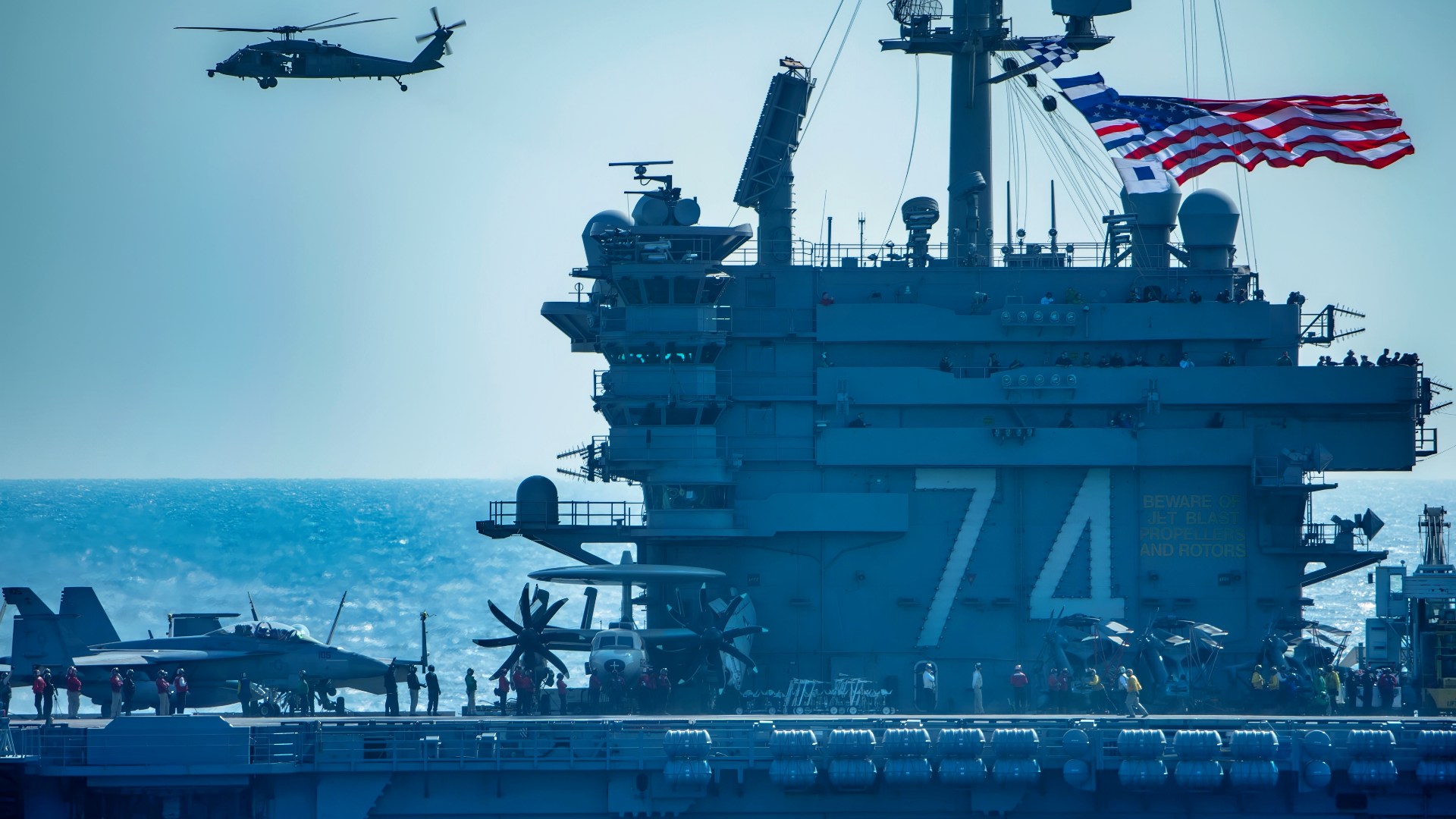
ARABIAN SEA (Dec. 14, 2018) The Nimitz-class aircraft carrier USS John C. Stennis transits the Arabian sea with the Essex Amphibious Ready Group (ARG) and 13th Marine Expeditionary Unit (MEU). The John C. Stennis Carrier Strike Group, Essex ARG, and 13th MEU are conducting integrated operations in the Arabian Sea to ensure stability in the Central Region, connecting the Mediterranean and the Pacific through the western Indian Ocean and three strategic choke points. (U.S. Navy photo by Mass Communication Specialist 3rd Class Tyler Diffie)
Nuclear propulsion also introduces additional maintenance, regulatory, and personnel requirements, as well as eventual decommissioning costs.
Even without deploying overseas, a carrier requires a crew and considerable logistical support to conduct safe flight operations.
Keeping the Nimitz operational indefinitely would consume resources that could otherwise support new aircraft carriers.
The current training assignment therefore extracts a little extra value from the vessel without committing to another expensive service-life extension.
End of an Era
Few American warships have been as consequential as the Nimitz, and all of the carrier’s days of frontline deployment are over.
Its usefulness to the Navy, however, has not expired. Some of the aviators qualifying aboard the ship today could spend the next several decades flying from the aircraft carriers that eventually replace it.
About the Author: Harrison Kass
Harrison Kass is a writer and attorney focused on national security, technology, and political culture. His work has appeared in Tablet, City Journal, The Hill, The Spectator, and The Cipher Brief. He holds a JD from the University of Oregon and a master’s in Global & Joint Program Studies from NYU—more at harrisonkass.com.


