


A French Rubis-class nuclear submarine sank a U.S. Navy aircraft carrier during a joint NATO naval exercise off the coast of Florida in 2015. The U.S. carrier was the USS Theodore Roosevelt, flagship of Carrier Strike Group 12. The French submarine was the Saphir (S602). The Rubis-class is the smallest nuclear-powered attack submarine class in existence. The Rubis-class was designed more than 30 years ago. The Saphir penetrated layered carrier strike group defenses. Those defenses included guided-missile cruisers, destroyers with advanced sonar, P-3C Orion anti-submarine aircraft, P-8 Poseidon anti-submarine aircraft, and a U.S. attack submarine assigned to guard the carrier.
A French Submarine Beats a Nimitz-Class Aircraft Carrier in a Wargame
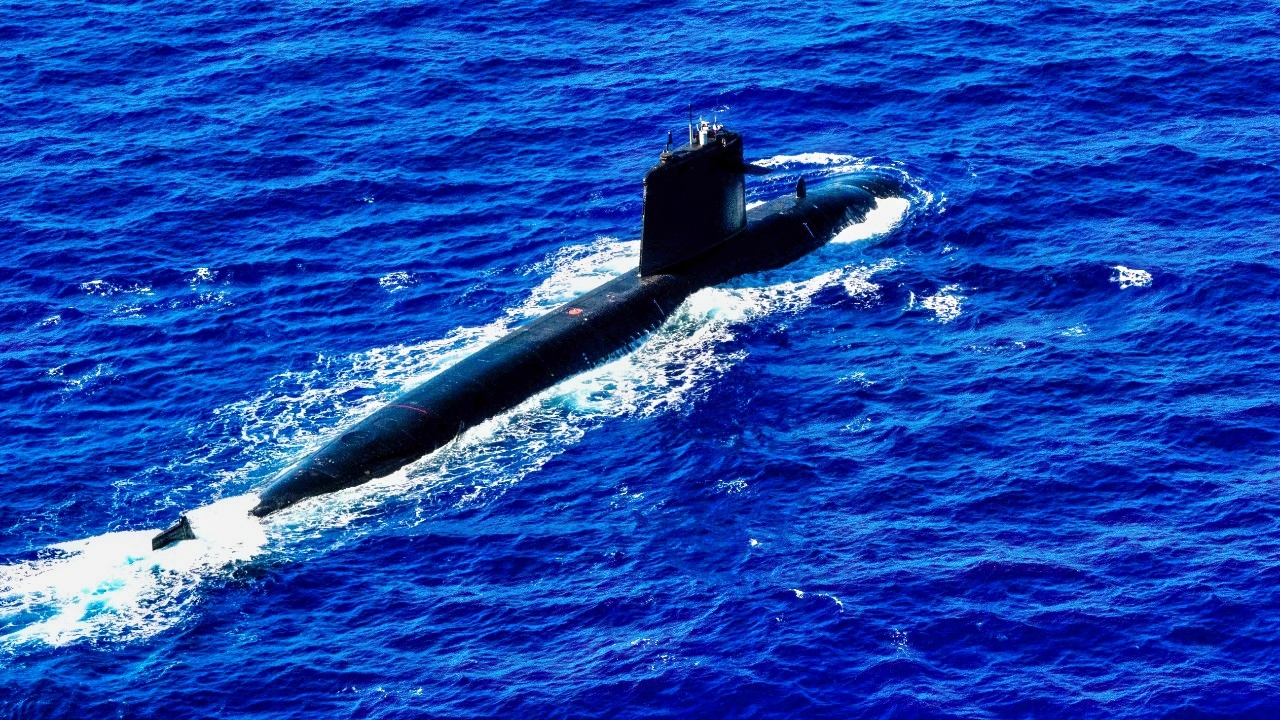
Rubis-Class Submarine from France. Image Credit: Creative Commons.
Submarines have been and always will be the kings of the sea. Despite advances in anti-submarine warfare (ASW), modern submarines still pose a significant threat to valuable assets such as aircraft carriers.
This was demonstrated poignantly during a joint NATO naval exercise off the coast of Florida in 2015. During this exercise, a French Rubis-class submarine managed to sneak through an entire carrier strike group and simulate a direct hit on an American aircraft carrier, thereby “sinking” the massive vessel. The event proved that even the most advanced ASW countermeasures cannot guarantee survival against stealth submarines, even ones designed more than 30 years ago.
Background: COMTUEX 2015
The exercise formed part of a Composite Unit Training Exercise, or COMPTUEX, a critical stage in preparing U.S. carrier strike groups for overseas deployment. The USS Theodore Roosevelt was the flagship of Carrier Strike Group 12, a formidable naval formation designed around layered defense.
This formation included guided-missile cruisers, destroyers equipped with advanced sonar, anti-submarine aircraft such as the P‑3C Orion and P‑8 Poseidon, and even a U.S. attack submarine tasked with helping guard the carrier. Together, these elements are intended to create a near-impenetrable shield against underwater threats.
Initially, the French submarine Saphir (S602) was not acting as an adversary. Instead, it was integrated into the U.S.-led force and assisted in tracking simulated enemy submarines. This cooperative phase is routine in these kinds of exercises and prepares both sides for potential combat scenarios.
However, as the exercise progressed into its second phase, the scenario changed; again, it was a routine part of these exercises. The Saphir was reassigned to play the role of the opposing force. Its mission became to hunt down the very carrier strike group it had previously supported and simulate its destruction.

Nimitz-class aircraft carrier USS Theodore Roosevelt (CVN 71) heads to sea following a brief logistics stop on the Greek island of Crete. Roosevelt and Carrier Air Wing Eight (CVW-8) are currently underway on a regularly scheduled deployment supporting maritime security operations. Roosevelt is the fourth ship in the NIMITZ – class of nuclear-powered aircraft carriers and is homeported in Norfolk, VA.U.S. Navy photo by Mr. Paul Farley
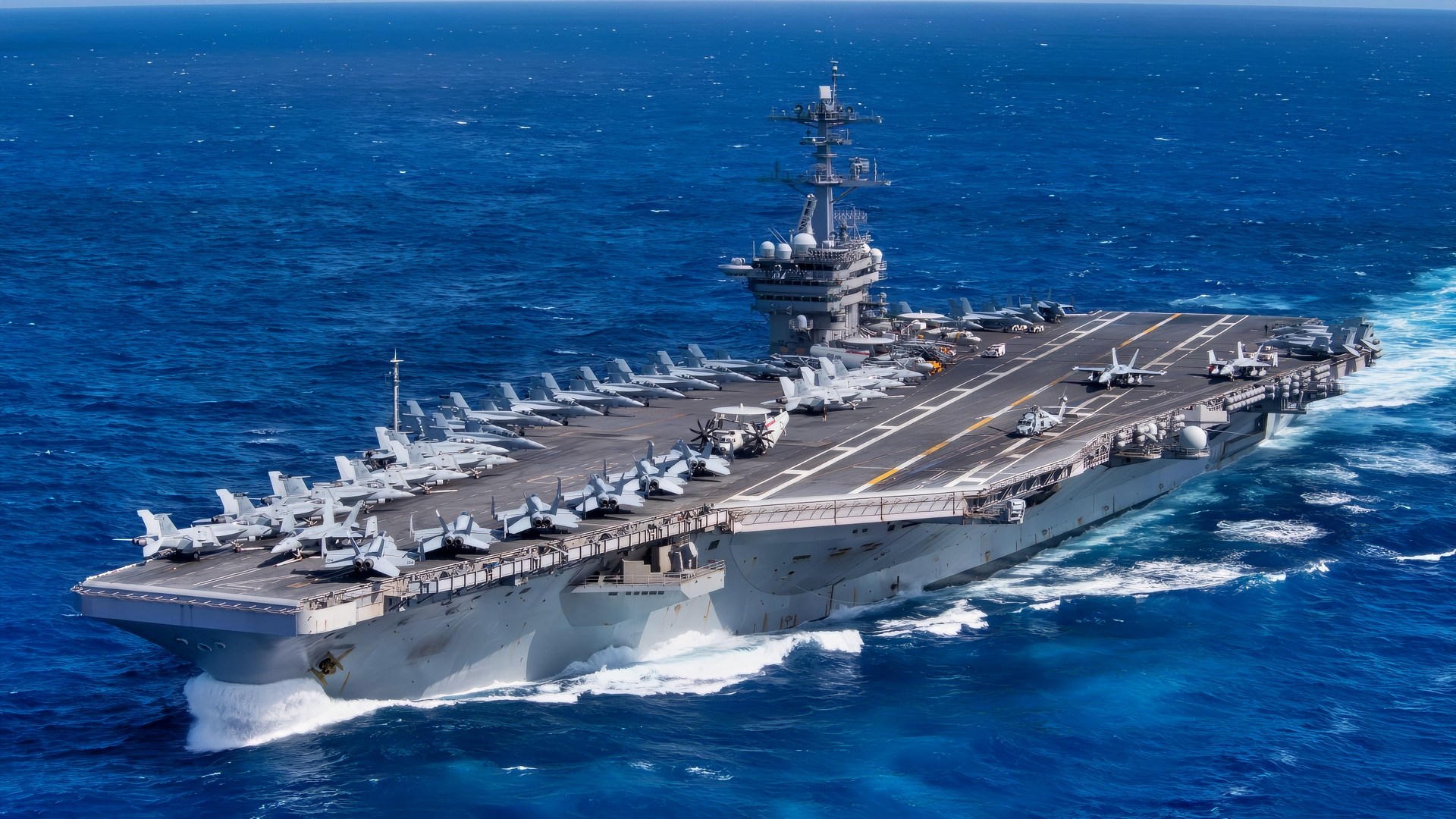
(Jan. 25, 2020) The aircraft carrier USS Theodore Roosevelt (CVN 71) transits the Pacific Ocean Jan. 25, 2020. The Theodore Roosevelt Carrier Strike Group is on a scheduled deployment to the Indo-Pacific. (U.S. Navy photo by Mass Communication Specialist Seaman Kaylianna Genier)
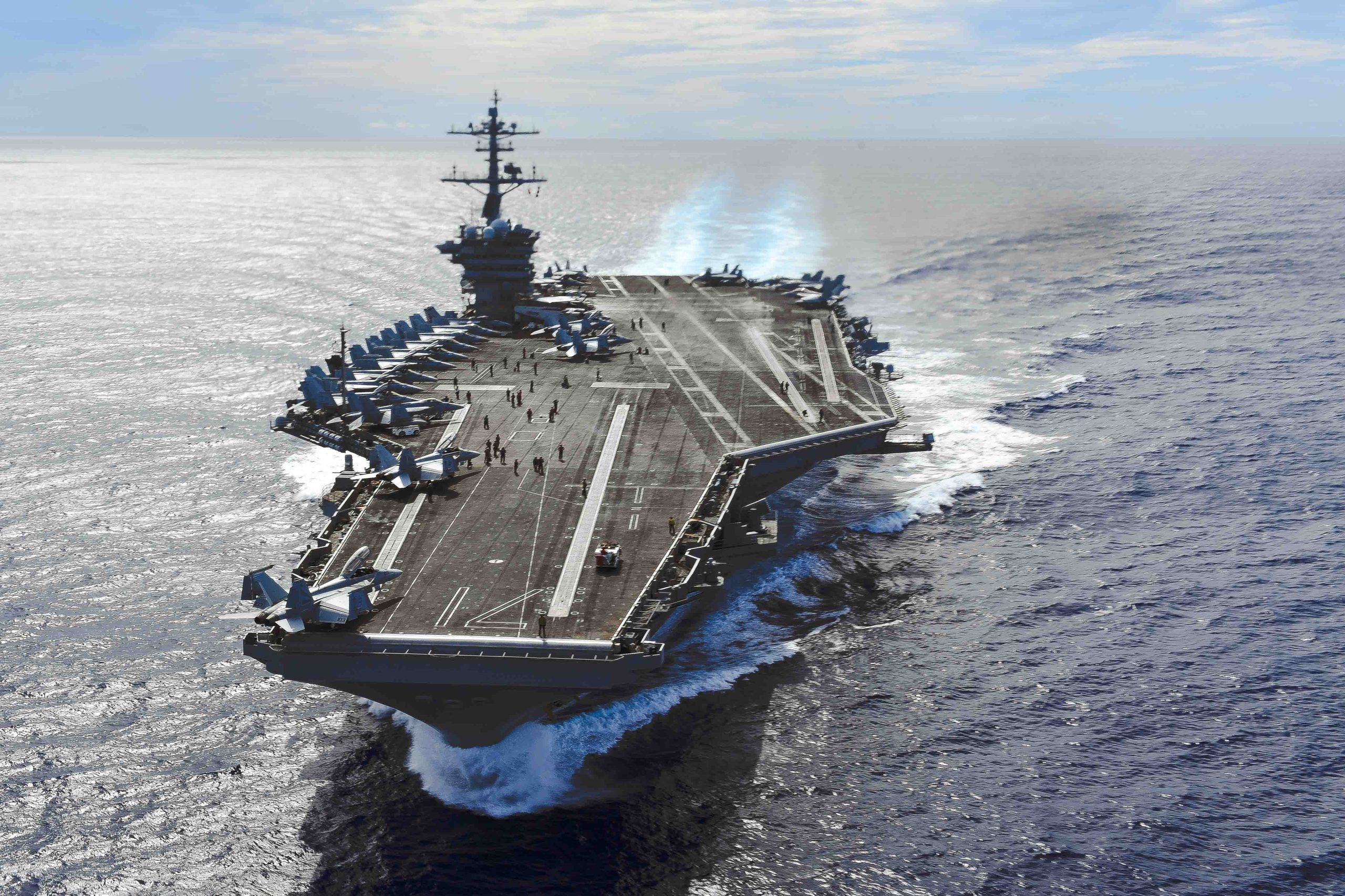
PHILIPPINE SEA (Sept. 24, 2024) The Nimitz-class aircraft carrier USS Theodore Roosevelt (CVN 71) transits the Philippine Sea, Sept. 24, 2024. Theodore Roosevelt, flagship of Carrier Strike Group 9, is underway conducting routine operations in the U.S. 7th Fleet area of operations. U.S. 7th Fleet is the U.S. Navy’s largest forward-deployed numbered fleet, and routinely interacts and operates with allies and partners in preserving a free and open Indo-Pacific region. (U.S. Navy photo by Mass Communication Specialist 3rd Class Adina Phebus)
A French Sub VS an American Carrier Strike Group
This new role turned the French submarine into a stealthy predator. Its objective was to penetrate the extensive defensive layers surrounding the USS Theodore Roosevelt, approach close enough to attack, and do so undetected.
Carrier strike groups are designed specifically to prevent such scenarios, and their anti-submarine warfare systems are among the most advanced in the world. Nevertheless, these measures never guarantee 100 percent protection, as Saphir proved.
Using its small size and quiet propulsion, the skilled crew of the Rubis-class submarine slipped through the carrier group’s defenses.
These submarines are among the smallest nuclear-powered attack subs in existence, and their reduced acoustic signature can make them particularly difficult to detect. Over the years, upgrades improved their stealth characteristics, making them even more dangerous in exercises like this.
How a Lone Rubbis-Class “Sank” a Supercarrier
At some point during the final phase of the exercise, the Saphir located the USS Theodore Roosevelt and maneuvered into an optimal firing position. This meant getting close enough, undetected, to simulate the launch of torpedoes or anti-ship missiles.
When the submarine’s commander issued the simulated firing order, the outcome was decisive. Exercise evaluators determined that the aircraft carrier had been successfully “killed.” Reports also indicated that several escort ships were neutralized in the scenario.
Of course, no actual weapons were fired, and the carrier was never in real danger. The “sinking” was determined through simulation systems and exercise rules that calculate whether an attack would have succeeded under combat conditions. Still, the results were indisputable. Within the context of the exercise, the U.S. Navy had effectively lost one of its most valuable assets to a single submarine.
How Could the U.S. Navy Let This Happen?
Most of the actual details behind the exercise are unknown. It is not known for certain how Saphire managed to avoid detection for so long, nor what the carrier strike group was doing that allowed the sub to get into attack positions. Analysts, however, have made several educated guesses.
Submarines inherently possess a stealth advantage. Even the most sophisticated sonar systems can struggle against a well-handled, quiet submarine, especially in coastal waters where sound behaves unpredictably. The Rubis-class boat’s relatively small size and low noise signature likely helped it exploit gaps in the defensive network.
Equally important was the nature of the exercise itself. Training events like COMPTUEX are deliberately designed to be challenging and unforgiving. The goal is not to produce easy victories but to expose weaknesses that could have serious consequences in real combat. In that sense, the simulated destruction of the USS Theodore Roosevelt was a valuable lesson for the U.S. Navy and likely informed future ASW practices.
Naturally, the French were ecstatic at the news. The incident first came to public attention when the French Navy released a blog post describing the exercise and highlighting Saphir’s success.
Although the post was later removed, the information had already spread widely and was preserved in various reports.
The U.S. Navy, for its part, said nothing about the exercise, which is hardly unusual, as the Navy never shares results or details of such exercises.
About the Author: Isaac Seitz
Isaac Seitz, a Defense Columnist, graduated from Patrick Henry College’s Strategic Intelligence and National Security program. He has also studied Russian at Middlebury Language Schools and has worked as an intelligence Analyst in the private sector.


