

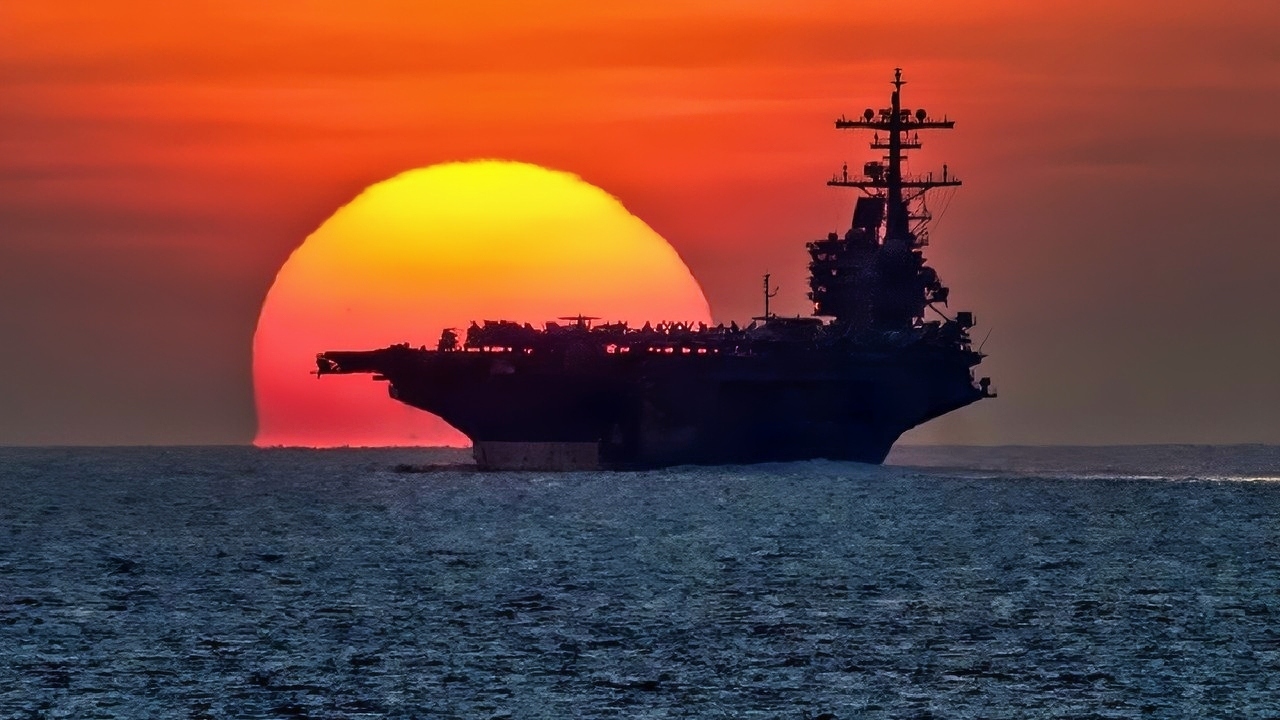
“I hate talking about combat drills when the U.S. Navy lost, and many times, lost aircraft carriers in simulations. But, hey, you only learn when you make mistakes.” That’s what a long-retired U.S. Navy surface warship officer told me last week when I asked him about the various times that U.S. Navy aircraft carriers have been sunk in various wargames over the years. And while we talk a lot about the infamous time Gotland-class AIP submarine from Sweden sinking an aircraft carrier back in 2005, Canada also achieved such a submarine ‘victory’ as well. And it was decades before. Yes, Canadian submarines made history that many naval enthusiasts have never heard about.
Canada Was Able to ‘Sink’ A U.S. Navy Aircraft Carrier
This is the story of a $5.5 billion supercarrier sunk by an $80 million diesel boat — figures from current defense reporting that adjust both platforms to modern equivalent costs.
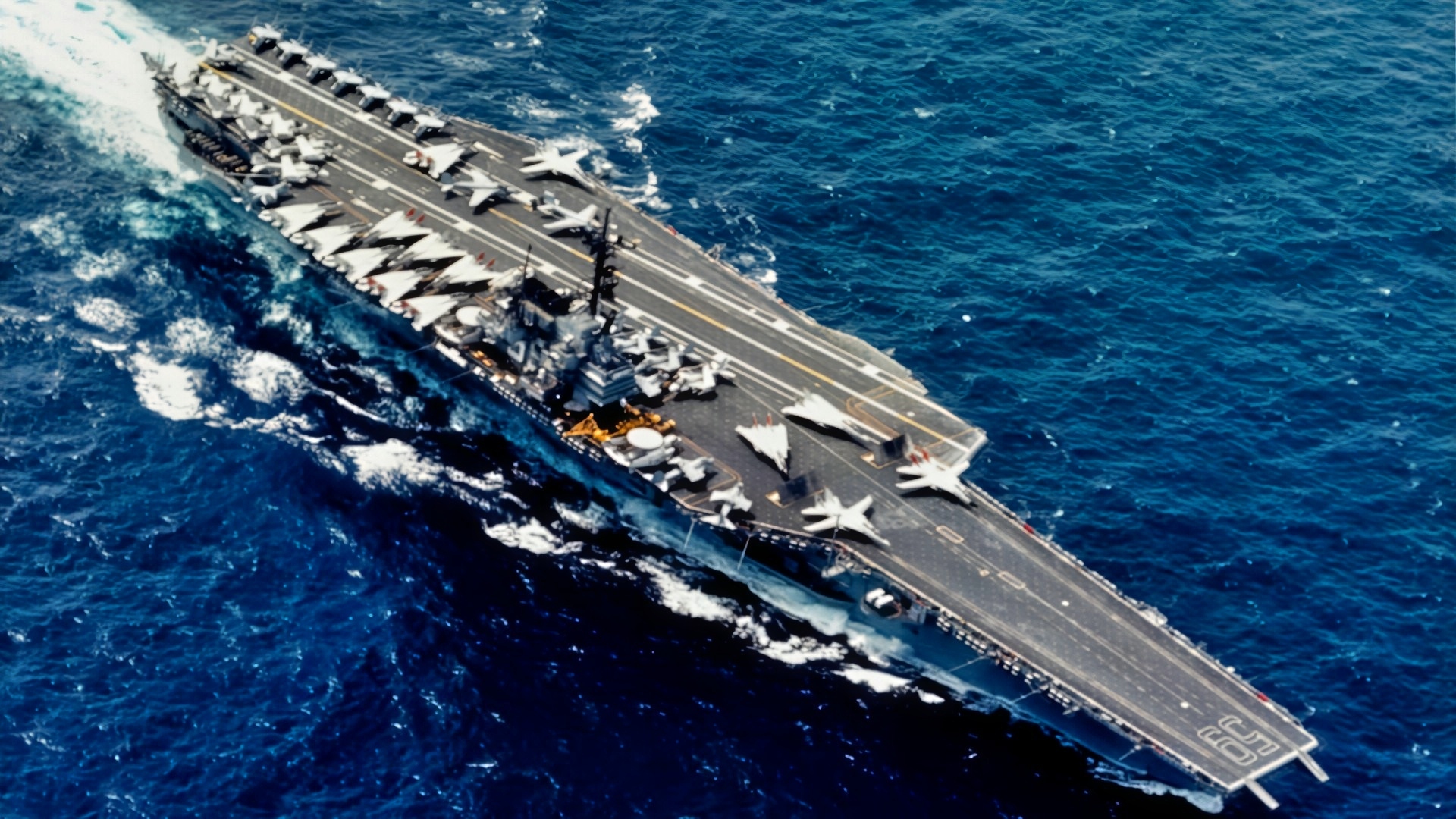
USS Forrestal Aircraft Carrier. Image Credit: Creative Commons.
A Cold War-era Canadian submarine, running on batteries, scored a confirmed kill on the most expensive warship in the Atlantic.
An exercise umpire, watching the engagement geometry play out in real time during a NATO drill, had no choice but to declare the carrier dead.
And the carrier strike group — destroyers, cruisers, a nuclear attack submarine, an entire carrier air wing — never found the Canadian boat at all.
The story is true.
The exercise was Ocean Venture/Magic Sword North, held in the Atlantic in 1981, during one of the largest NATO drills of the Cold War.
The carrier was the USS Dwight D. Eisenhower (CVN-69). The submarine was either HMCS Okanagan, HMCS Ojibwa, or HMCS Onondaga — the records are scarce enough that even contemporary defense reporting cannot identify which of the three Canadian Oberon-class boats actually scored the hit.
Here is what happened, why it happened, and why the same vulnerability still defines the carrier debate in 2026.
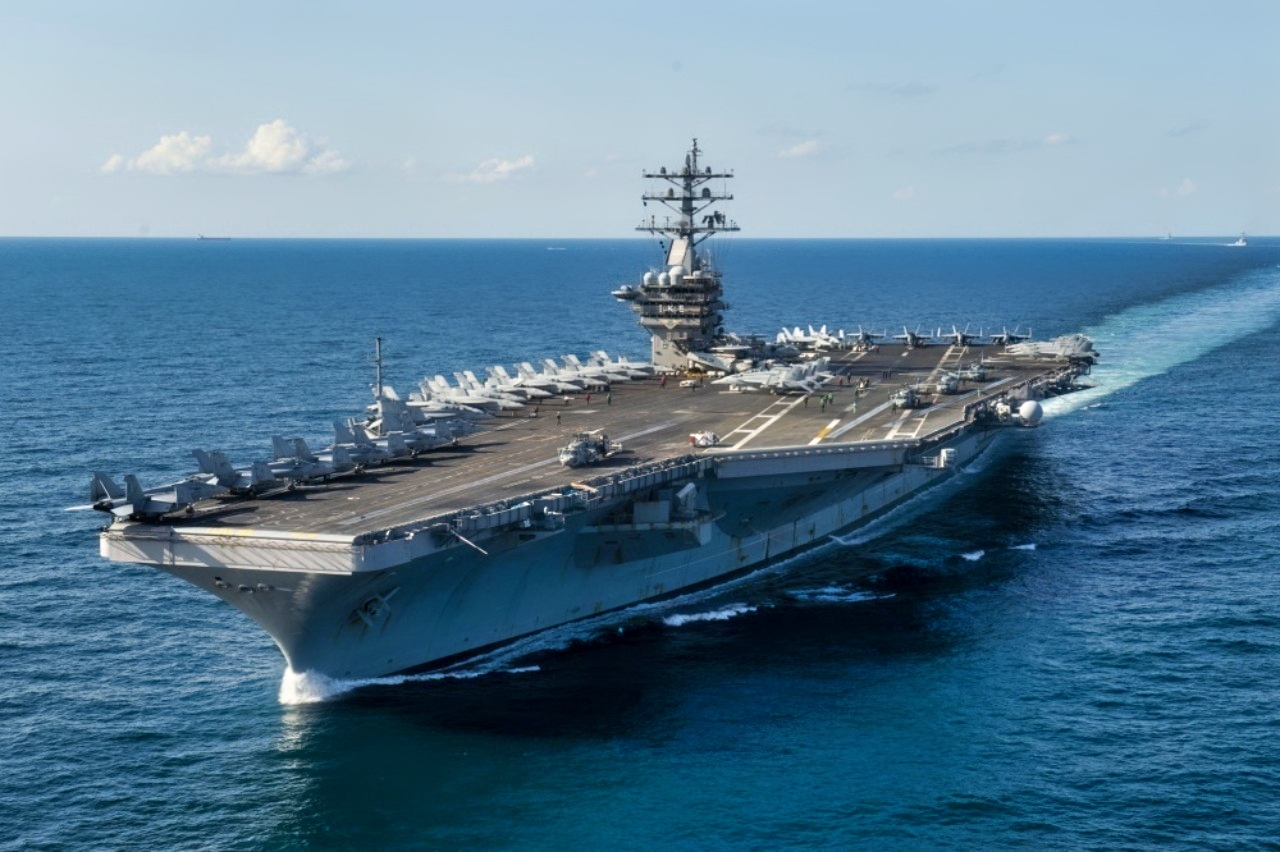
ATLANTIC OCEAN (Sept. 28, 2019) The aircraft carrier USS Dwight D. Eisenhower (CVN 69) transits the Atlantic Ocean with ships assigned to Carrier Strike Group (CSG) 10 and aircraft assigned to Carrier Air Wing (CVW) 3 during a photo exercise to conclude Tailored Ship’s Training Availability (TSTA) and Final Evaluation Problem (FEP) as part of the basic phase of the Optimized Fleet Response Plan. (U.S. Navy photo by Mass Communication Specialist 1st Class Tony D. Curtis/Released)
The Submarine
The HMCS Okanagan, Ojibwa, and Onondaga were not new in 1981.
They were British-built Oberon-class diesel-electric submarines acquired by Canada in the 1960s, originally for training purposes in the Royal Canadian Navy.
By the late 1970s, the boats had been quietly upgraded with anechoic tiles to reduce sonar reflection, modernized acoustic isolation in their machinery spaces, and improved sensor and combat systems.
They were not nuclear-powered.
They could not stay submerged indefinitely. They could not sprint at 30-plus knots underwater the way a Los Angeles-class American attack submarine could.
What they could do — and what no nuclear submarine on Earth could do — was shut down completely.
A nuclear submarine cannot turn off its reactor while at sea. The reactor must continue producing heat. Coolant pumps must continue circulating water through the primary loop. Steam plant machinery must continue generating the electrical power the boat needs to run. Every one of those systems makes noise. Modern American nuclear boats are extraordinarily quiet — but they are never silent.
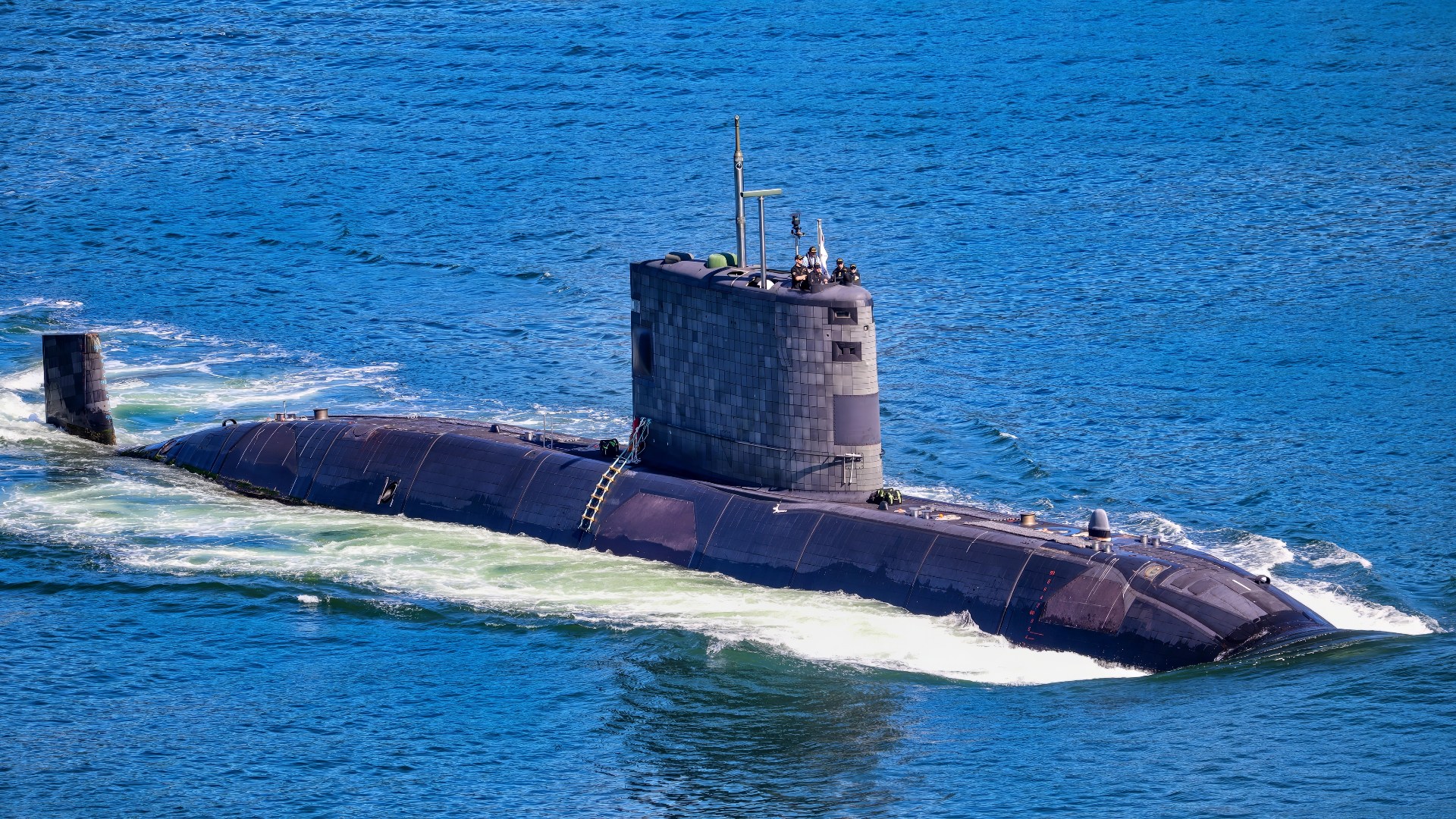
Victoria-Class Submarine of Canada

The Royal Canadian Navy long-range patrol submarine HMCS Victoria (SSK 876) arrives at Naval Base Kitsap-Bangor for a port call and routine maintenance. The visit is Victoria’s first to Bangor since 2004. (U.S. Navy photo by Lt. Ed Early/Released)
A diesel-electric submarine running on batteries is silent. Not “very quiet.” Silent. The motors that turn the propeller shaft are essentially the same motors that power electric cars, and they produce almost no mechanical noise.
With the diesel engines shut down and the boat coasting along on stored battery power, an Oberon-class submarine produced less radiated noise than the ambient ocean itself — quieter than the breaking waves on the surface, quieter than the marine life around it, quieter than the distant merchant traffic that fills the North Atlantic with low-frequency rumble.
A passive sonar operator listening for that submarine was, in effect, listening for a ghost.
The Exercise: Submarine vs. Aircraft Carrier
Ocean Venture/Magic Sword North was a multi-phase NATO exercise designed to rehearse a wartime amphibious operation off the coast of Norway.
The Eisenhower carrier strike group — at the time one of the most advanced naval formations in the world — was paired with the older USS Forrestal (CV-59) in a simulated landing scenario, with multiple Allied submarines assigned the role of opposing-force “enemy” boats trying to penetrate the carriers’ defensive screens.
The Eisenhower acquitted herself well in the first three phases. No submarine got through.

Kilo-Class Submarine. Image Credit: Creative Commons.

Kilo-Class Submarine. Image Credit: Creative Commons.
The strike group’s layered defenses — multiple destroyers running active sonar in the outer screen, helicopters dipping sonobuoys ahead of the formation, S-3 Viking aircraft hunting at longer ranges, attack submarines patrolling the inner waters — were exactly what the carrier had been built to operate inside of. The doctrine worked.
Then came Phase IV.
The Canadian Oberon — running submerged, on batteries, moving at the slowest speed at which the boat would still maintain depth control — slipped through the destroyer screen. Defense reporting since has described how the Canadian crew tracked the strike group’s movement over hours, repositioned the boat into the gaps between the active sonar lobes of the escorting destroyers, and patiently maneuvered into a torpedo firing solution on the carrier itself.
The simulated torpedoes were “fired.” The exercise umpire, adjudicating engagement geometry, reviewed the firing solution and declared the Eisenhower destroyed.
Defense reporting on the exercise also indicates that a second Canadian submarine, operating in a different sector of the operating area, scored a similar hit on the Forrestal in a later phase.
Two American supercarriers. Two Canadian diesel boats. Two simulated kills. The Eisenhower never found the submarine that “sank” her.
Why It Worked
The U.S. Navy’s anti-submarine warfare doctrine in 1981 was built around a specific threat: fast, deep-diving Soviet nuclear attack submarines — Victors, Alfas, the later early Akulas — sprinting toward American carrier groups at speeds in the high 20s or low 30s of knots.

Victor III-Class Submarine. Image Credit: Creative Commons.
Screen geometry, sonar settings, helicopter patrol patterns, and the placement of friendly nuclear attack submarines were all optimized to detect and prosecute that kind of target.
A small, slow-moving diesel boat creeping along on battery power at 3 or 4 knots, deliberately staying as close to the seafloor as bottom contour allowed, did not match that threat profile. The strike group’s sensors and operators were tuned to find a different enemy. Active sonar pings looking for high-speed transients heard nothing because the Canadian boat was producing no transients. Passive sonar listening for reactor coolant pumps and steam plant noise heard nothing because there was no reactor and no steam plant running.
The exercise rules of engagement also tilted the engagement somewhat in the submarine’s favor.
To simulate realistic combat conditions, the destroyers’ active sonar use was restricted — pinging continuously in wartime would announce the strike group’s position to every Soviet boat within hundreds of miles, so the exercise replicated the reality that escorts ration their active sonar emissions.
Those constraints are not artifacts of the exercise. They are what carriers actually do in wartime. The Canadian Oberon did not exploit some artificial loophole that would not exist in real combat. It exploited the same operational realities that would govern any future engagement between a quiet diesel submarine and an American carrier strike group.
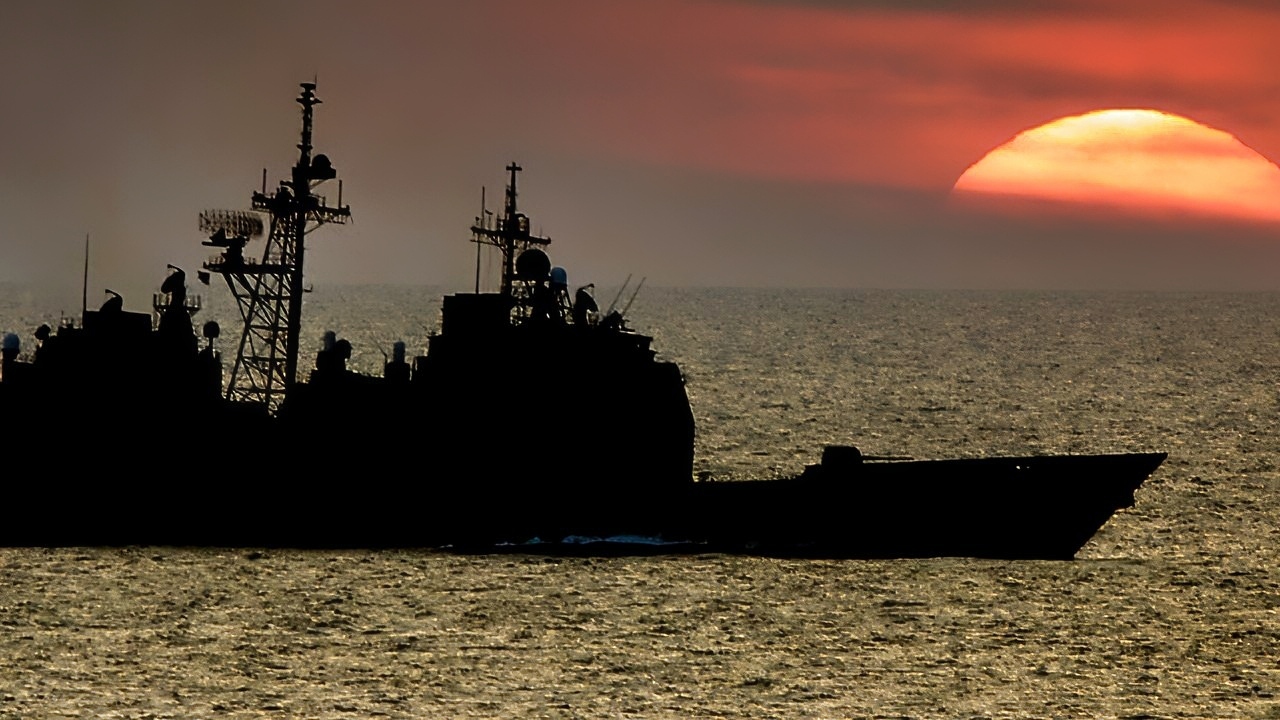
The Ticonderoga Class Cruiser USS Normandy (CG 60) steams at sunset in the Atlantic Ocean while operating with the USS George Washington battle group on May 18, 2000. The Normandy, homeported in Norfolk, Va., is participating in a Joint Task Force Exercise with the battle group.
(DoD photo by Petty Officer 2nd Class Shane McCoy, U.S. Navy. (Released))
The Pattern Was Not Unique
The 1981 Eisenhower incident was not a one-off.
Allied diesel-electric submarines have scored simulated kills on American carriers in roughly eight known NATO and bilateral exercises between 1972 and 2005, according to compiled defense reporting.
Dutch, Australian, and Canadian boats appear repeatedly in the exercise records.
The pattern is consistent: a small, quiet, conventionally powered submarine, operating with a skilled crew under realistic exercise constraints, manages to penetrate the screen of a U.S. carrier strike group and reach torpedo-launch position before being detected.
The most famous of these incidents came in 2005, when the Royal Swedish Navy leased the Gotland-class submarine HSwMS Gotland to the U.S. Navy for two years of anti-submarine warfare exercises out of San Diego. The Gotland is roughly the same size as the old Canadian Oberons — about 1,600 tons submerged — but with a critical upgrade: an air-independent propulsion (AIP) system built around a Kockums Stirling engine, allowing the boat to remain submerged for weeks without surfacing or running its diesel engines.
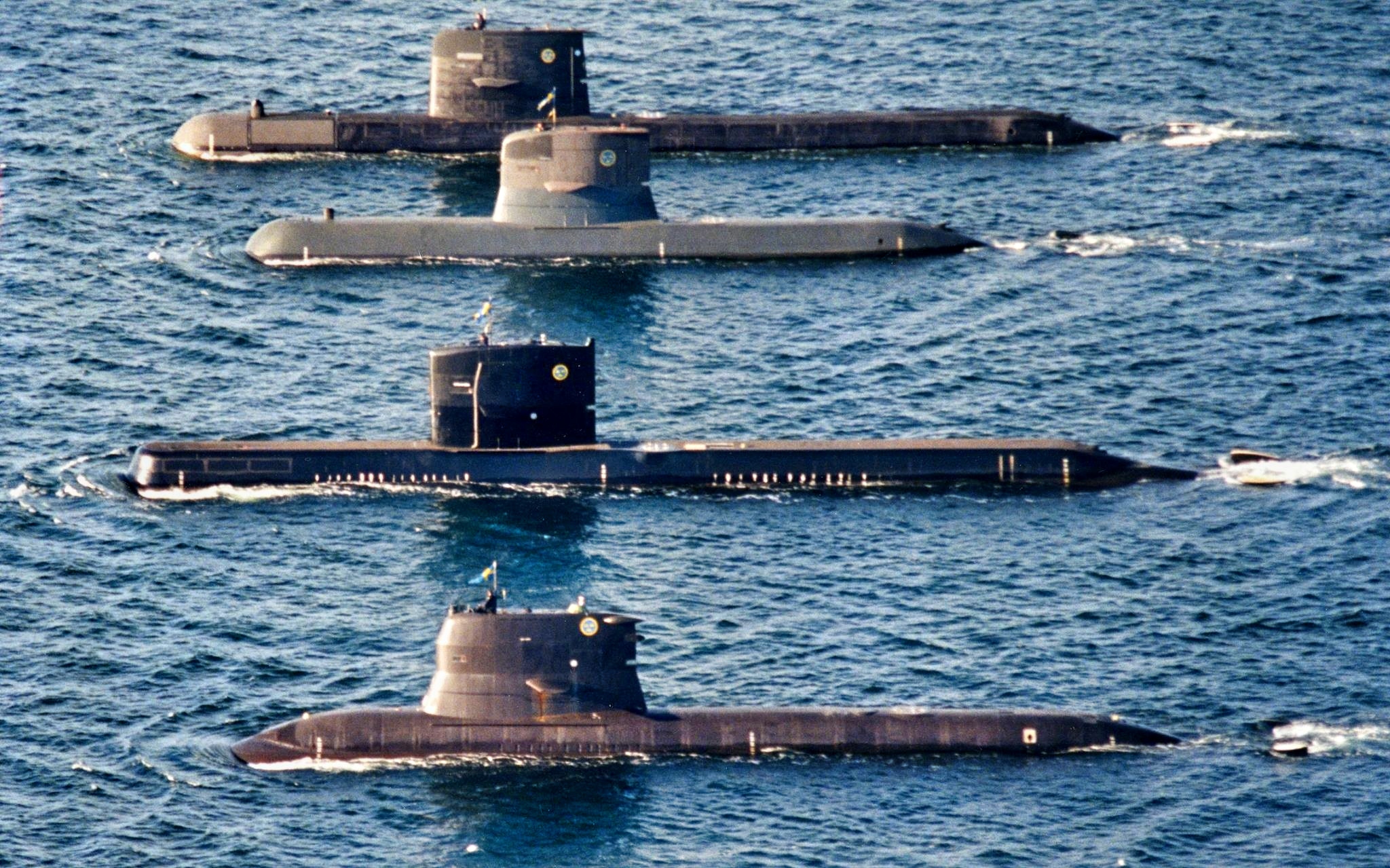
Gotland-Class Submarines. Image Credit: Creative Commons.
In repeated exercises against the USS Ronald Reagan strike group, the Gotland scored simulated kill after simulated kill on the carrier and her escorts. Naval analyst Norman Polmar’s assessment, quoted in Proceedings and elsewhere, was that the Gotland “ran rings” around the American task force. U.S. anti-submarine warfare specialists involved in the drills were reportedly demoralized by the experience. The Navy’s eventual conclusion was that its undersea sensors were not adequate to deal with quiet AIP-equipped diesel boats.
The Gotland was the first AIP-equipped submarine to participate in U.S. exercises. It is no longer the only one.
What This Means For Carriers Today
In 2026, the threat landscape has gotten substantially worse.
China currently operates a fleet of Yuan-class diesel-electric submarines — Type 039A and Type 039B variants — equipped with Stirling-engine AIP systems comparable to the Gotland. China is producing Yuans at a faster rate than the United States is producing Virginia-class submarines. The total Chinese AIP-equipped diesel submarine fleet now numbers more than 20 hulls in current Office of Naval Intelligence estimates and is continuing to grow.

Yuan-Class Submarine AIP. Image Credit: Creative Commons.
Russia operates the Lada-class and exports the Kilo-class to multiple navies. Iran operates Russian-built Kilos plus the smaller Ghadir-class midget submarines. North Korea operates a substantial fleet of conventionally powered submarines. Algeria, Vietnam, and Indonesia are AIP customers. The technology that the Canadian Oberon demonstrated in 1981 is now widely proliferated and continuously improving.
The American response has been institutional. The U.S. Navy’s investments in acoustic quieting on the Virginia-class submarine program, in distributed undersea sensor networks, in unmanned underwater vehicles, in variable-depth towed-array sonar for surface escorts, and in next-generation maritime patrol aircraft are all driven, at least in part, by the lessons learned from Ocean Venture 1981, from the 2005 Gotland deployment, and from the broader pattern of allied diesel boats killing American carriers in exercises.
Whether those investments are adequate to the current threat is the question that carrier advocates and carrier critics have been arguing about for forty years. The Gerald R. Ford-class is being built around the assumption that improved active and passive defenses, combined with longer-range carrier air wings, can keep the carrier strike group operating safely beyond the threat envelope of enemy diesel submarines.
Critics — including a growing chorus inside the Navy itself — argue that the asymmetry between a $13 billion carrier and a $200 million AIP submarine has grown to the point where carriers are no longer the appropriate centerpiece of American naval power projection.
That argument is not new. The 1981 Eisenhower incident is one of its founding documents.
The Lesson That Won’t Go Away
There is a particular kind of military lesson that the United States Navy has repeatedly demonstrated it does not want to learn.
It is the lesson that complexity, expense, and technical sophistication are not, by themselves, sufficient to guarantee operational dominance. It is the lesson that a smaller, cheaper, less impressive weapon system in the hands of a skilled crew can defeat a larger, more expensive, more impressive one. It is the lesson that asymmetric warfare is not a tactic that emerges from the weak side’s desperation — it is the natural state of any engagement in which one side cannot afford to match the other system-for-system.
The Canadians, in 1981, were not desperate. They were operating exactly the kind of submarine they could afford to operate, at exactly the operational tempo they could sustain, with exactly the tactical doctrine that played to the strengths of their platform and the weaknesses of the carrier strike group’s defenses. The HMCS Okanagan, Ojibwa, or Onondaga — whichever boat actually fired the simulated torpedoes — proved on a single afternoon in the Atlantic that the most expensive warship in NATO could be killed by a Cold War-era diesel boat with a patient crew and good batteries.
Forty-five years later, that lesson has been replicated by the Swedes against the Reagan, by the Dutch and Australians against multiple American carriers, and by exercise after exercise in which an inexpensive diesel boat outmaneuvers a carrier strike group built to defend against an entirely different threat.
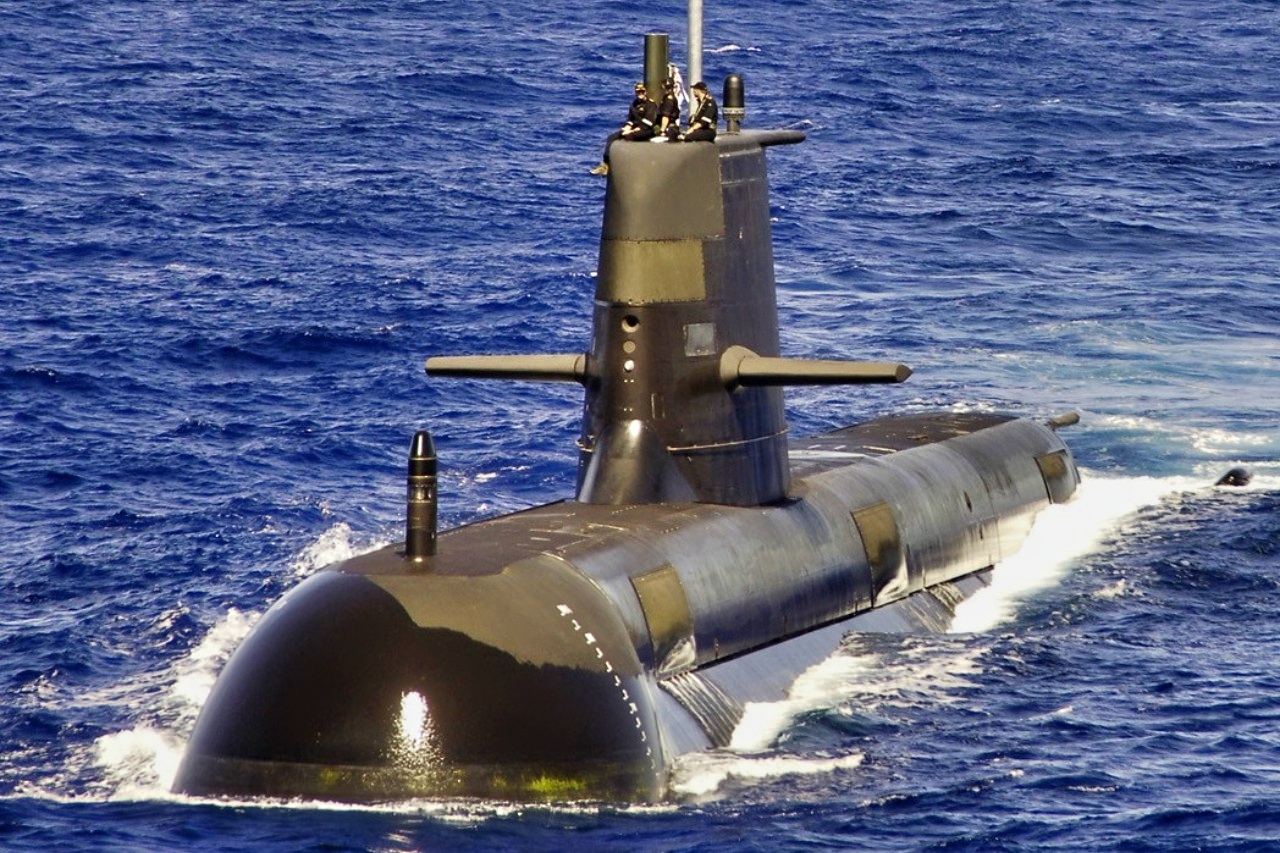
(July 25, 2006)- The Australian Submarine HMAS Rankin (Hull 6) and the Los Angeles Class attack submarine USS Key West (SSN-722) prepare to join a multinational formation with other ships that participated in the Rim of the Pacific exercise. To commemorate the last day of RIMPAC, participating country’s naval vessels fell into ranks for a photo exercise. RIMPAC includes ships and personnel from the United States, Australia, Canada, Chile, Japan, Peru, the Republic of Korea, and the United Kingdom. RIMPAC trains U.S. allied forces to be interoperable and ready for a wide range of potential combined operations and missions. Abraham Lincoln Carrier Strike Group are currently underway on a scheduled Western Pacific deployment. U.S. Navy photo by Mass Communications Specialist Seaman James R. Evans (RELEASED)
The Chinese Navy has been studying these exercises for decades. The Russian Navy has been studying them for longer. The next time an American carrier finds itself opposed by a quiet diesel boat in waters where the rules of engagement actually matter — where the active sonar use is rationed because emitting reveals position, where the screen geometry is constrained by fuel consumption and air wing operations, where the engagement is real, and the umpire is not adjudicating with a clipboard — the result may not be a simulation.
The Canadian Oberon’s 1981 attack on the USS Eisenhower was an exercise. The lesson it taught was not.
About the Author: Harry J. Kazianis
Harry J. Kazianis (@Grecianformula) was the former Senior Director of National Security Affairs at the Center for the National Interest (CFTNI), a foreign policy think tank founded by Richard Nixon based in Washington, DC. Harry has over a decade of experience in think tanks and national security publishing. His ideas have been published in the NY Times, The Washington Post, The Wall Street Journal, CNN, and many other outlets worldwide. He has held positions at CSIS, the Heritage Foundation, the University of Nottingham, and several other institutions related to national security research and studies. He is the former Executive Editor of the National Interest and the Diplomat. He holds a Master’s degree focusing on international affairs from Harvard University.


