

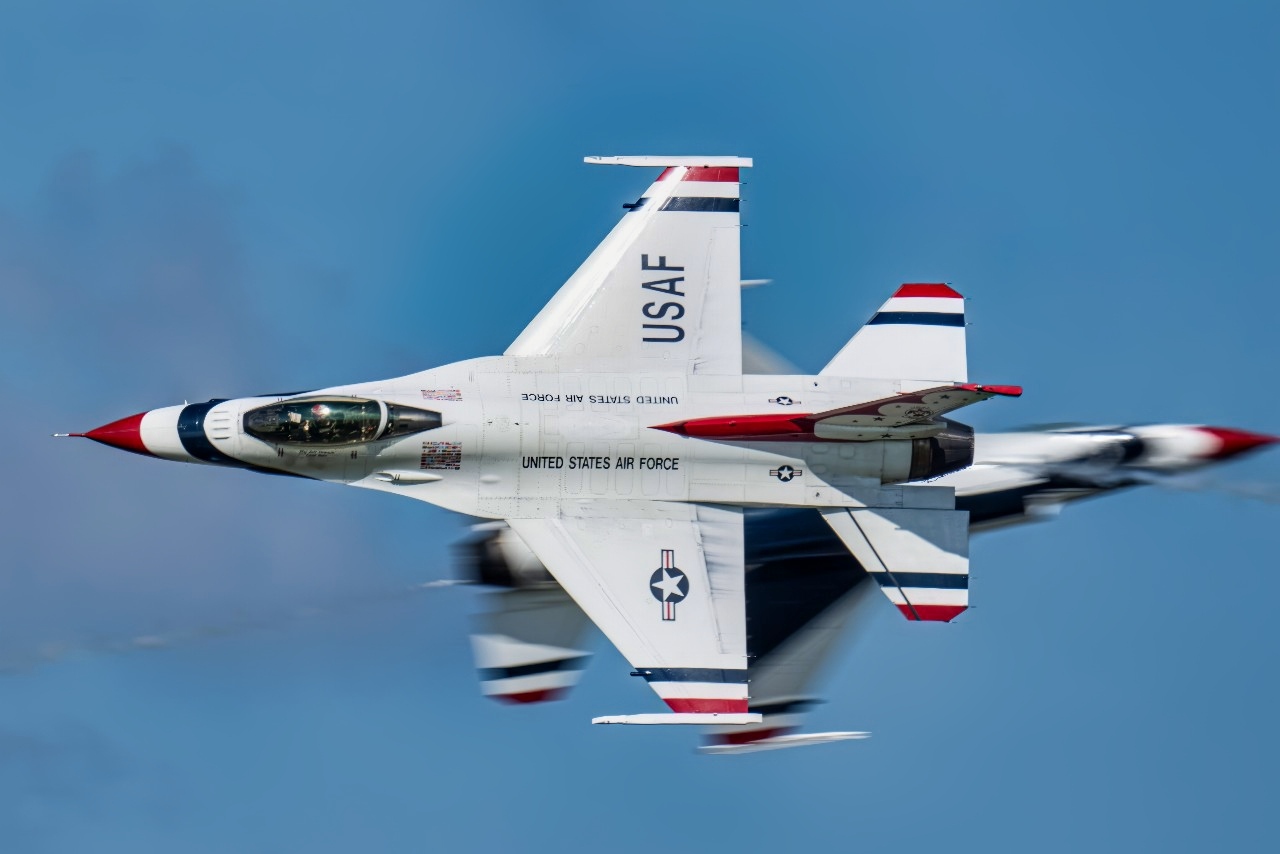
Ukraine has made no secret of its desire to join NATO, viewing the alliance as the strongest hedge against future Russian aggression.
President Volodymyr Zelenskyy is still advocating Ukrainian accession today, even as negotiations to end the war loom.
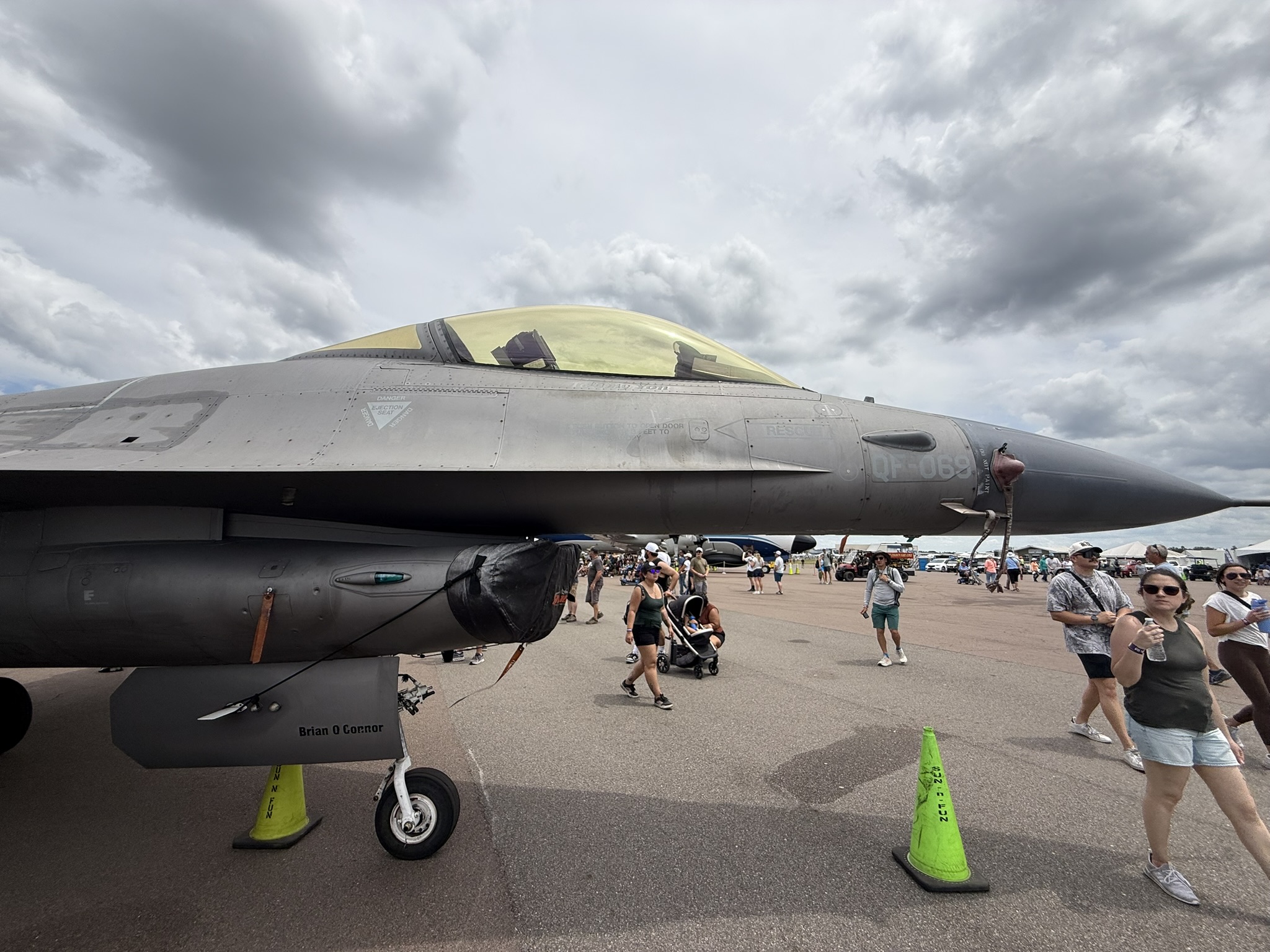
F-16 fighter from Lakeland, Florida Air Show. National Security Journal Original Photo.
Yet despite years of advocacy, NATO membership remains highly unlikely for Ukraine in the foreseeable future.
While NATO has repeatedly affirmed that Ukraine belongs in the alliance, significant obstacles to accession remain.
Paradoxically, admitting Ukraine to the security alliance could risk a confrontation with Russia, undermining Ukraine’s security and Europe’s broader security.
For Ukraine to join NATO would essentially defeat NATO’s purpose.
NATO Unanimity
NATO currently has 32 members, and under Article 10 of the North Atlantic Treaty, admitting a new member requires unanimous agreement among the existing members.
Currently, no such consensus exists.
While NATO has affirmed that Ukraine’s future is in the alliance, it has granted no extension and set no timeline—even as allies describe Ukraine’s pathway toward NATO as “irreversible.” Still, the alliance maintains that it would invite Ukraine only when all members agree, and all conditions are met.
Of course, Ukraine’s ongoing war presents a difficult obstacle; NATO members are understandably reluctant to extend a collective-defense commitment to a country already fighting Russia.
Article 5
The problem of admitting a country at war is Article 5—NATO’s defining security commitment under which an armed attack against one member is considered an attack against all.
Article 5 doesn’t require every ally to declare war; each member may determine the assistance it considers necessary, up to and including armed force.
The Article 5 commitment is intended to provide credible collective deterrence. And admitting Ukraine while it is currently embroiled in a war with Russia would create an unprecedented strategic challenge.
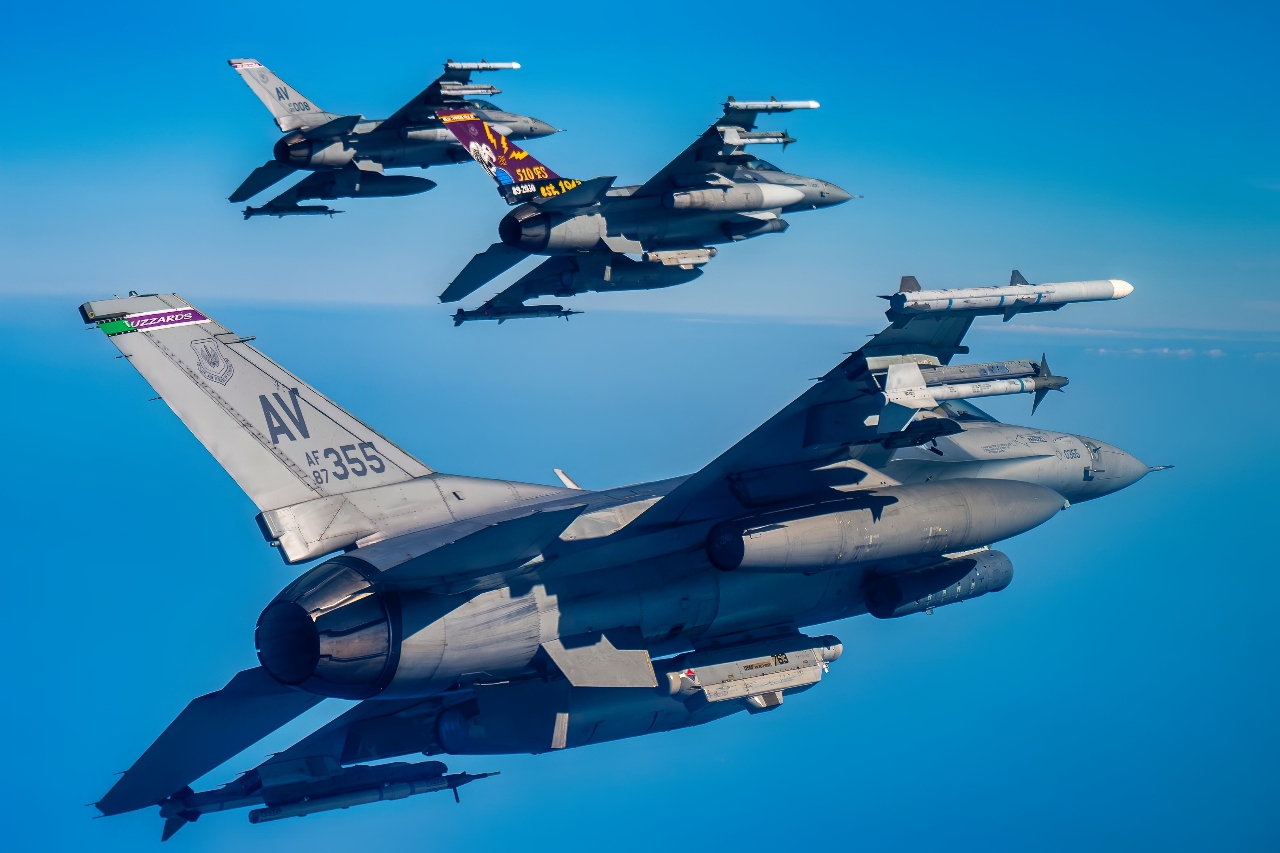
Three U.S. Air Force F-16 Fighting Falcons assigned to the 31st Fighter Wing at Aviano Air Base fly in formation during Exercise Combined Strike 25 along the coast of Italy, August 18, 2025. Integration flying training is key to enhancing interoperability with NATO partners and increasing our readiness capabilities. (U.S. Air Force photo by Senior Airman Zachary Jakel)
If Russia renewed attacks against a NATO-admitted Ukraine, it could force NATO members to decide whether to intervene militarily, forcing a confrontation between NATO and Russia—something that has been carefully avoided for decades.
The risks are obvious, including the potential for nuclear escalation.
Similarly, if Ukraine were admitted and the alliance hesitated to defend it, it could undermine confidence in the alliance’s collective-defense guarantees.
Russia’s Opposition
Moscow has opposed NATO’s eastward expansion since the end of the Cold War.
Following German reunification, NATO admitted several former Warsaw Pact members and Soviet republics: Poland, Hungary, and the Czech Republic in 1999; and Estonia, Latvia, and Lithuania in 2004, enraging Russia and bringing the alliance directly to Russia’s border.
Russian leaders have consistently defined continued NATO expansion, especially with respect to Ukraine, as a threat to Russian security.
Critics of expansion similarly argue that Western policymakers have underestimated how Moscow perceives the alliance’s movement eastward.
During negotiations over German reunification in 1990, Western officials made various statements about NATO’s future military presence and eastward expansion.
However, no binding agreement prohibited NATO enlargement across Eastern Europe. So Russia’s security concerns and past assurances justify its opposition to Ukrainian membership.
The Argument For
Advocates of Ukrainian NATO membership argue that ambiguity has already failed.
At the 2008 Bucharest summit, NATO declared that Ukraine and Georgia would eventually become members. Russia subsequently invaded Georgia in 2008 and Ukraine in 2014.
Supporters of NATO enlargement have argued that clearer security guarantees might have deterred Moscow in both instances.
Proponents also argue that NATO has successfully defended existing members, whom Russia appears reluctant to attack directly.
While Ukraine’s security concerns are legitimate and its reasons for joining NATO sensible, NATO membership is not the only possible response, and it is not necessarily the smartest immediate one.
Western governments could continue supplying defensive weapons, intelligence, training, and economic assistance without extending Article 5 assurances, which seems the more likely immediate outcome.
Ultimately, admitting Ukraine would require NATO members to accept potentially enormous strategic risks, which would be quite hard to justify.
Given those risks, the absence of consensus, and Russia’s explicit opposition, Ukrainian inclusion in NATO seems unlikely for the foreseeable future.
About the Author: Harrison Kass
Harrison Kass is a writer and attorney focused on national security, technology, and political culture. His work has appeared in Tablet, City Journal, The Hill, The Spectator, and The Cipher Brief. He holds a JD from the University of Oregon and a master’s in Global & Joint Program Studies from NY—more at harrisonkass.com.


