


Key Points and Summary – The Boeing X-20 Dyna Soar was a Cold War gamble to build a reusable, piloted spaceplane that could orbit Earth at roughly Mach 22, strike targets, service satellites, and glide home to a runway landing.
-Backed by the U.S. Air Force and staffed by a secret astronaut corps that included Neil Armstrong, the program advanced hot-structure design, hypersonic flight theory, and lifting reentry concepts years ahead of their time.

The Air Force’s X-37B Orbital Test Vehicle Mission 5 successfully landed at NASA’s Kennedy Space Center Shuttle Landing Facility Oct. 27, 2019. The X-37B OTV is an experimental test program to demonstrate technologies for a reliable, reusable, unmanned space test platform for the U.S. Air Force.
-Yet Robert McNamara killed the project in 1963 amid soaring costs, fuzzy missions, and diplomatic concerns.
-Its technology lived on, shaping NASA’s Space Shuttle, the X-37B—and decades of spaceplane dreams.
X-20 Dyna Soar: The Would-Be Mach 22 Space Bomber
The term “dinosaur” refers to the presumably extinct “terrible lizards” of the Mesozoic Era (252 to 66 million years ago; I say “presumably extinct” as many scientists now in fact consider birds to be modern day living dinosaurs) which are the centerpiece of the overly rehashed “Jurassic Park” film franchise that in turn was based upon the bestselling novels of the late Dr. Michael Crichton.
“Dinosaur” is also used as a derogatory slang term for something outdated; for example, in the handgun world, Glock enthusiasts sometimes look down their noses at M1911 enthusiasts.
However, in the case of the X-20 “Dyna Soar,” had it gotten off the ground both literally and figuratively, no one would have derided it as obsolete, as it was a state-of-the art concept that would’ve flown faster and higher than any pterodactyl or modern day bird dinosaur; this Dyna Soar would’ve presumably soared into outer space at a Mach 22 speed!
What Might Have Been: Boeing X-20 Dyna Soar Premise & Promise
The X-20 was a United States Air Force project, and Boeing was the aerospace firm that the USAF contracted with to build this ambitious project (which, with 20/20 hindsight, is rather fitting, seeing how now Boeing is the awardee to build the USAF’s 6th Generation F-47 NGAD [Next Generation Air Dominance] fighter).
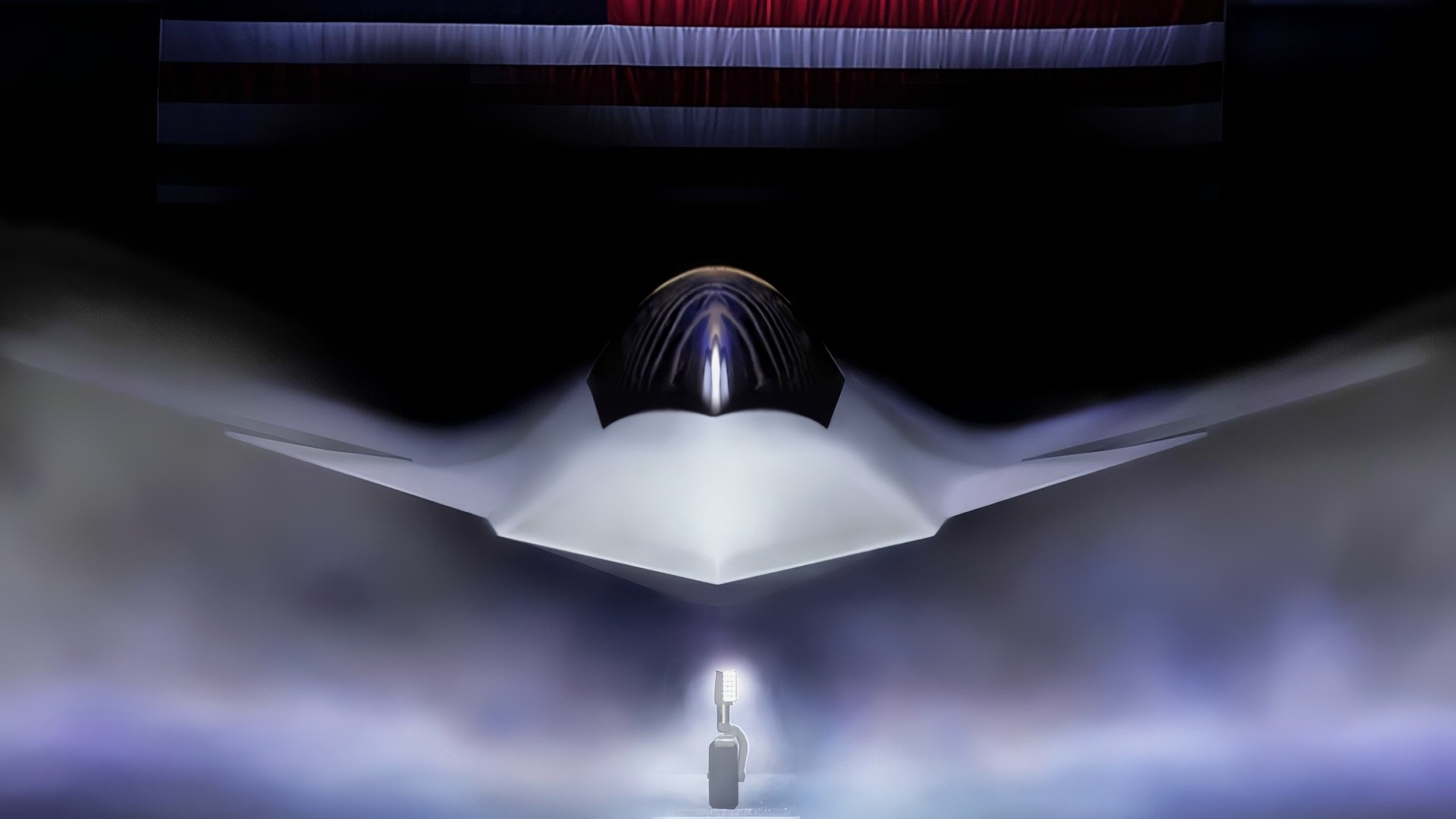
Shown is a graphical artist rendering of the Next Generation Air Dominance (NGAD) Platform. The rendering highlights the Air Force’s sixth generation fighter, the F-47. The NGAD Platform will bring lethal, next-generation technologies to ensure air superiority for the Joint Force in any conflict. (U.S. Air Force graphic)
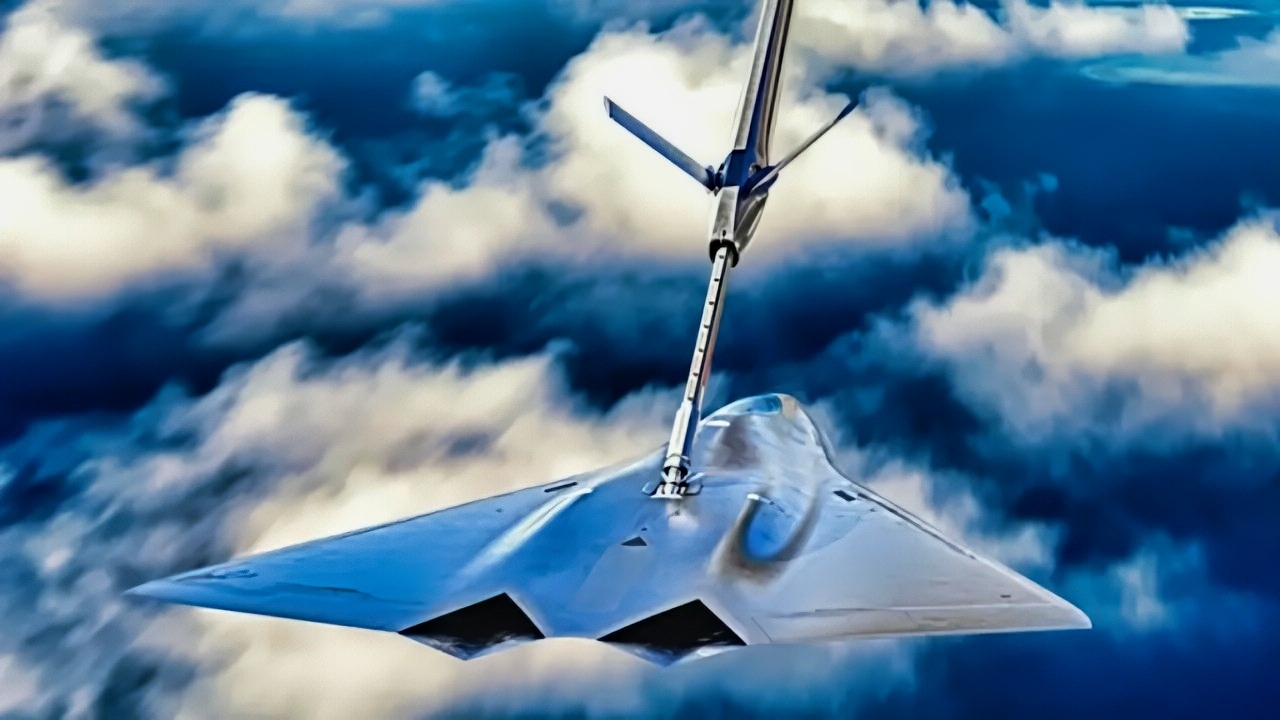
F-47 Lockheed Photo. Image Credit: Lockheed Handout.
The project was launched during the heady days of the Cold War, officially commencing on October 24, 1957 (20 days after America was humiliated by the Soviets’ Sputnik launch), with the overall design of the Dyna-Soar outlined in March 1960.
The concept behind the X-20 was to become the first winged orbital space vehicle capable of lifting reentries and conventional landings, not to mention a spaceplane that could be used for a variety of military missions, including aerial reconnaissance, bombing, space rescue, satellite maintenance, and as a space interceptor to sabotage enemy satellites.
If the X-20 had come to fruition, it would have made its maiden flight on New Year’s Day 1966.
Indeed, in April 1960, seven astronauts were secretly chosen for the Dyna Soar program, namely Neil Armstrong (his name may sound just slightly familiar to anyone with a halfway decent knowledge of 20th century history), William H. “Bill” Dana, Henry C. Gordon, William J. “Pete Knight,” Russell L. Rogers, Milt Thompson, and James W. Wood.
Would-Be Tech Specs and Vital Stats
Crew: 1 (pilot)
Fuselage Length: 35.34 ft (10.77 m)
Wingspan: 20.8 ft (6.3 m)
Height: 8.5 ft (2.6 m)
Empty Weight: 10,395 lb (4,715 kg)
Max Takeoff Weight (MTOW): 11,387 lb. (5,165 kg)
Powerplant: 2 × AJ10-138 rocket engine, each generating 8,000 lbf (36 kN) thrust
Maximum Speed: 17,500 mph (28,200 km/h, 15,200 knots)
Range: 25,000 miles (41,000 km, 22,000 nautical miles)
Service Ceiling: 530,000 ft (160,000 m)
Rate of Climb: 100,000 ft/min (510 m/s)
To put that mind-blowing Mach 22 figure in additional perspective, anything object at or above Mach 5 is considered hypersonic; the North American X-15, which in its own right was a borderline spaceplane, attained a top speed of Mach 6.7 in 1967 (gotta love that numerical symmetry there, eh?). Ironically enough, that X-15 mission was flown by none other than Pete Knight, who had originally been selected for the X-20 program!
So, What Went Wrong?
Alas, the Dyna Soar program was aborted on December 10, 1963 (by sad coincidence, less than three weeks after the assassination of President John F. Kennedy), just after construction had begun. The final price tag of this dead Dyno Soar $660 million ($6.78 billion when adjusted for inflation).
As summed up by physicist Andrew LePage in an April 10, 2016 article for his “Drew Ex Machina” publication titled “The Future That Never Came: The X-20 Dyna Soar Aerospace Plane,” Secretary of Defense [Robert S.] McNamara later claimed in testimony to the US Senate that there was no longer any justification for the expensive X-20 program especially at a time when the military had yet to define clearly its mission. There were also continuing questions about the usefulness of the X-20 Dyna Soar and its relation to future military space programs. ”
There were also some not-so-publicized geopolitical factors at play here: the potential military applications of a system like Dyna Soar complicated the Kennedy Administration’s behind-the-scenes diplomatic efforts with the Soviet Union regarding mutual satellite overflight.
On the same day that the X-20 was cancelled, the Air Force officially replaced the X-20 Dyna Soar with MOL (Manned Orbiting Laboratory) as the focus of its manned space efforts; ironically enough, the MOL also ended up getting cancelled (after an expenditure of $1.56 billion and 5/5 years’ worth of time & effort).
Dyna Soar Legacy
The “X-tinction” (so to speak) of the X-20 notwithstanding, the time and money spent on the program didn’t turn out to be a total waste, as affiliated research on spaceplanes influenced both NASA’s Space Shuttle program and the USAF’s X-37B automated spaceplane.
And just like the dinosaurs of the “Jurassic Park” franchise, this star-crossed would-be space Dyno-Soar lived on in sci-fi pop culture, such as the classic “Twilight Zone” episode “And When the Sky Was Opened” (starring Rod Taylor, best known for “The Time Machine” and “The Birds;” this particular interpretation of the X-20 had a three-person crew as opposed to just one), the 1962 novel “Mike Mars Flies the Dyna-Soar” by Donald A. Wollheim, and the John Berryman 1963 short story “The Trouble with Telstar.”
About the Author: Christian D. Orr, Defense Expert
Christian D. Orr is a Senior Defense Editor. He is a former Air Force Security Forces officer, Federal law enforcement officer, and private military contractor (with assignments worked in Iraq, the United Arab Emirates, Kosovo, Japan, Germany, and the Pentagon). Chris holds a B.A. in International Relations from the University of Southern California (USC) and an M.A. in Intelligence Studies (concentration in Terrorism Studies) from American Military University (AMU). He is also the author of the newly published book “Five Decades of a Fabulous Firearm: Celebrating the 50th Anniversary of the Beretta 92 Pistol Series.”


