

Energy Expert Says Diesel Crisis Started Well Before the Wars in Ukraine and Iran – Diesel prices have dominated headlines in recent months, with record highs across the United States.
Two conflicts are widely blamed for the hike in living costs for Americans: the Iran war and Russia’s full-scale invasion of Ukraine.
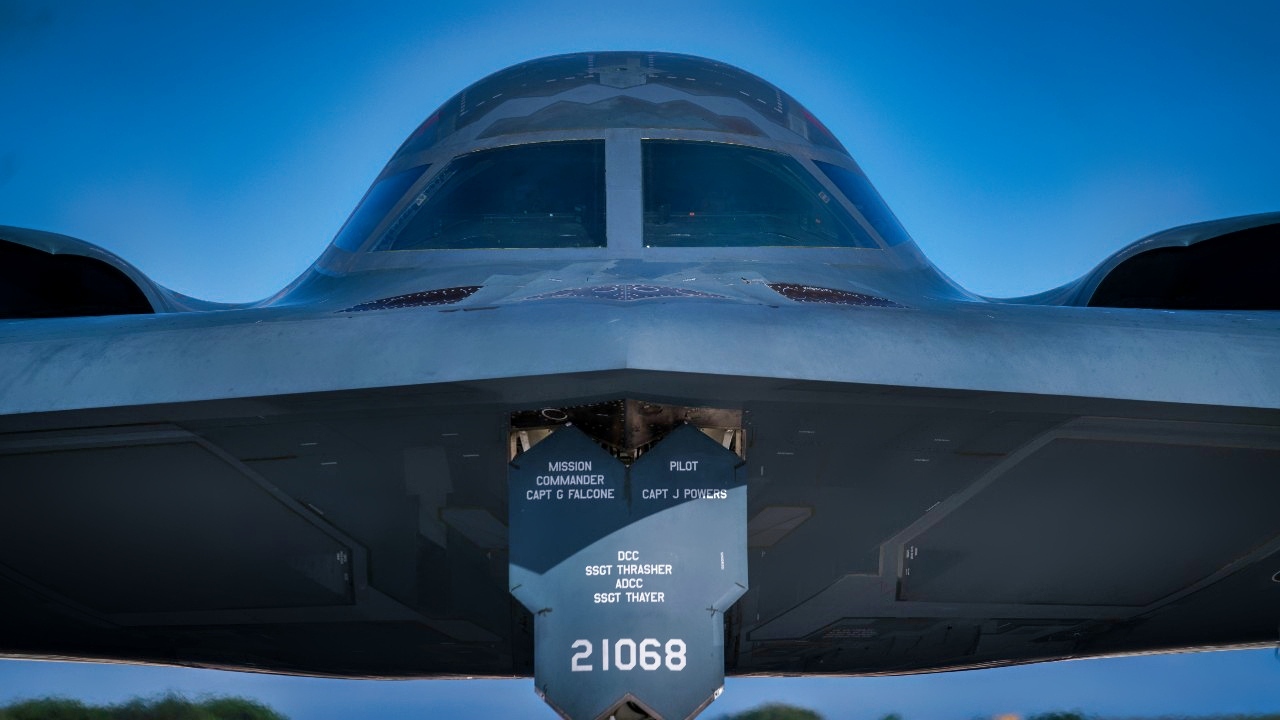
A B-2 Spirit, assigned to the 509th Bomb Wing, Whiteman Air Force Base, taxis on the flightline Jan. 8, 2018, at Andersen Air Force Base, Guam. Approximately 200 Airmen and three B-2 Spirits from Whiteman Air Force Base (AFB), Missouri, deployed to Andersen AFB in support of U.S. Pacific Command’s (PACOM) Bomber Assurance and Deterrence mission. U.S. Strategic Command bombers regularly rotate through the Indo-Pacific region to conduct U.S. PACOM-led air operations, providing leaders with deterrent options to maintain regional stability. During this short-term deployment, the B-2s will conduct local and regional training sorties and will integrate capabilities with key regional partners, ensuring bomber crews maintain a high state of readiness and crew proficiency (Air Force photo by Staff Sgt. Joshua Smoot) .

A B-2 Spirit bomber deployed from Whiteman Air Force Base, Missouri, is parked on the flightline at Joint Base Pearl Harbor-Hickam, Hawaii, Jan. 10, 2019. Three B-2 bombers and more than 200 Airmen deployed here in support of U.S. Strategic Command’s (USSTRATCOM) bomber task force mission. Bomber aircraft regularly rotate through the Indo-Pacific region to integrate capabilities with key regional partners and maintain a high state of aircrew proficiency. (U.S. Air Force photo by 2nd Lt. Allen Palmer)
However, one energy expert has argued that the diesel crisis began well before much of the world realized the importance of the Strait of Hormuz, or Russian oil refineries, sharing a prediction on the world’s approach to energy going forward.
Oil and the Economy
Gail Tverberg, writing for oilprice.com, argued in a detailed analysis published on Wednesday, 30th September, that the diesel shortage began as early as 2020.
Tverberg began by noting diesel’s importance and outlining how rising diesel costs ripple through the wider economy. Diesel is used to produce and transport food, so higher pump prices mean higher grocery-store prices. She also noted that consumers prefer low prices to keep living costs down, while oil producers prefer higher prices to incentivize investment.
“Without additional investment, the quantity of heavy oil extracted and made into these fuels will tend to decrease because of depletion issues,” she added.
Tverberg then noted that “oil” has a different meaning, with heavier oils used for diesel and jet fuel production while lighter oils are used for gasoline. Diesel is more expensive to extract, so it costs more to produce. Consumers typically do not see this cost because diesel is essential for food production and transportation.
A Problem from Previous Years
Tverberg argued that diesel consumption has not increased since 2005, plateauing for almost 15 years before falling 16% during the pandemic. It has not fully recovered to the 70 gallons per year per capita seen in the 2010s.
“At least in part, what is happening is that recent oil prices have not been high enough for countries producing somewhat heavy, sour oil,” Tverberg said. “This is especially the case for oil exporting countries that depend on oil revenue to support their economies. They need more revenue than just enough to cover extraction costs, plus a reasonable return for shareholders. They also need money to fund the development of make-work projects to employ their citizens and to fund subsidized imported food for their population.”
She also noted that heavier oil production can change with oil prices. Tverberg cited the drop in oil prices when the pandemic struck and the resulting steep decline in Middle Eastern production; conversely, production increased when prices rose at the beginning of Russia’s full-scale invasion of Ukraine.
A Call for Higher Prices
Tverberg briefly noted that sustained high prices for diesel and jet fuel can spur investment in extracting extra heavy oil and bitumen (EHOB). If successful, this could relieve the diesel shortage.
“The prices of diesel and jet fuel are high now, but this is at least partly due to higher insurance costs and partly due to the extra costs related to shipping oil longer distances to avoid blocked straits,” Tverberg wrote. “These extra costs don’t get back to oil companies in a way that encourages countries to extract more heavy oil. What is needed are permanently higher prices for diesel and jet fuel, relative to the price of gasoline, even if the problems with respect to the straits of Hormuz and of Bab al-Mandab disappear.”
Advanced Countries Falling Behind
Tverberg noted that Advanced Countries such as the U.S., Israel, and NATO members had fallen behind “Other than Advanced Countries” such as China, Russia, and Iran in total diesel and jet fuel consumption. Yet, per capita, Advanced Countries remain well ahead in terms of barrels consumed.
“People in the Other than Advanced Countries would tend to be dismayed by the continued wide gap between the standard of living of their own economy, and the standards of living in the Advanced Countries,” Tverberg added.
“Many of these countries export extracted resources that are ultimately sold as goods to people living in Advanced Countries. If the selling prices of these commodities were higher, workers in these countries could perhaps afford to have cars and air conditioning, like workers in the Advanced Countries.”
She concluded by predicting that “society itself will need to change in order to make use” of higher-cost oil, which would require more complex extraction techniques.
She also outlined a few ideas, including reducing the need for tax revenue in oil-exporting countries and cutting total diesel and jet fuel use by shortening supply chains and splitting the world among the Americas, Europe, Africa, and Asia.
“It seems to me that the self-organizing nature of economies will gradually push them in the directions they need to go if the world is to start incorporating a significant quantity of expensive products made from heavy oil into its energy mix,” Tverberg finished. “We cannot yet imagine what all the changes will look like. In some ways they may resemble a recession, but there will likely still be an interest in greater complexity and in working to improve people’s lives.”
About the Author: Shay Bottomley
Shay Bottomley is a British journalist. He has written for the Western Standard, Business Insider, Maidenhead Advertiser, Slough Express, Windsor Express, Berkshire Live and Southend Echo.