


At the beginning of this week, markets and the ordinary person breathed a collective sigh of relief as the forty-seventh President of the United States, Donald J. Trump, appeared to walk back his previous warning of “Military Terror” attacks against the Islamic Republic of Iran.
Most people were not sighing because they supported the Islamic Republic.
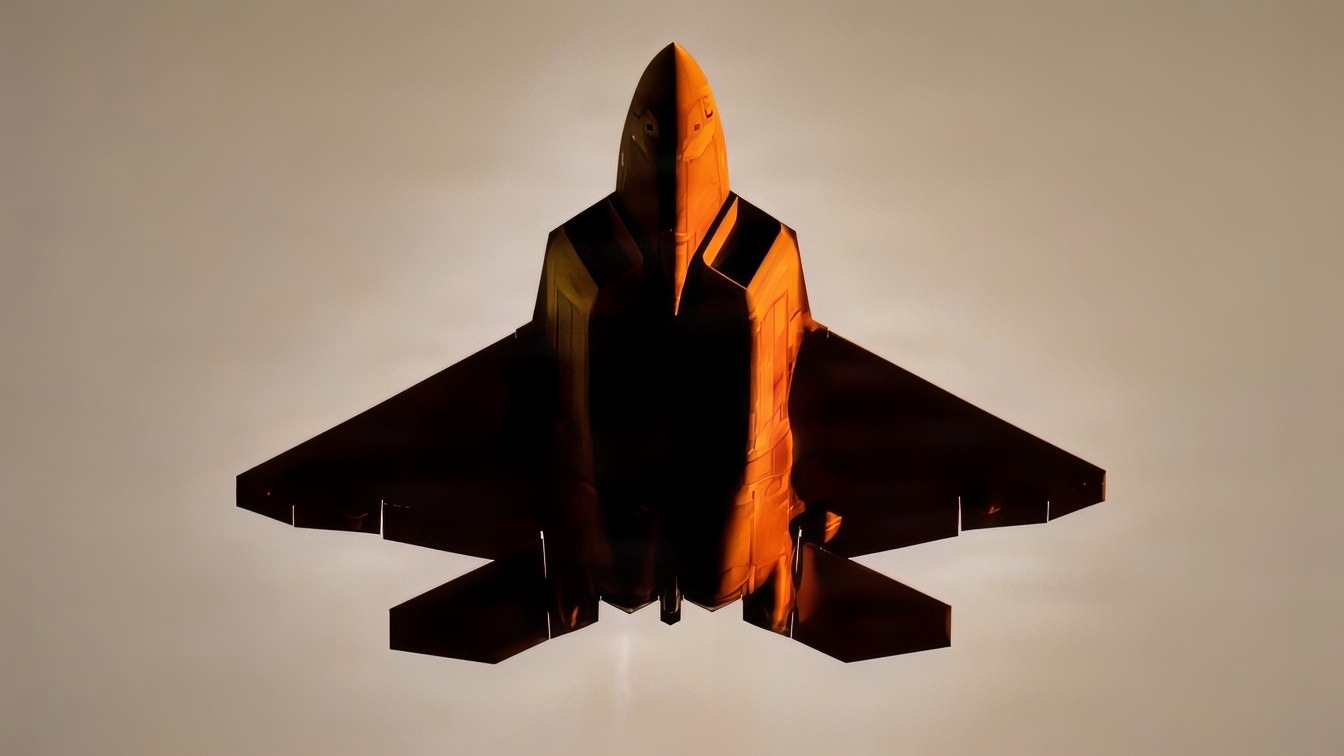
U.S. Air Force Capt. Nick “Laz” Le Tourneau, F-22 Raptor Aerial Demonstration Team pilot and commander, practices at Joint Base Langley-Eustis, VA, November 12th, 2025. The F-22 Raptor Aerial Demonstration showcases the unmatched maneuverability of the airframe by executing a series of combat maneuvers to inspire Americans and their allies, and deter foreign adversaries. (U.S. Air Force video by Staff Sgt. Michael Bowman)
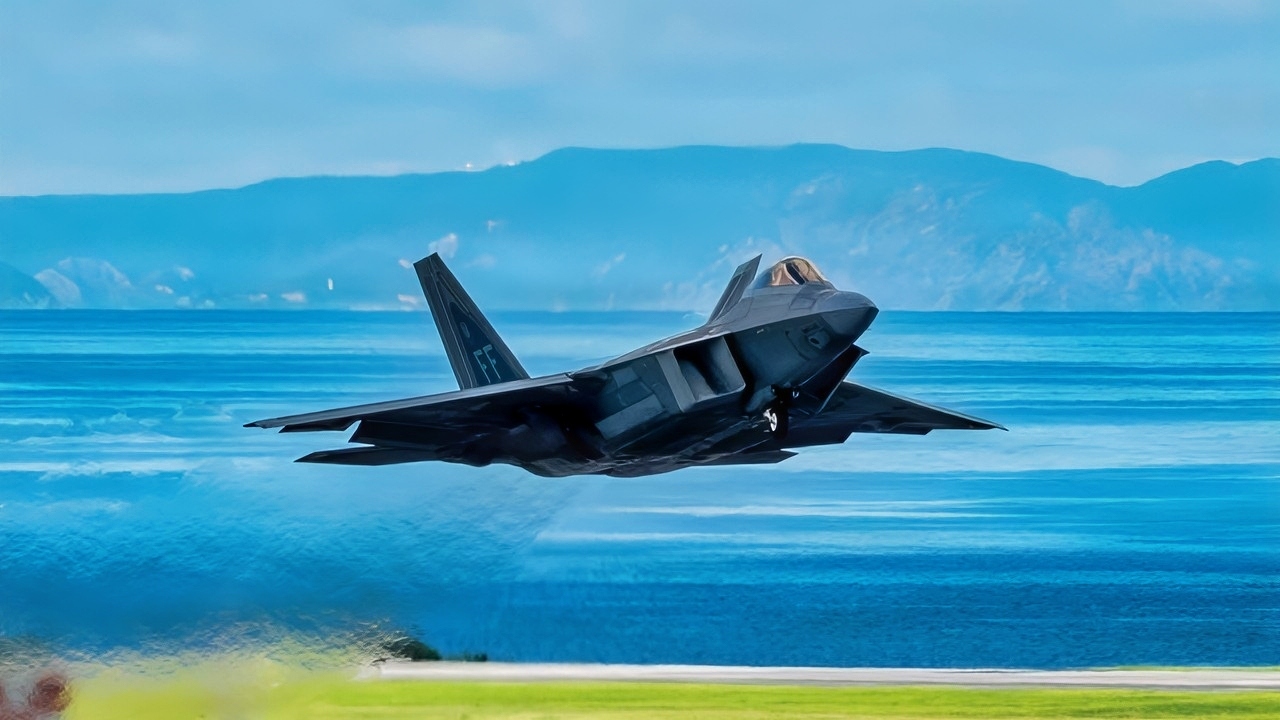
A U.S. Air Force F-22 Raptor assigned to the 27th Expeditionary Fighter Squadron, deployed to Kadena Air Base, takes off during readiness exercise BB26-1 at Kadena Air Base, Japan, Aug. 3, 2026. Exercises and operations incorporating agile combat employment concepts ensure forward-deployed forces in the Indo-Pacific are ready to protect and defend the United States, allied and partner interests at a moment’s notice. (U.S. Air Force photo by Senior Airman Violette Hosack) 18 WG/PA
Peace In Our Time?
They were relieved because they, unlike the American leadership, understood the ramifications of another round of escalation (although, to be fair, it seems as though reason has finally prevailed among Trump and his inner circle–for now).
Had Trump gone through with his threatened strikes, the retaliation from Iran would have been hard to endure.
Firing from concealed positions deep underground, the Iranians would have launched a missile and drone fusillade against most–if not all–of the already strained energy production infrastructure of their Gulf Arab neighbors.
The government of Saudi Arabia was most worried about what Iran might do if Trump attacked the Islamic Republic’s energy and water infrastructure because Saudi Arabia’s economy was already hanging by a proverbial thread.
So, the Trump administration backed off (for now).
Early on Monday, the US Treasury Secretary Scott Bessent indicated that the Trump administration was set to sign the proposed peace deal with Iran by Wednesday.
That day has come and gone. Now, there are indications that the Trump administration will likely sign an agreement soon.
We shall see.
After all, the Trump administration has prized strategic deception and unpredictability as critical components of its overall war strategy. So, we might be getting a deal. Or, Trump might decide to attack this weekend.
Consequences For Losing a War (You Started)
As it stands, if Trump signs a deal with Iran by this weekend, it will be a strategic defeat for America, and it will lead to a true reset of the world order.
Consider this: the Americans and their Israeli partners started a regime change war against the Islamic Republic of Iran on February 28.
It was supposed to last anywhere between four days and five weeks (depending on who you ask) and end in the destruction of the Islamic Republic, its replacement with a friendlier government, and an end to the perceived Iranian nuclear weapons threat.
None of those things happened, and the war has lasted six months (and counting). Meanwhile, the Iranians punched back hard.
Not only by closing the Strait of Hormuz (SoH) for the last six months (blockading 20 percent of the world’s crude oil supply), but the Iranians also devastated Israel and the Gulf Arab states with their missile and drone counterattacks.
Then, Iranian proxies, notably the Houthis of Yemen, got involved by further pressuring the West via the closure of the Strait of Bab el-Mandeb.
If the war continued, the Americans faced a real strategic defeat. Now, if they sign the proposed deal, it’s still a defeat.
But Trump can manage the narrative much better than he could have if he had lost while engaged in war against the Iranians.
And just what is the deal?
For starters, the Americans have little to do with the negotiations, contrary to what the US president claimed.
In fact, neither Tehran nor the Arab states involved in the negotiation process wanted the Americans (or Israelis) anywhere near the negotiations.
Instead, a coalition of Arab states, led by the Omanis, is negotiating with Iran on behalf of the United States.
Deal Or No Deal?
The Omani deal has seen several iterations, but the most recent one that appears likely to be the one that everyone agrees to involves a shared Omani-Iranian shipping route through the SoH.
That route will be jointly managed, but the Iranians will have overriding authority.
What’s more, both Iran and Oman will collect tolls once the deal is agreed to.
The Iranians have expressed support for allowing the Omanis to operate a separate route through the SoH (contingent on Iran having what amounts to veto power over which ships use it).
In other words, the American demand that the SoH be restored to its prewar operation and governance (no tolls and considered an international waterway) is not being met. That’s a massive strategic defeat for the United States, especially considering how loud the US leadership was about the matter.
So, if Trump were to acquiesce to the Omani-Iranian deal (big if), there’d be no hiding that the Americans have lost the war–they failed to achieve regime change, did not totally denuclearize the Islamic Republic, and could not achieve a reopening of the SoH to prewar conditions.
At the same time, because of the economic factors and deteriorating political conditions in the United States, Trump needs to end the war quickly.
And the deal being proposed by Oman is, in fact, a temporary one requiring all sides to return to the negotiating table for a longer discourse on many other topics (notably Iran’s nuclear program).
Iran Might Be Forcing Escalation
While the Americans have depleted their longer-range strike systems and their defensive interceptors, hawks in Washington and Tel Aviv insist that the US still retains other capabilities that would allow for an effective re-strike on Iran.
What’s more, retired United States Navy Adm. Mark Montgomery told me in an interview that it is the assumption of many in the US military and in the think tank community that the Americans had effectively degraded Iran’s air defenses and radar systems, so that the US could now risk sending forces closer and deeper inside Iran.
That notion may sound wild (indeed, it is highly irresponsible). But the Iranians are now giving the Trump administration an excuse to potentially escalate in such a manner, irrespective of the economic and political fallout in the near term.
That’s because Iran’s parliament is now debating a law that would exact onerous transit fees for the SoH while denying the use of the Strait for any country they deem to be a threat or any country (the United States and Israel) that refuses to pay war reparations to the Islamic Republic of Iran–and their proxies in the so-called “Axis of Resistance.”
While Trump might have gone along with the Omani deal in the near term, if the Iranian parliament passes such a law, there is no way–regardless of the drain on US resources and its economy–that Trump will seek to de-escalate.
About the Author: Brandon J. Weichert
Brandon J. Weichert is Senior National Security Editor. He also manages The Weichert Brief on Substack. Weichert also hosts “National Security Talk” on Rumble. He is the author of four bestselling national security books, the most recent of which is A Disaster of Our Own Making: How the West Lost Ukraine (Encounter Books). Follow him via Twitter/X @WeTheBrandon.


