

Key Points and Summary – The U.S. Navy is sliding into a serious attack-submarine shortfall just as undersea power matters most.
-Aging Los Angeles-class boats are retiring as their reactor cores near exhaustion, but Virginia-class replacements are arriving years late amid workforce gaps, supply-chain issues, and more complex Block V builds.

(Mar. 21, 2025) – The Los Angeles-class fast-attack submarine, USS Santa Fe (SSN 763), transits the Pacific Ocean, March 21, 2025. Santa Fe is one of four Los Angeles-class fast-attack submarines assigned to Commander, Submarine Squadron 11. Santa Fe is part of Commander Submarine Squadron 11, home to four Los Angeles-class fast-attack submarines, which are capable of supporting various missions, including anti-submarine warfare, anti-ship warfare, strike warfare and intelligence, surveillance and reconnaissance. (U.S. Navy photo by Mass Communication Specialist 1st Class Keenan Daniels)
-At the same time, public shipyards are so backed up that even delivered Virginias spend excess time in maintenance, further shrinking operational availability.
-The Navy now expects its SSN fleet to dip into the mid-40s in the early 2030s—well below its stated 66-boat requirement—while China accelerates its own undersea expansion.
The U.S. Attack Submarine Shortfall Could Haunt the 2030s
The U.S. Navy is entering a critical decade for its undersea force. Submarines matter arguably more than ever before, and if automation goes in the direction it seems to be, they could soon be far more important than America’s fleet of surface vessels and supercarriers. And while this is all unfolding – and the nature of global naval power is changing – the numbers are going in the wrong direction.
Los Angeles-class submarines (SSNs) are retiring at a significantly faster rate than new Virginia-class boats are being delivered, leaving the Navy with fewer deployable submarines at a time when China is accelerating its own massive naval expansion.
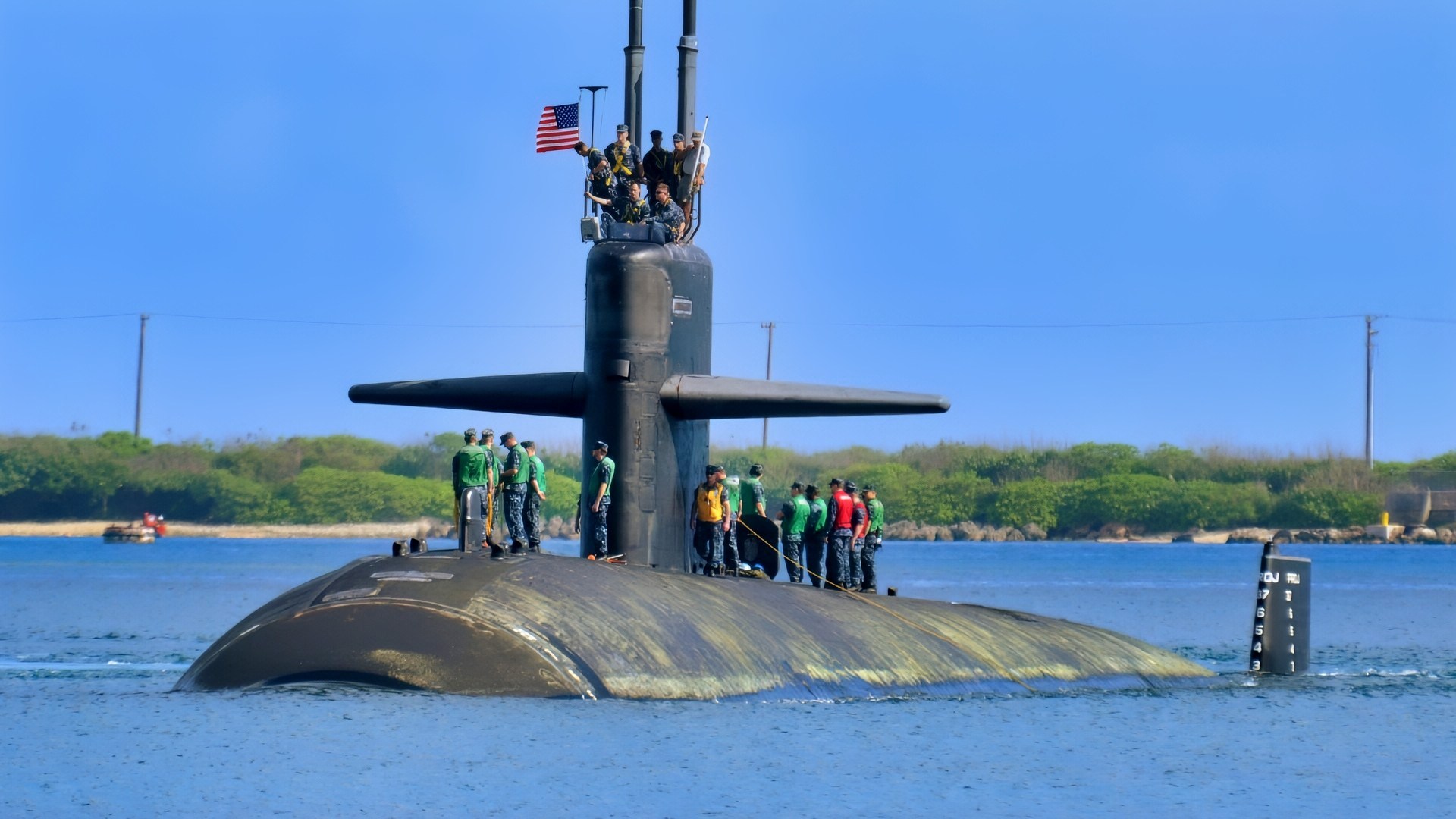
130507-N-LS794-045
POLARIS POINT, Guam (May 7, 2013) The Los Angeles-class attack submarine USS Albuquerque (SSN 706) arrives in Apra Harbor, Guam, to conduct maintenance and liberty. Albuquerque is conducting operations in the U.S. 7th Fleet area of responsibility. (U.S. Navy photo by Mass Communication Specialist 1st Class Jeffrey Jay Price/Released)
The shortfall is only getting worse; fleet size is already below the required level, our industrial base can’t keep up, and maintenance delays are compounding the problem.
As a result, the Navy is now facing an SSN availability crisis that could last well into the 2030s.
The gap is coming, and is arguably already here. Now it’s just a matter of how the United States manages the risk it creates. But how did this happen?
How the Shortfall Happened
It has long been predicted that the U.S. Navy faced a dip in submarine availability, and those predictions have come true. The Los Angeles class, commissioned between the late 1970s and the mid-1990s, is approaching the end of its reactor life.
Once a reactor core nears exhaustion, refueling becomes technically possible but economically unrealistic.
The Navy has repeatedly concluded that extending the life of many of the aging LA-class hulls is simply not worth the cost at this stage.
This dynamic has led to a steady increase in retirements in recent years.
Just look at the numbers: the Navy had 62 attack submarines in 2005. By 2024, that number was down to between 49 and 50.
The Navy’s own 30-year shipbuilding plan has identified a need for 66 SSNs, but has conceded that the fleet will likely fall to around 46 in the early 2030s before later recovering.

(Dec. 10, 2010) The Los Angeles-class attack submarine USS Houston (SSN 713) takes part in a photo exercise as part of Keen Sword 2011. Keen Sword is a joint, bilateral exercise designed to strengthen Japan-U.S. military operations. (U.S. Navy photo by Mass Communication Specialist 3rd Class Casey H. Kyhl)

The Los Angeles-class fast attack submarine USS Philadelphia (SSN 690) arrives in Souda harbor for a routine port visit to Greece’s largest island. Philadelphia is homported in Groton, CT and began a scheduled six-month deployment in June 2005.
Commissioned June 25, 1977, USS PHILADELPHIA is the third LOS ANGELES-class attack submarine and the first ship in her class built by Electric Boat. U.S. Navy photo by Paul Farley
In an ideal world, the Virginia-class program would be replacing these boats on a near one-for-one basis.
The Virginia class is the Navy’s modern fast-attack submarine program, designed to replace the aging Los Angeles-class with vessels that boast quieter acoustics, improved sensors, and the ability to conduct intelligence, surveillance, strike, and anti-submarine missions. Production of those submarines, however, has slowed dramatically.
Both General Dynamics Electric Boat and Newport News are behind schedule, primarily due to workforce shortages, supply chain gaps, and delays in component delivery. And then, of course, there are the lingering effects of pandemic-era disruptions and lockdowns.
The Government Accountability Office has suggested that recent Virginia-class submarines are being delivered an average of 2 years late, and that some Block IV boats required major repairs immediately after commissioning due to quality issues.
The introduction of the Block V design, which features the long-planned Virginia Payload Module (VPM), has further complicated production.
The VPM adds 84 feet to the hull and requires a significantly more complex construction process.
The Congressional Research Service analyzed the problem extensively, noting that the VPM increases labor hours, disrupts the overall rhythm and process of manufacturing, and strains subcontractors who are already operating at capacity.
Maintenance delays are also part of the problem and continually reduce the adequate fleet size.
Public Navy shipyards – Pearl Harbor, Portsmouth, Puget Sound, and Norfolk – are all struggling to complete depot-level overhauls on time.
In 2022, reports suggested that attack submarines spent 4,000 more days idle in maintenance than planned over the previous decade, effectively removing several boats’ worth of operational availability.
Even the Virginias that have been delivered can’t always be deployed because the yards simply lack capacity. That’s a problem that will persist until America’s industrial base and shipyard capacity problems are solved.
The Timing Couldn’t Be Worse
Put these all together, and the problem should be clear: the Navy is retiring old submarines on schedule, as it should, but new submarines are arriving late, and there’s no indication that the problem will improve anytime soon.
Existing submarines are also spending too much time in maintenance. The result? A shrinking and increasingly overstretched force.
And the timing could not be worse. Navy officials have already warned Congress that the FY2025 procurement goals for two Virginia-class submarines per year are no longer realistic, and the latest budget debate reveals bipartisan concern that the industrial base is still falling behind, even with record funding.
Add China’s accelerating undersea expansion – and its growing ability to track U.S. boats in the Western Pacific – and the consequences become apparent.
The United States is losing numbers and time. And unless shipyards recover output far faster than expected – and they won’t – the undersea gap could easily define America’s naval risk well into the next decade.
About the Author:
Jack Buckby is a British author, counter-extremism researcher, and journalist based in New York. Reporting on the U.K., Europe, and the U.S., he works to analyze and understand left-wing and right-wing radicalization, and reports on Western governments’ approaches to the pressing issues of today. His books and research papers explore these themes and propose pragmatic solutions to our increasingly polarized society. His latest book is The Truth Teller: RFK Jr. and the Case for a Post-Partisan Presidency.
More Military Ideas
The U.S. Navy’s Constellation-Class Frigate Crisis Keeps Getting Worse
China’s New H-20 Stealth Bomber Might Have a 10,000 km Range
Even Mach 3 Speeds Could Not Save the Titanium SR-71 Blackbird
The U.S. Navy’s New DDG(X) Destroyer Is Sailing Into Stormy Waters


